
Scene at Delft — History & Facts
What if silence could speak through light? In Johan Barthold Jongkind's Scene at Delft, the quietude of a cityscape reverberates with an undercurrent of madness, as if the tranquility is merely a fragile facade. Look to the right at the shimmering water that mirrors the delicate hues of an overcast sky. The pale blues and soft grays blend seamlessly, creating a dreamlike atmosphere that draws the eye toward the distant spires of Delft's architecture. Notice how the brushstrokes are both fluid and frenetic, suggesting movement beneath the stillness.
The careful application of light captures fleeting moments, transforming mundane elements into whispers of thought, where each nuance of color plays a role in telling a broader story. Delve deeper into this seemingly serene scene, and you’ll uncover layers of emotional tension. The juxtaposition between the calm surface of the water and the busy shapes of boats hints at an inner chaos, a madness masked by the beauty of the landscape. The absence of human figures intensifies this effect, leaving the viewer to ponder the unspoken narratives behind the canvas.
The artist’s choice of an overcast day might symbolize a moment of introspection, where nature’s silence echoes the tumult of the human spirit. In 1868, Jongkind painted Scene at Delft during a period of personal challenge, grappling with the shift in the art world toward Impressionism. Living in France, he found himself increasingly isolated as his innovative style earned mixed reactions. This work reflects his ongoing quest for identity and expression, encapsulating both a physical landscape and the intangible struggle of an artist in transition.
More Artworks by Johan Barthold Jongkind
Browse all →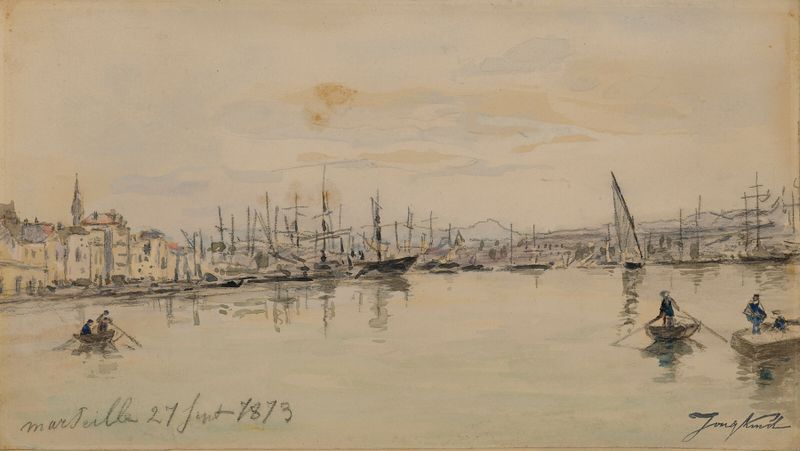
Le Port de Marseille
Johan Barthold Jongkind

Canal Saint-Martin
Johan Barthold Jongkind

Countryside near Brezins, between Grenoble and Vienne
Johan Barthold Jongkind

Notre-Dame vue du quai de la Tournelle
Johan Barthold Jongkind

Environs de Grenoble
Johan Barthold Jongkind

Clair de lune à Overschie (environs de Rotterdam)
Johan Barthold Jongkind

Port de Honfleur
Johan Barthold Jongkind
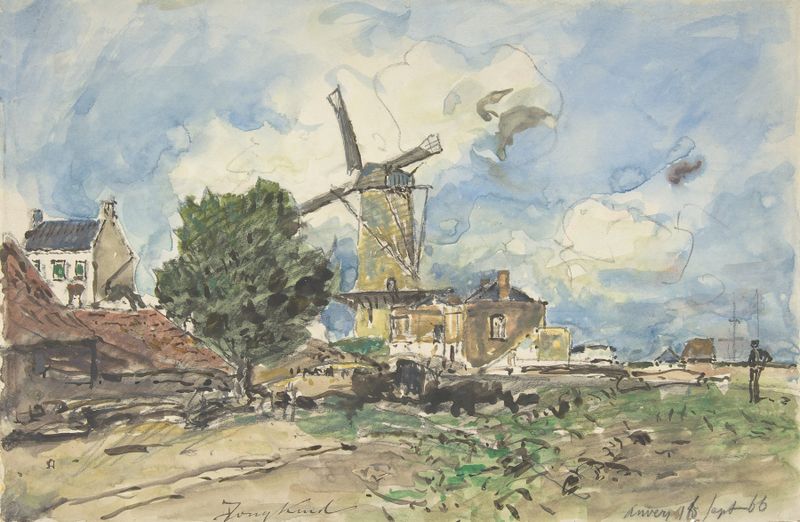
Wind Mill at Antwerp
Johan Barthold Jongkind

Le Havre
Johan Barthold Jongkind

The Church of Overschie
Johan Barthold Jongkind





