
Schönbrunn — History & Facts
In the face of fleeting beauty, how do we capture the essence of decay? Look closely at the somber yet evocative palette—faded greens and browns dominate the canvas, whispering of a once-vibrant life. Focus on the crumbling architecture; the elegant lines of the structure are softened by age, inviting the viewer to trace the outlines like a lover's caress. Notice how shadows stretch languidly across the scene, as if time itself is lingering, reflecting the quiet resignation of a world in decline. Beneath the surface, this work speaks of contrasts—the tension between grandeur and melancholy.
The once-majestic buildings stand as ghostly reminders of splendor, each fissure telling a story of neglect and the passage of time. Tiny details, such as the overgrown foliage encroaching upon the stone, symbolize nature's relentless reclamation, reminding us that beauty is transient and impermanence is an integral part of existence. Created during an undefined moment in the artist's trajectory, this piece captures a particular sensibility of the era—an exploration of the sublime within decay. The lack of a clear date hints at a transcendent quality, suggesting that Graner was keenly aware of the interplay between civilization and nature, amidst a backdrop of a rapidly changing world.
This painting serves as both a reflection and a rebuttal to the relentless march of time, an invitation to remember.
More Artworks by Ernst Graner
Browse all →
The Departure of Emperor Francis Joseph, near the Schweizertor in Hofburg residence
Ernst Graner

Old Albrechtsplatz (today Albertinaplatz) in Vienna with the Philipphof and the Mozart monument
Ernst Graner
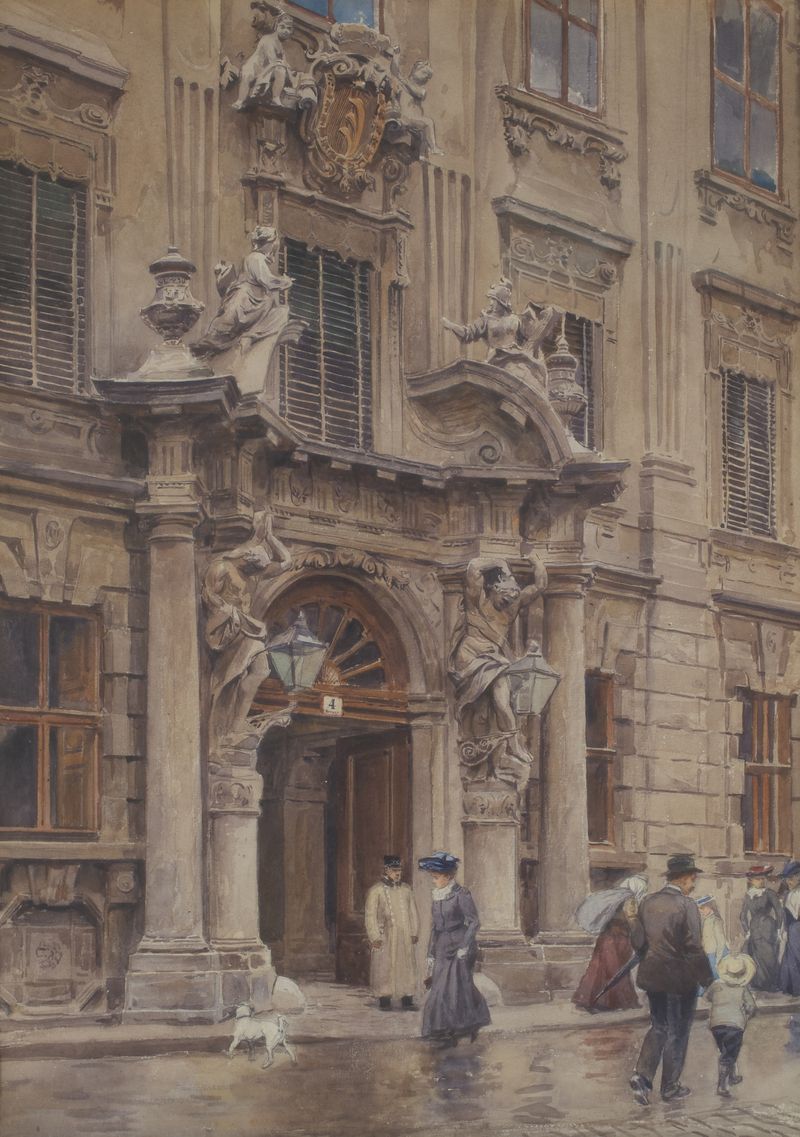
Das Portal Des Palais Kinsky
Ernst Graner
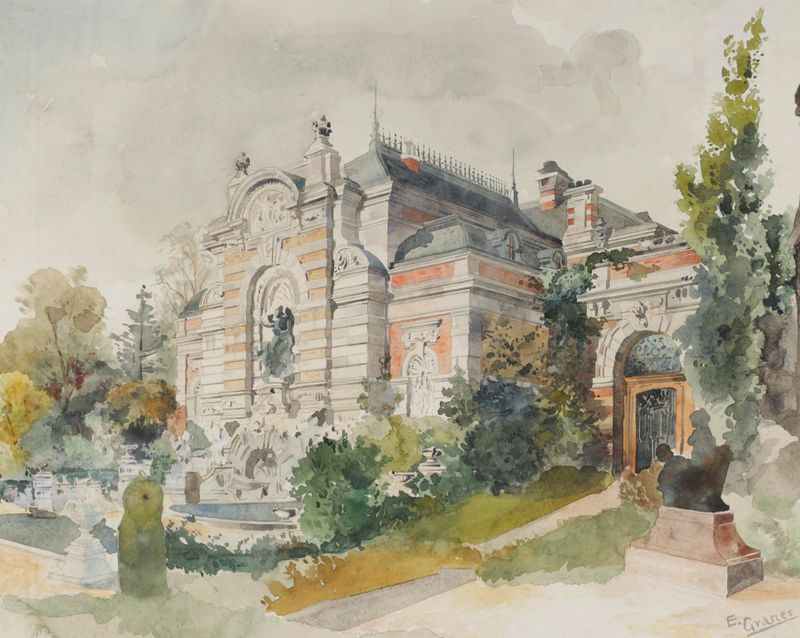
Villa in einem Park
Ernst Graner

Karlskirche
Ernst Graner

Kaiser Franz Joseph überquert den Naschmarkt
Ernst Graner

Palais des Prinzen Eugen in der Himmelpfortgasse
Ernst Graner

Die Schwendergasse In Wien Mit Schwenders Colosseum
Ernst Graner
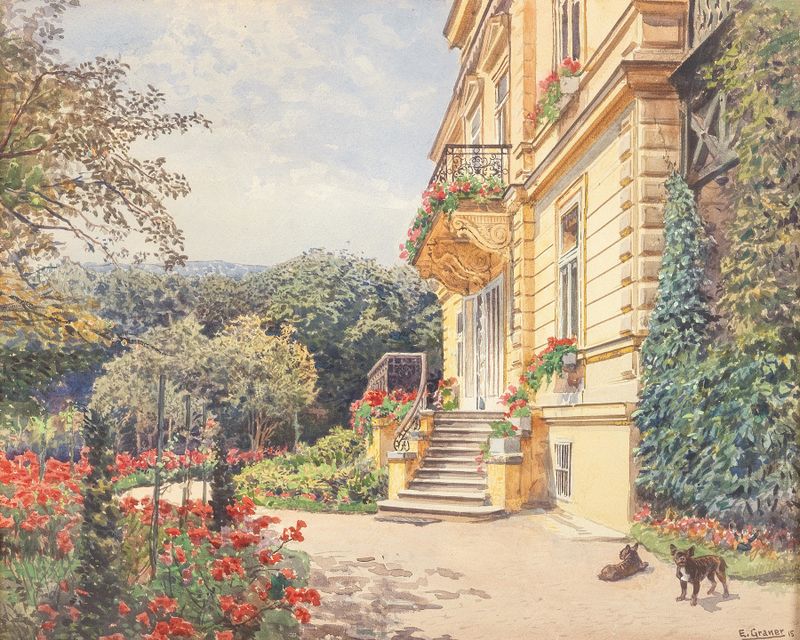
Villa in gepflegtem Garten
Ernst Graner
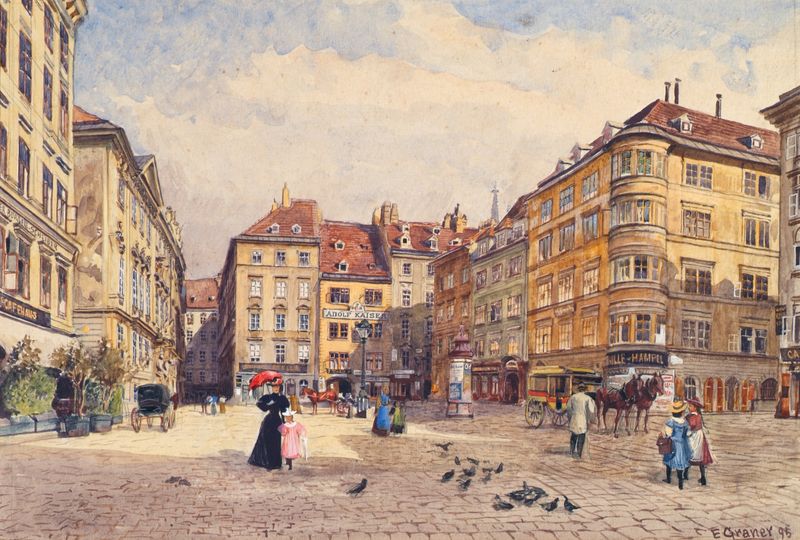
Der Judenplatz In Wien
Ernst Graner
More Architecture Art
Browse all →
The statue of Liberty
Frédéric Auguste Bartholdi

View of Houses in Delft, Known as ‘The Little Street’
Johannes Vermeer

View of Houses in Delft, Known as ‘The Little Street’
Johannes Vermeer

The Cathedral in Rouen. The portal, Grey Weather
Claude Monet

The yellow house
Vincent van Gogh

The Church in Auvers-sur-Oise, View from the Chevet
Vincent van Gogh