
Schreibendes Mädchen — History & Facts
What draws the eye first is the hush of concentration: a young girl, head bowed, utterly absorbed in the act of writing. The artist’s hand lingers over the details that make this moment so immediate—the careful grip of the pencil, the left hand steadying a book, the faintest furrow in her brow. Light falls from the left, catching the golden strands of her hair and the blue check of her sleeve, while the woven basket with its ball of yarn sits quietly in the background, a gentle reminder of domestic life.
The table’s red cloth and the inkpot anchor the scene, but it is the girl’s focus that holds the viewer, inviting us to share in her private world of letters and learning. Painted in 1902, this work belongs to a period when scenes of everyday childhood were cherished by collectors and families alike, especially in the German-speaking world. Artists like Albert Anker became known for their tender, unsentimental portrayals of children at work and play—a reflection both of changing attitudes toward childhood and of the growing value placed on education. While history has kept few traces of this specific painting’s journey, its presence in the Koller Auktionen collection today is a testament to the enduring appeal of such intimate glimpses into ordinary lives.
Look again at the girl’s intent expression, and the world of 1902 feels close at hand.
More Artworks by Albert Anker

Portrait Of A Girl
Albert Anker
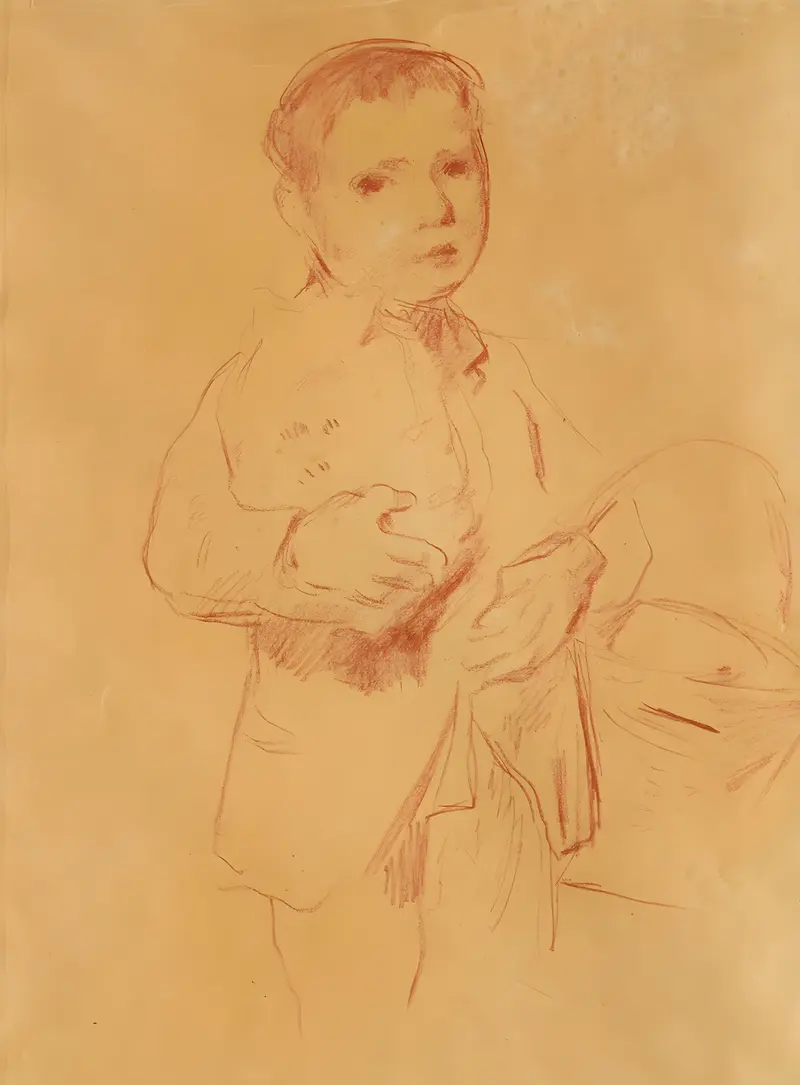
Boy with a basket
Albert Anker
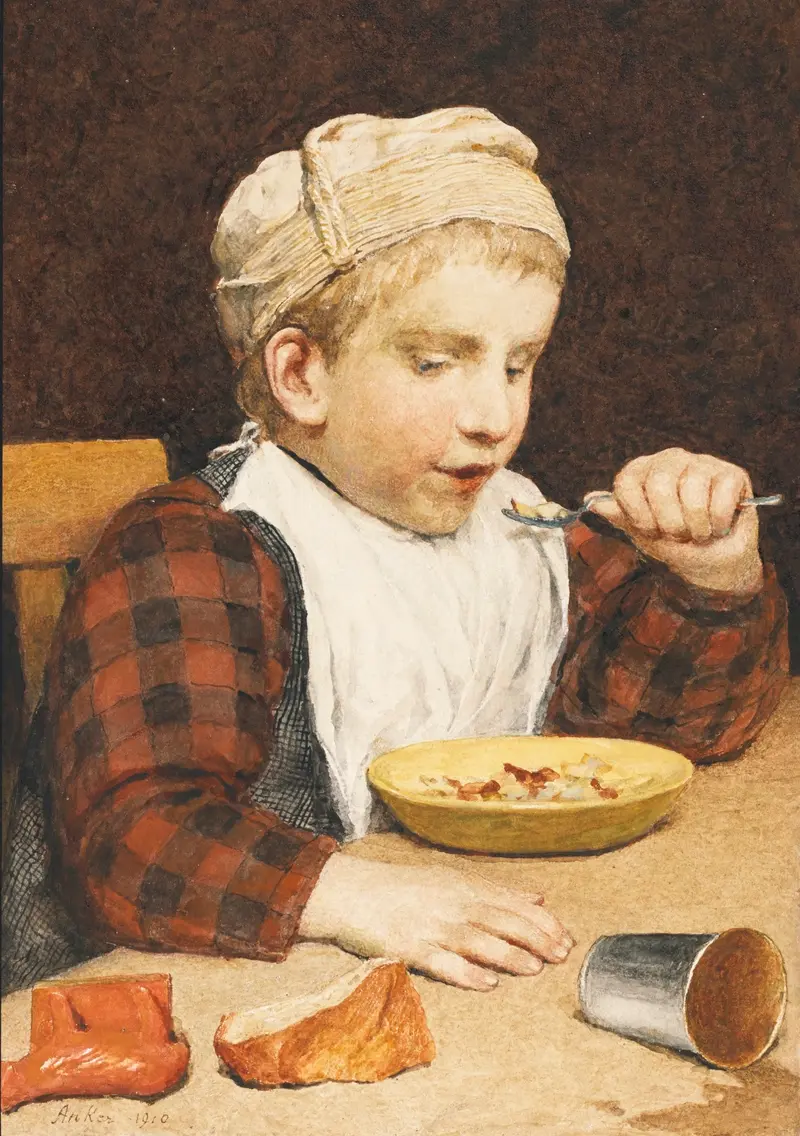
Knabe Mit Mütze Beim Essen
Albert Anker
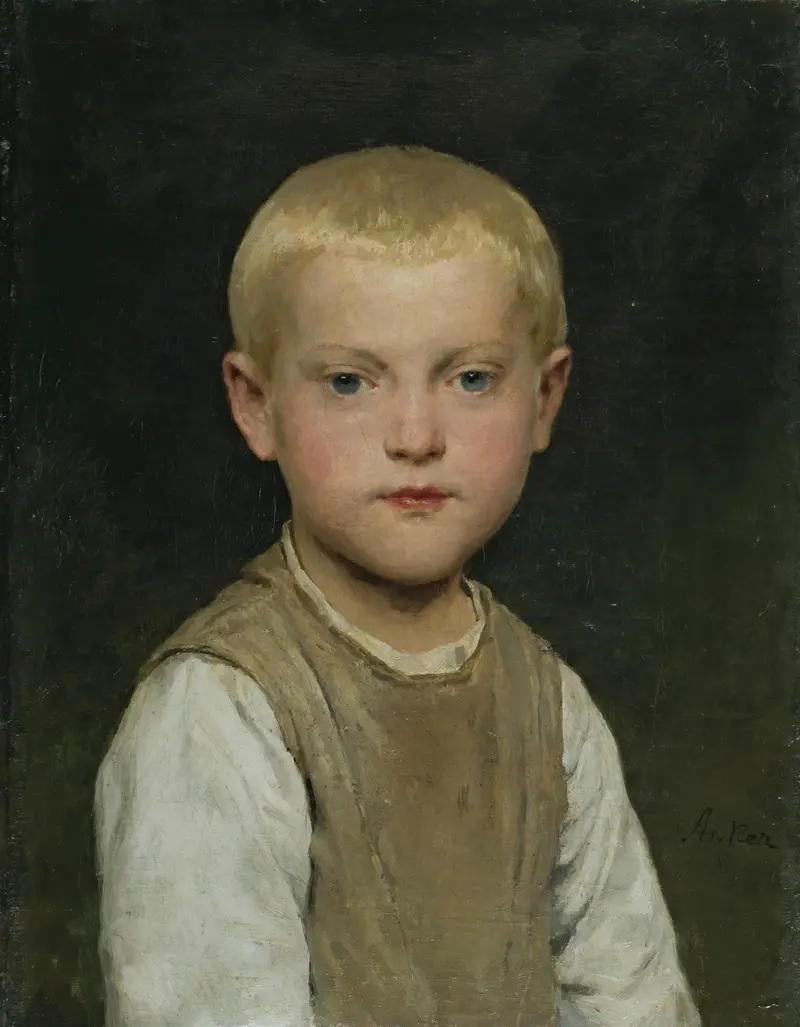
Knabenbildnis (Dr Heiri)
Albert Anker
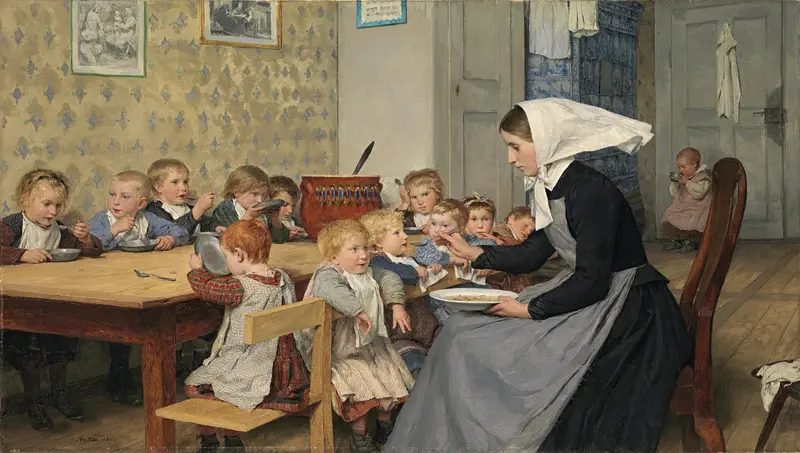
Die Kinderkrippe I
Albert Anker

L’instituteur et le pasteur
Albert Anker
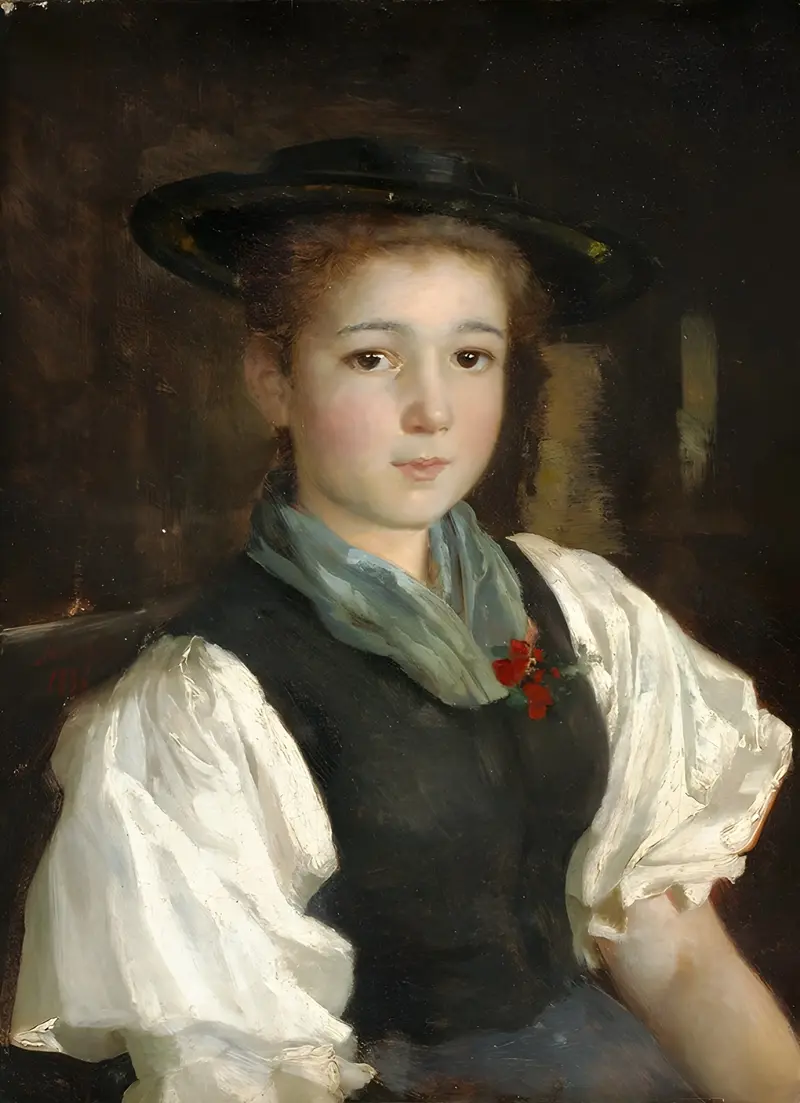
Bauernmädchen (Farm Girl)
Albert Anker
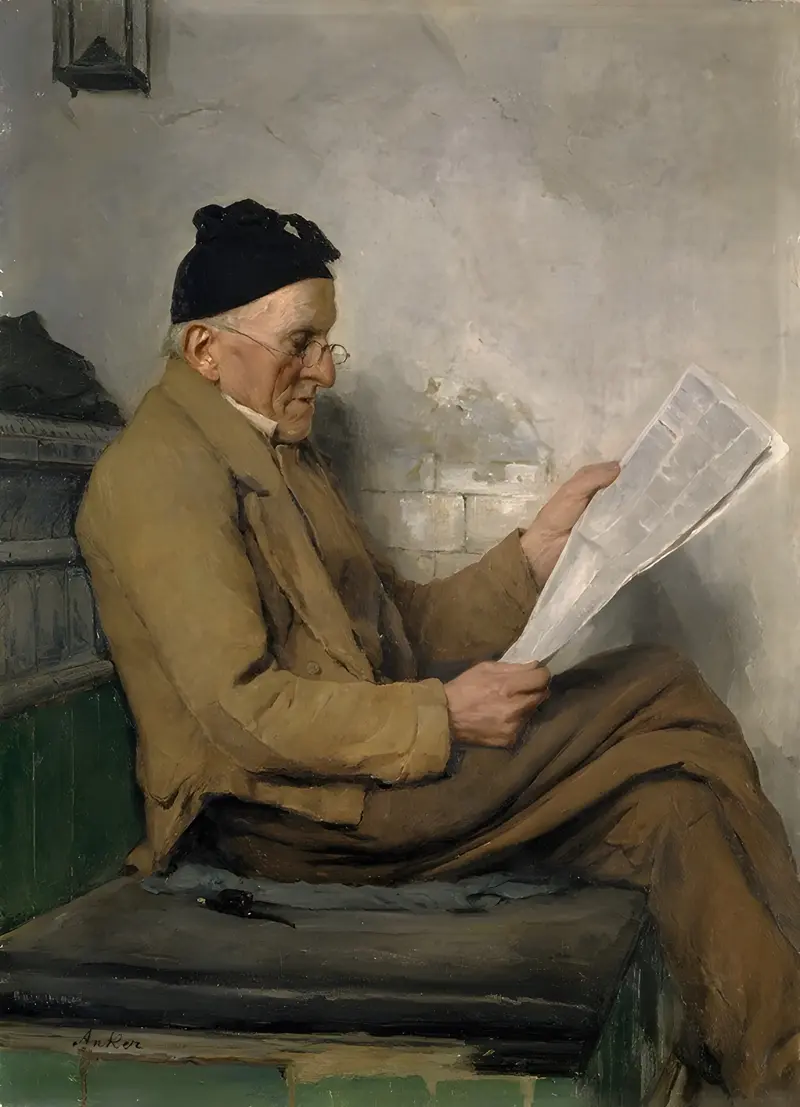
Farmer Reading on the Stove Bench
Albert Anker
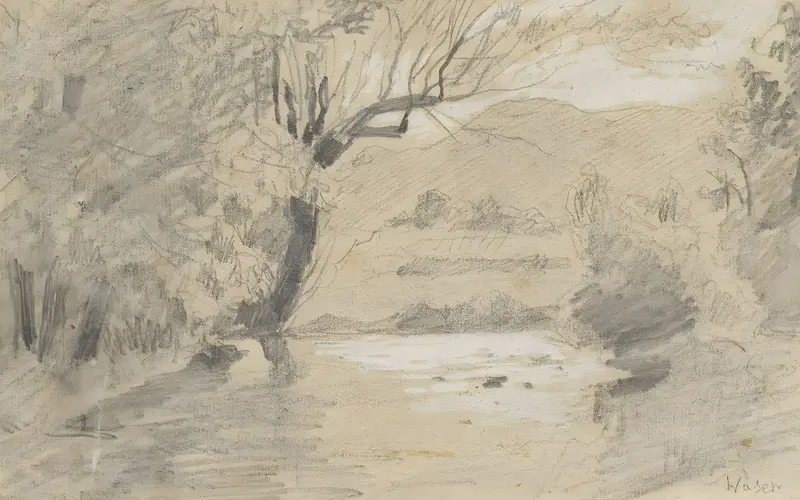
Flusslandschaft in Wasen (Emmental)
Albert Anker
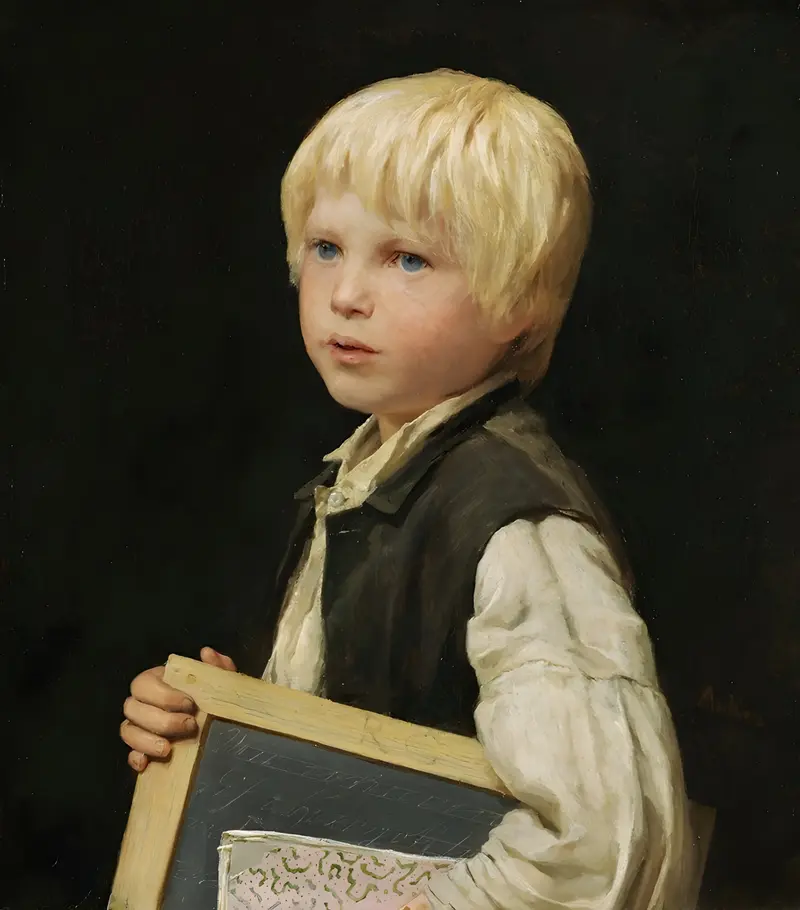
School Boy
Albert Anker
More Genre Scene Art

Banquet of the Officers of the St George Civic Guard
Frans Hals

Rembrandt and Saskia in the Scene of the Prodigal Son
Rembrandt van Rijn

Bal du moulin de la Galette
Pierre-Auguste Renoir

Quadrille at the Moulin Rouge
Henri de Toulouse-Lautrec

A Burial at Ornans
Gustave Courbet

When Will You Marry?
Paul Gauguin