
Schulknabe mit Pelzmütze in Schneelandschaft — History & Facts
What draws the eye first is the boy’s steady, thoughtful gaze, set against the pale quiet of a snowy village. The fur cap and thick coat signal a winter morning, but his cheeks are flushed with life, and his posture—one hand pocketed, the other clutching schoolbooks—suggests a moment of pause before the day’s lessons begin. The artist, Albert Anker, has chosen a viewpoint that brings us to the boy’s level, inviting us to share in his anticipation or perhaps his hesitation.
The muted browns and greys of his clothing echo the subdued tones of the landscape, while the bright spines of his books offer a small promise of color and warmth. Light falls evenly, softening the outlines of both figure and background, and directing our attention to the boy’s alert expression. Painted in 1877, this work belongs to a world in which scenes of everyday rural life were gaining new dignity on canvas. Albert Anker was celebrated for his sympathetic portrayals of Swiss village children, capturing both the dignity and vulnerability of youth.
Such paintings were often commissioned or collected by the rising middle class, who saw in them a reflection of cherished values—education, perseverance, and the quiet heroism of ordinary days. While little is recorded about the particular journey of this painting, its presence in a modern collection reminds us how the 19th century’s fascination with childhood still speaks to us. Look again at the boy’s face: it is both a portrait of a single winter morning and a window onto a whole era’s hopes.
More Artworks by Albert Anker

Portrait Of A Girl
Albert Anker
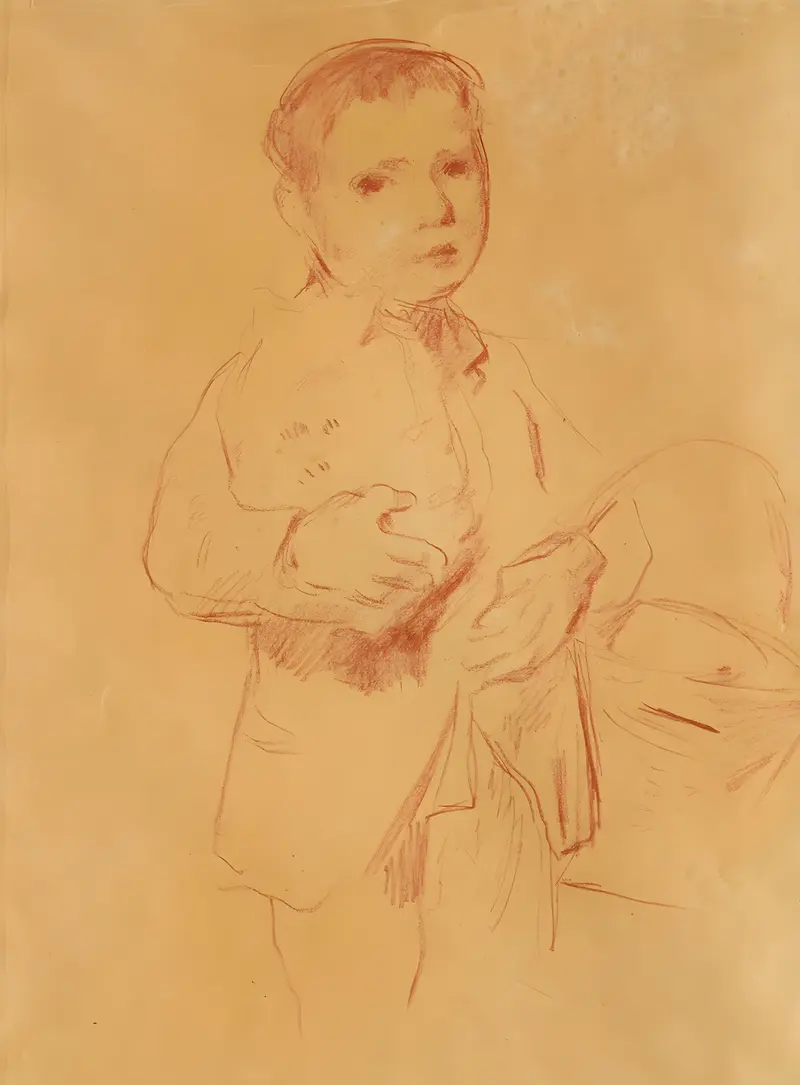
Boy with a basket
Albert Anker
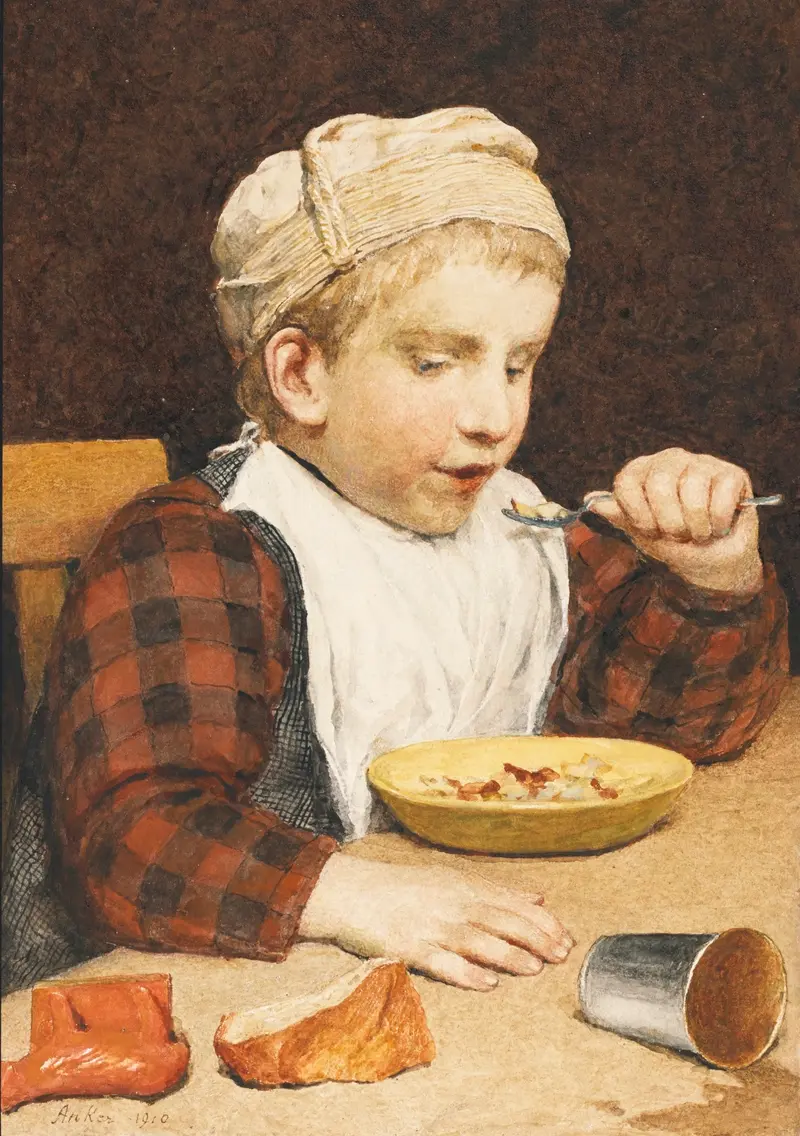
Knabe Mit Mütze Beim Essen
Albert Anker
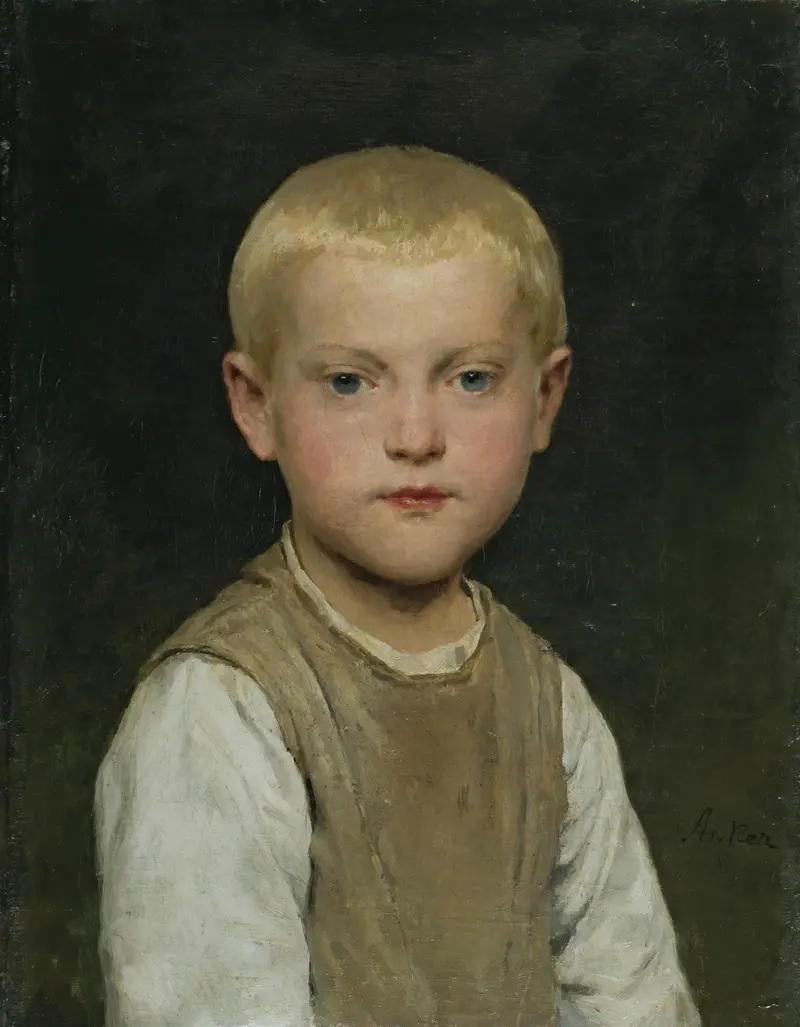
Knabenbildnis (Dr Heiri)
Albert Anker
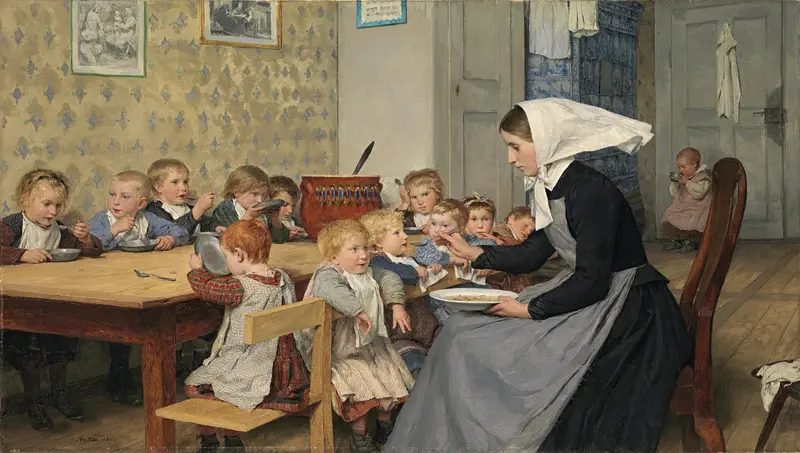
Die Kinderkrippe I
Albert Anker

L’instituteur et le pasteur
Albert Anker
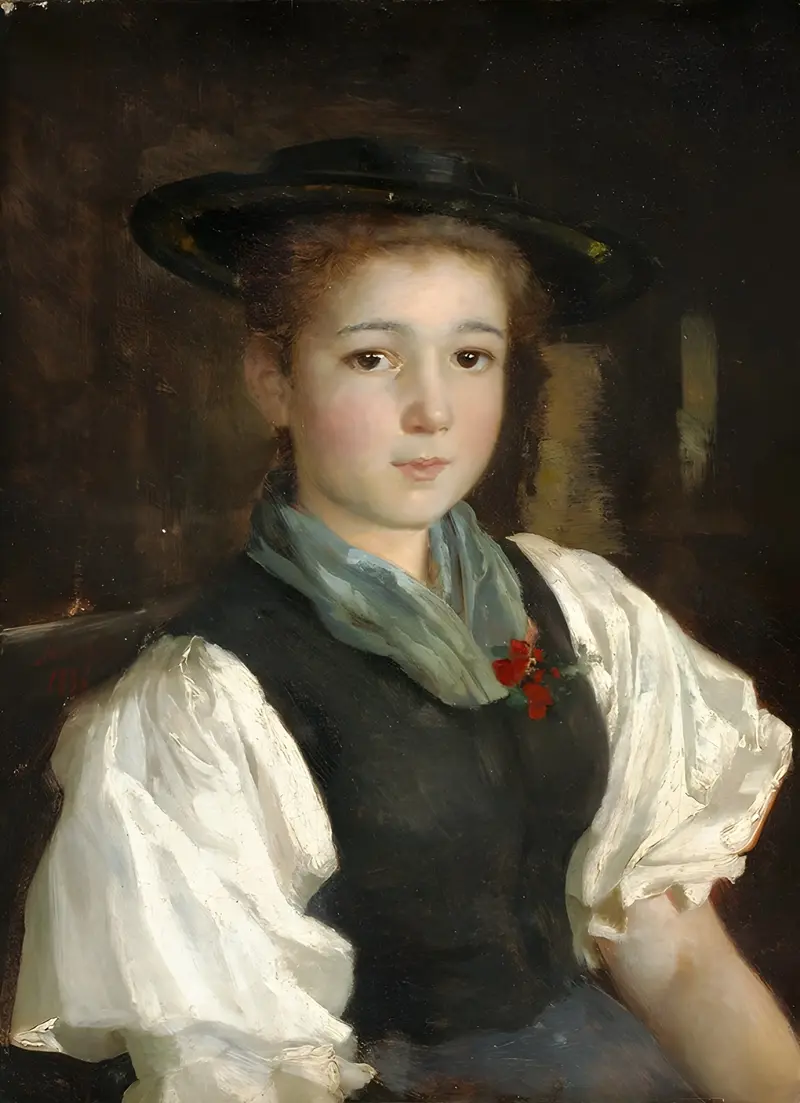
Bauernmädchen (Farm Girl)
Albert Anker
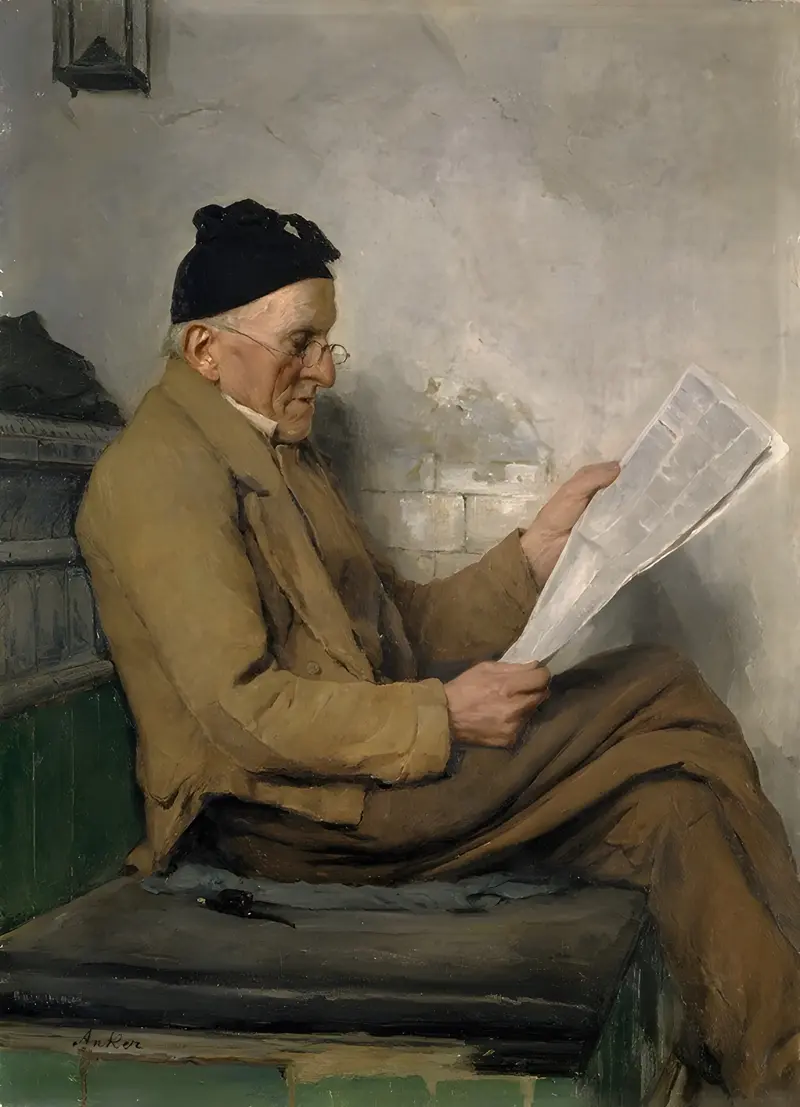
Farmer Reading on the Stove Bench
Albert Anker
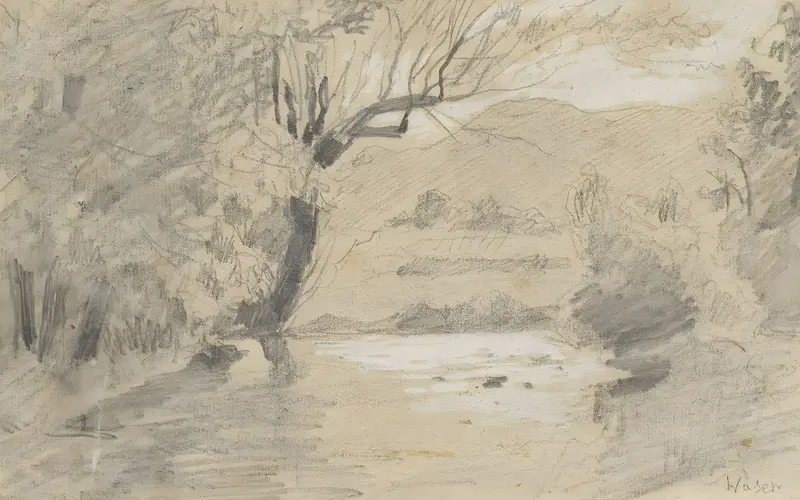
Flusslandschaft in Wasen (Emmental)
Albert Anker
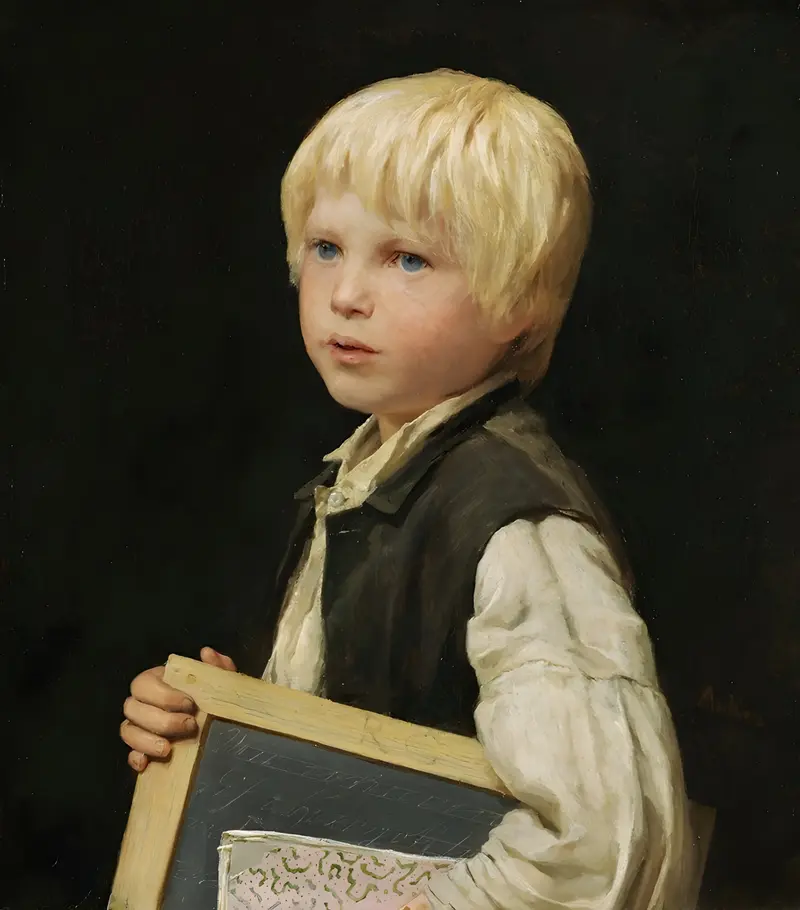
School Boy
Albert Anker
More Genre Scene Art

Banquet of the Officers of the St George Civic Guard
Frans Hals

Rembrandt and Saskia in the Scene of the Prodigal Son
Rembrandt van Rijn

Bal du moulin de la Galette
Pierre-Auguste Renoir

Quadrille at the Moulin Rouge
Henri de Toulouse-Lautrec

A Burial at Ornans
Gustave Courbet

When Will You Marry?
Paul Gauguin