
Schwender Colosseum in Mariahilfer Straße — History & Facts
Can beauty exist without sorrow? In Schwender Colosseum in Mariahilfer Straße, the illusion of grandeur dances precariously on the edge of nostalgia, inviting viewers to ponder the transient nature of splendor. Focus on the intricate architecture that fills the canvas, drawing your gaze toward the sweeping arches and delicate embellishments that rise majestically in the background. The artist employs a harmonious palette of warm earth tones, harmonizing light and shadow to evoke a sense of depth and dimension. Notice how the light strikes the colosseum’s façade, casting soft reflections that bring a lively glow to its contours, while the surrounding figures engage in their daily rituals, seemingly oblivious to the monument's looming presence. Hidden beneath this façade of beauty lies a juxtaposition of decay and renewal.
The bustling life in the foreground contrasts sharply with the wear of the grand structure, hinting at the passage of time and the eroding ideals of the past. Each figure is a reminder of impermanence, their actions weaving a narrative of modernity that coexists with the relic of history, suggesting a dialogue between what is lost and what remains. This interplay of life and architecture speaks to our collective experience of longing and memory. Ernst Graner created this work during a period marked by rapid urbanization in Vienna, where the grandeur of historical architecture faced the encroachment of modern life.
The exact date of the painting remains unknown, but it reflects the artist’s keen observation of the changing landscape and the social dynamics of his time. His engagement with both the beauty and the sorrow of urban transformation resonates deeply, capturing a moment of stillness amidst the inevitable flow of progress.
More Artworks by Ernst Graner
Browse all →
The Departure of Emperor Francis Joseph, near the Schweizertor in Hofburg residence
Ernst Graner

Old Albrechtsplatz (today Albertinaplatz) in Vienna with the Philipphof and the Mozart monument
Ernst Graner
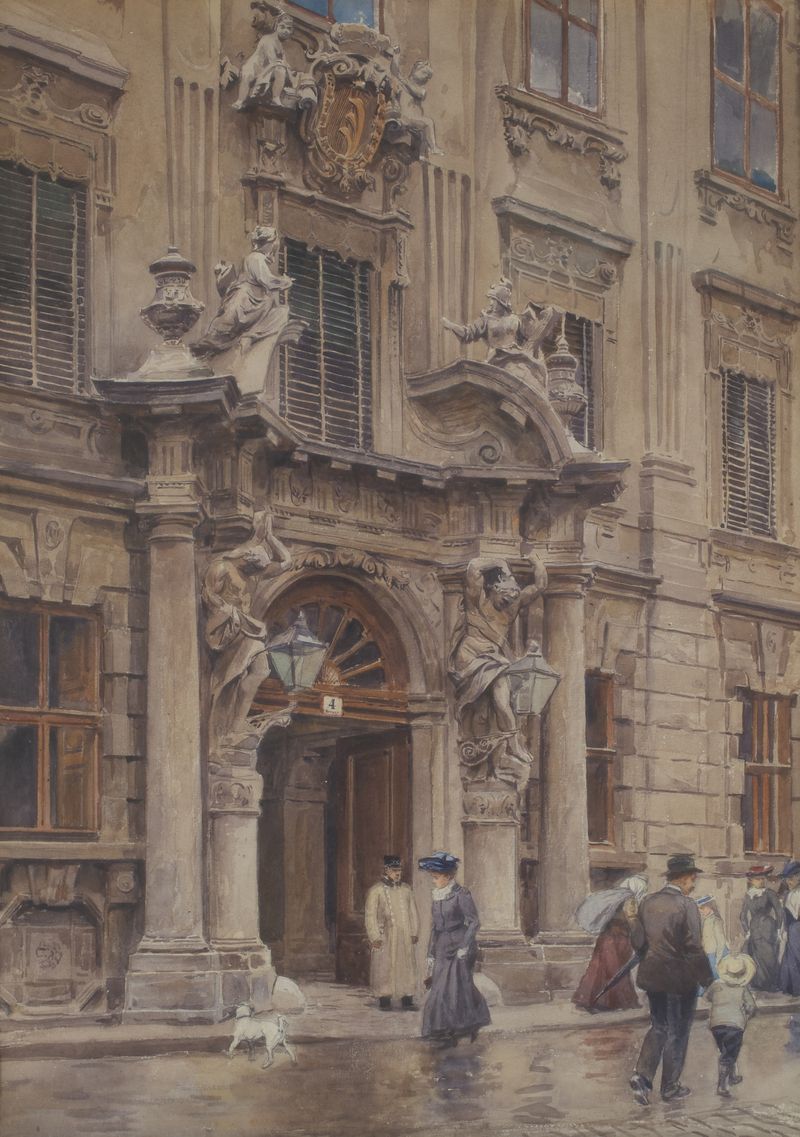
Das Portal Des Palais Kinsky
Ernst Graner
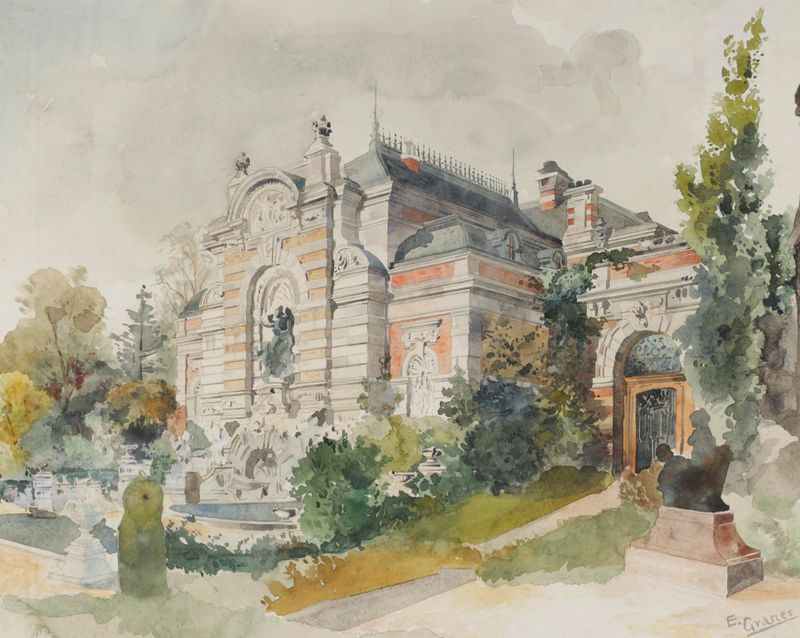
Villa in einem Park
Ernst Graner

Karlskirche
Ernst Graner

Kaiser Franz Joseph überquert den Naschmarkt
Ernst Graner

Palais des Prinzen Eugen in der Himmelpfortgasse
Ernst Graner

Die Schwendergasse In Wien Mit Schwenders Colosseum
Ernst Graner
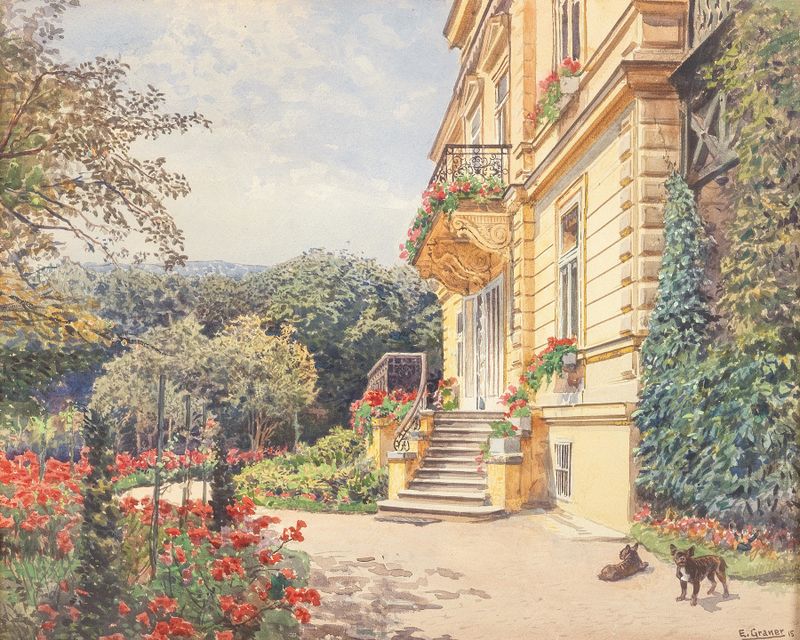
Villa in gepflegtem Garten
Ernst Graner
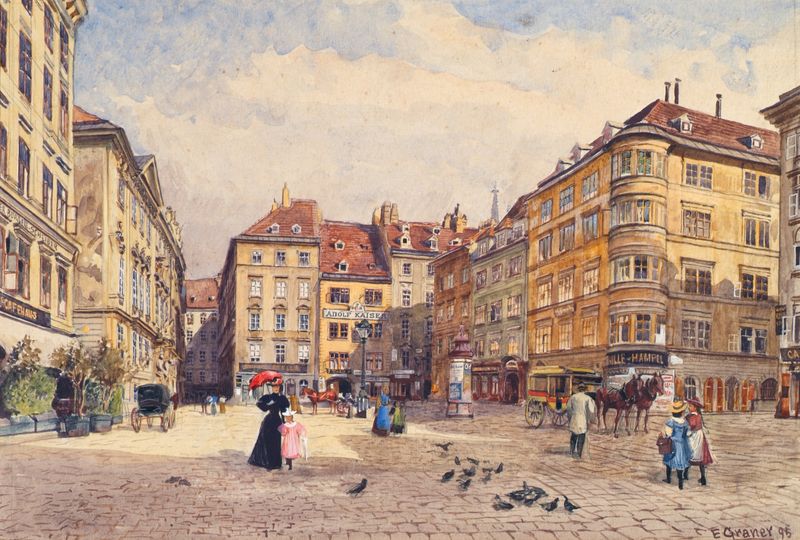
Der Judenplatz In Wien
Ernst Graner
More Architecture Art
Browse all →
The statue of Liberty
Frédéric Auguste Bartholdi

View of Houses in Delft, Known as ‘The Little Street’
Johannes Vermeer

View of Houses in Delft, Known as ‘The Little Street’
Johannes Vermeer

The Cathedral in Rouen. The portal, Grey Weather
Claude Monet

The yellow house
Vincent van Gogh

The Church in Auvers-sur-Oise, View from the Chevet
Vincent van Gogh