
Scène D’hiver En Hollande — History & Facts
Where does light end, and longing begin? In the stillness of winter, a profound silence envelops a Dutch landscape, weaving the delicate threads of nostalgia into the fabric of everyday life. Look to the left at a distant horizon, where the soft wash of pale blues meets the muted whites of snow-covered fields. The sky, a canvas of gentle grays, hints at the fleeting sun trying to break through. Notice how the trees, their branches bare and reaching, create a stark contrast against the tranquil backdrop, while the subtle brushwork adds texture to the scene.
The composition draws the eye toward a winding path, leading the viewer deeper into this serene yet melancholic moment. Within this quiet expanse lies an emotional tension, as the interplay of light and shadow hints at hidden stories. The absence of figures evokes a sense of solitude, inviting personal reflections on the nature of isolation and connection. The icy river, barely visible, serves as a reminder of the passage of time, while the stillness urges one to ponder what lies beneath the surface — dreams, aspirations, perhaps even memories lost to the cold. In 1871, Jongkind painted this work during a transformative time in art, as he embraced the Impressionist movement while still rooted in Dutch realism.
Living in Paris, he was influenced by contemporaries who celebrated light and atmosphere, yet he remained dedicated to his own vision of capturing the essence of the Dutch landscape. This painting reflects not only his artistic evolution but also the profound beauty found within the quiet moments of life.
More Artworks by Johan Barthold Jongkind
Browse all →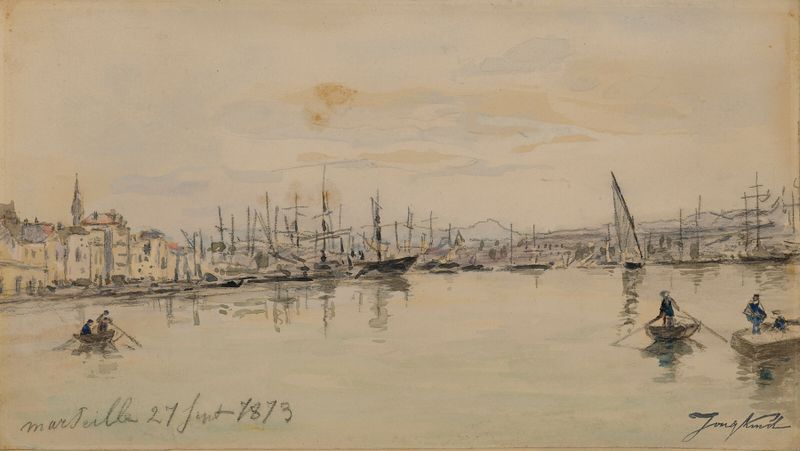
Le Port de Marseille
Johan Barthold Jongkind

Canal Saint-Martin
Johan Barthold Jongkind

Countryside near Brezins, between Grenoble and Vienne
Johan Barthold Jongkind

Notre-Dame vue du quai de la Tournelle
Johan Barthold Jongkind

Environs de Grenoble
Johan Barthold Jongkind

Clair de lune à Overschie (environs de Rotterdam)
Johan Barthold Jongkind

Port de Honfleur
Johan Barthold Jongkind
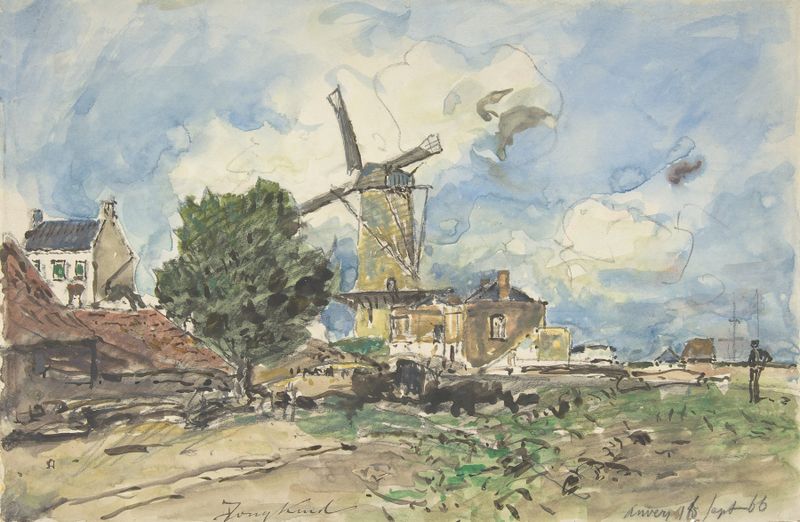
Wind Mill at Antwerp
Johan Barthold Jongkind

Le Havre
Johan Barthold Jongkind

The Church of Overschie
Johan Barthold Jongkind





