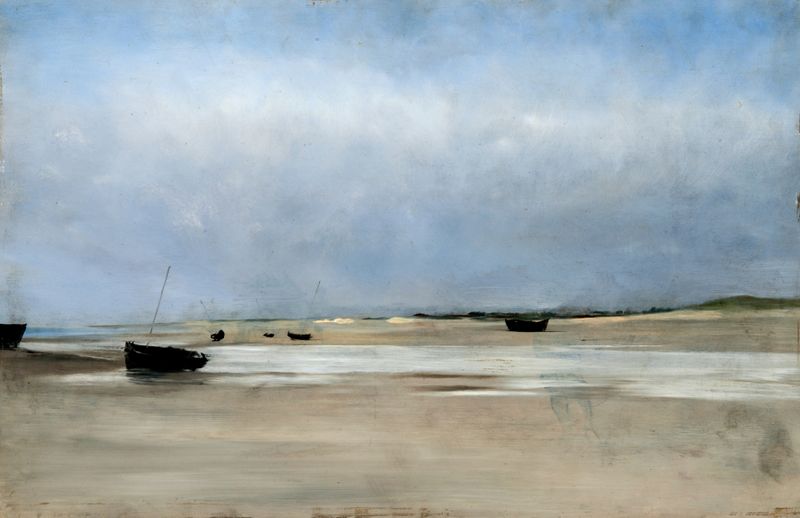
Sea and Clouds — History & Facts
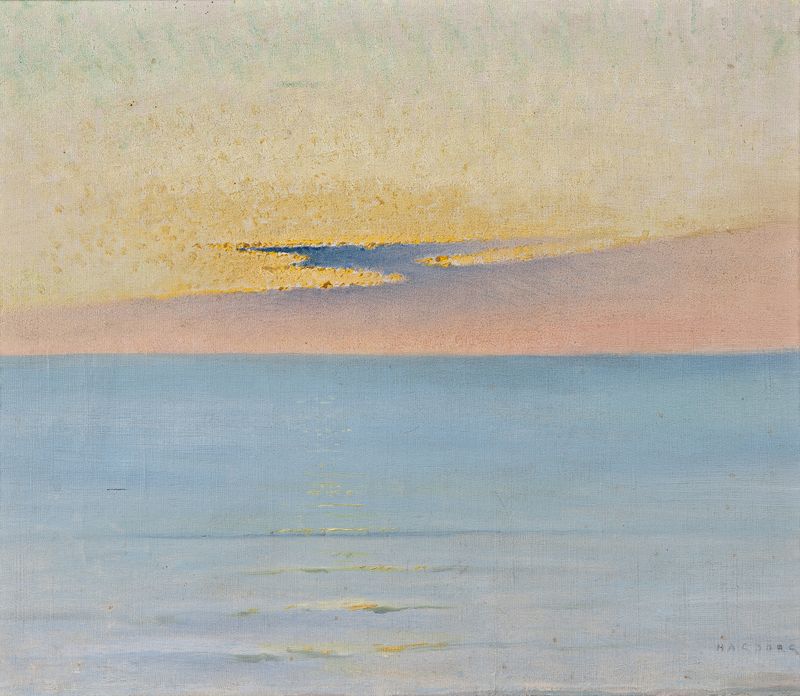
In the vast expanse of the ocean, waves ripple endlessly, echoing a profound sense of solitude that seems to stretch into infinity. The sky, heavy with clouds, hovers above like an uninvited guest, amplifying the feeling of isolation amid the beauty of nature. Look to the left at the tumultuous sea, where deep blues and greens swirl together, forming a tumultuous dance that draws the eye. The artist’s brushwork is both vigorous and delicate, creating a sense of movement that contrasts sharply with the more serene, muted grays of the clouds hovering above.
Notice how the light breaks through in places, illuminating patches of the water, suggesting a fleeting moment of hope amidst the overwhelming expanse. Yet, within this breathtaking scene lies a paradox. The juxtaposition of the vibrant sea against the oppressive sky elicits an emotional tension, stirring feelings of both awe and loneliness. The relentless waves symbolize the tumult of life, while the clouds connoting a sense of confinement serve as a reminder of isolation.
This duality evokes deep introspection, inviting viewers to consider their own relationship with nature and solitude. In 1881, Hagborg painted Sea and Clouds during a period marked by personal upheaval and artistic exploration. Living in Paris, he was immersed in the evolving landscape of Impressionism, a movement that sought to capture fleeting moments and the essence of light. This painting reflects his complex emotional state and his desire to find beauty amidst chaos, encapsulating the essence of a world in transition.