Hazy Weather by the Sea — History & Facts
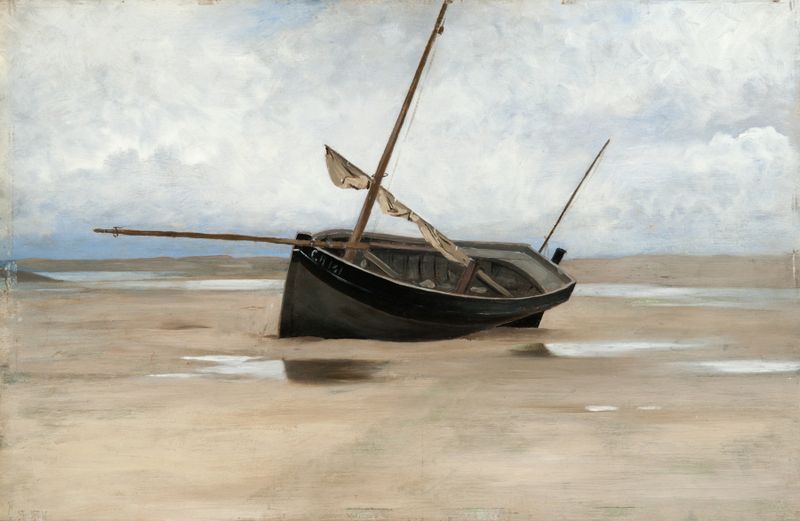
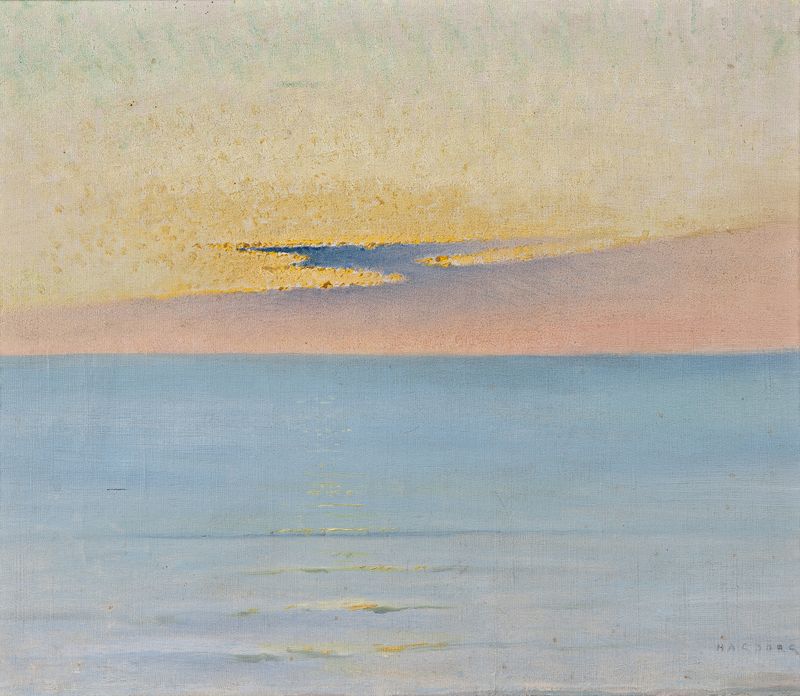
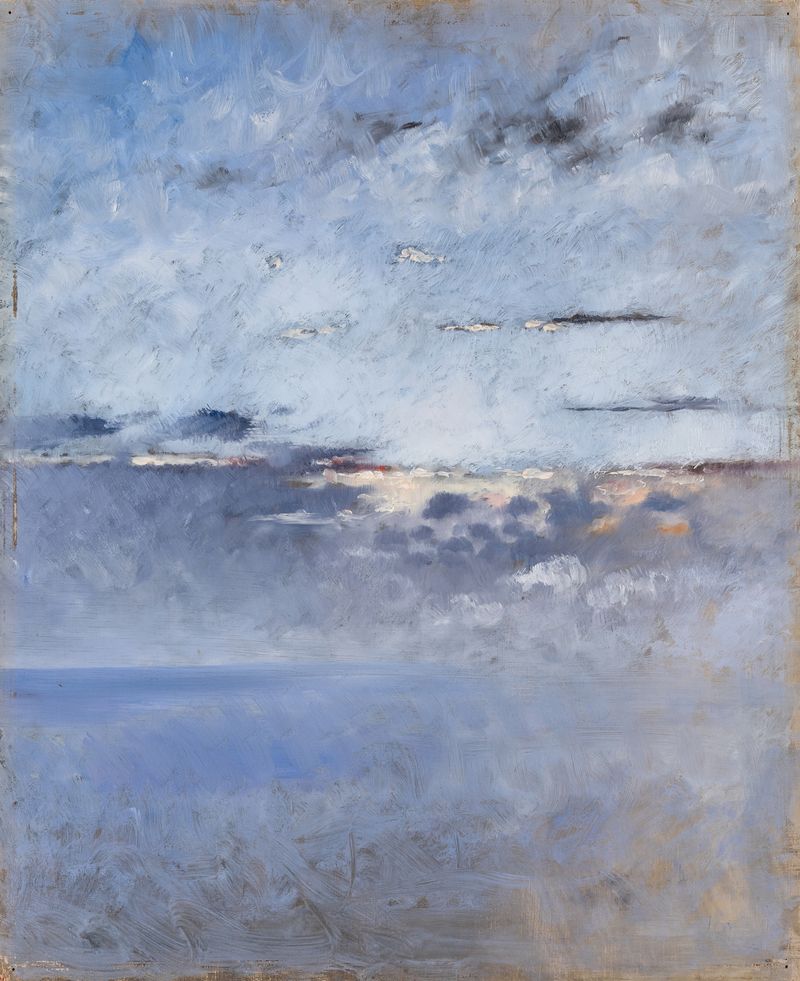
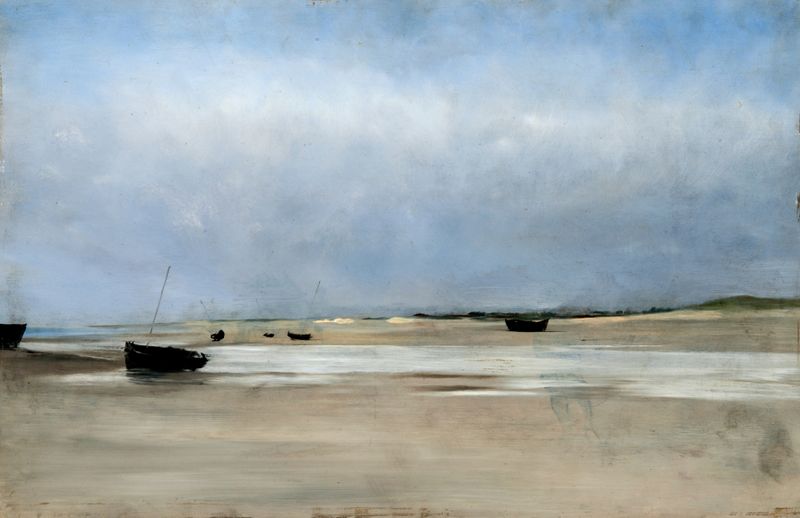
What if beauty was never meant to be finished? In the presence of nature, we are drawn into a fleeting moment where serenity and chaos exist in tandem, enticing our senses to explore the depths of both. Look to the horizon, where soft, muted hues blend seamlessly into one another, capturing the essence of a foggy seaside landscape. The artist’s delicate brushstrokes create a dreamlike quality, where the water's surface dances with shimmering light, inviting a sense of tranquility. Notice how the clouds gather, their gentle, swirling forms contrasting against the calmness of the sea below, evoking a sense of introspection.
This ambient interplay of color and form enriches the viewer's experience, immersing them in the quiet embrace of nature. Within this hazy scene lies an emotional complexity that speaks to human longing and the ephemeral nature of beauty. The mysterious fog serves as a metaphor for uncertainty, shrouding the landscape and drawing us into contemplation. The juxtaposition of the inviting sea and the obscured horizon suggests that while beauty is present, it is often just out of reach, echoing the ecstasy and melancholy of life itself.
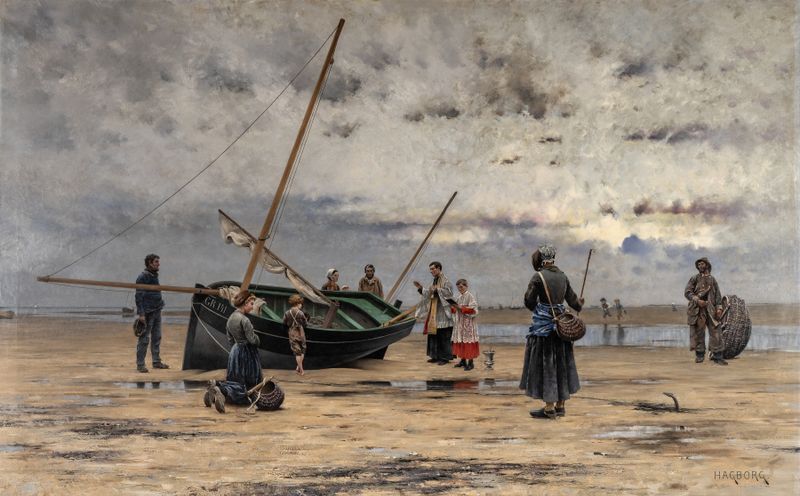
Each element seems to breathe, as if urging us to find joy in transience. August Hagborg painted this piece during a period of artistic exploration, likely in the late 19th to early 20th century. His work reflects a fascination with impressionism and naturalism, capturing the sublime beauty of the landscape while grappling with the evolving dynamics of art in an era of rapid change. As the world around him transformed, he sought to celebrate nature's allure, encouraging viewers to cherish the fleeting moments that define our existence.