Sea in Sunset — History & Facts
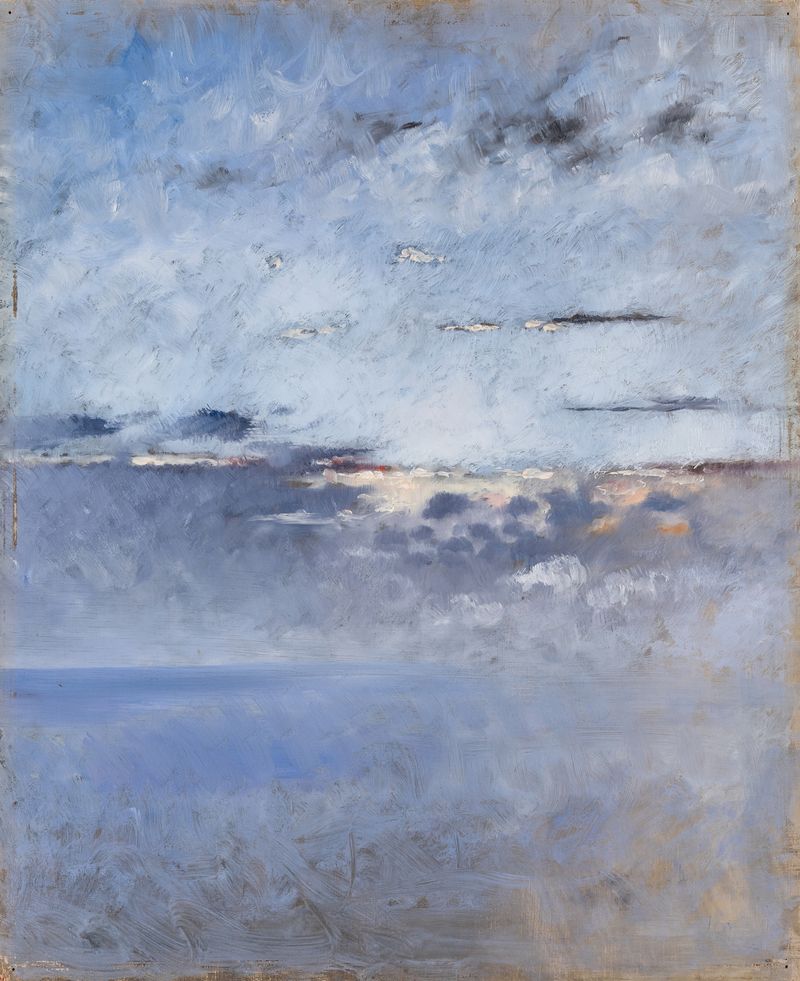
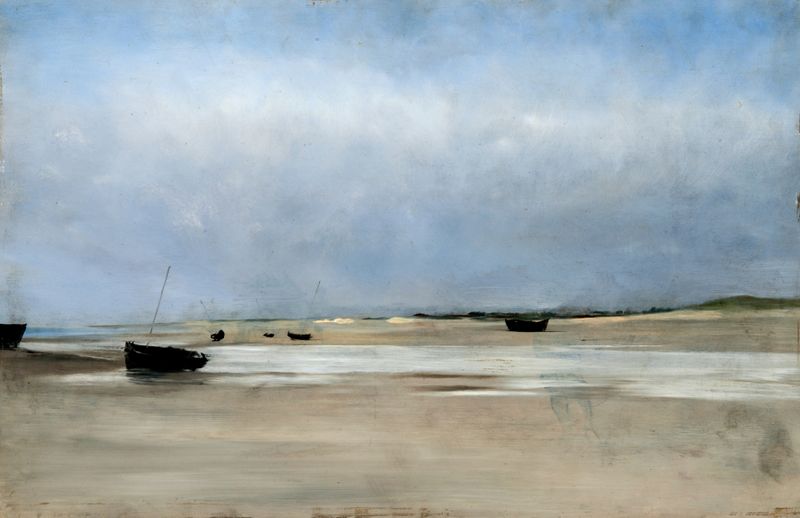
What if silence could speak through light? In Sea in Sunset, a profound sense of emptiness envelops the viewer, inviting contemplation of nature's vastness and solitude. Look to the horizon, where a soft palette of orange and purple hues melds into the deep blue of the water. The gentle ripples reflect the fading light, creating a shimmering pathway that draws the eye into the distance. Notice how the brushstrokes vary—some smooth and fluid, others more textured—each adding depth to the ocean's surface.
The composition balances the expansive sky and the tranquil sea, leading to a serene yet introspective atmosphere, evoking feelings of both wonder and loneliness. As you explore the painting, consider the emotional dialogue between the bold strokes of the sky and the subtle shadows of the water beneath. The interplay of light and shadow suggests a transient moment, capturing the essence of a day’s end and the ephemeral nature of life. This scene encapsulates a duality: the tranquility of sunset juxtaposed with an underlying sense of isolation, urging viewers to reflect on their own existence amidst the infinite. August Hagborg created this work during a time of artistic transition in the late 19th century, exploring new lighting techniques that would influence the Impressionist movement.
Living in Europe, he was part of a larger cultural shift that emphasized the beauty of nature and emotion. This period brought about a growing appreciation for landscapes, as artists sought to capture fleeting moments of light and color, setting the stage for the modern art that would follow.