Sea harbour — History & Facts
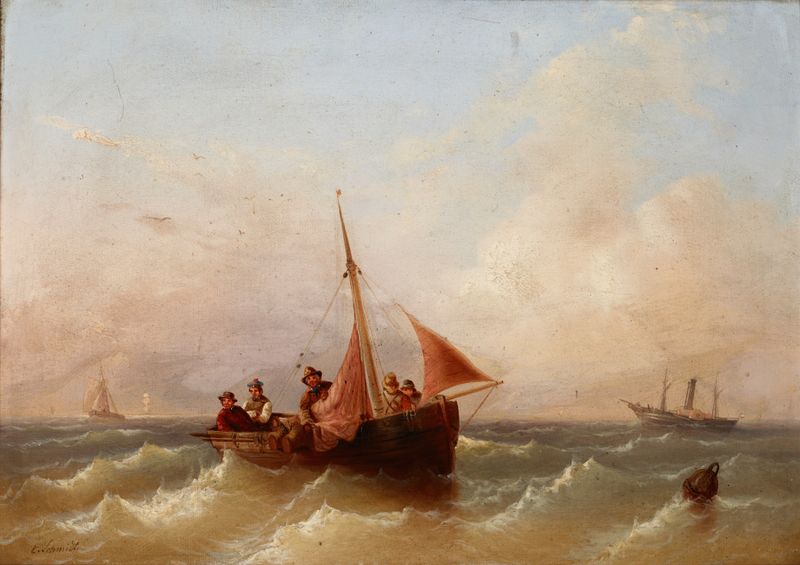
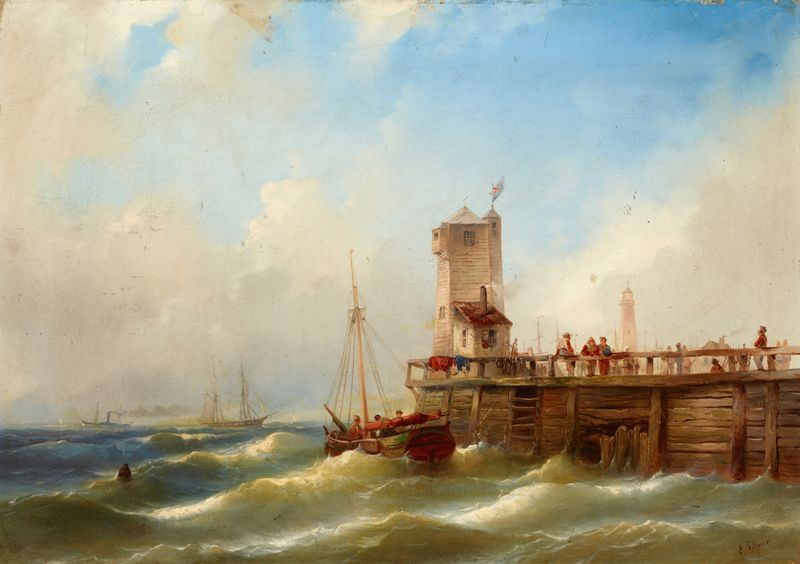
In the stillness of creation, reflections can reveal layers unseen, whispering truths beneath the surface. Focus on the tranquil waters of the harbor, where the reflections dance softly, mirroring the muted colors of the sky and the quaint boats bobbing gently. Notice how the artist captures the interplay of light and shadow, inviting you to explore every ripple that suggests life beneath the calm surface. The palette is subdued yet rich, blending blues and grays that evoke both serenity and a subtle tension, hinting at stories that lie in the depths. Delve deeper into the composition, where the jagged shoreline meets the gentle curve of the water.
The contrast between the rugged land and the fluid sea encapsulates a dichotomy between stability and transience. Each brushstroke contributes to a meditative atmosphere, pulling you into an introspective state. In the distance, a faint horizon beckons, embodying the promise of journeys yet to unfold, while the boats appear frozen in time, suspended between departure and arrival. Eduard Schmidt created this piece during an era marked by shifting artistic movements, likely in the late 19th or early 20th century.
As he worked, the world around him was evolving, with realism and impressionism vying for attention. Positioned amidst these currents, he drew upon the beauty of nature, a testament to a moment captured long before the chaos of modernity. Schmidt’s oeuvre reflects an enduring dialogue with the environment, reminding viewers to appreciate the quiet moments that often go unnoticed.