
Seapiece by Moonlight — History & Facts
A single ship rides the moonlit tide, dwarfed by a sky so vast it seems to press down upon the water. The eye is drawn first to the shaft of silver that cuts through the darkness, a path of reflected moonlight that both isolates and illuminates the vessel. The ship’s sails hang slack, suggesting a moment of stillness—perhaps anticipation—while the looming clouds above threaten to swallow the light at any moment.
Every brushstroke in the sky seems to churn with movement, yet the sea below remains eerily calm, as if time itself has paused for the viewer to contemplate the ship’s fate. This is not a narrative of action, but of waiting, of being suspended between the known and the unknown. Painted around 1827-1828, Seapiece by Moonlight belongs to the world of early nineteenth-century Romanticism, a time when artists like Caspar David Friedrich turned to nature to express the mysteries and anxieties of the human spirit. Such seascapes were rarely simple records of maritime life; instead, they offered viewers a stage for reflection, often commissioned by collectors who sought images that could stir both awe and introspection.
Little is documented about this particular painting’s journey, now in the Sternburg Stiftung, but its mood and palette speak clearly of its era—a period when the sea was both a frontier and a mirror for the soul. Stand before it, and the ship’s solitary voyage becomes your own.
More Artworks by Caspar David Friedrich

The Sea of Ice
Caspar David Friedrich
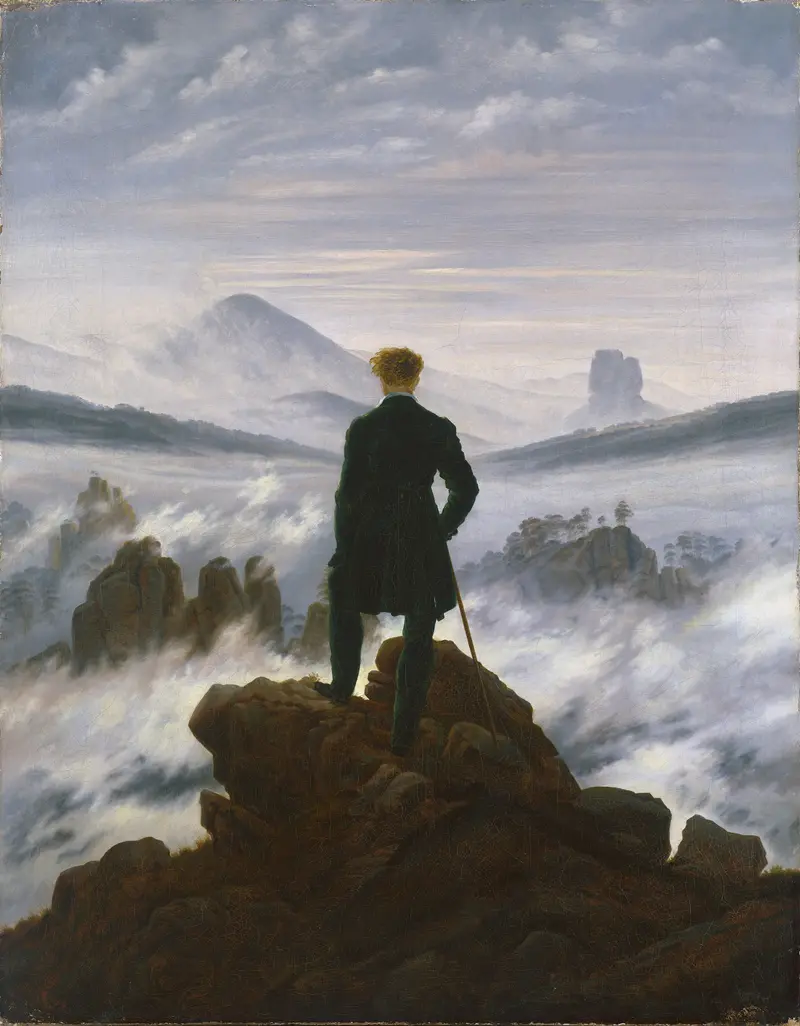
Wanderer above the Sea of Fog
Caspar David Friedrich
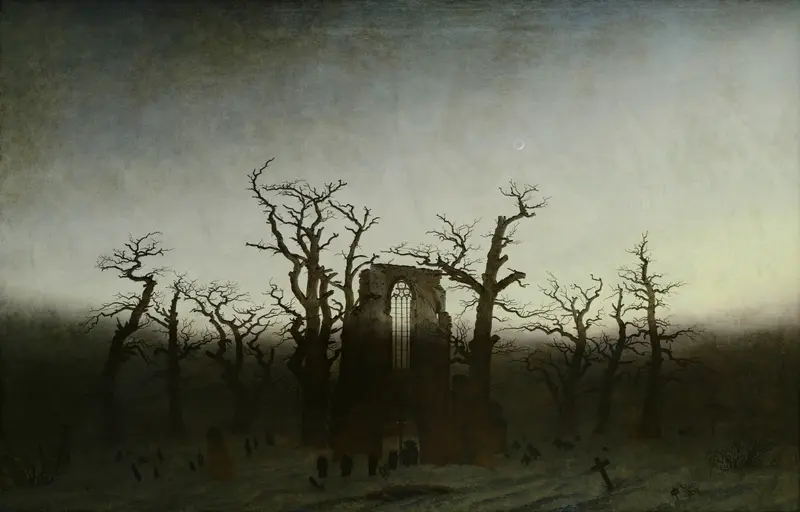
The Abbey in the Oakwood
Caspar David Friedrich
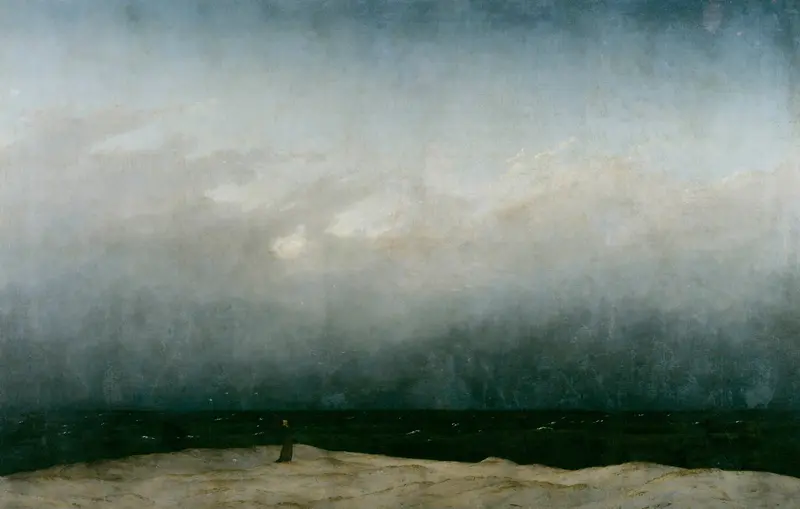
The Monk by the Sea
Caspar David Friedrich
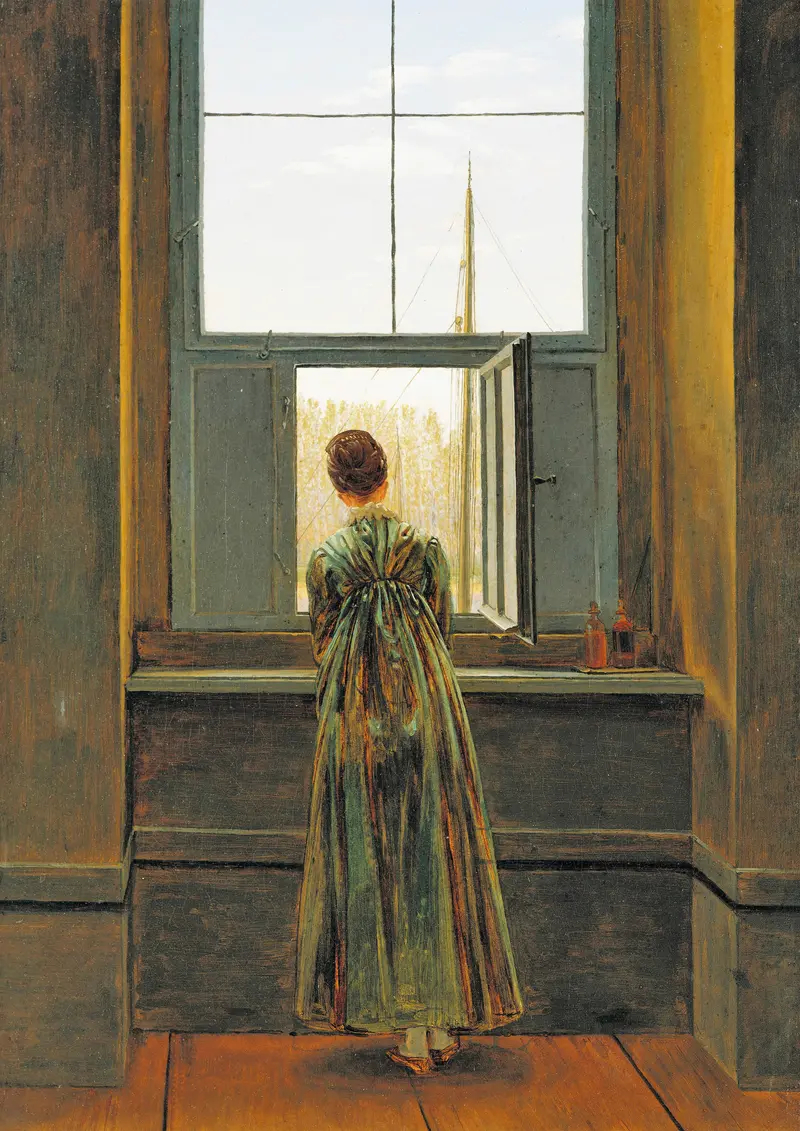
Woman at a Window
Caspar David Friedrich
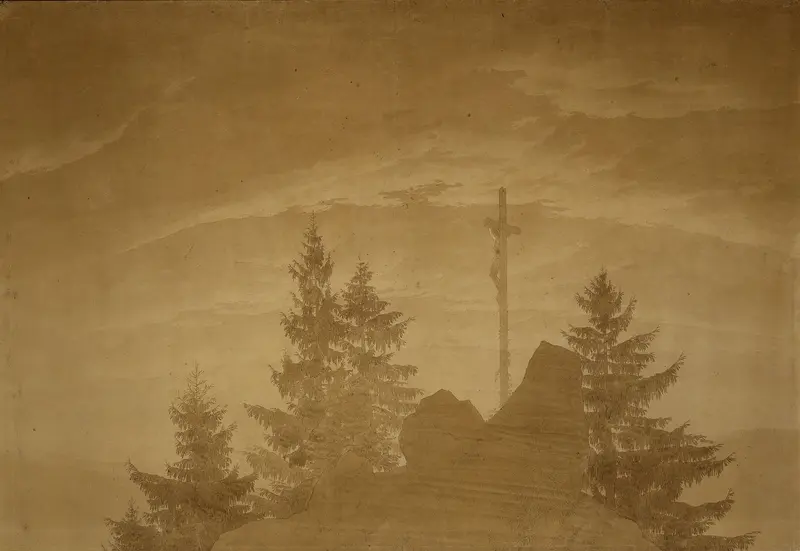
Cross in the Mountains
Caspar David Friedrich
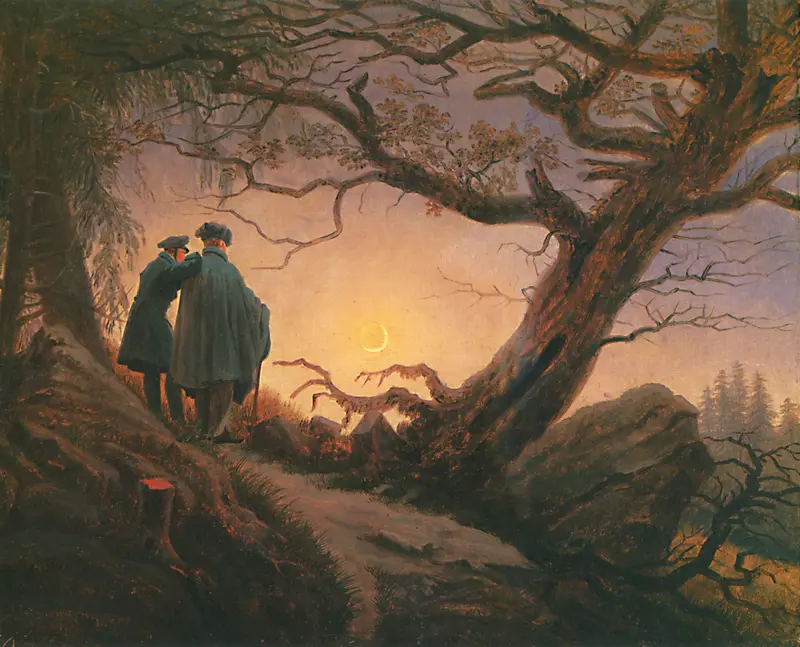
Two Men Contemplating the Moon
Caspar David Friedrich
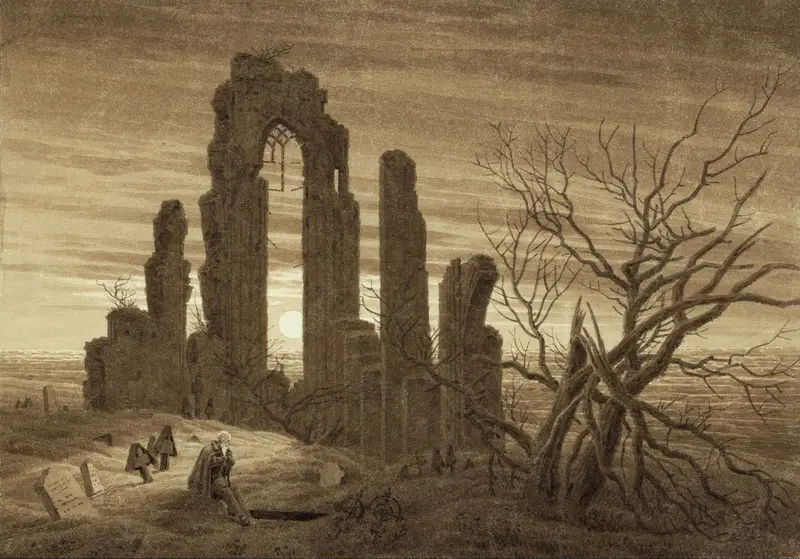
Winter – Night – Old Age and Death (from the times of day and ages of man cycle of 1803)
Caspar David Friedrich
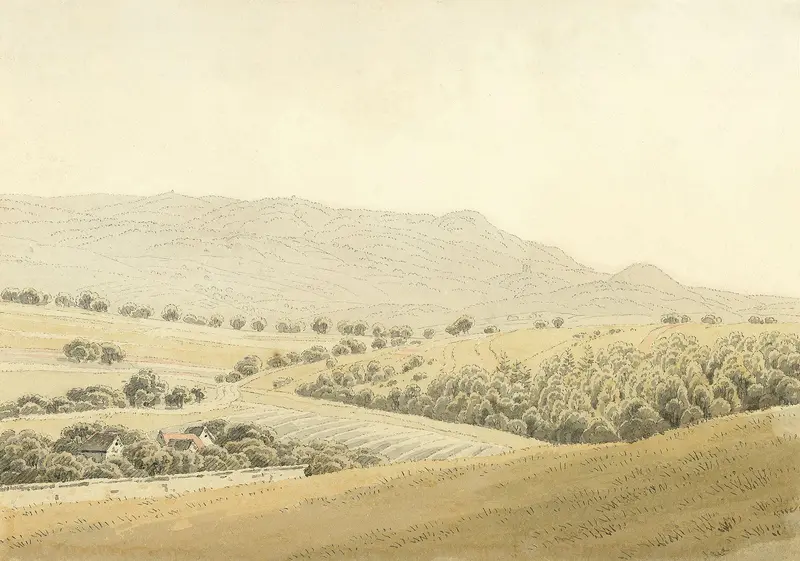
Mittelgebirgslandschaft
Caspar David Friedrich

Landschaft mit gebirgsee, morgen
Caspar David Friedrich




