Seaport — History & Facts
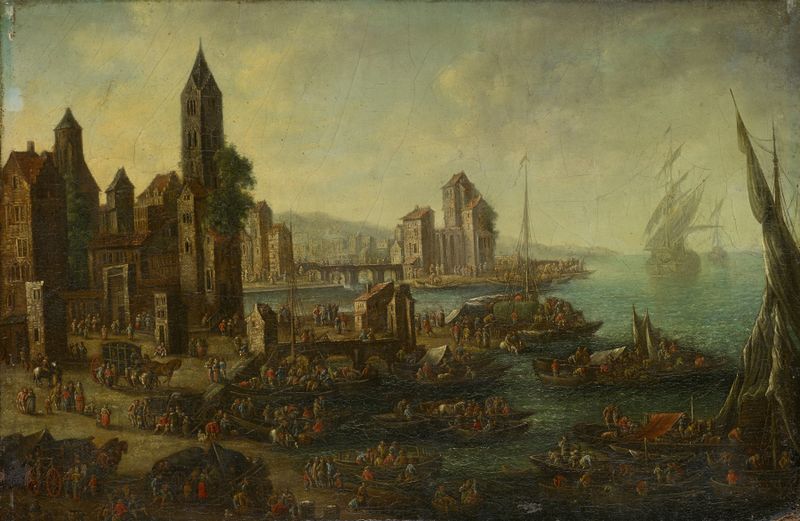
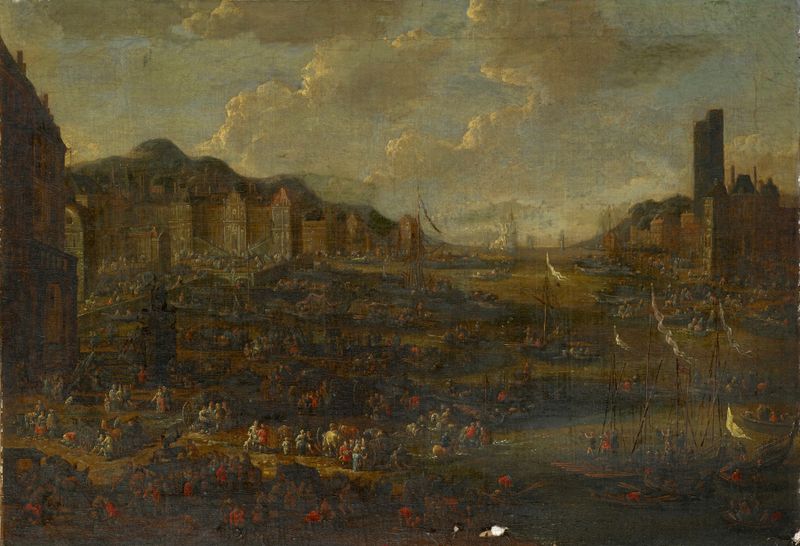
When did color learn to lie? In Seaport, the juxtaposition of vibrant hues against the starkness of mortality invites a contemplation of life’s transience framed by the bustle of maritime activity. Look to the left where the sun glimmers on the water, casting a luminous path that seems to lead the viewer into the depths of the scene. The boats, rendered with meticulous detail, are arranged like actors in a play, their sails billowing under an unseen wind. The palette is rich—deep blues and warm ochres intertwine, creating a balance that feels both harmonious and unsettling, a reminder of the duality of existence as commerce thrives against the backdrop of an ever-looming horizon. As you explore the canvas further, notice the figures engaged in labor—each gesture, deliberate yet ephemeral, echoes the passage of time.
The dynamic activity of the port contrasts sharply with the quiet, distant ships fading into the horizon, symbolizing dreams half-fulfilled or lives left uncharted. This tension between the vibrant present and the fading future evokes a reflection on the fragility of our endeavors, suggesting that even amidst vibrancy, mortality remains ever-present. Created during a period when maritime trade was both a lifeblood and a perilous endeavor, Boudewijns painted Seaport in a context rich with artistic exploration and economic vitality. The Dutch Golden Age was marked by a fascination with realism and detail, and it was a time when artists sought to depict not just scenes of everyday life, but also the underlying narratives that pulse beneath.
This work stands as a testament to his skill and the era’s preoccupation with both prosperity and the inexorable passage of time.