Market Day — History & Facts
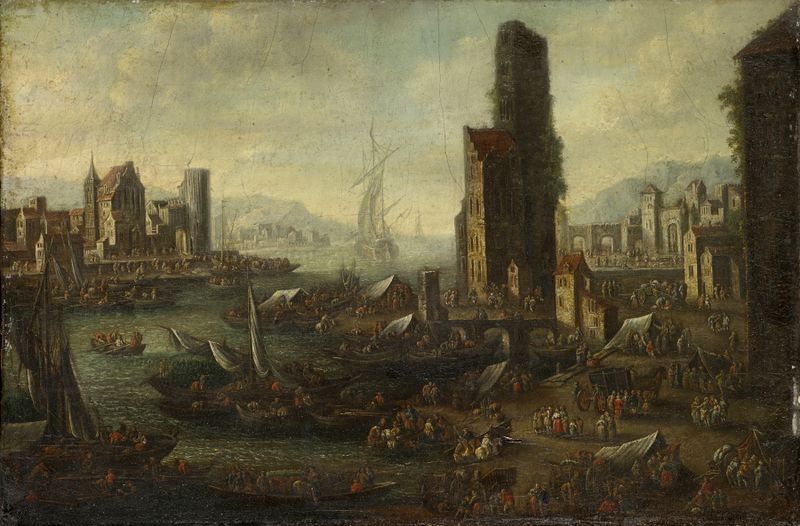
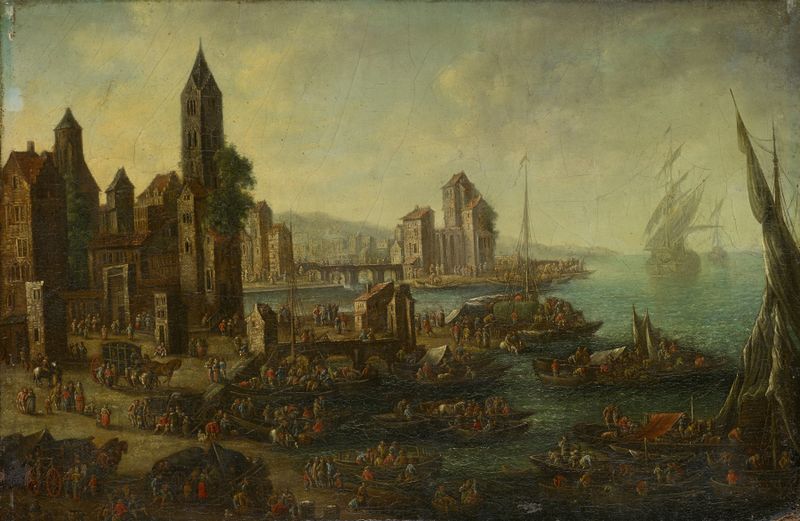
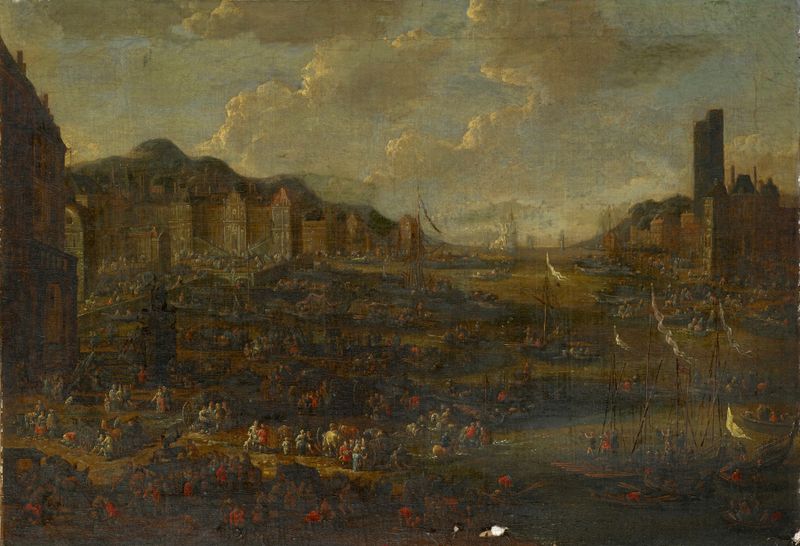
Can beauty exist without sorrow? In the bustling heart of a marketplace, layers of vibrant colors and textures weave a narrative that speaks of life’s joys and tribulations, hinting at a world on the cusp of revolution. Look to the left at the merchants' stalls, overflowing with fruits and textiles, their vivid hues contrasting with the more muted tones of the buildings beyond. The meticulous brushwork captures fleeting moments—shadows stretch across cobblestones, and the glint of sunlight dances upon polished wares, inviting the viewer to explore each detail. Notice how the figures interact; their gestures—from a seller’s enthusiastic beckoning to a buyer’s contemplative gaze—invoke the rhythm of commerce and conversation, grounding the scene in a palpable immediacy. Yet beneath the surface, subtle tensions emerge: the disparity between the abundant display of goods and the weary expressions of the townsfolk suggest more than a simple market day.
The vibrant colors hint at a facade, while the somber undertones reflect the societal changes brewing beneath the surface, capturing the delicate balance between prosperity and the impending upheaval that looms. The painting speaks to the duality of joy and discontent, hinting at a community on the brink of transformation. Created during a period of great social change, the artist painted this scene in the 17th century, a time when the Netherlands was witnessing both economic prosperity and the seeds of societal revolution. Boudewijns, known for his still lifes and genre scenes, utilized his keen observation of daily life to encapsulate the complex emotions of his time, reflecting not only the beauty of the everyday but also the underlying currents of change that defined an era.