Seaside — History & Facts
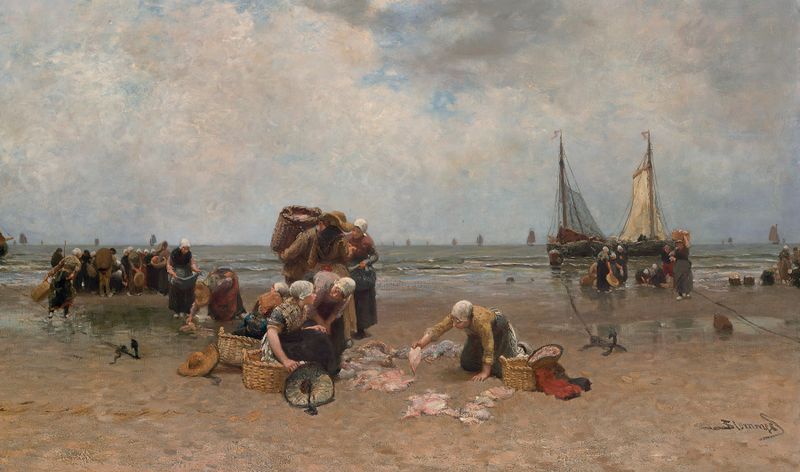
What if silence could speak through light? In Seaside, a tranquil tableau unfolds, whispering the legacy of fleeting moments and gentle waves. The canvas captures the essence of a serene coastal atmosphere, inviting contemplation and connection. Look to the center of the painting where soft waves caress the shore, their rhythmic dance beneath a pale sky. The artist employs delicate brushstrokes to evoke the gentle lapping of water, while shimmering hues of azure and sand blend seamlessly.
Notice how the sunlight filters through the clouds, casting warm highlights on the figures gathered at the water's edge, their silhouettes subtly defined against the brilliance of the scene. Within this idyllic setting lies a juxtaposition of stillness and anticipation; the figures seem both engaged in their surroundings and lost in thought. The contrast between their serene expressions and the dynamic movement of the water serves to underscore the timelessness of the moment, a reminder of nature's perpetual ebb and flow. Each brushstroke carries the weight of memories, evoking a sense of nostalgia that resonates with viewers long after they leave the canvas. Created during the late 19th to early 20th century, this work reflects a significant period in the artist's life, as he navigated the shifts in Dutch realism and Impressionism.
Blommers immersed himself in capturing the beauty of coastal life, influenced by the burgeoning movement that sought to embrace the play of light and atmosphere. His dedication to portraying serene landscapes marked him as a distinct voice in the art world, emphasizing the beauty of everyday moments in a rapidly changing society.