
Semur, Le Chemin De L’église — History & Facts
What if silence could speak through light? In Semur, Le Chemin De L’église, a tranquil path winds towards a distant church, enveloped in a soft haze that hints at both emptiness and serenity. This painting invites the viewer into a contemplative space, where every brushstroke echoes the whispers of a world poised between presence and absence. Look to the left where dappled sunlight filters through the dense canopy, illuminating the earthy path ahead. Notice how the gentle play of light and shadow captures the essence of a quiet moment — the trees seem to breathe, their foliage swaying imperceptibly.
The muted palette of greens and browns conveys a sense of peaceful solitude, emphasizing the tranquility of the scene while directing our gaze toward the church, which stands as a silent sentinel in the background. Yet, within this serene landscape lies a tension — the road stretches out, seemingly endless, evoking a journey not just through nature but also through introspection. The church, so close yet distant, suggests a sanctuary that tantalizingly eludes us, hinting at spiritual emptiness amidst the lush surroundings. The absence of figures enhances this solitude, allowing the viewer to reflect on their own search for meaning and connection in an expansive, yet isolating, world. Painted between 1855 and 1860, this artwork emerged during Corot's exploration of landscapes that intertwine the natural with the spiritual.
Living in France, he was drawn to the enchantment of rural scenes, capturing the nuances of light that defined the era. His approach represented a shift in the art world, as he sought to convey emotion and atmosphere through simplicity and clarity, laying the groundwork for future Impressionist endeavors.
More Artworks by Jean-Baptiste-Camille Corot
Browse all →
View of Genoa
Jean-Baptiste-Camille Corot
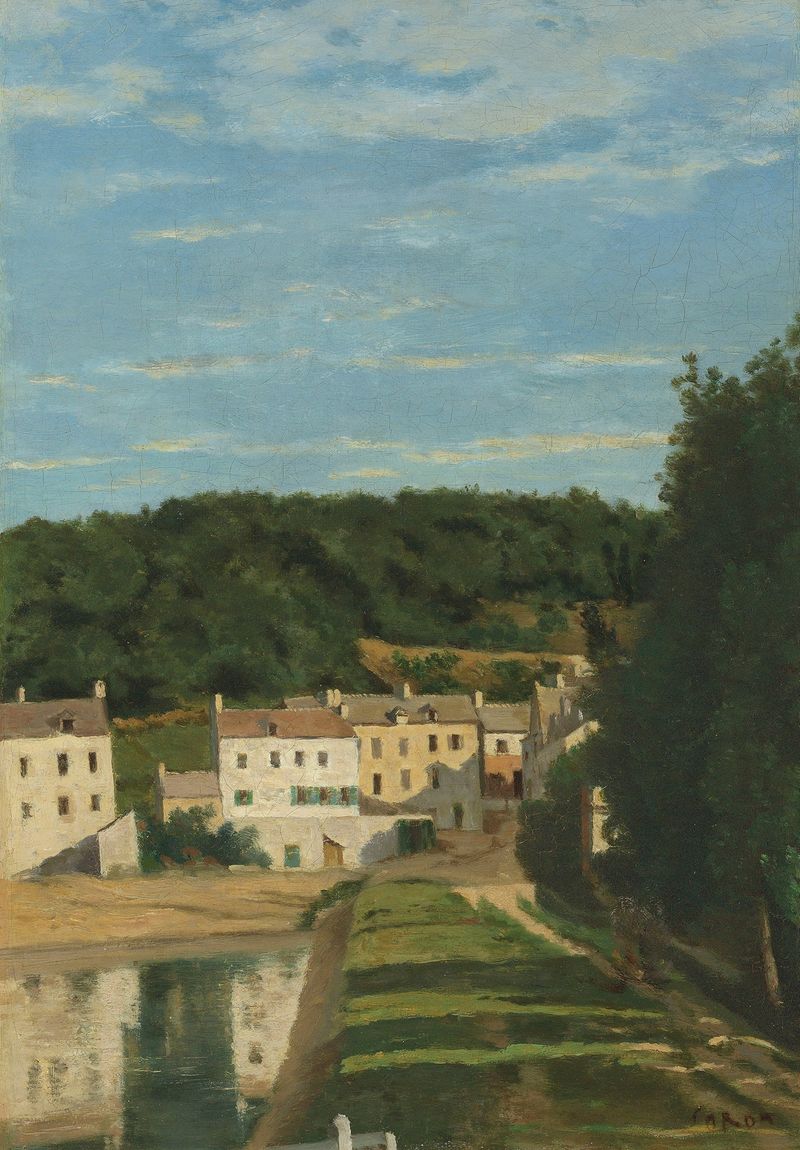
Les Maisons Cabassud À Ville D’avray
Jean-Baptiste-Camille Corot

La solitude. Souvenir de Vigen (Limousin)
Jean-Baptiste-Camille Corot
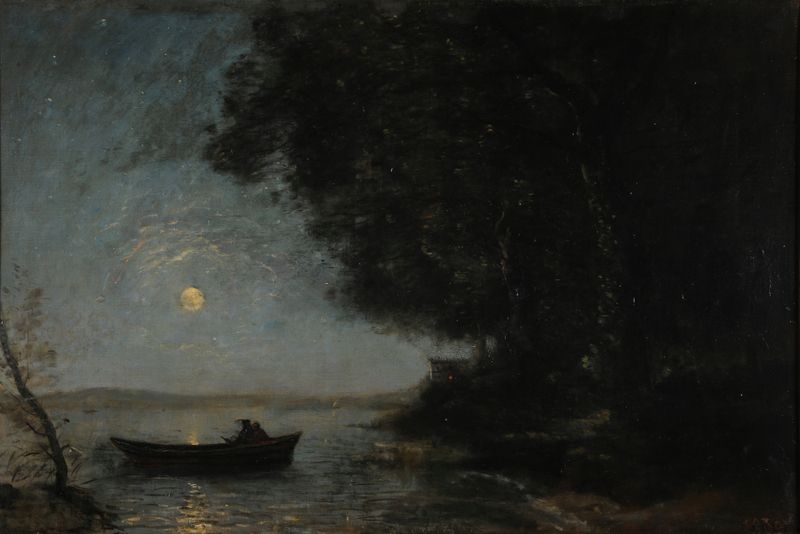
Le lac ; effet de nuit
Jean-Baptiste-Camille Corot
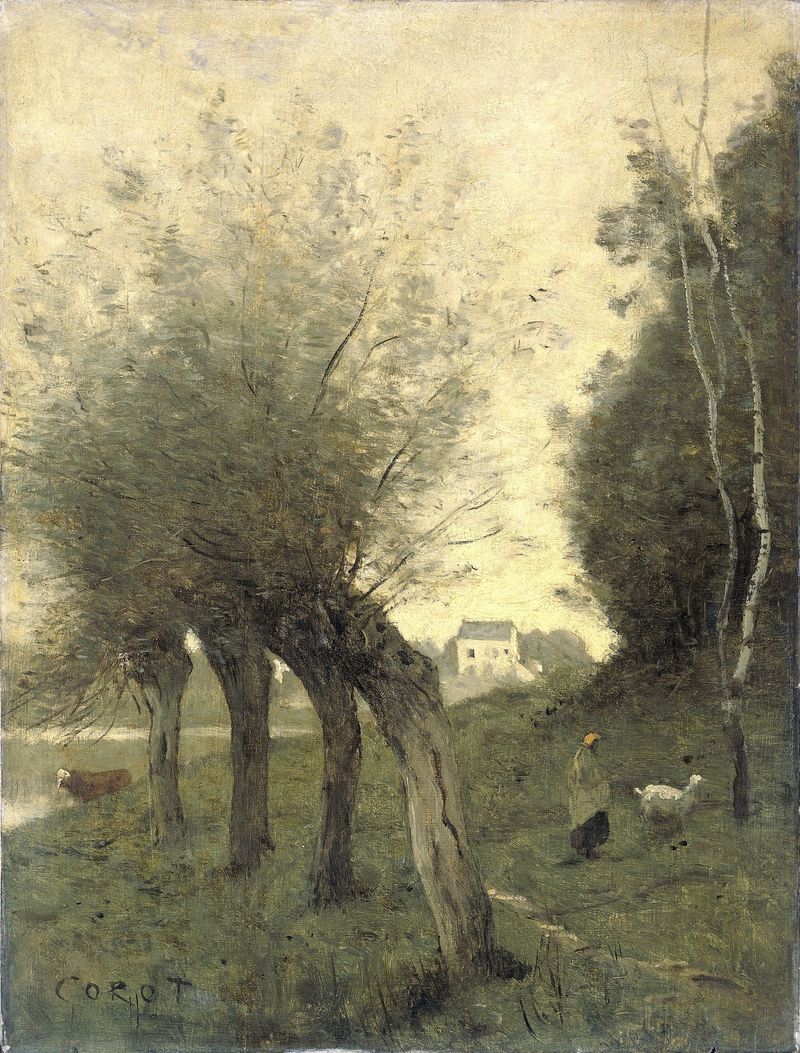
Landscape with Pollard Willows
Jean-Baptiste-Camille Corot
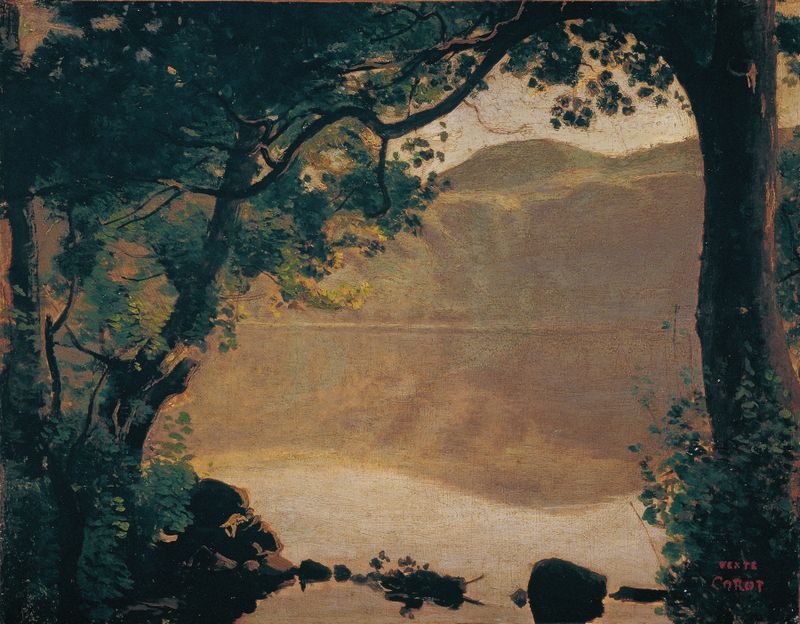
Der Nemisee
Jean-Baptiste-Camille Corot
Les Étangs De Ville D’avray
Jean-Baptiste-Camille Corot
Pond in the Woods
Jean-Baptiste-Camille Corot
Ville D’avray; L’abreuvoir Des Chevaux
Jean-Baptiste-Camille Corot
Le vallon au cavalier
Jean-Baptiste-Camille Corot





