Settee (one of a pair) (part of a set) — History & Facts
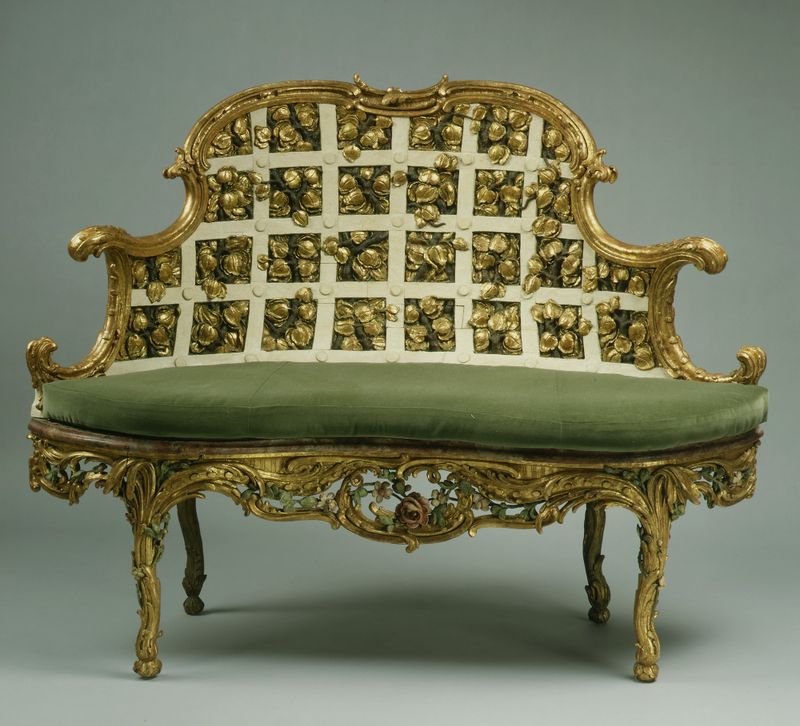
When did color learn to lie? The vibrant hues of a bygone era whisper stories of both comfort and artifice, beckoning us to ponder the destinies entwined with each brushstroke. Focus on the delicate curves of the settee’s armrest, where light dances upon the gilded details. Notice how the deep, rich fabrics contrast with the soft, polished wood, creating a dialogue between opulence and homeliness. The careful craftsmanship is evident in every tufted cushion and intricate pattern, inviting the viewer to imagine the lives that once flourished in its embrace. Yet, beneath the surface beauty lies a tension between the exuberance of decorative arts and the stark reality of their creation.
Each stitch and flourish holds echoes of labor, a reminder of the skilled hands that shaped this piece, while the vibrant colors may distract from the passage of time and the inevitable decay of all material things. The juxtaposition of luxury and fragility speaks to the ever-shifting nature of human aspirations. Painted between 1763 and 1764, this work emerged during a period of transformation for Johann Michael Bauer, as he navigated the evolving landscape of Rococo style in Germany. This era saw a heightened focus on art as a reflection of societal status, where lavish furnishings were not merely functional but served as markers of identity and ambition.
In the grand salons of Europe, the settee would have held witness to whispered negotiations of fate, destiny, and the delicate dance between artifice and authenticity.