
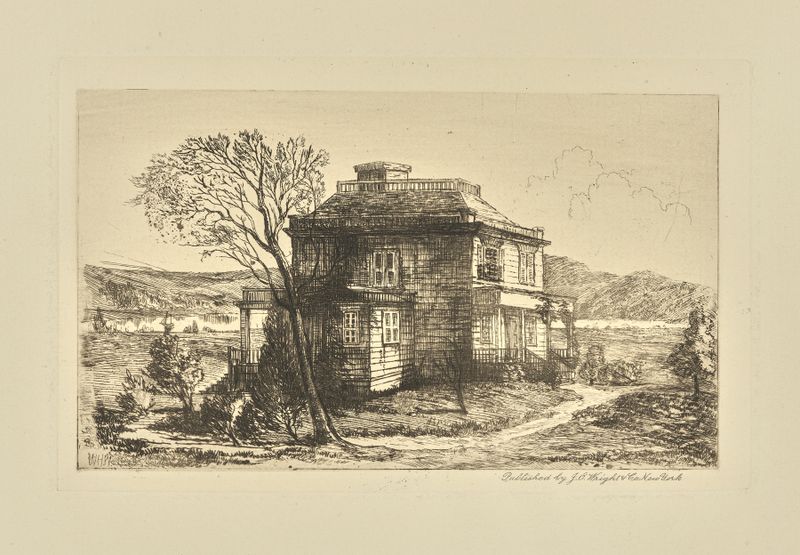
Seventy Six Stone House, rear. — History & Facts
Where does light end, and longing begin? In the stillness of Seventy Six Stone House, rear, a haunting rebirth emerges from the shadows, evoking a quiet nostalgia that resonates within us all. Look to the left at the textured stone walls, their weathered surfaces bathed in warm ochres and muted grays. The delicate interplay of light and shadow reveals the architectural details—the windows, slightly ajar, seem to breathe with history. Notice how the gentle light filters through the foliage, casting intricate patterns on the ground, inviting the viewer to step into a moment suspended in time.
The composition, with its balance of solidity and softness, draws the eye into the serene landscape surrounding the house, blending the human touch with nature's embrace. Beneath the surface, this artwork speaks of contrasts—the permanence of the stone structure juxtaposed with the ephemeral quality of light and life. The subtle hints of decay in the stonework suggest a narrative of passage, where time leaves its indelible mark yet also heralds renewal. Each brushstroke conveys a sense of bittersweet longing, evoking memories of a past that still lingers, while the vibrant hues symbolize the possibility of rebirth amidst decay. In 1890, William Henry Wallace painted this piece during a time when the art world was grappling with the transition from the traditional to the modern.
Living in a rapidly industrializing society, he found solace in the remnants of the past, capturing the essence of a world that was changing. It was a period of introspection for the artist, as he navigated the evolving landscape of art, seeking to honor the beauty of the seemingly forgotten.
More Artworks by William Henry Wallace
Browse all →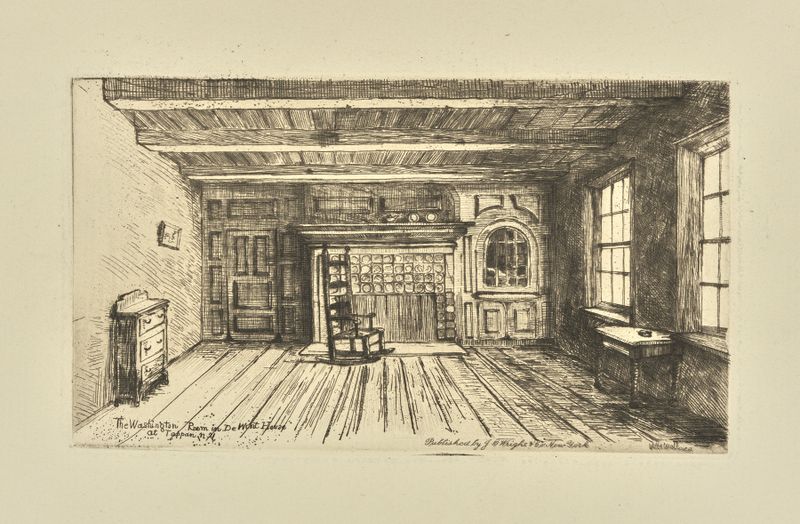
The Washington room in De Wint House at Tappan, N.Y.
William Henry Wallace

The Bevrley Robinson House Garrisons Hudson River.
William Henry Wallace
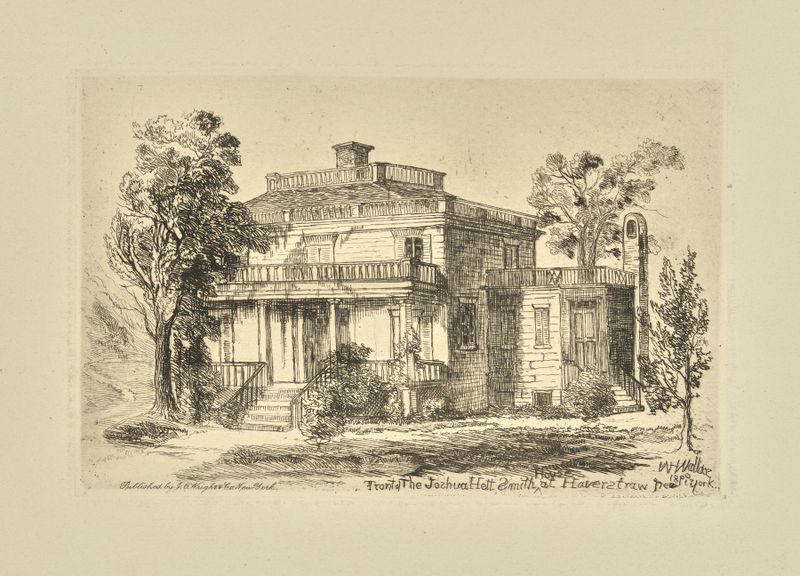
Front of the Joshua Hett Smith House at Haverstraw New York.
William Henry Wallace
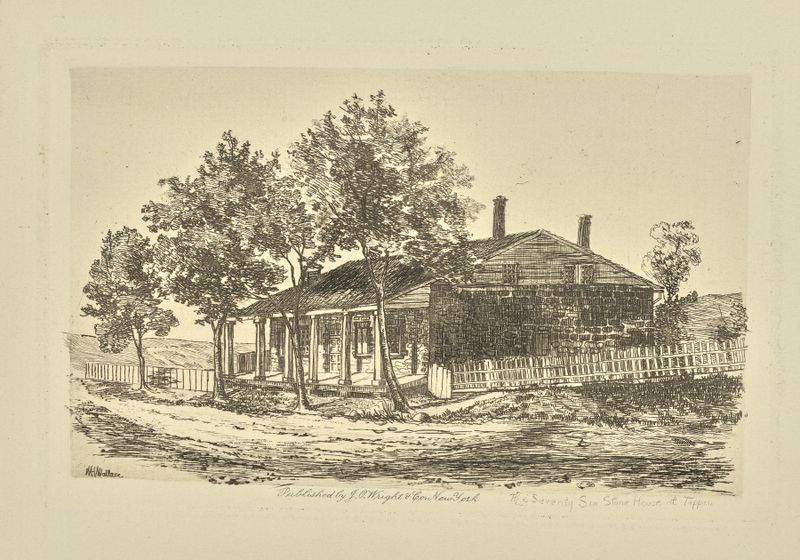
The Seventy Six Stone House at Tappan.
William Henry Wallace
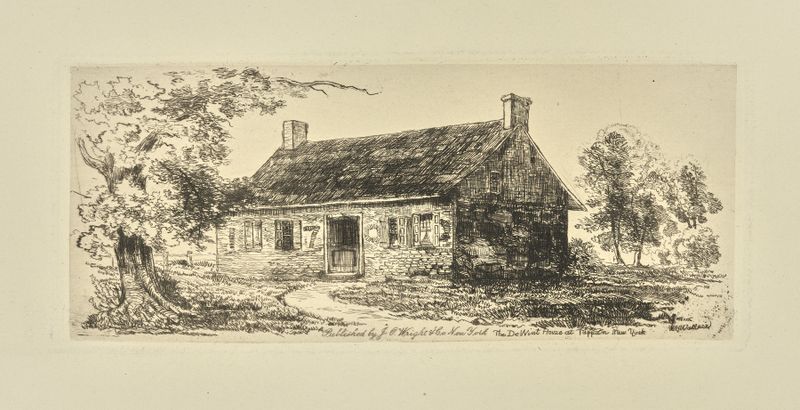
The De Wint House at Tappan, New York.
William Henry Wallace
Side view of Joshua Hett Smith House at Haverstraw New York
William Henry Wallace
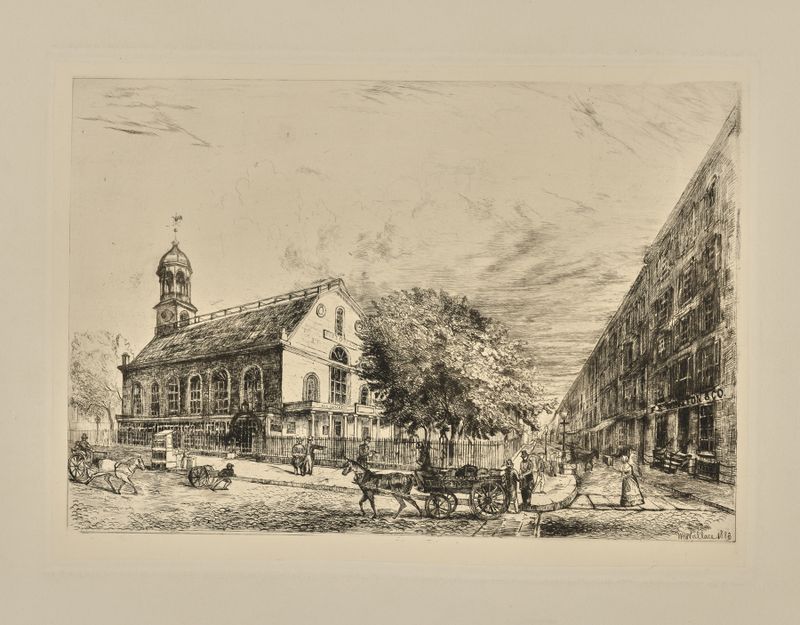
Old Post Office, New York.
William Henry Wallace
More Architecture Art
Browse all →
The statue of Liberty
Frédéric Auguste Bartholdi

View of Houses in Delft, Known as ‘The Little Street’
Johannes Vermeer

View of Houses in Delft, Known as ‘The Little Street’
Johannes Vermeer

The Cathedral in Rouen. The portal, Grey Weather
Claude Monet

The yellow house
Vincent van Gogh

The Church in Auvers-sur-Oise, View from the Chevet
Vincent van Gogh