Sügismaastik — History & Facts
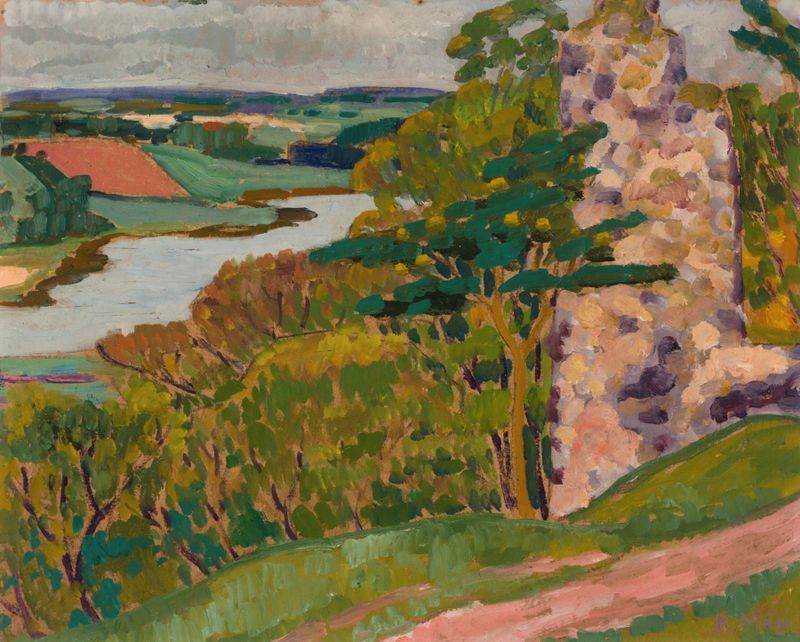
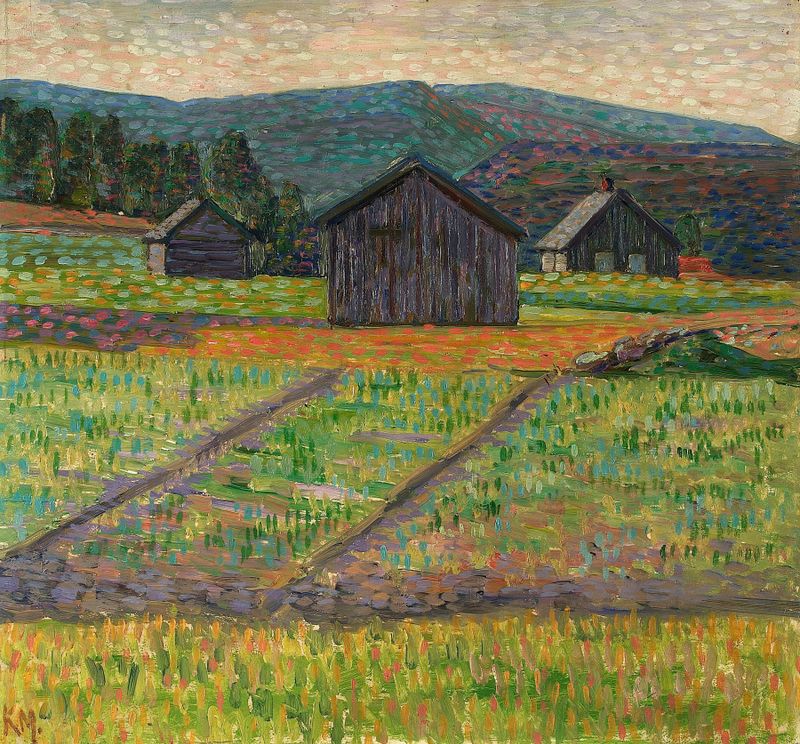
Could a single brushstroke hold eternity? In the hands of an artist, fear can transform into beauty, echoing through the hues of a landscape that both soothes and unsettles. Look to the left at the sweeping curves of the hills, painted in rich, earthy tones that have an almost tactile presence. The palette transitions from deep greens to vibrant yellows, capturing the essence of autumn's embrace. Notice how the sky looms overhead, a tempest of blues and grays, suggesting an impending storm that disrupts the otherwise serene scene.
Each brushstroke is deliberate, revealing a tension between the tranquility of nature and the chaos that threatens to invade. The juxtaposition of the warm, inviting landscape against the cold, ominous sky speaks to a deeper emotional conflict, one that resonates with the viewer's own experiences of fear. The winding path through the landscape offers a metaphor for life’s uncertainties, leading us toward an unknown destination. Here, the beauty of the season is tinged with an awareness of the inevitable changes that lie ahead, making the viewer acutely aware of their own fragility. In 1912, the artist created this piece while living in Estonia, a time when the region was grappling with national identity and artistic expression amid a backdrop of political turbulence.
Mägi was influenced by the Symbolist movement and sought to capture the emotional resonance of nature, reflecting his own inner turmoil as he navigated his place in a rapidly changing world. This painting serves as a poignant reminder of the visceral connections we have with the landscapes that shape our lives.