
Sir William Young, 1st Baronet (1724/5-1788), Governor of St Dominica — History & Facts
What first arrests the eye in Sir William Young, 1st Baronet (1724/5-1788), Governor of St Dominica by Agostino Brunias is the confident stance of its subject, set against a swirl of red drapery and the gleam of gilded furniture. The governor stands, one hand resting on a book atop an ornate table, the other holding his tricorne hat, his gaze meeting the viewer’s with a mixture of calculation and poise. The scarlet and blue uniform, rich with gold trim, is no mere costume: it broadcasts authority and imperial reach, while the books and papers hint at the intellectual and administrative burdens of his office.
Light pours in from the left, casting the figure into sharp relief and drawing attention to the details of his dress and the textures of the setting, while the shadowed background suggests the weight of unseen responsibilities. This portrait belongs to a world where painted likenesses were instruments of power and memory, commissioned to assert rank and secure legacy. In the late eighteenth century, British colonial administrators like Sir William Young sought to project their status through grand full-length portraits, often painted by artists who traveled with them or were brought from Europe. Agostino Brunias, trained in Rome and active in both England and the West Indies, was such a figure—his career shaped by the demands of patrons navigating the complexities of empire.
The painting, created between 1770 and 1788, is a rare example of Brunias turning from his better-known scenes of Caribbean life to the formality of official portraiture. History has kept few traces of the journey this canvas has taken, but its presence today invites us to look again at the ways power, personality, and place were woven together in paint.
More Artworks by Agostino Brunias
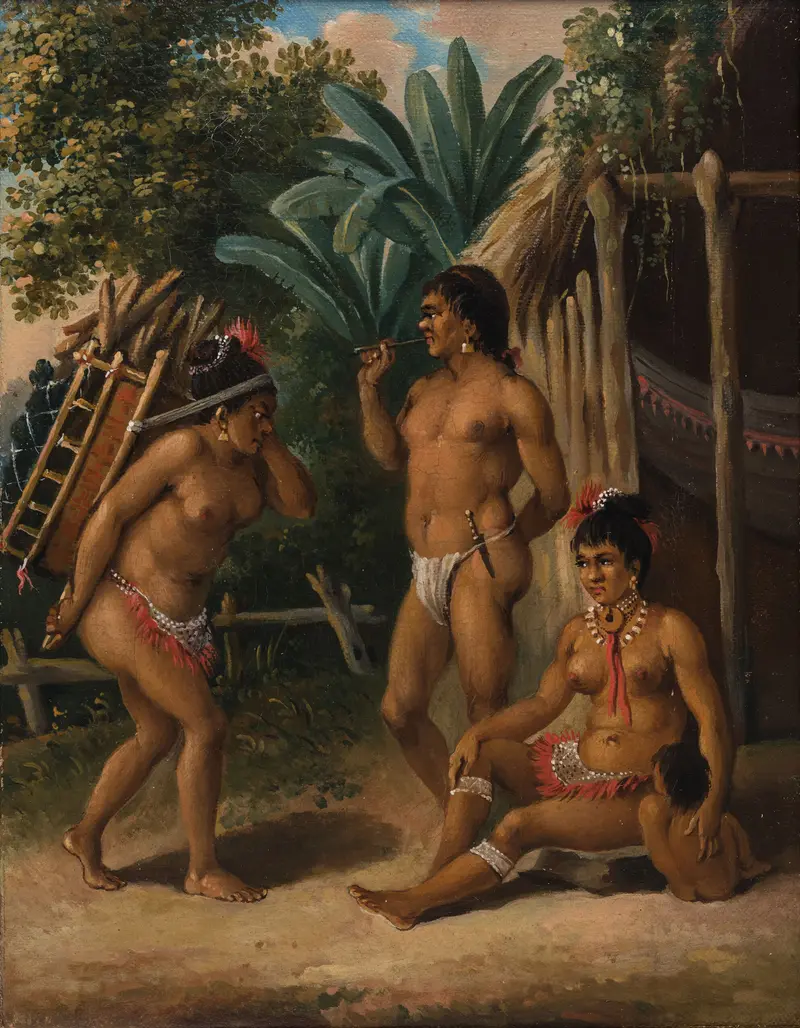
Indigenous Kalinago of St. Vincent [Aboriginal Caraibs of St. Vincents]
Agostino Brunias
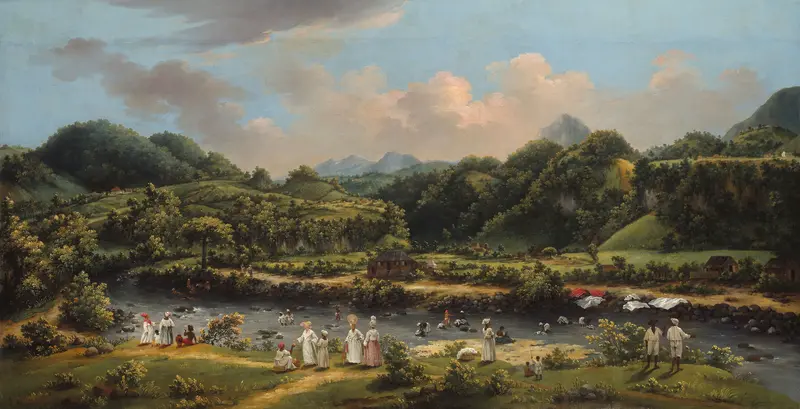
View on the River Roseau, Dominica
Agostino Brunias
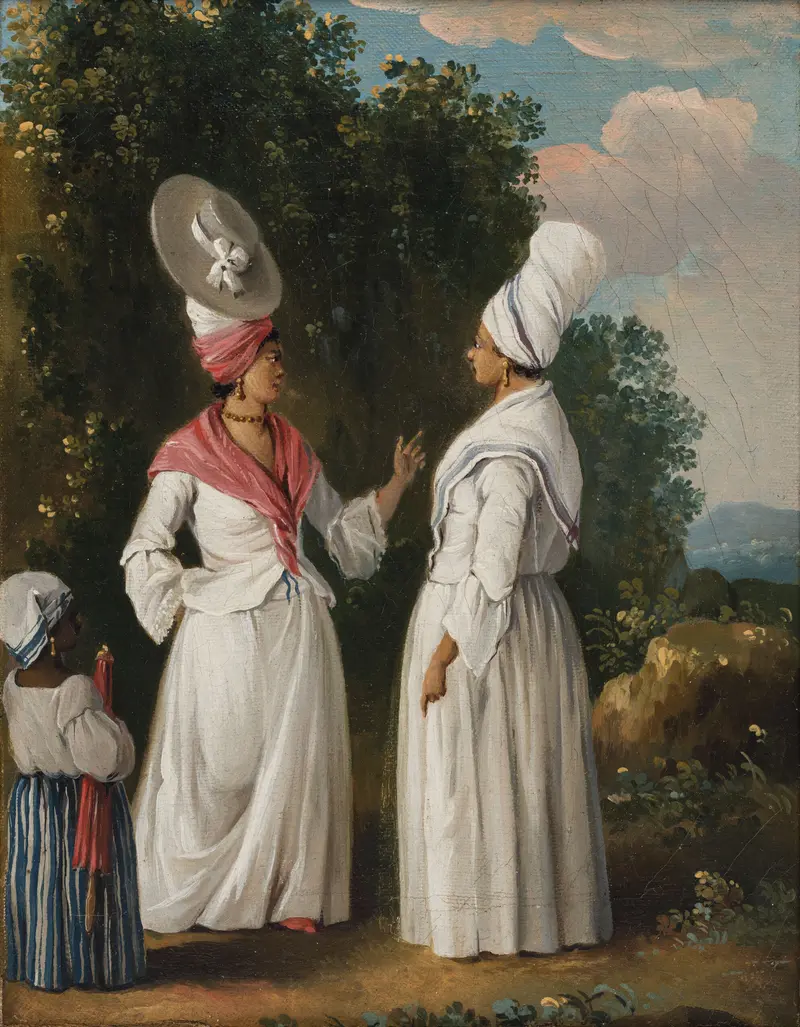
Francophone Women of Color and a Young Attendant, Dominica [French Mulatresses of Dominica in their Proper Dress]
Agostino Brunias
View on the River Roseau, Dominica
Agostino Brunias
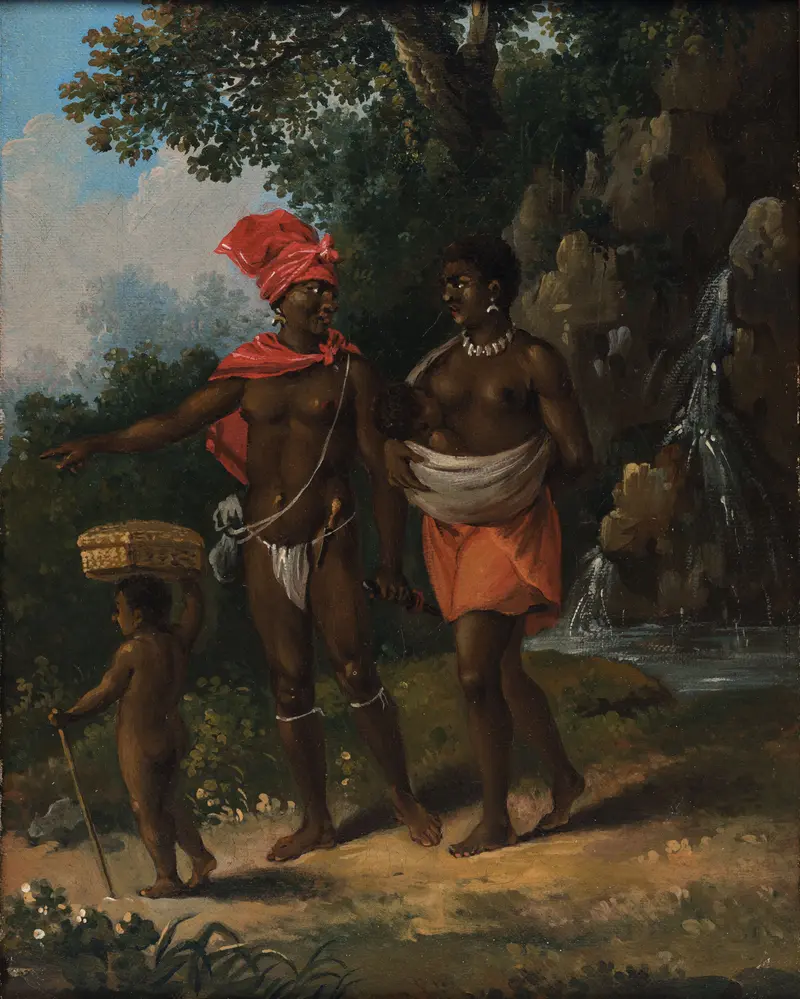
Garifuna Peoples of St. Vincent [Caraibs of St. Vincents]
Agostino Brunias
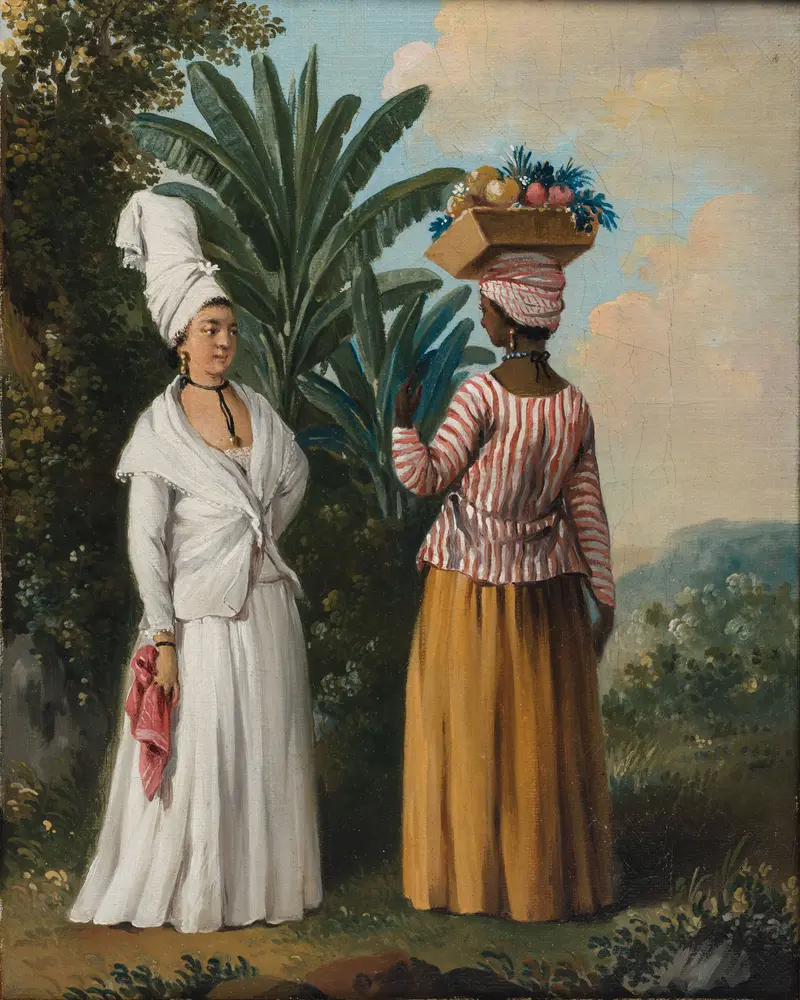
Two Women of Color, Dominica [French Mulatress of Dominica and a Negro Woman in their Proper Dress]
Agostino Brunias

Purchasing Fruit [A French Mulatress Purchasing Fruit from a Negro Wench]
Agostino Brunias

Women of Color Bathing and a Voyeur [Mulatresses and Negro Woman Bathing]
Agostino Brunias
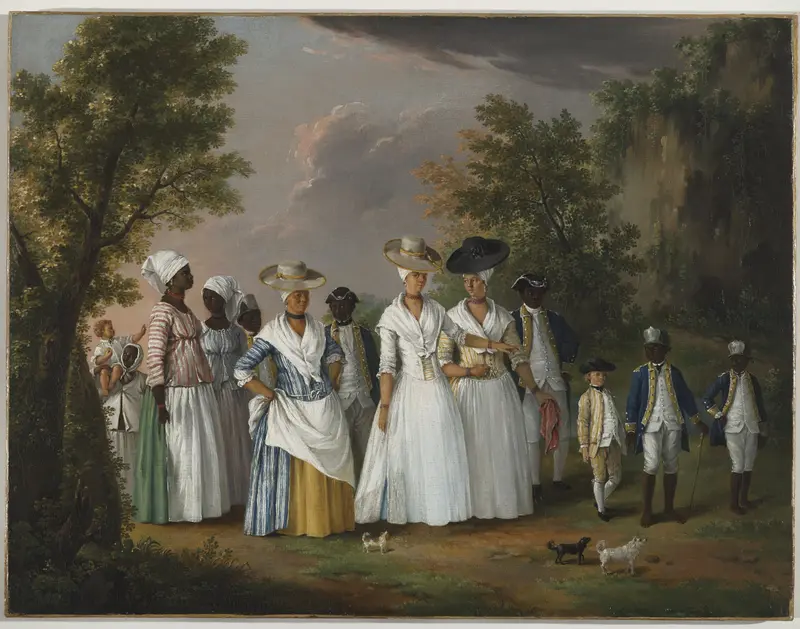
Free Women of Color with their Children and Servants in a Landscape
Agostino Brunias
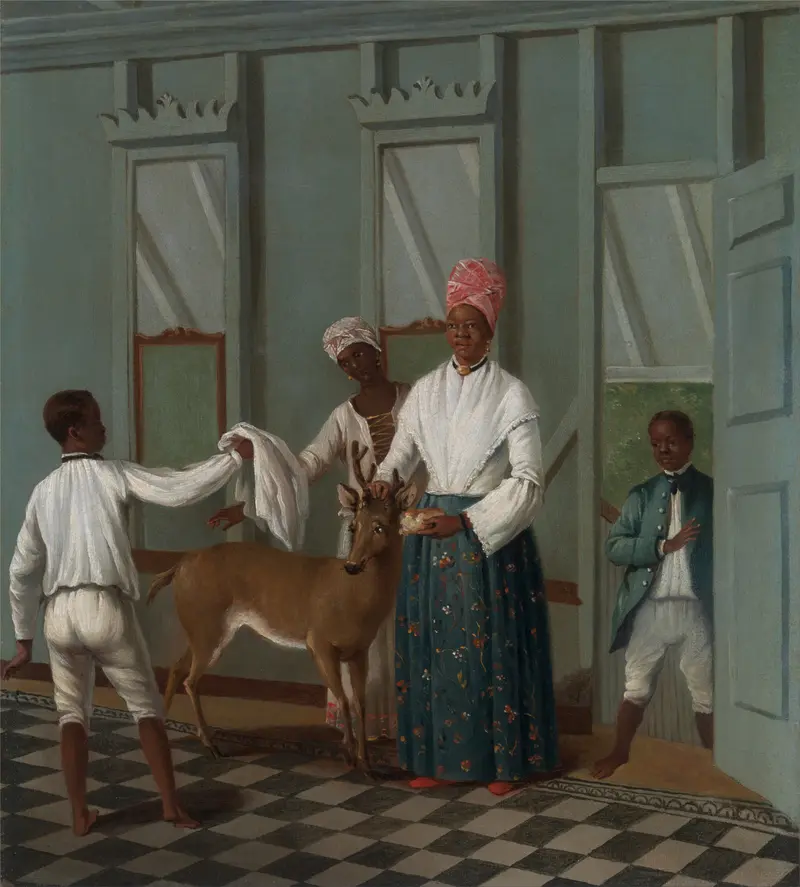
Servants Washing a Deer
Agostino Brunias





