
Servants Washing a Deer — History & Facts
A deer, startled but docile, stands at the heart of this cool, sunlit interior, the focus of a quiet ritual that hints at both care and command. The checkerboard floor draws the viewer’s gaze inward, where three figures—two women and a boy—attend to the animal with practiced precision. Each gesture is charged with purpose: a towel is extended, hands steady the deer’s antlers, and a piece of bread or soap is offered, suggesting a moment of cleansing or preparation.
The women’s headwraps and composed expressions signal both their authority in this domestic space and their place within a complex hierarchy. The open door and the boy in a turquoise jacket at its threshold invite us to wonder what lies beyond this moment—an everyday task, or something more ceremonial? Painted around 1775, Servants Washing a Deer belongs to a world where the boundaries of labor, status, and identity were sharply drawn, yet constantly negotiated. Works like this, produced in the age of empire and plantation economies, often served to document or idealize the lives of servants and enslaved people in colonial households, sometimes for the eyes of European patrons eager for glimpses of distant colonies.
The artist, Agostino Brunias, became known for such scenes, capturing the textures of daily life in the Caribbean with a careful eye for costume and setting. History has kept few traces of this particular painting’s journey, but its presence in a digital collection today allows us to return, again and again, to the silent drama unfolding on its tiled floor.
More Artworks by Agostino Brunias
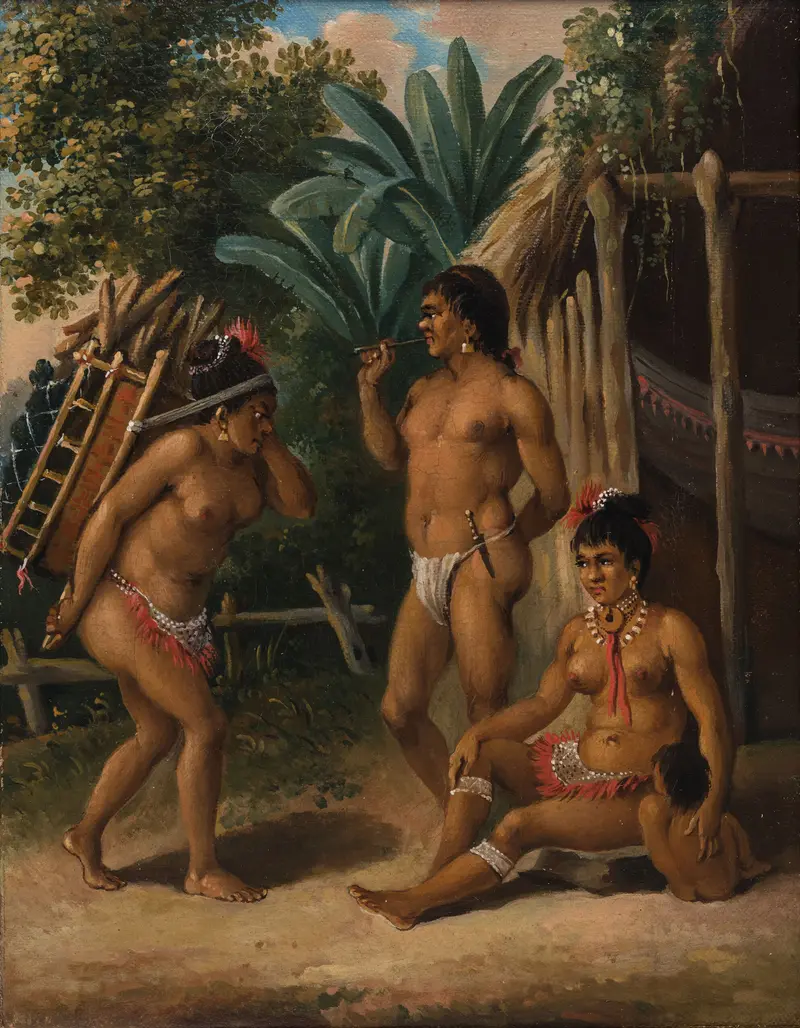
Indigenous Kalinago of St. Vincent [Aboriginal Caraibs of St. Vincents]
Agostino Brunias
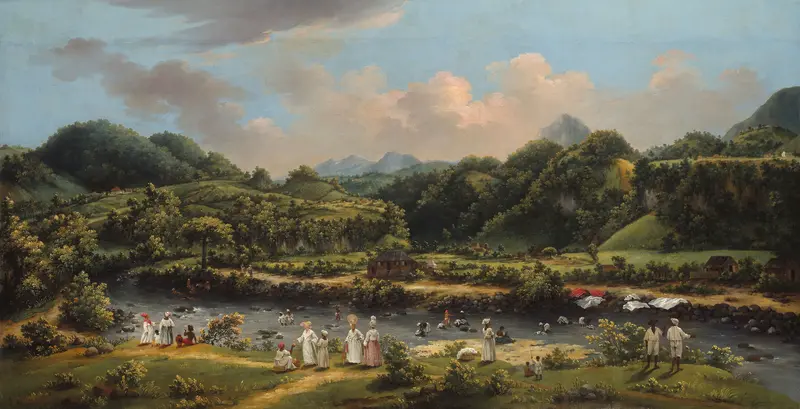
View on the River Roseau, Dominica
Agostino Brunias
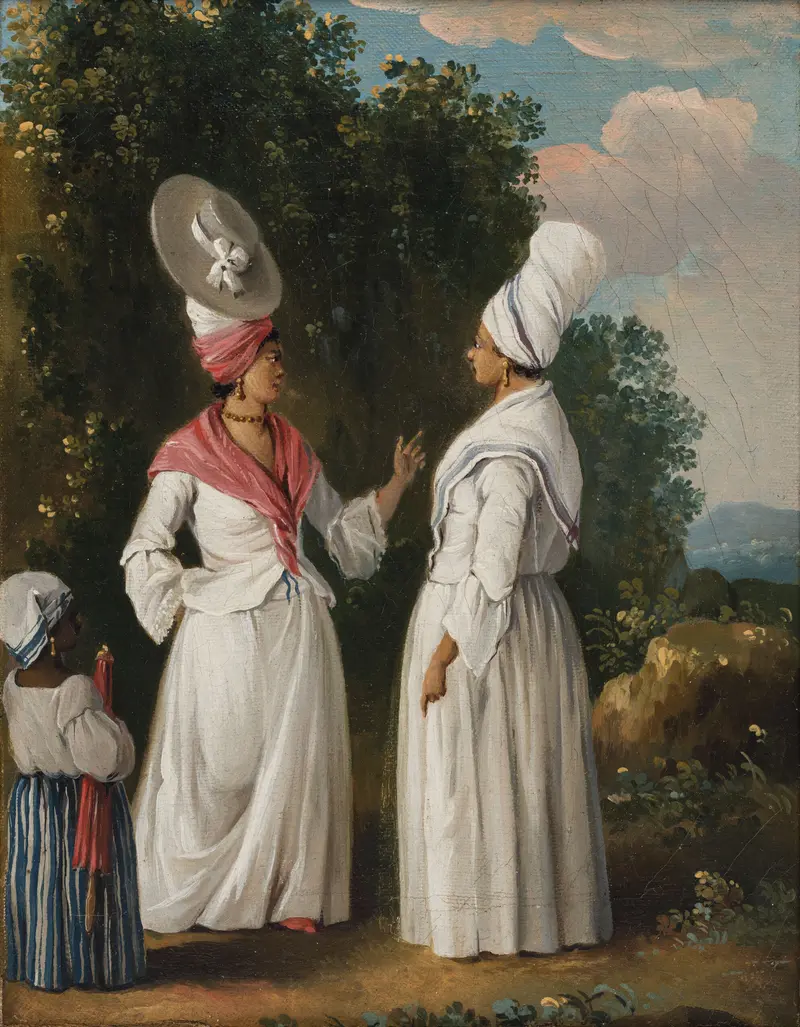
Francophone Women of Color and a Young Attendant, Dominica [French Mulatresses of Dominica in their Proper Dress]
Agostino Brunias
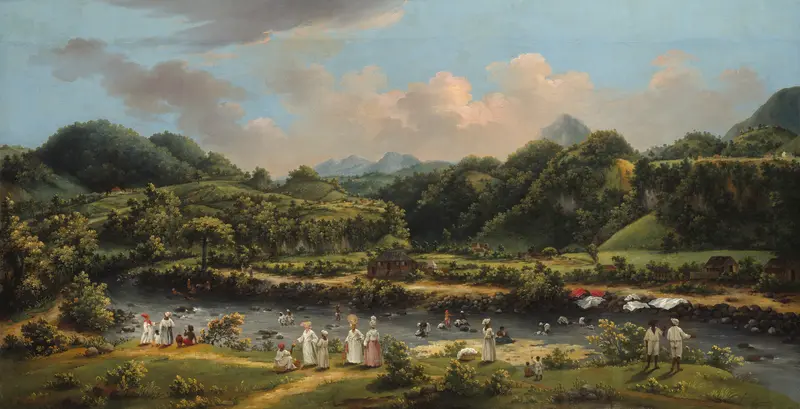
View on the River Roseau, Dominica
Agostino Brunias
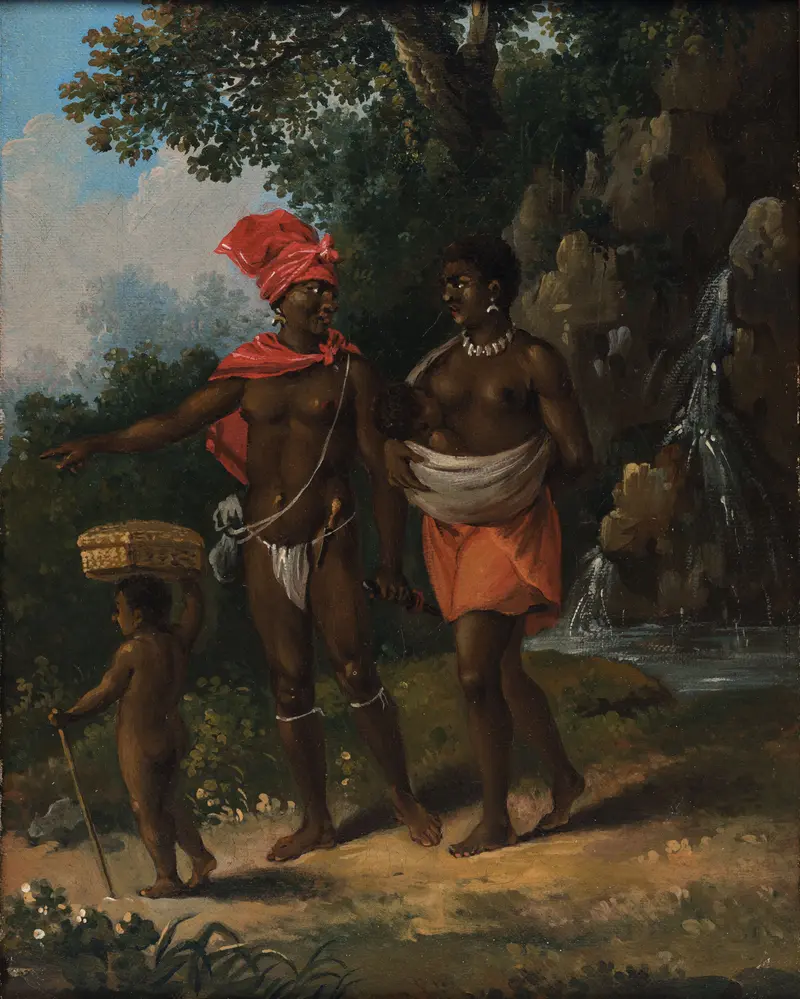
Garifuna Peoples of St. Vincent [Caraibs of St. Vincents]
Agostino Brunias
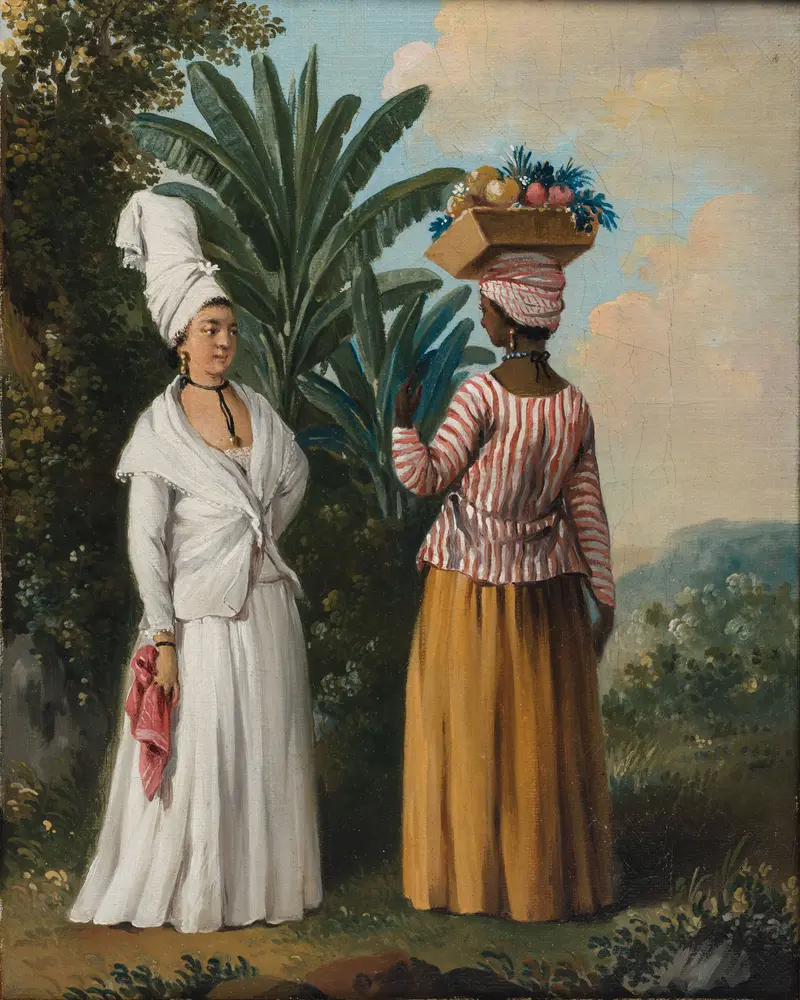
Two Women of Color, Dominica [French Mulatress of Dominica and a Negro Woman in their Proper Dress]
Agostino Brunias

Purchasing Fruit [A French Mulatress Purchasing Fruit from a Negro Wench]
Agostino Brunias

Women of Color Bathing and a Voyeur [Mulatresses and Negro Woman Bathing]
Agostino Brunias
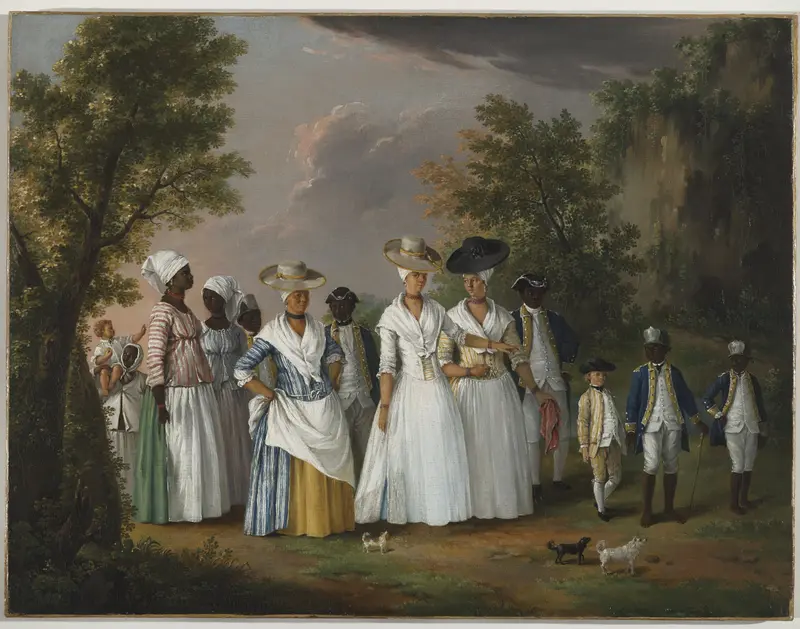
Free Women of Color with their Children and Servants in a Landscape
Agostino Brunias
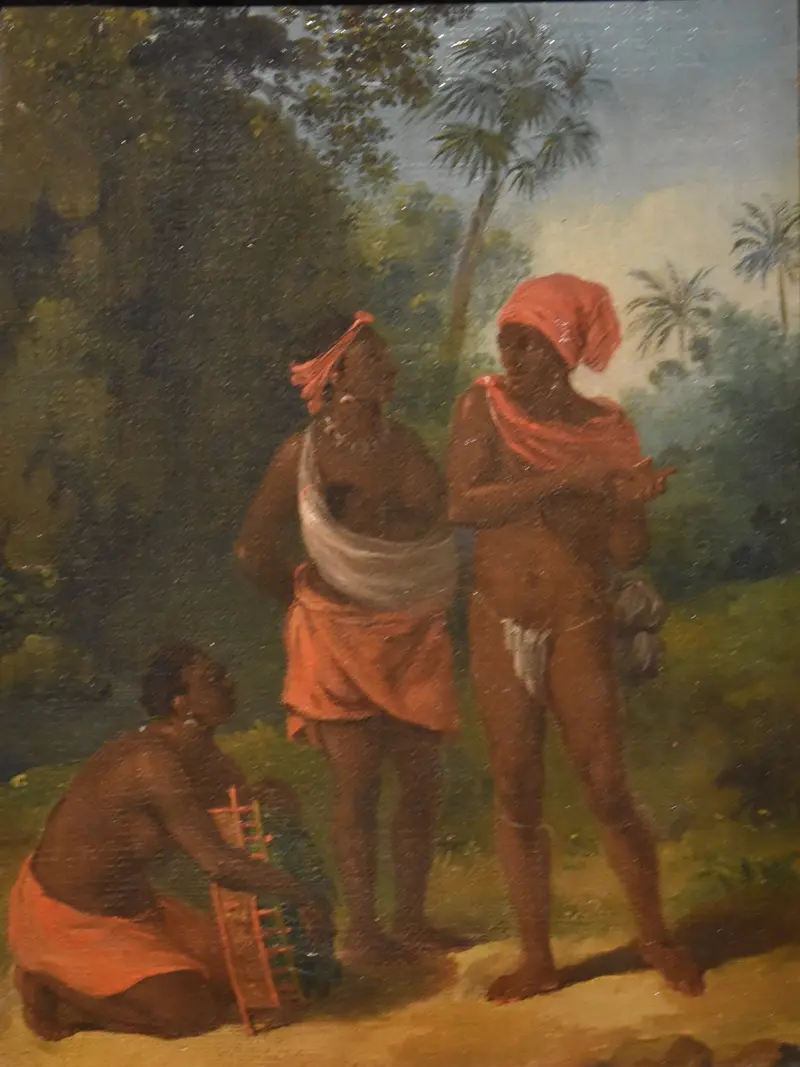
Augustin Brunias Les Caraïbes noirs de Saint Vincent 02
Agostino Brunias
More Genre Scene Art

Banquet of the Officers of the St George Civic Guard
Frans Hals

Rembrandt and Saskia in the Scene of the Prodigal Son
Rembrandt van Rijn

Bal du moulin de la Galette
Pierre-Auguste Renoir

Quadrille at the Moulin Rouge
Henri de Toulouse-Lautrec

A Burial at Ornans
Gustave Courbet

When Will You Marry?
Paul Gauguin