
Free Women of Color with their Children and Servants in a Landscape — History & Facts
What first catches the eye is the quiet confidence of three women, dressed in gleaming white and crowned with broad hats, standing at the heart of a gathering that is anything but simple. Their stance is direct, their gazes outward, as if meeting the viewer’s curiosity with their own. Around them, a retinue of children and attendants forms a living tableau, each figure carefully posed, their clothing and gestures signaling a world of social codes and relationships.
The play of light on crisp fabric, the subtle shadows on faces, and the careful positioning of hands and accessories all speak to a society in which appearances are charged with meaning. Painted around 1764, this work by Agostino Brunias draws the viewer into the layered realities of colonial Caribbean life. The composition is orchestrated with the precision of a stage scene: the women at center are flanked by figures whose uniforms and livery mark them as servants, while the children—some in miniature versions of adult dress—suggest the transmission of status and identity across generations. The landscape, lush and slightly wild, frames the group but never overwhelms them; instead, it heightens the sense of occasion.
The animals at their feet, a black dog and a white dog, echo the contrasts and complexities of the human gathering above. Every detail, from the striped bodices to the gold trim on jackets, invites the viewer to read the codes of class, freedom, and belonging that shaped this world. Works like this, painted for colonial patrons or visitors, were both records and performances of social order in the Caribbean’s stratified societies. Around the mid-eighteenth century, artists such as Brunias were commissioned to capture the distinctive dress, customs, and hierarchies of plantation life—images that would both inform and reassure audiences in Europe.
The date of this painting, circa 1764, places it at a time when the identities and roles of free people of color were being negotiated and displayed with increasing visibility. History has kept few traces of the individual lives behind these faces, but the painting endures as a window onto a world where every gesture and garment was charged with meaning—inviting us to look again, and look closer.
More Artworks by Agostino Brunias
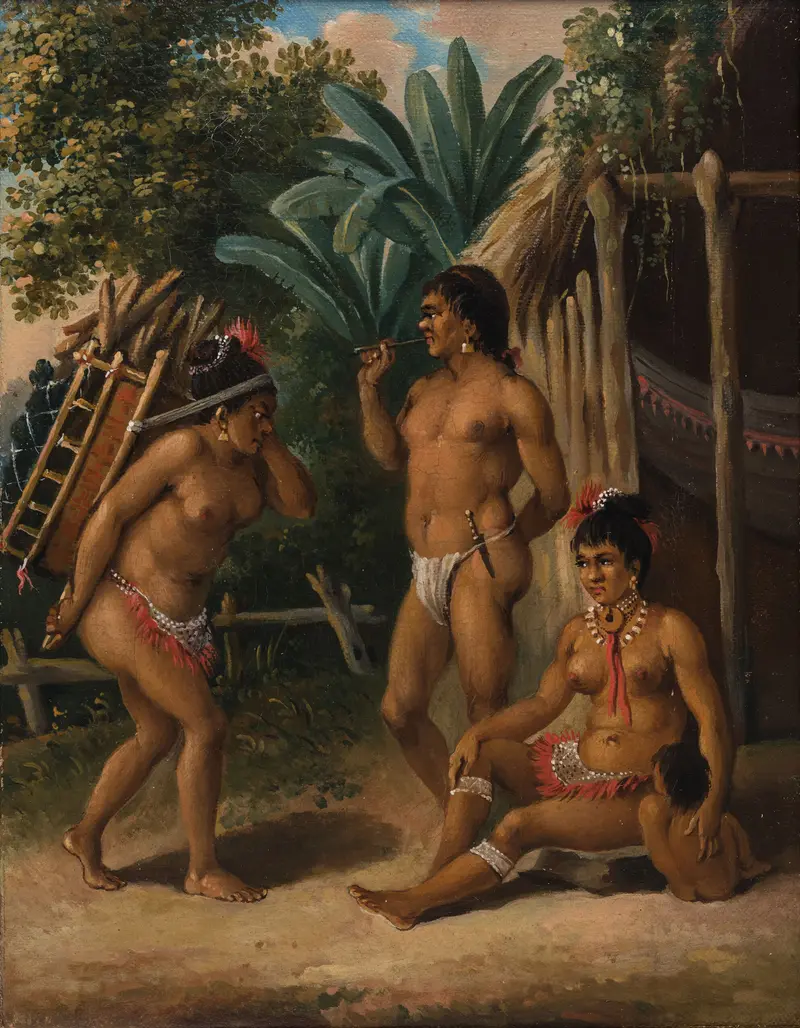
Indigenous Kalinago of St. Vincent [Aboriginal Caraibs of St. Vincents]
Agostino Brunias
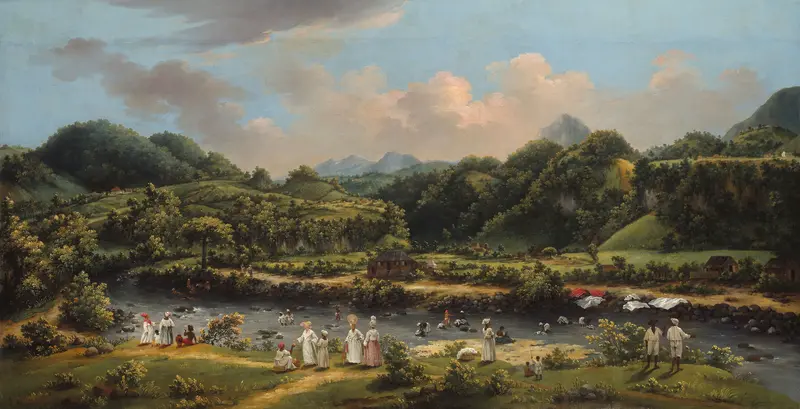
View on the River Roseau, Dominica
Agostino Brunias
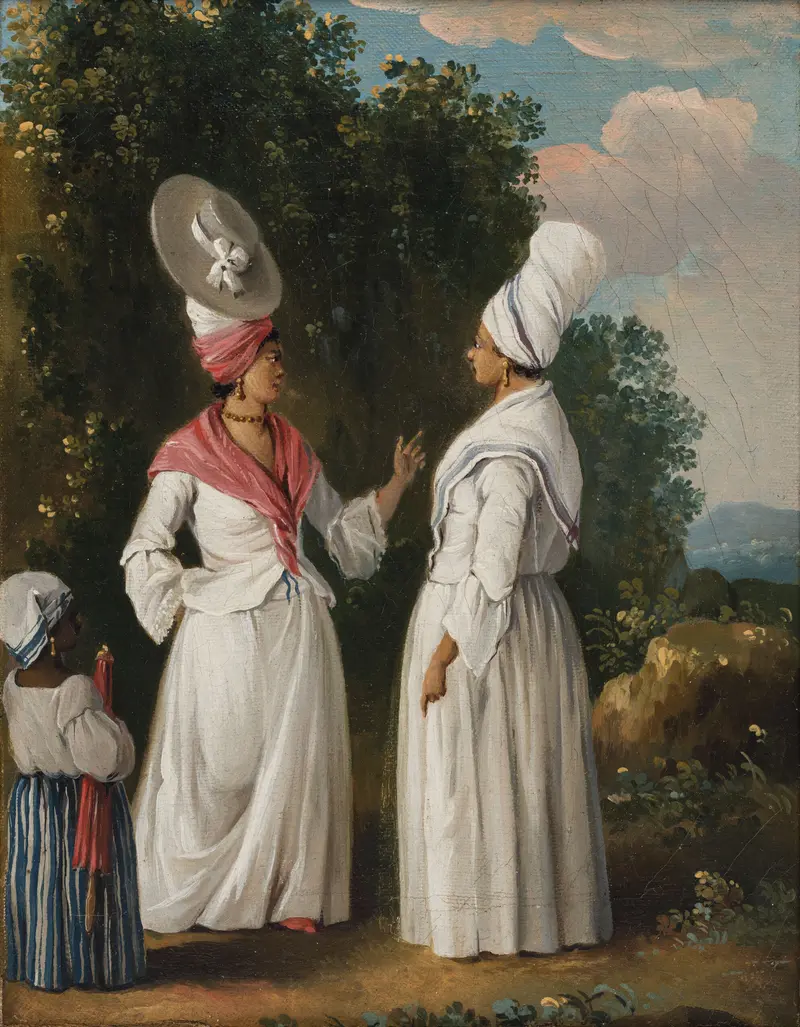
Francophone Women of Color and a Young Attendant, Dominica [French Mulatresses of Dominica in their Proper Dress]
Agostino Brunias
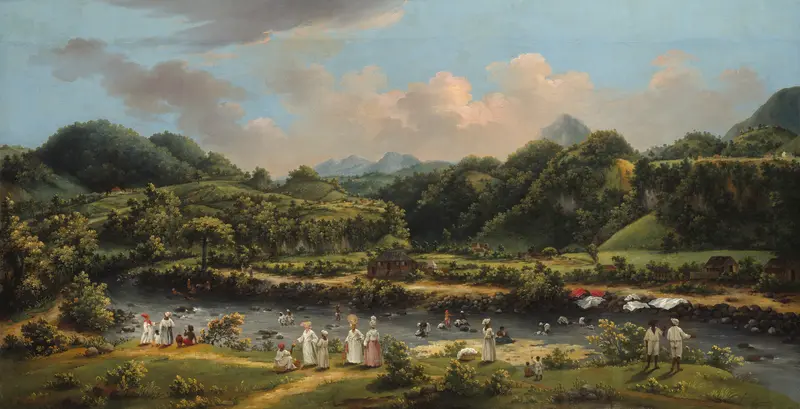
View on the River Roseau, Dominica
Agostino Brunias
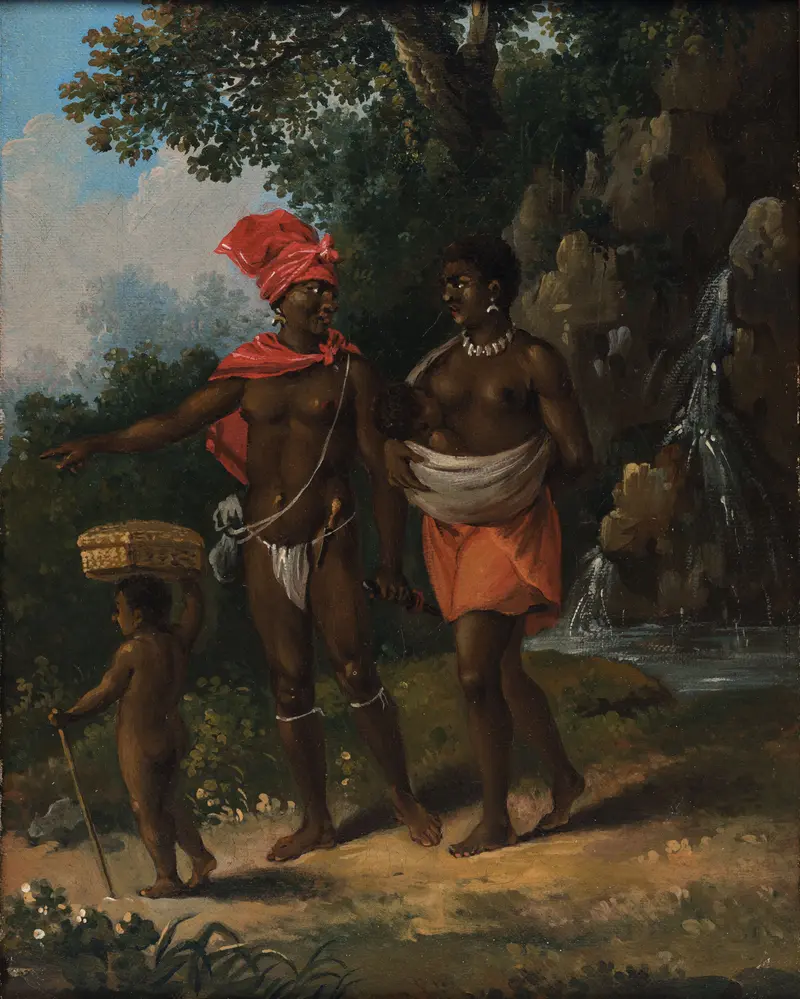
Garifuna Peoples of St. Vincent [Caraibs of St. Vincents]
Agostino Brunias
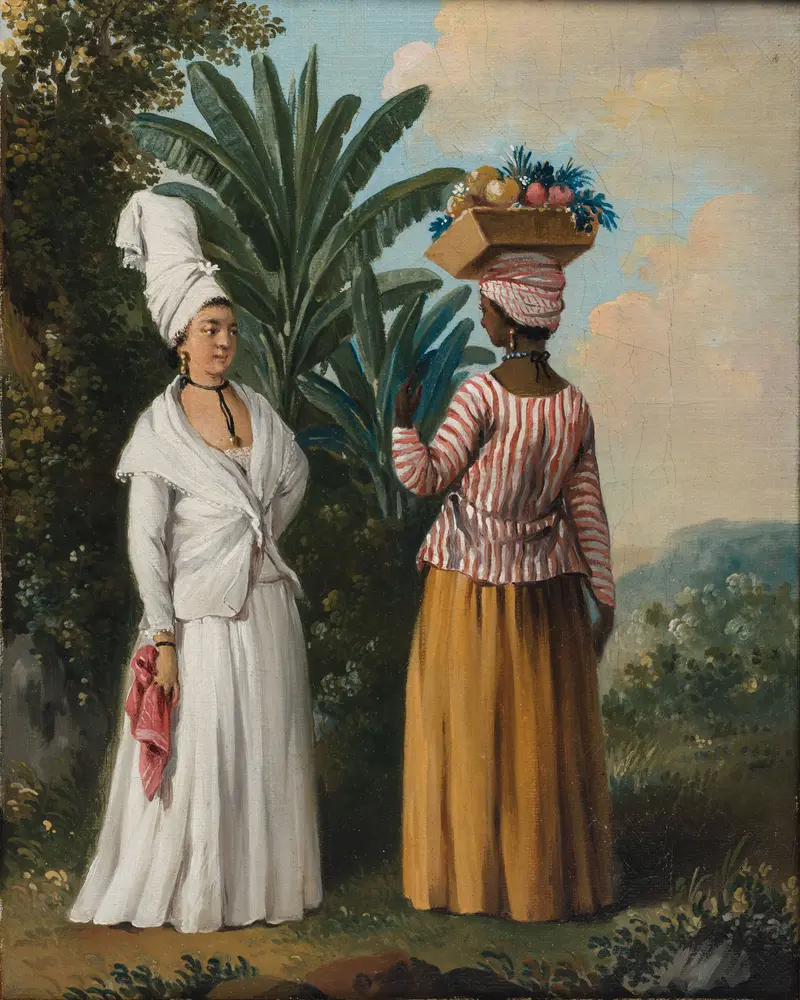
Two Women of Color, Dominica [French Mulatress of Dominica and a Negro Woman in their Proper Dress]
Agostino Brunias

Purchasing Fruit [A French Mulatress Purchasing Fruit from a Negro Wench]
Agostino Brunias

Women of Color Bathing and a Voyeur [Mulatresses and Negro Woman Bathing]
Agostino Brunias
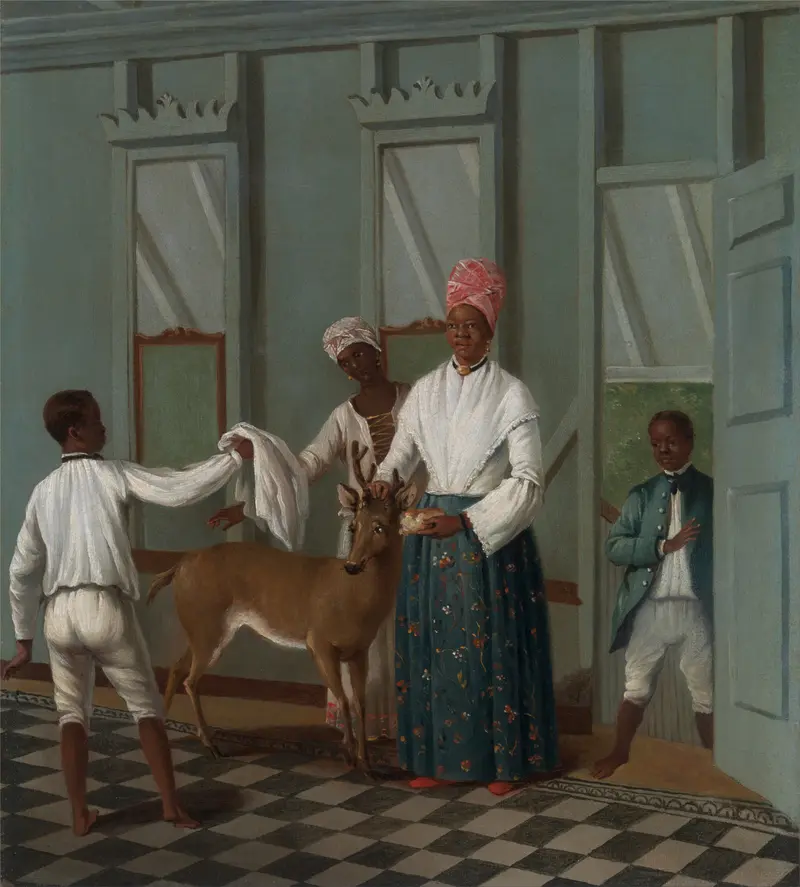
Servants Washing a Deer
Agostino Brunias
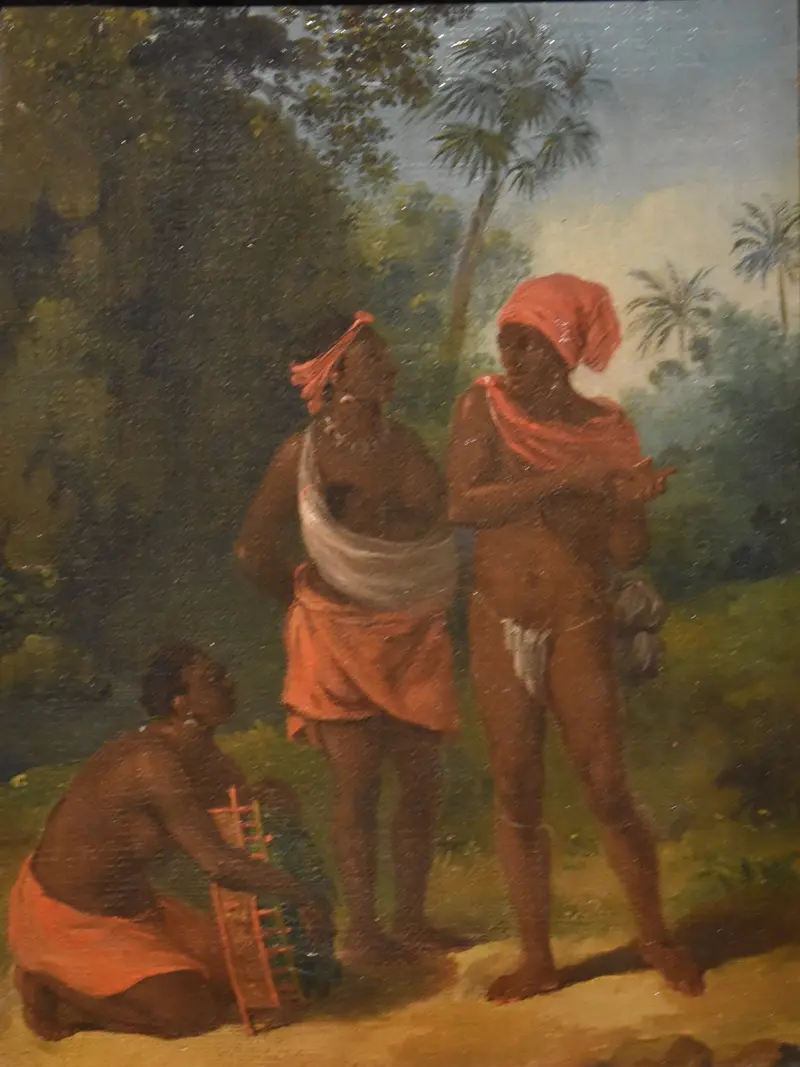
Augustin Brunias Les Caraïbes noirs de Saint Vincent 02
Agostino Brunias
More Genre Scene Art

Banquet of the Officers of the St George Civic Guard
Frans Hals

Rembrandt and Saskia in the Scene of the Prodigal Son
Rembrandt van Rijn

Bal du moulin de la Galette
Pierre-Auguste Renoir

Quadrille at the Moulin Rouge
Henri de Toulouse-Lautrec

A Burial at Ornans
Gustave Courbet

When Will You Marry?
Paul Gauguin