
Art period · 17th–18th century · British North America
Colonial American Art and Paintings
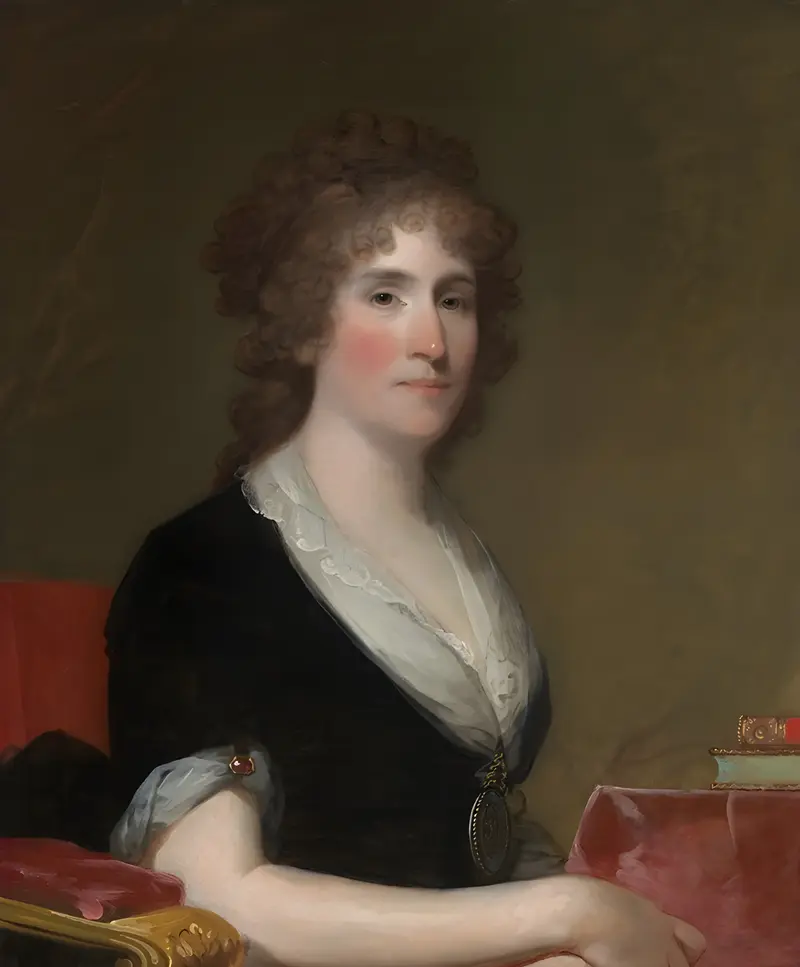
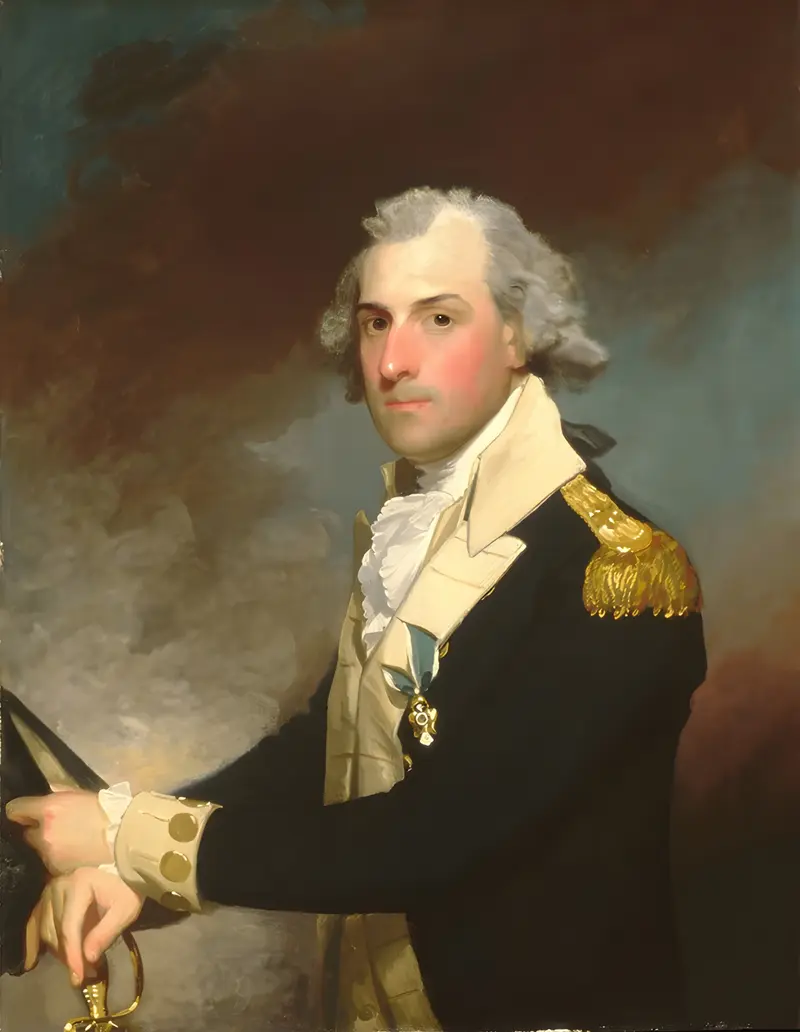
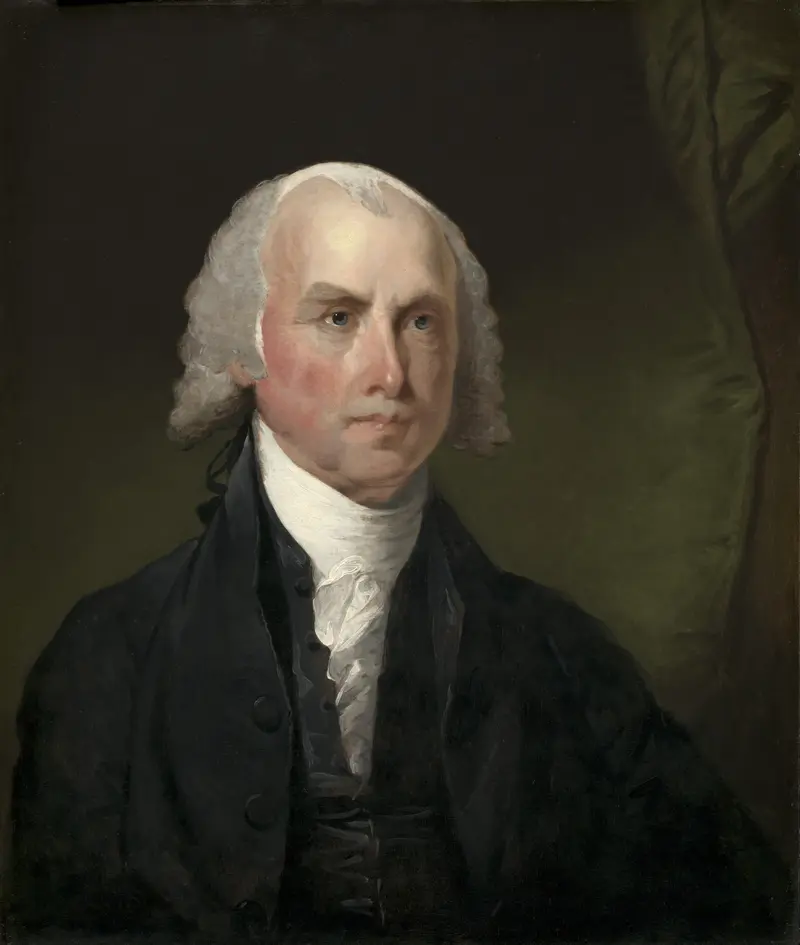
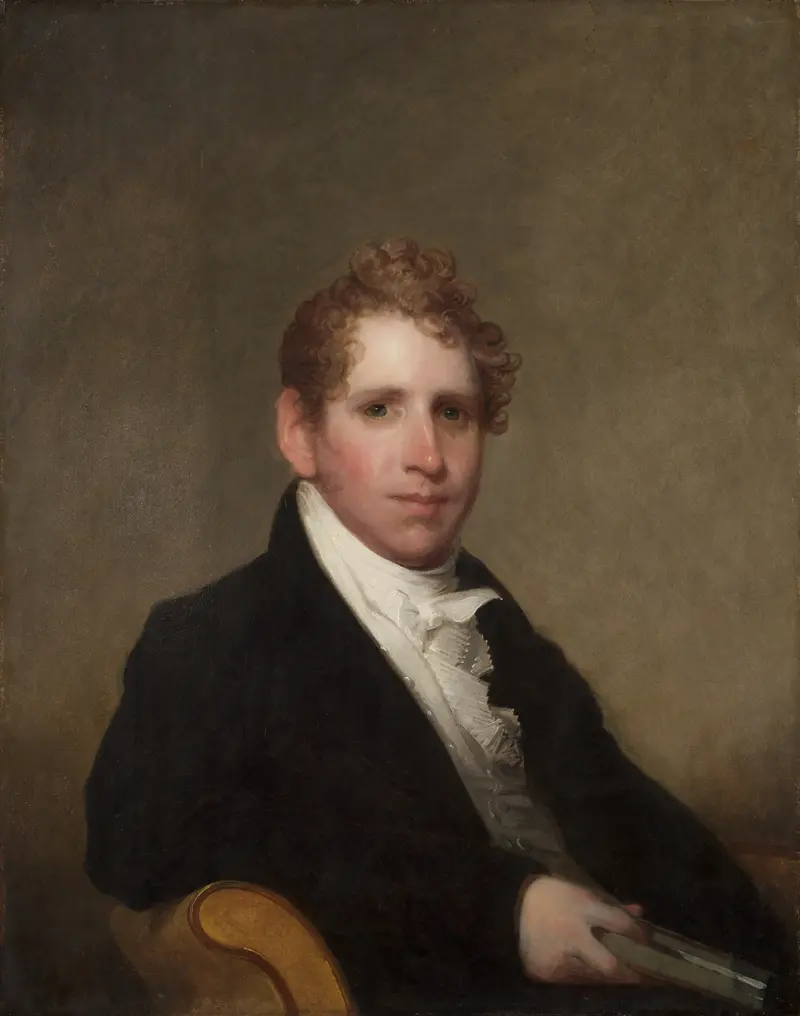
Colonial American art is the painting of a historical period: the art of Britain's North American colonies in the 17th and 18th centuries, up to the Revolution of 1776. Most of it is portraits of merchants, ministers and their families, painted in Boston, Newport, New York, Philadelphia and the southern colonies. Its painters include John Smibert, Robert Feke, John Singleton Copley, Charles Willson Peale and Gilbert Stuart.
Sitters wanted to look rich: Copley dressed the Boston merchant Nicholas Boylston in a silk banyan and set his company's ship behind him. After independence Peale, Stuart and John Trumbull painted the leaders and battles of the Revolution, and the Getty's art vocabulary lets the term cover work that carried the colonial style into the early 1800s.
Browse 299 Colonial American paintings and artworks below, all public domain and free to download.
Selected and written by Pavel MazuelasUpdated November 5, 2026
Part of Art Movements and Painting StylesRelated: Neoclassicism, Folk Art, Famous Portrait Paintings
All Colonial American paintings and artworks
Mostly portraits, plus West Indian scenes, Philadelphia street views, landscapes, history paintings of the Revolution and a few ceramics. All public domain, free to download.
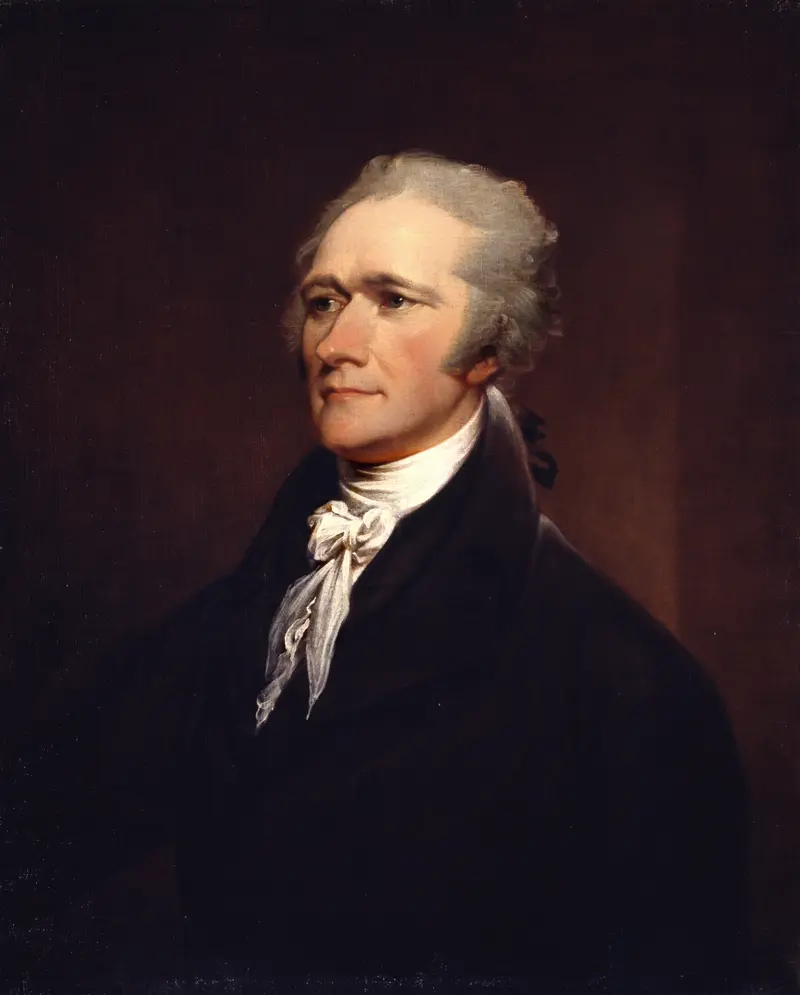
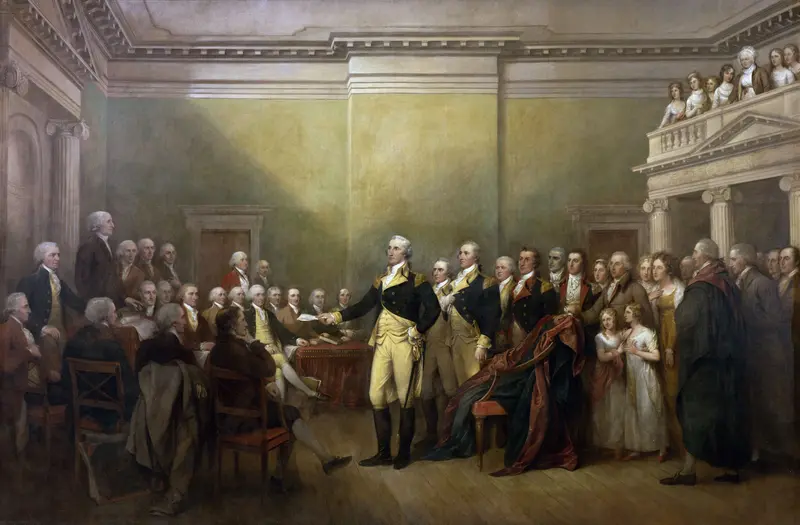

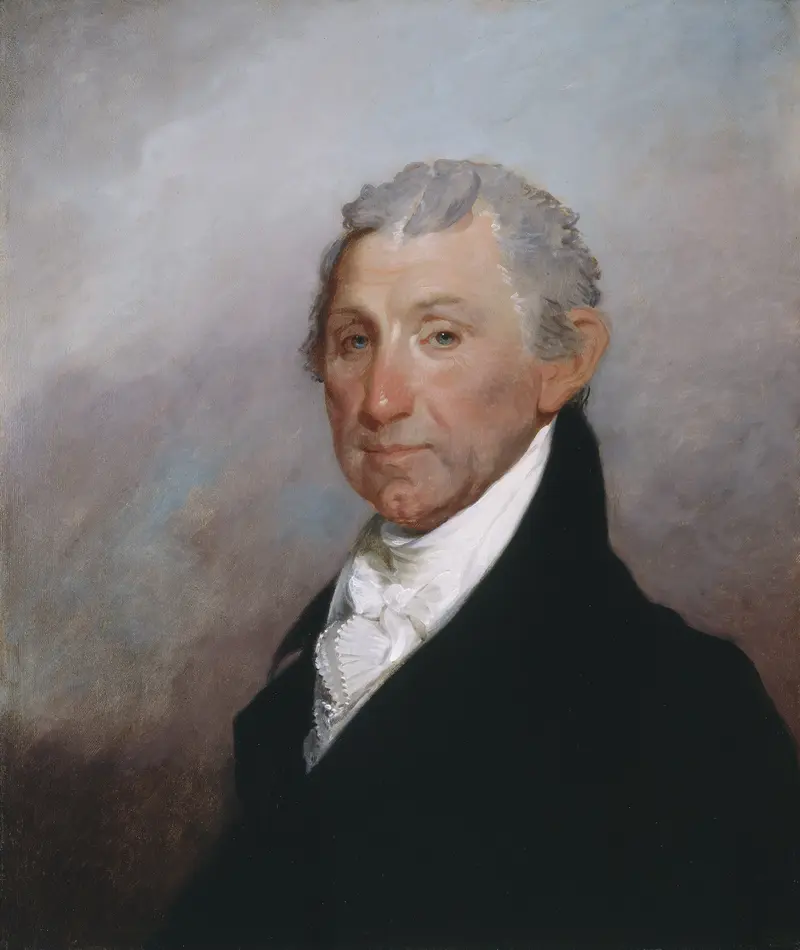
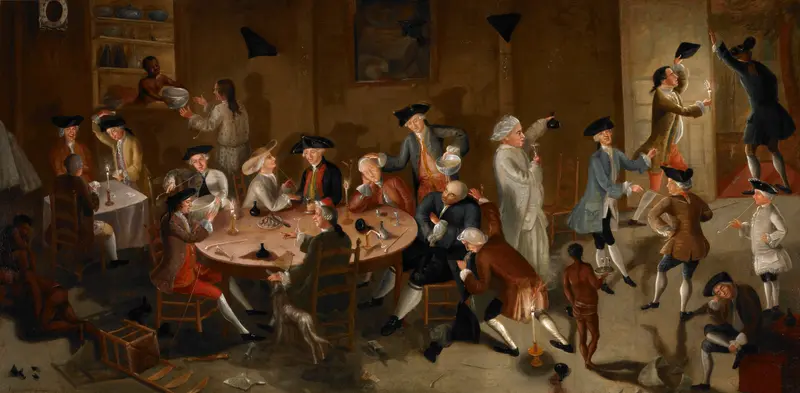
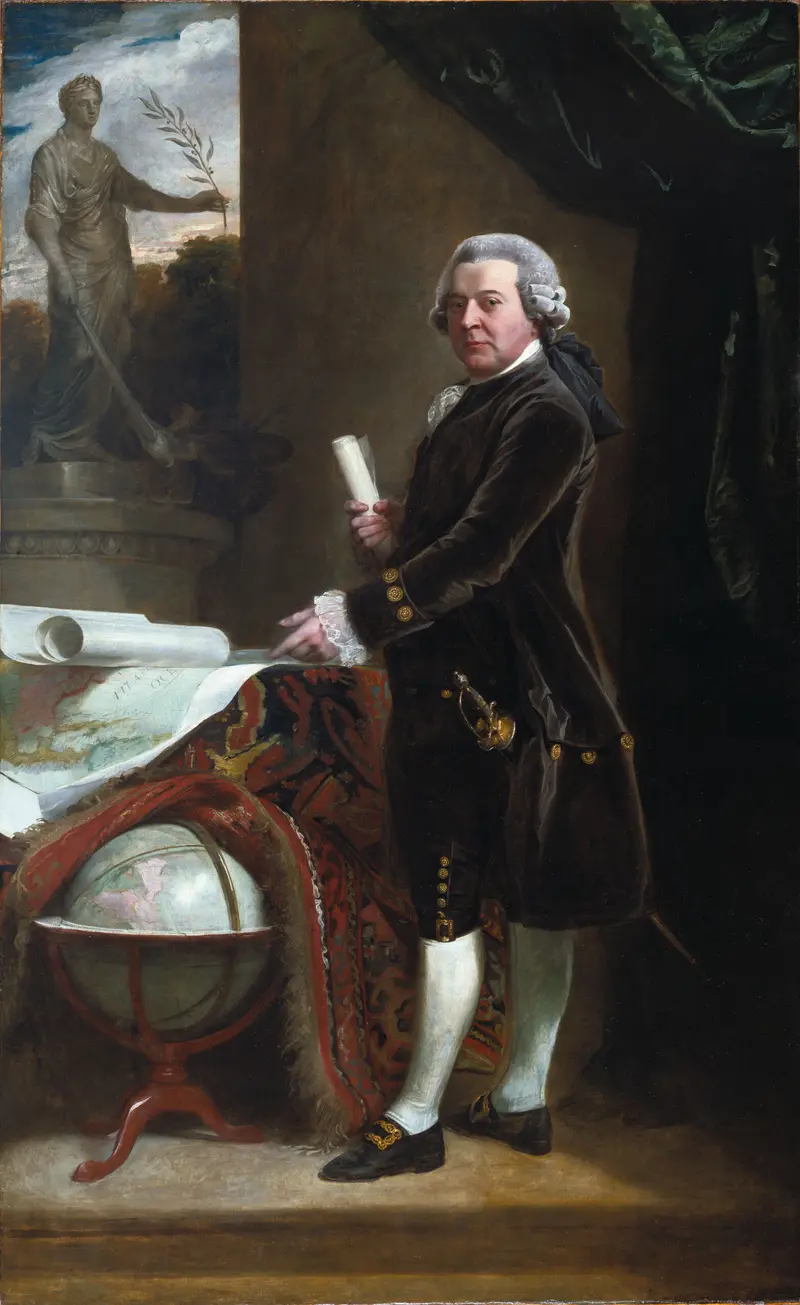

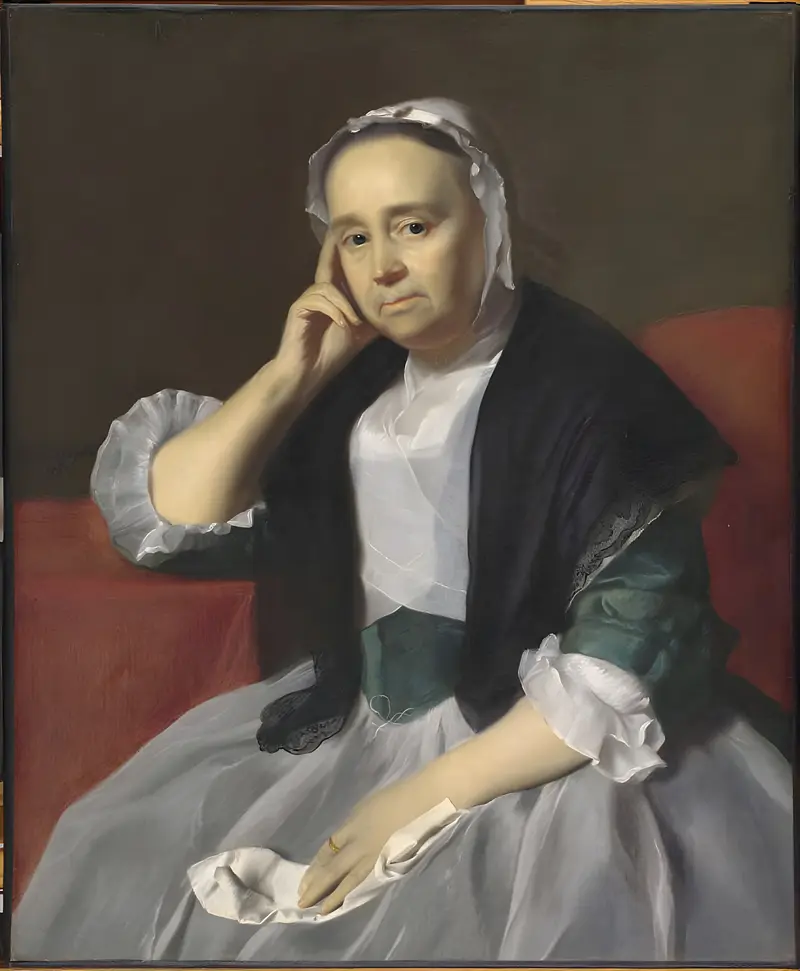
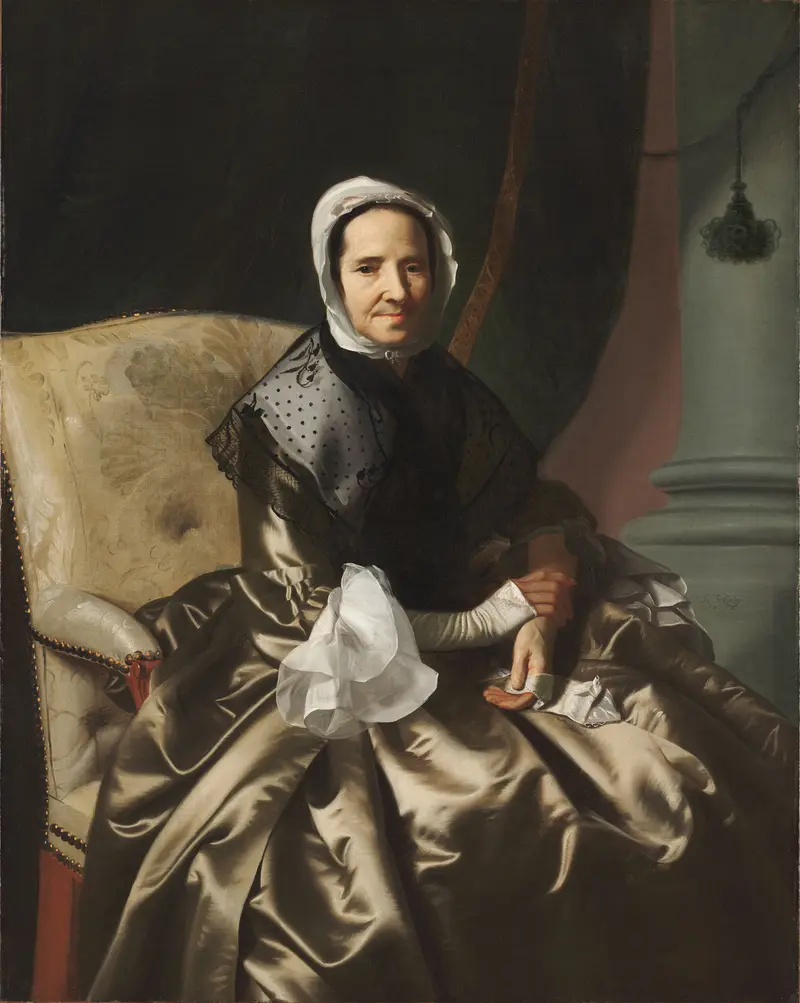
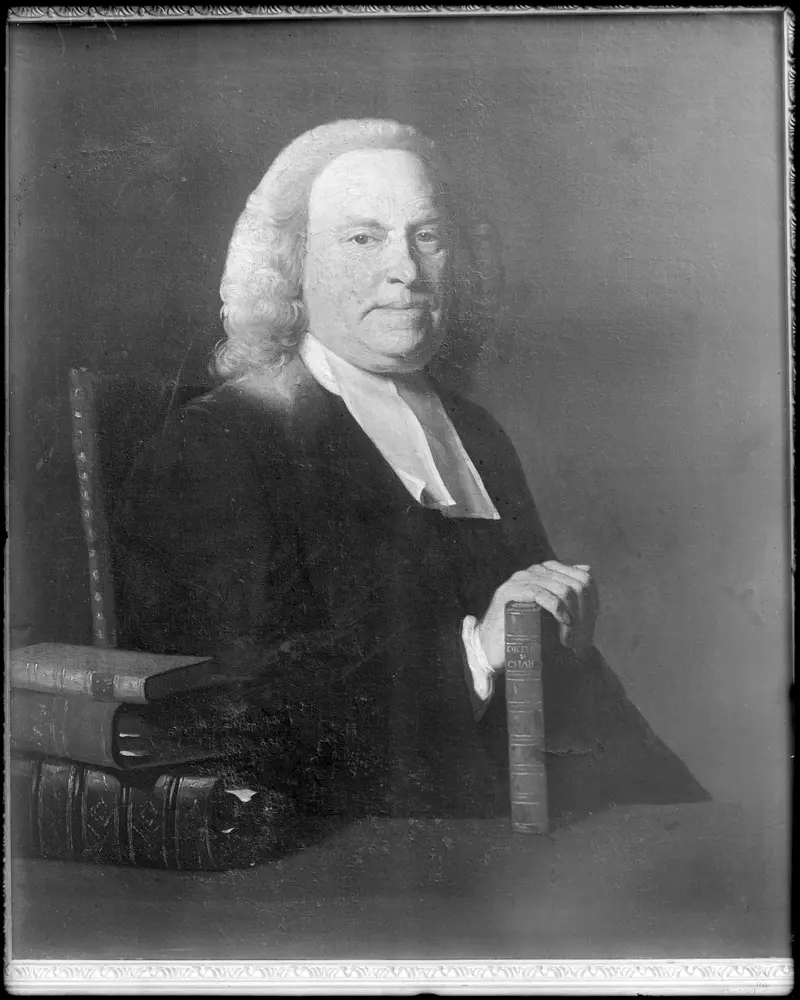
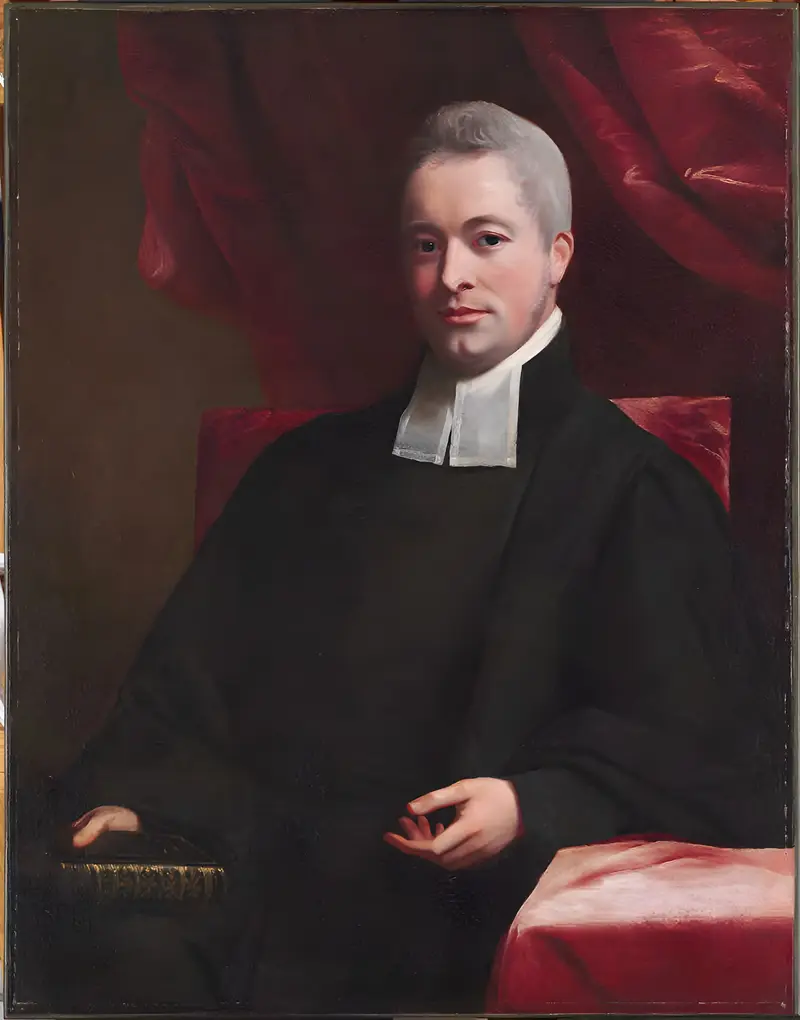


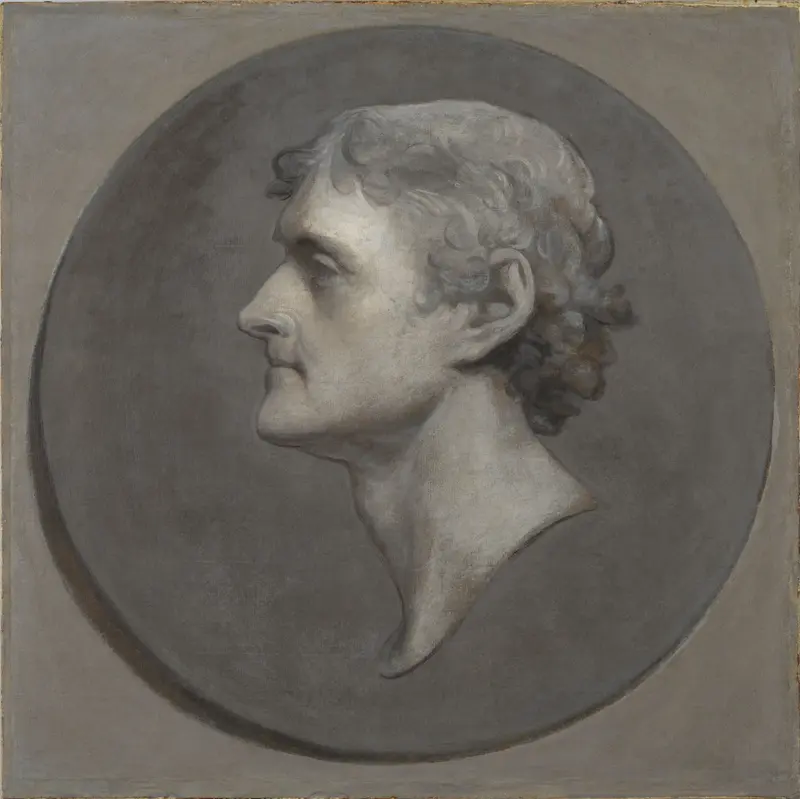
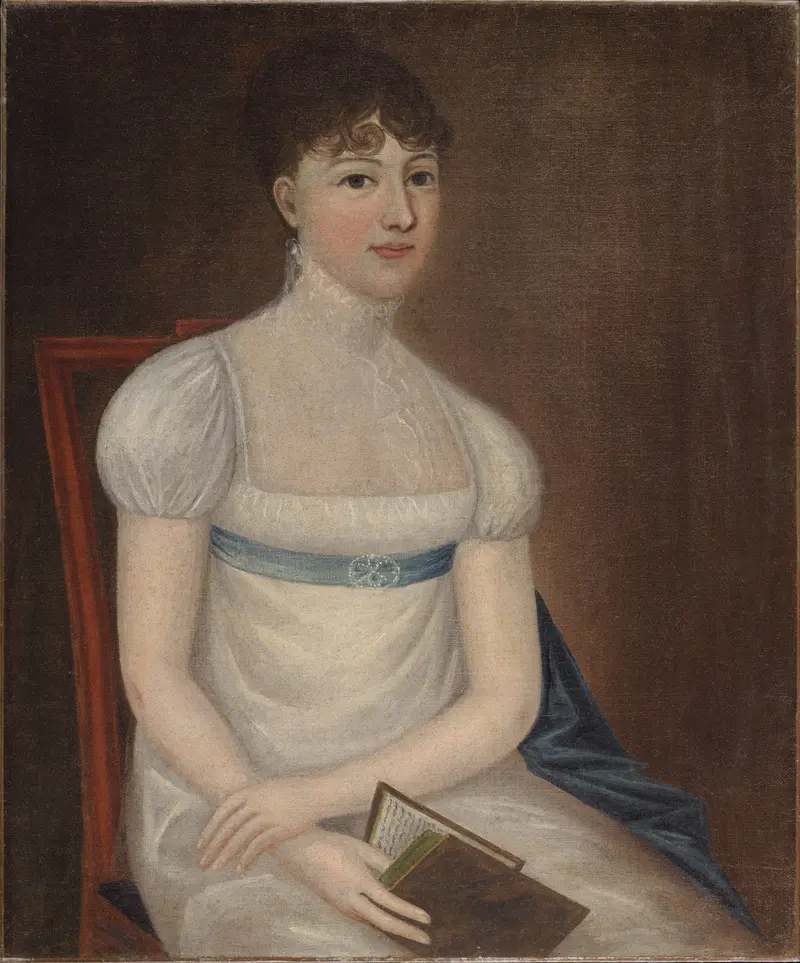
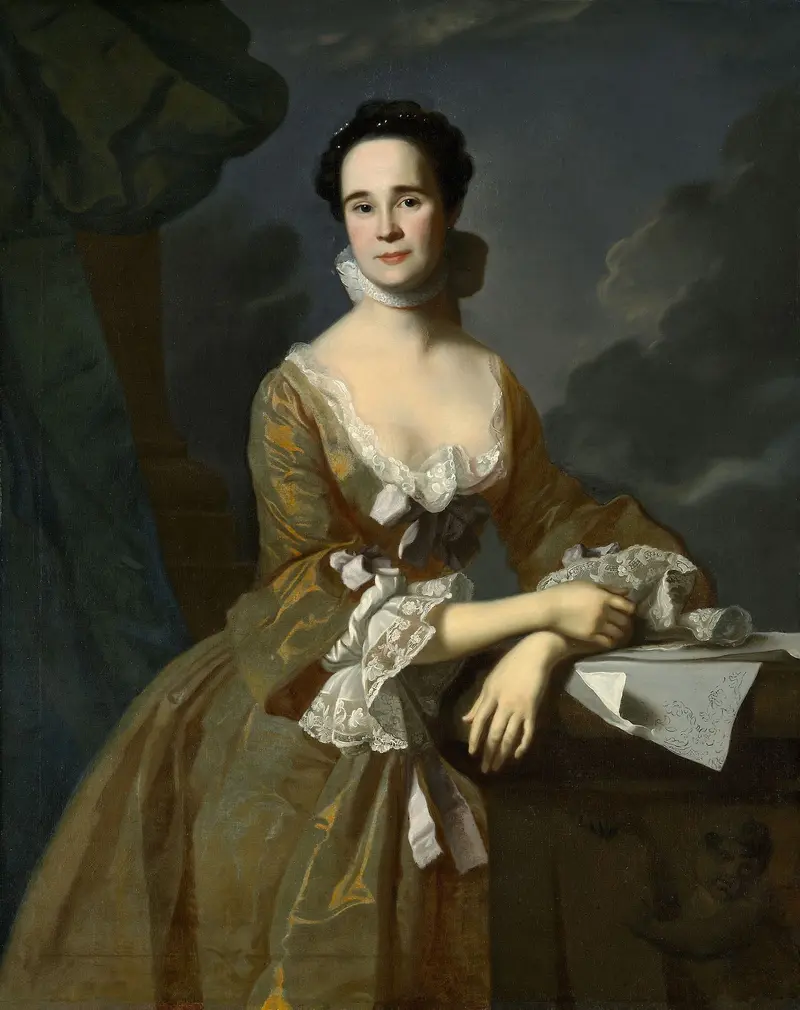
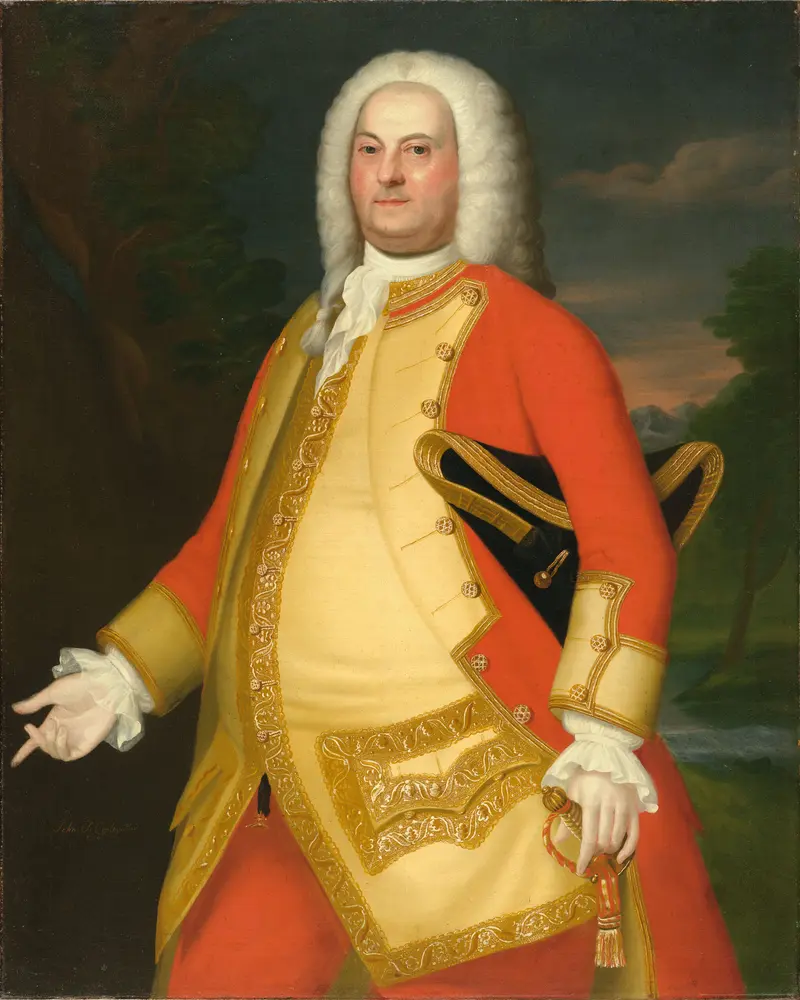
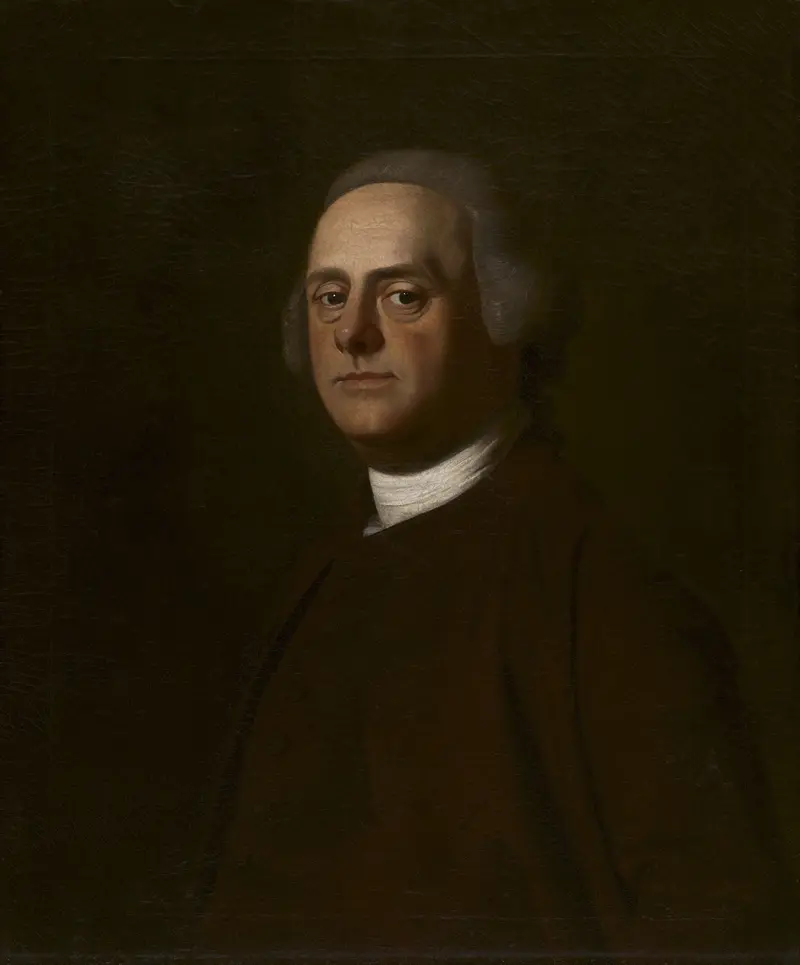
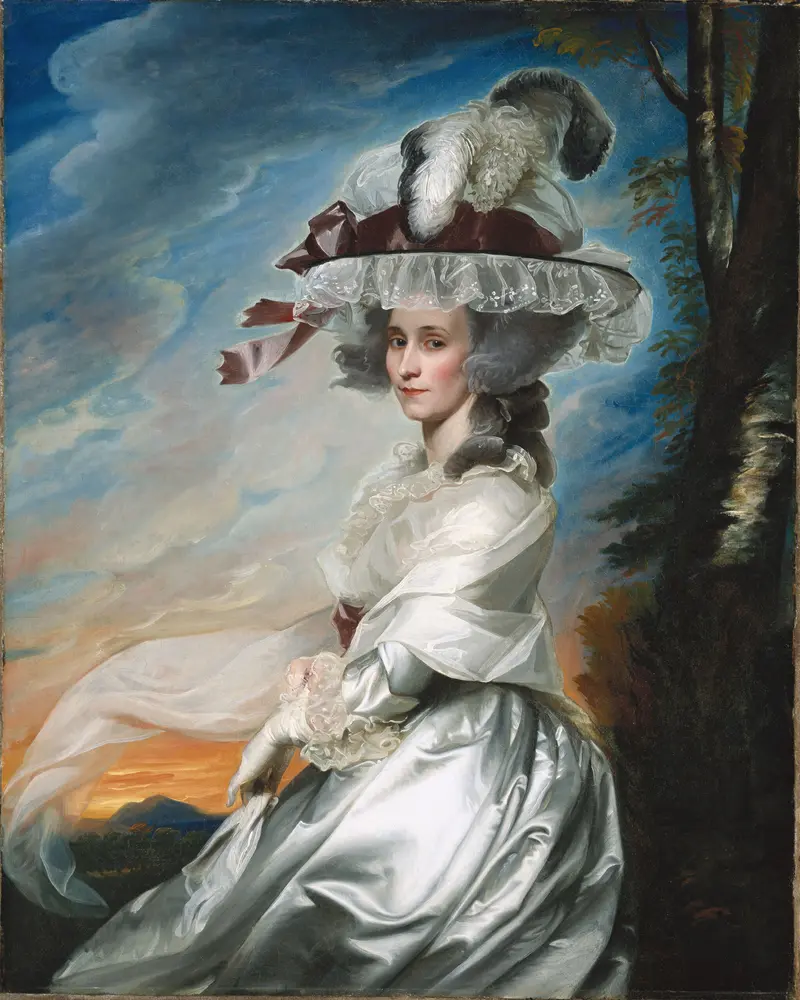
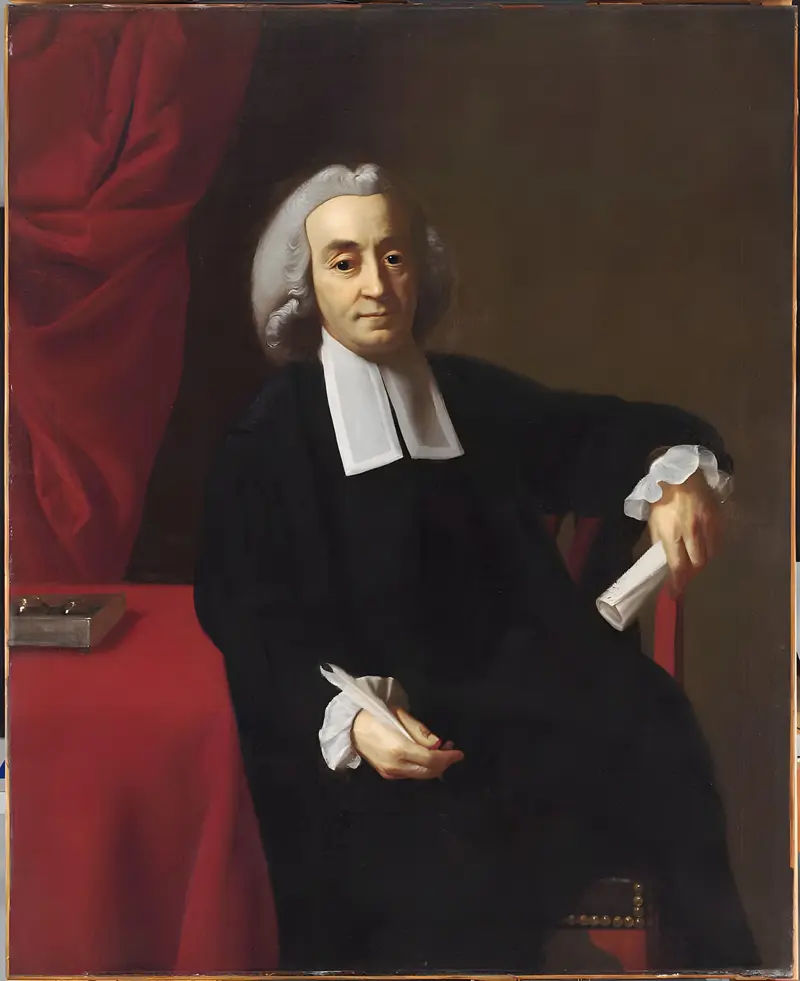
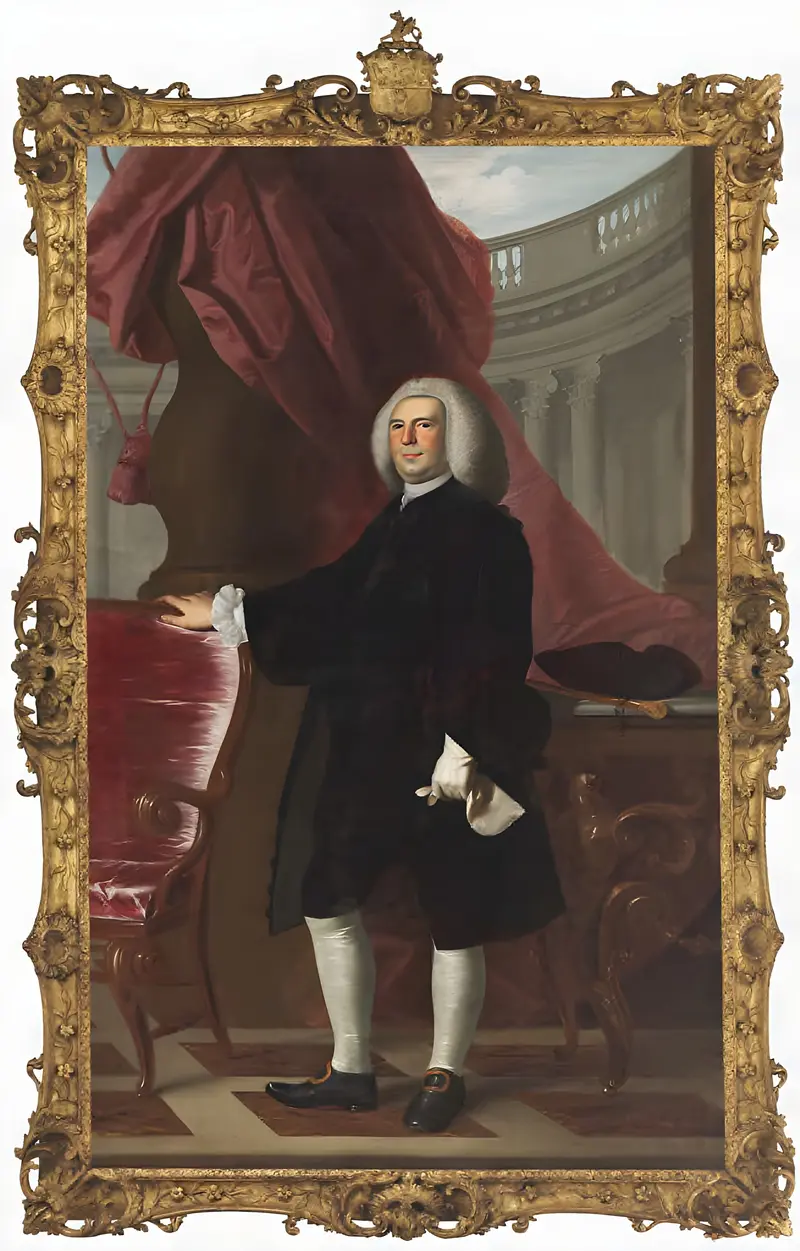

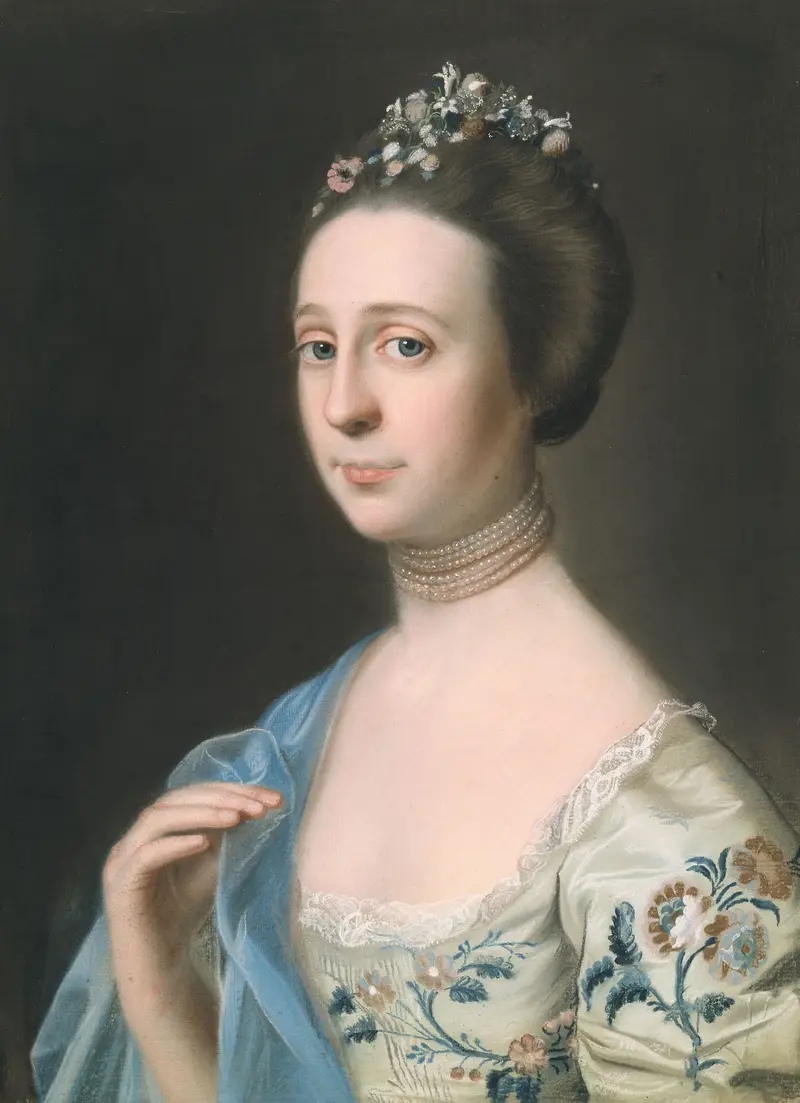
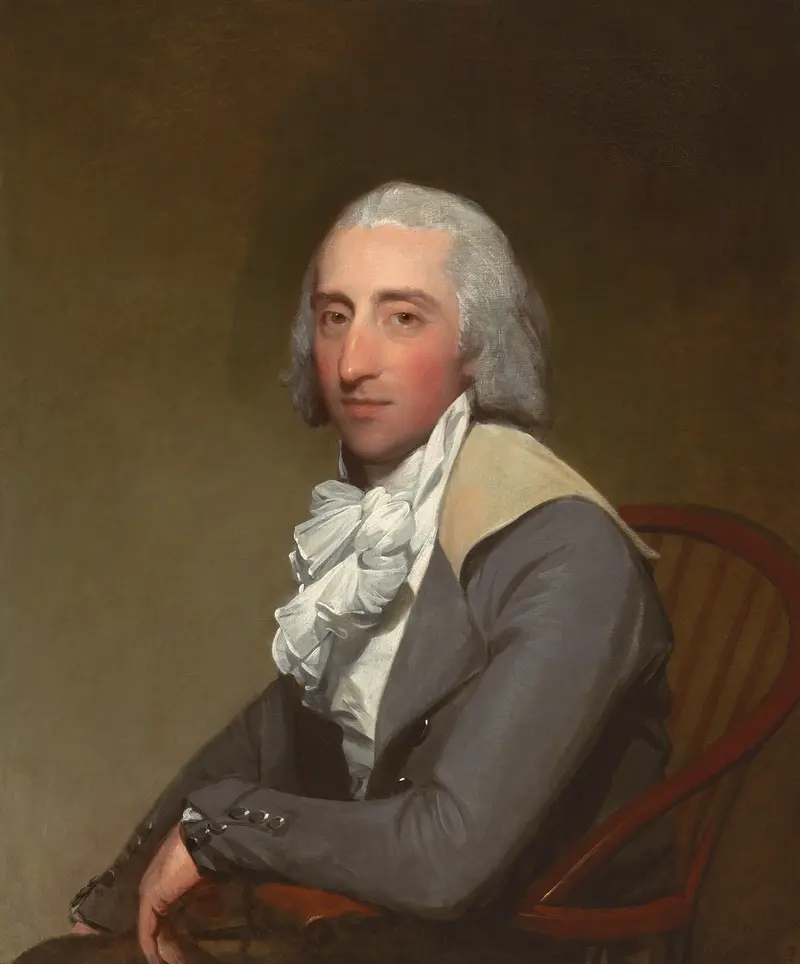
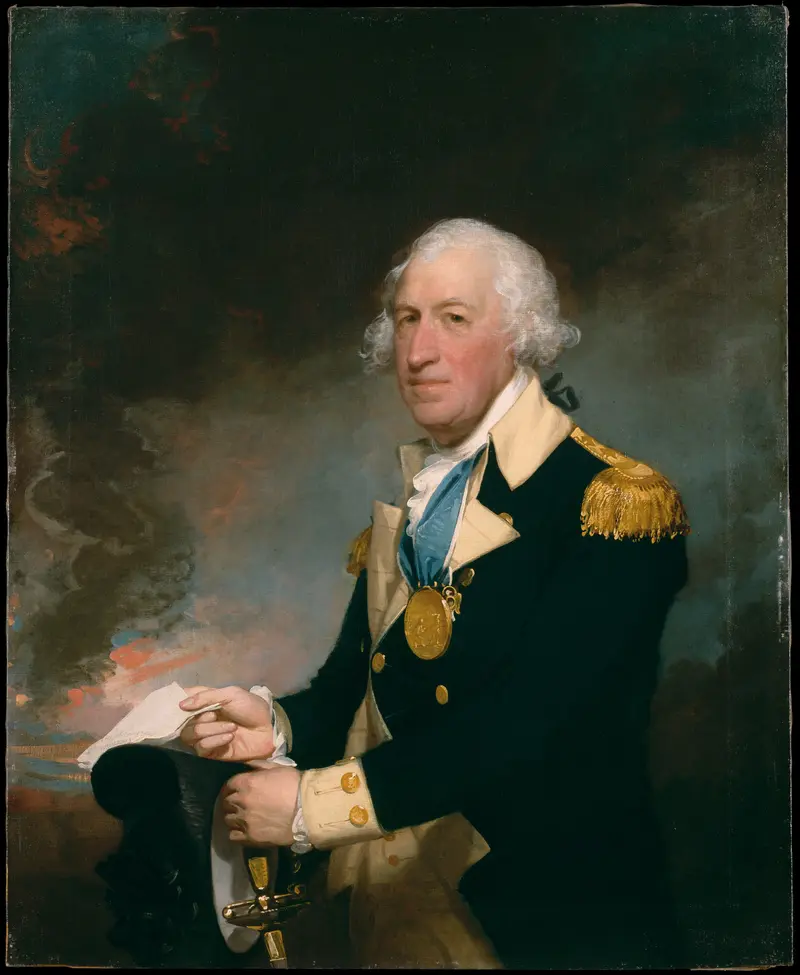
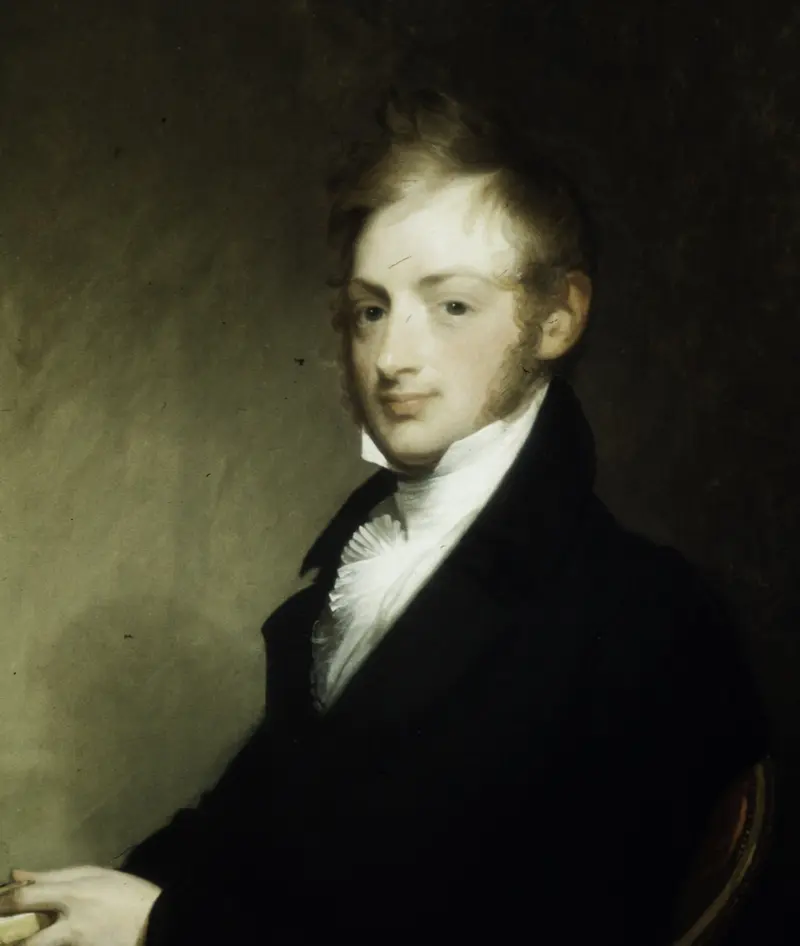
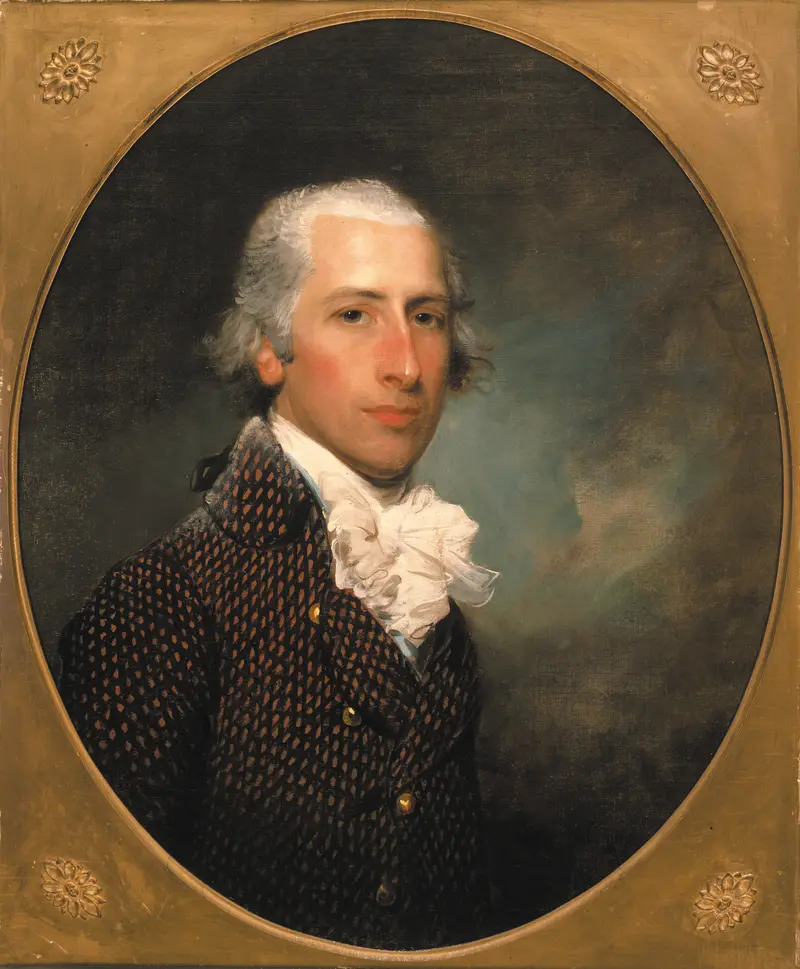
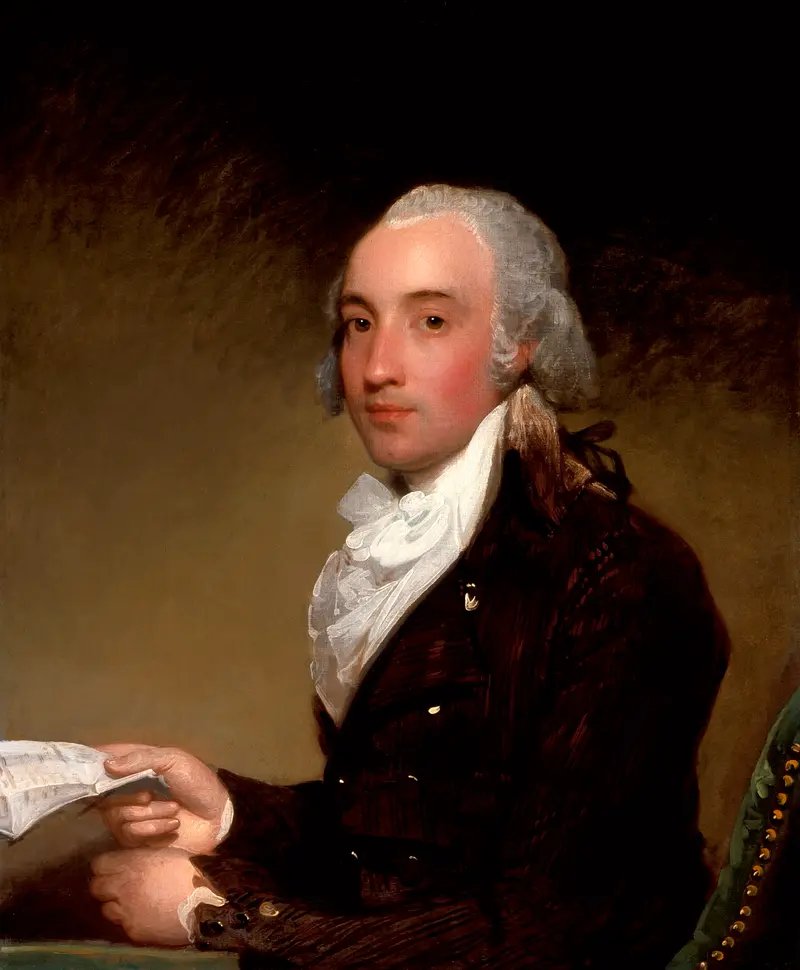
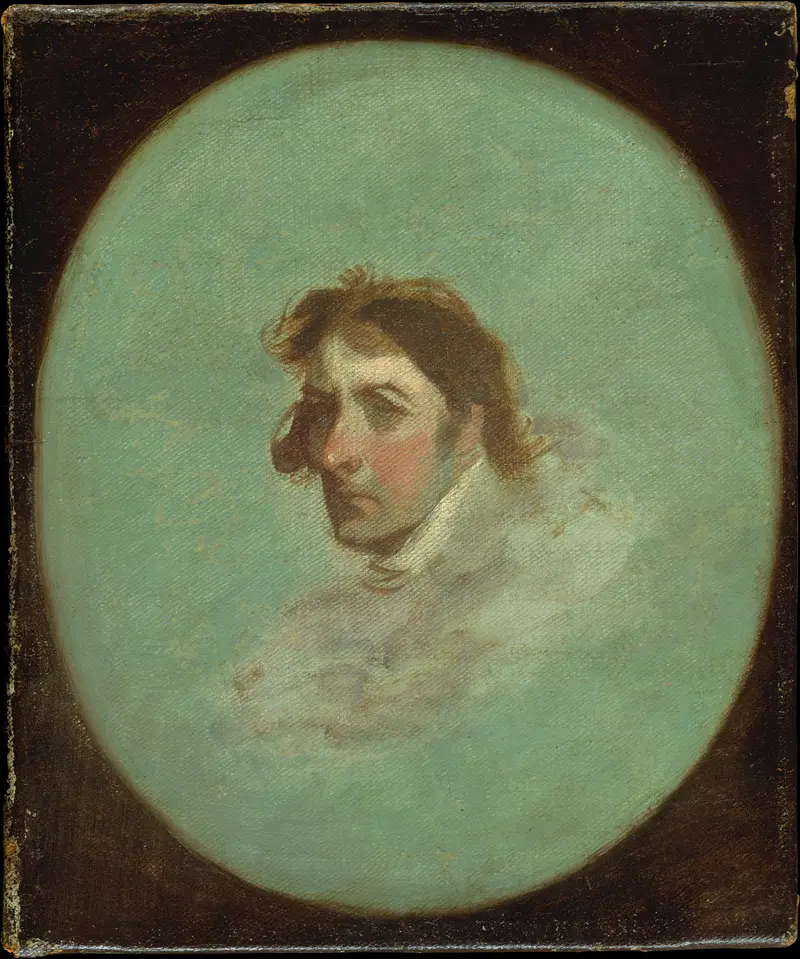
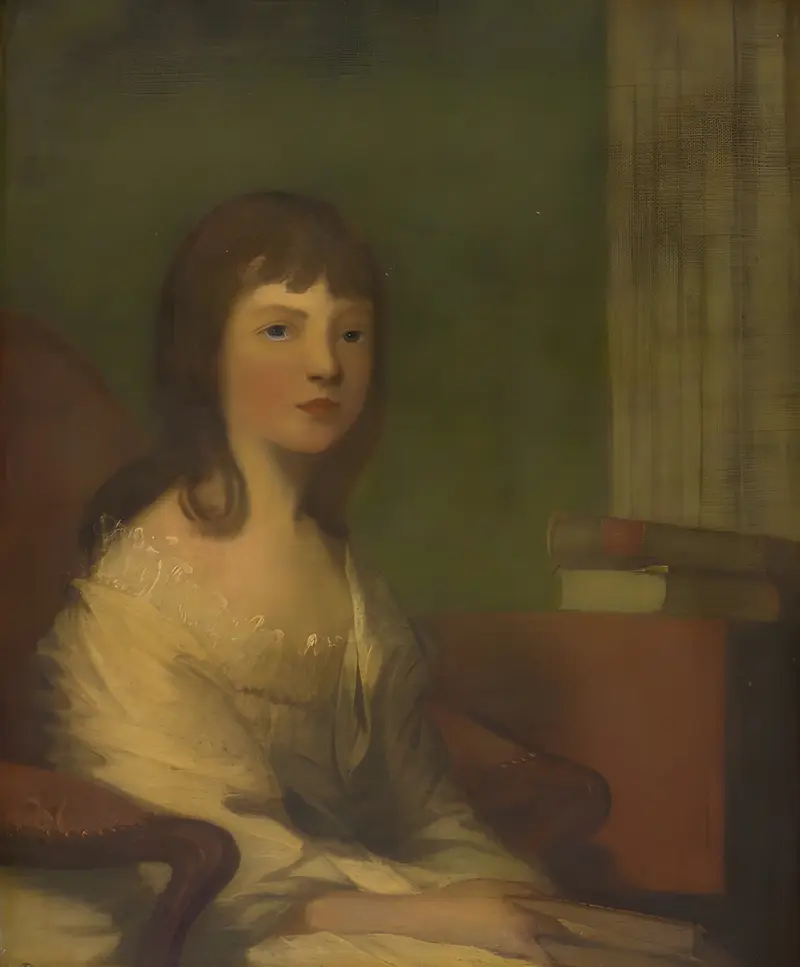
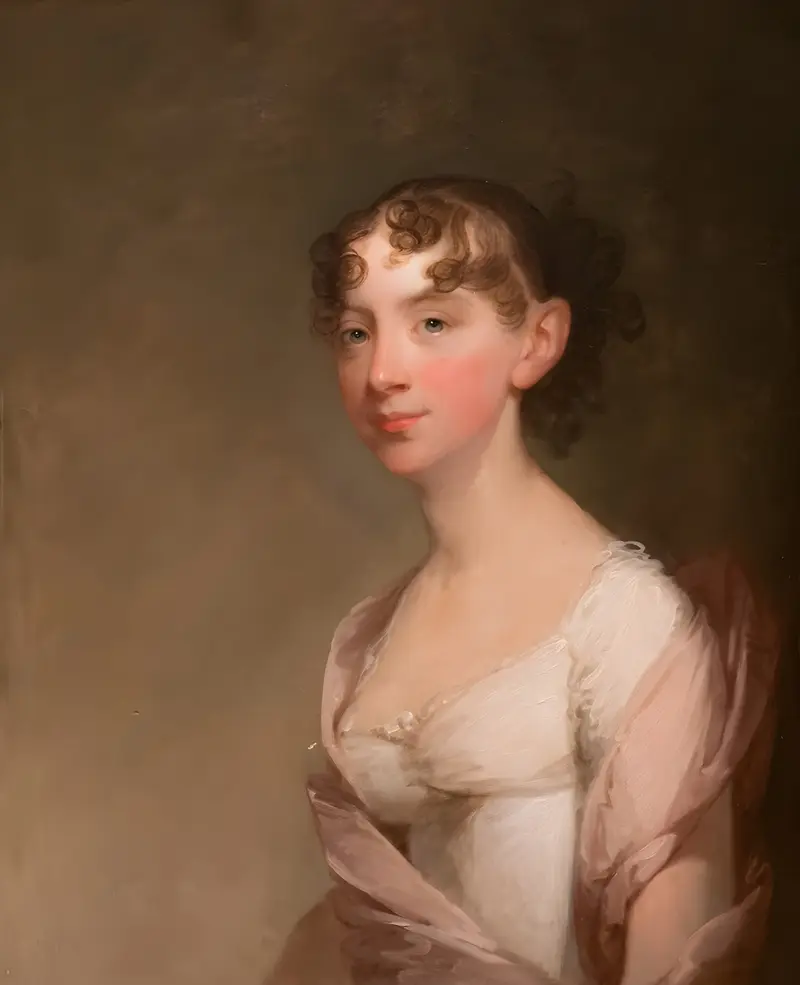
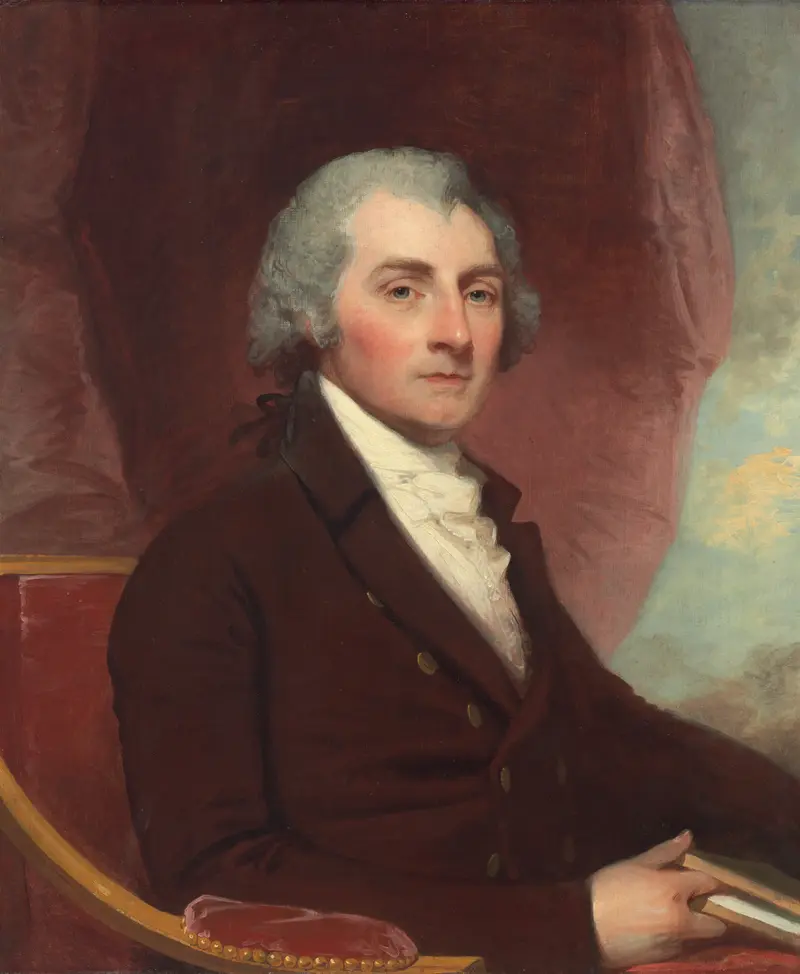
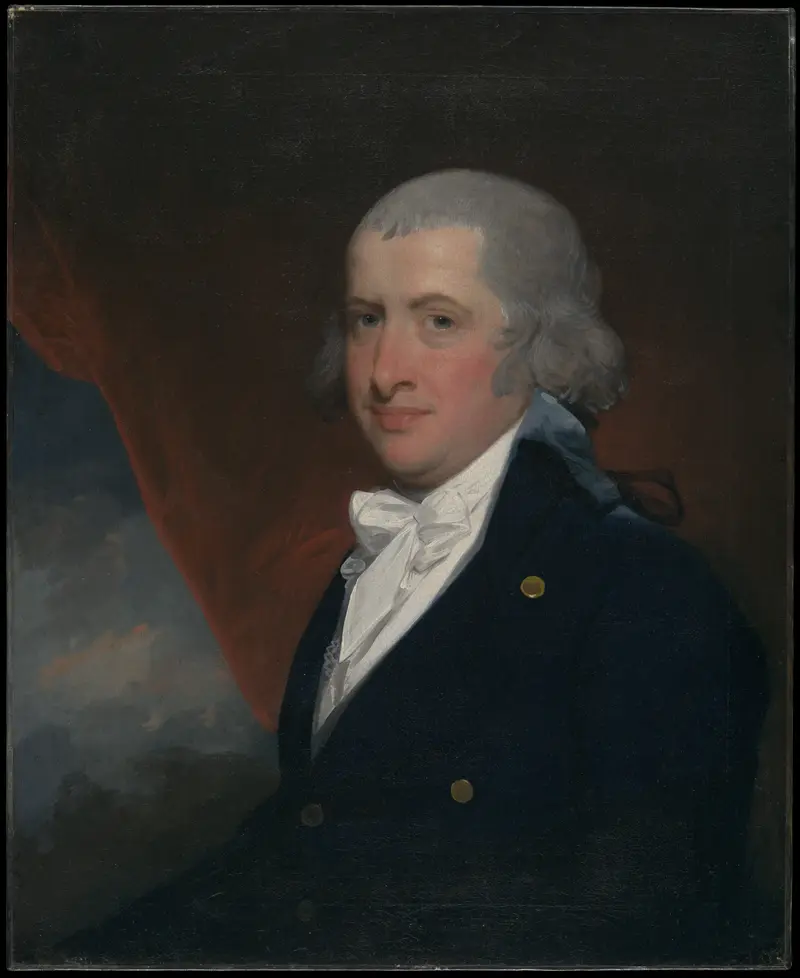
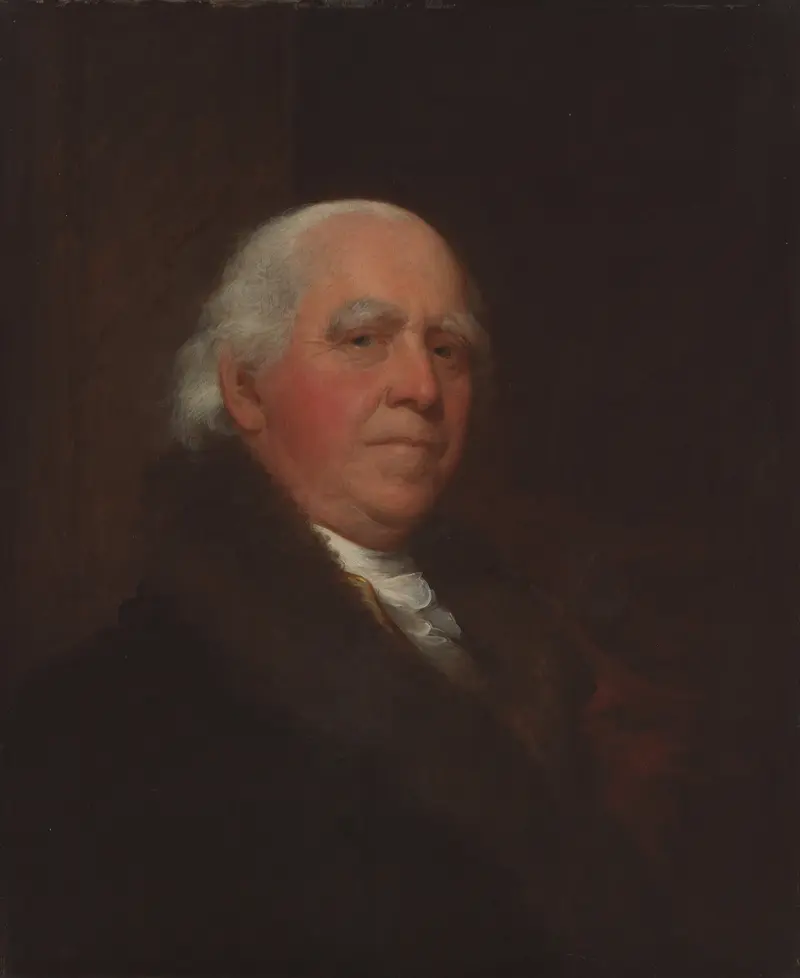
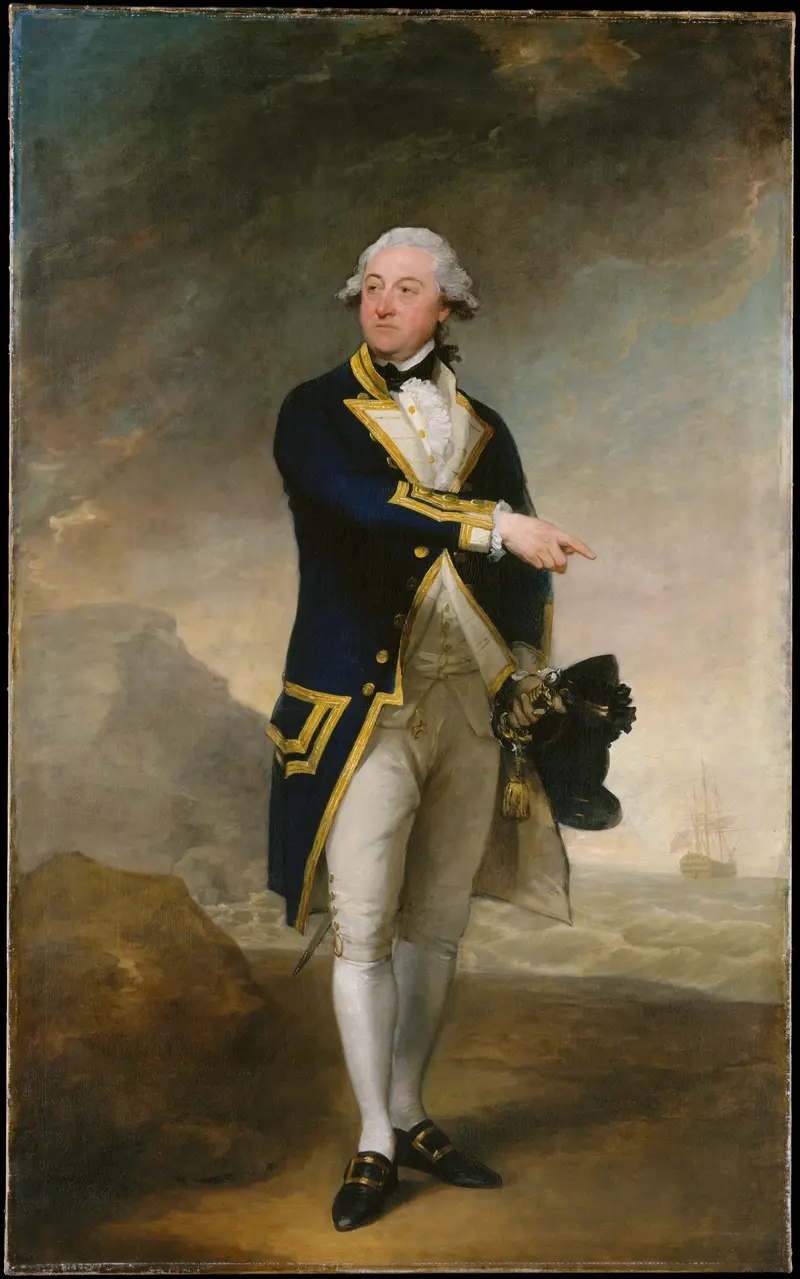
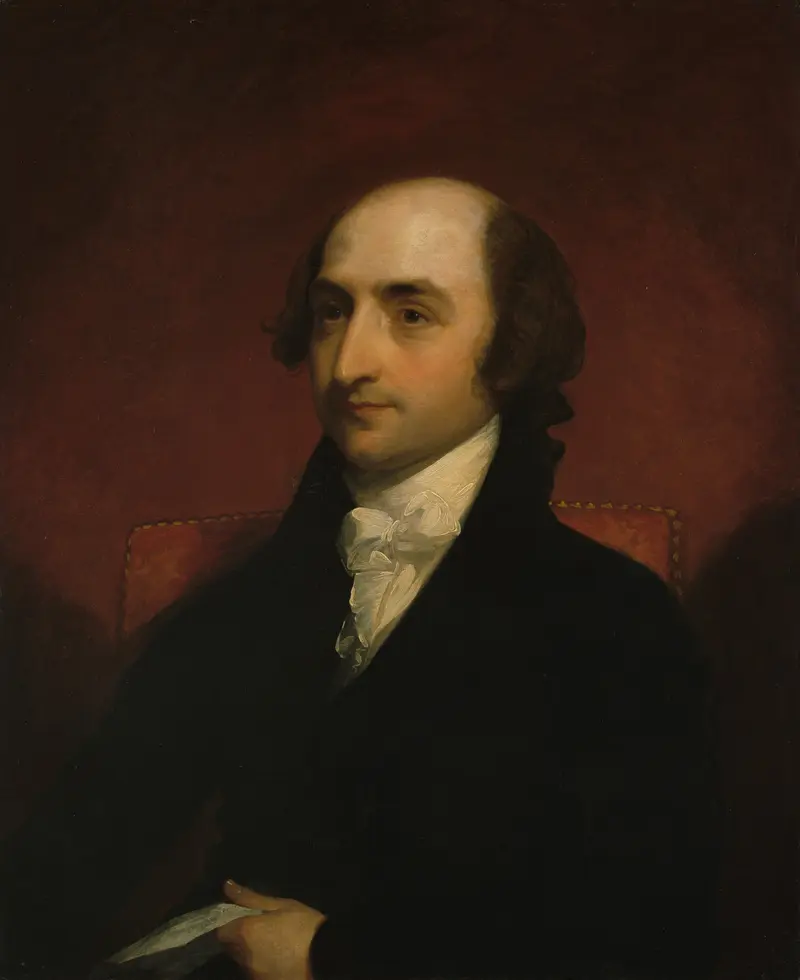
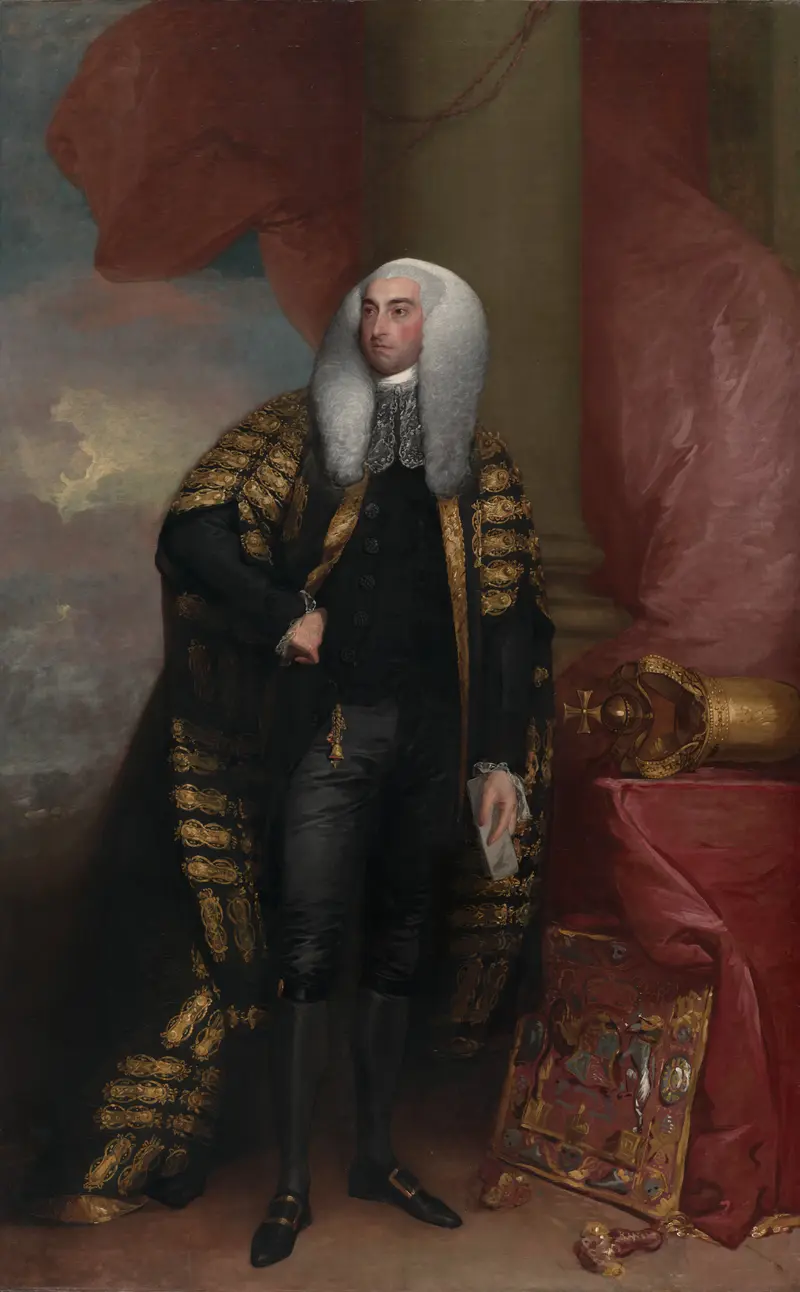
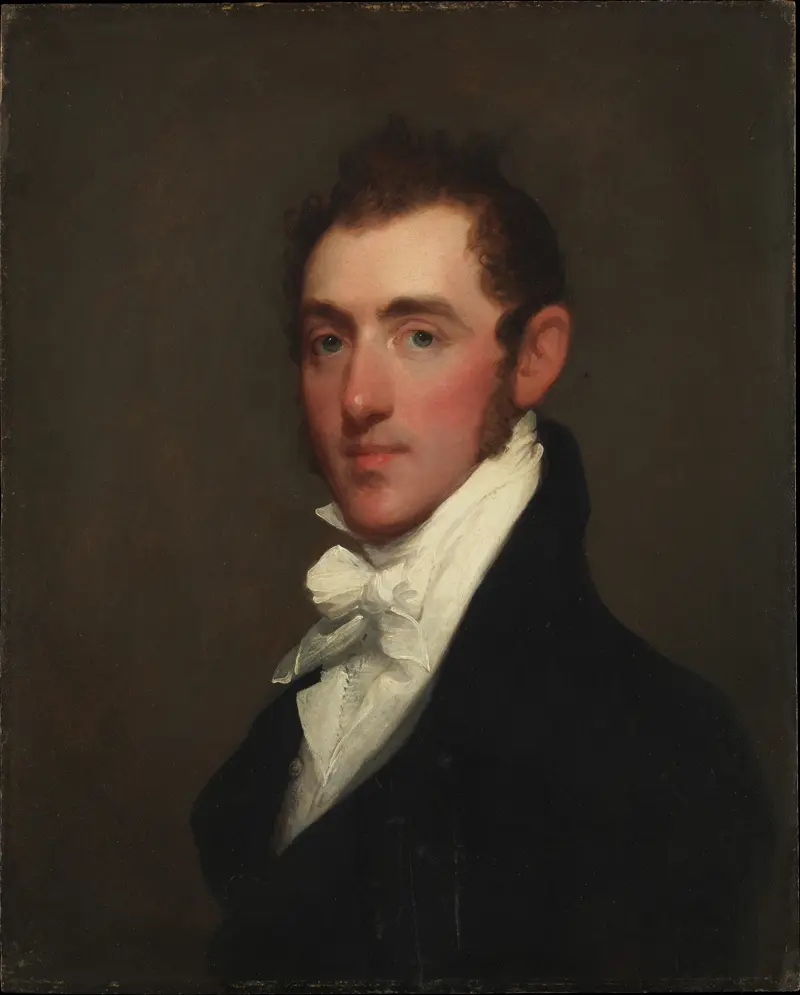
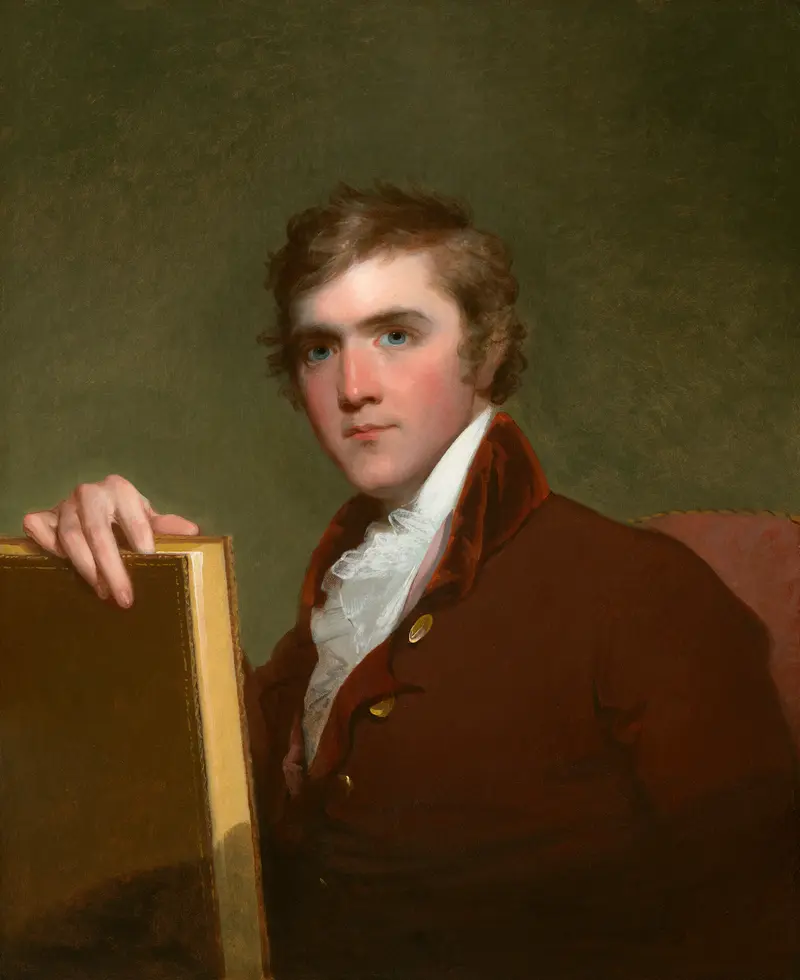
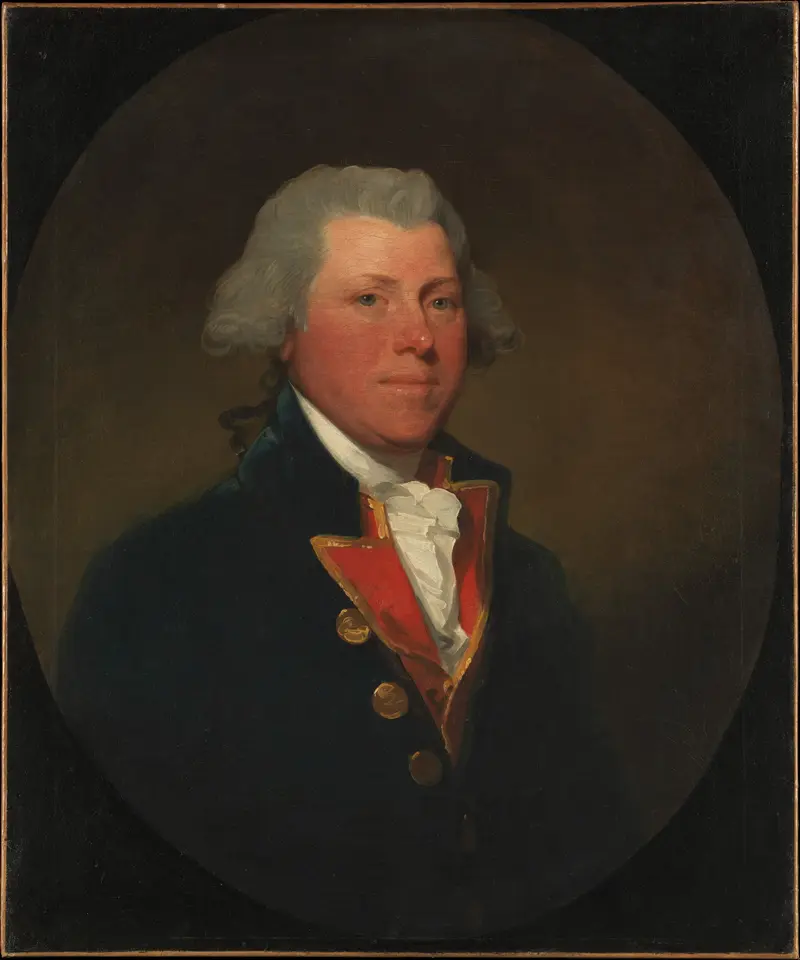
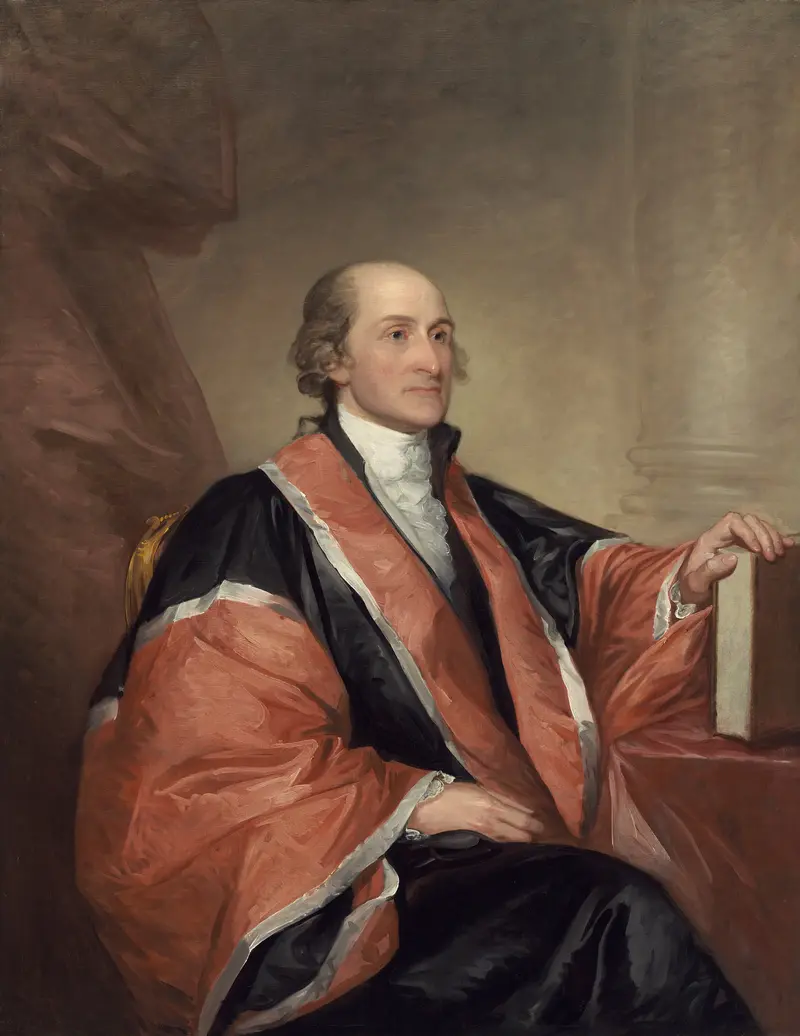
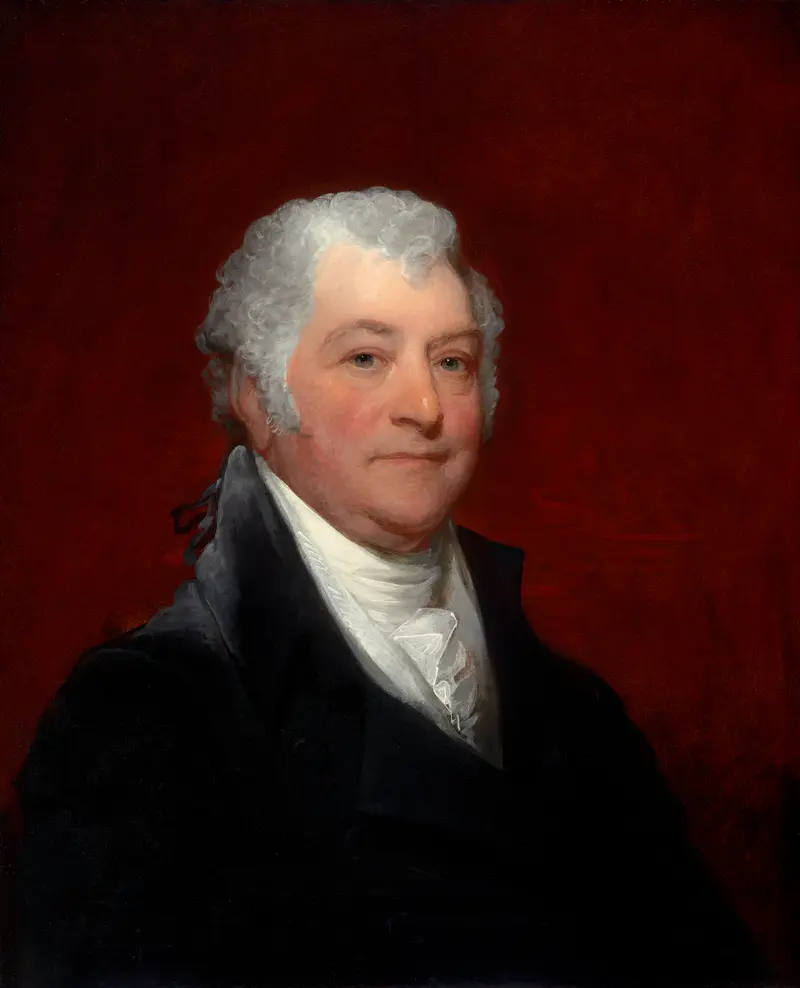
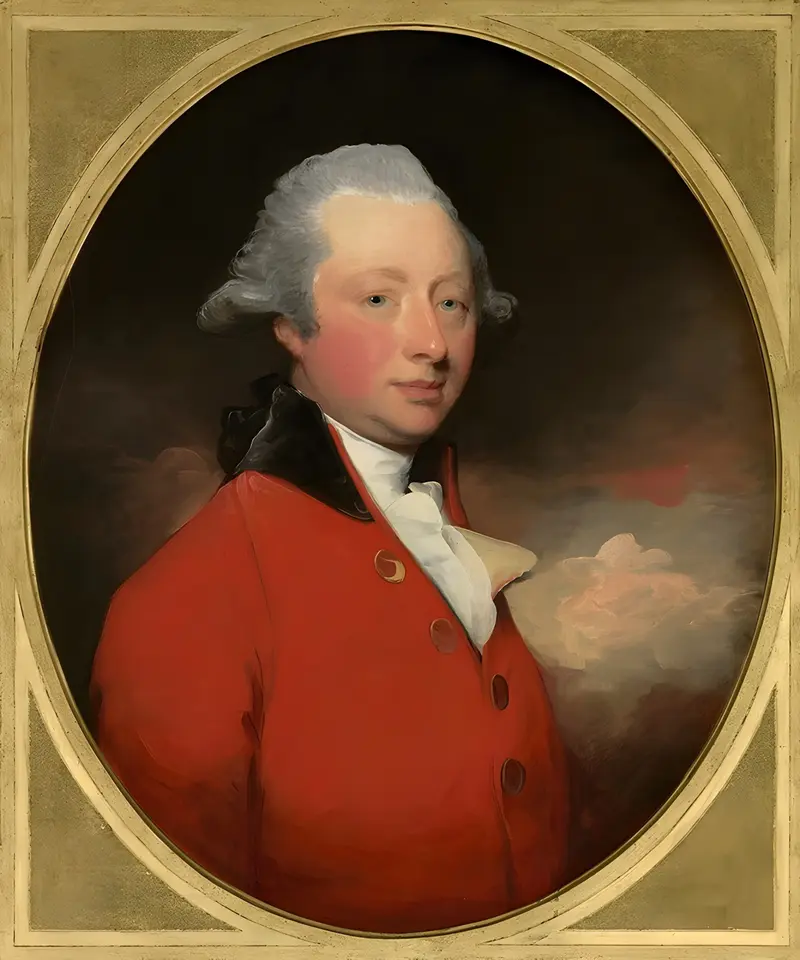
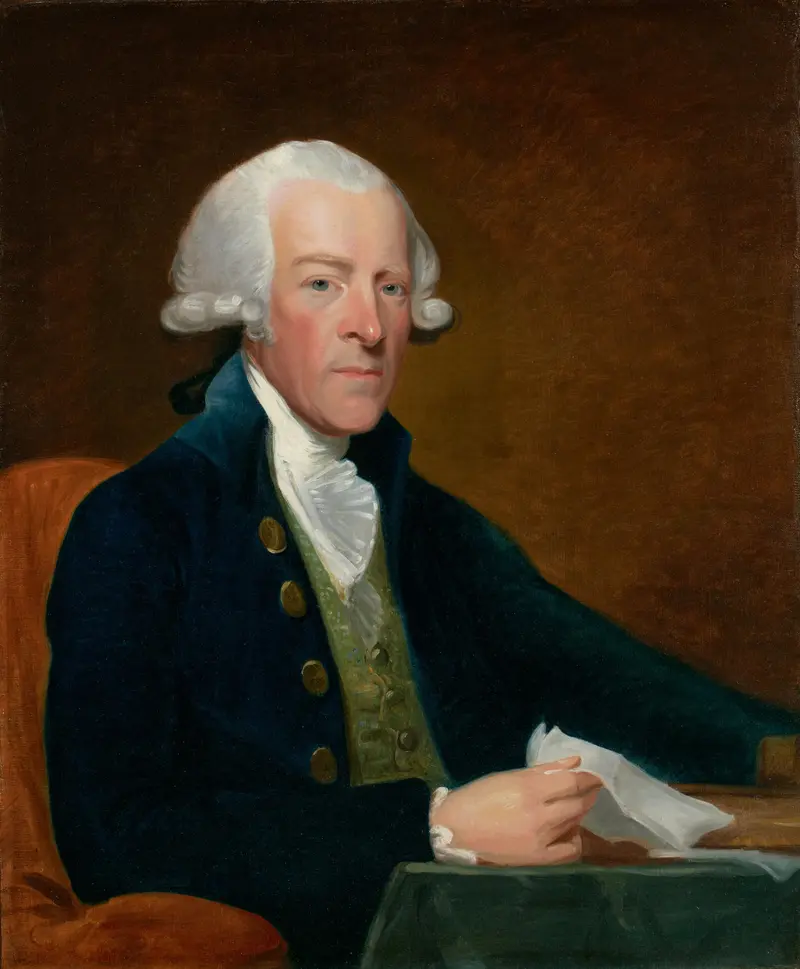
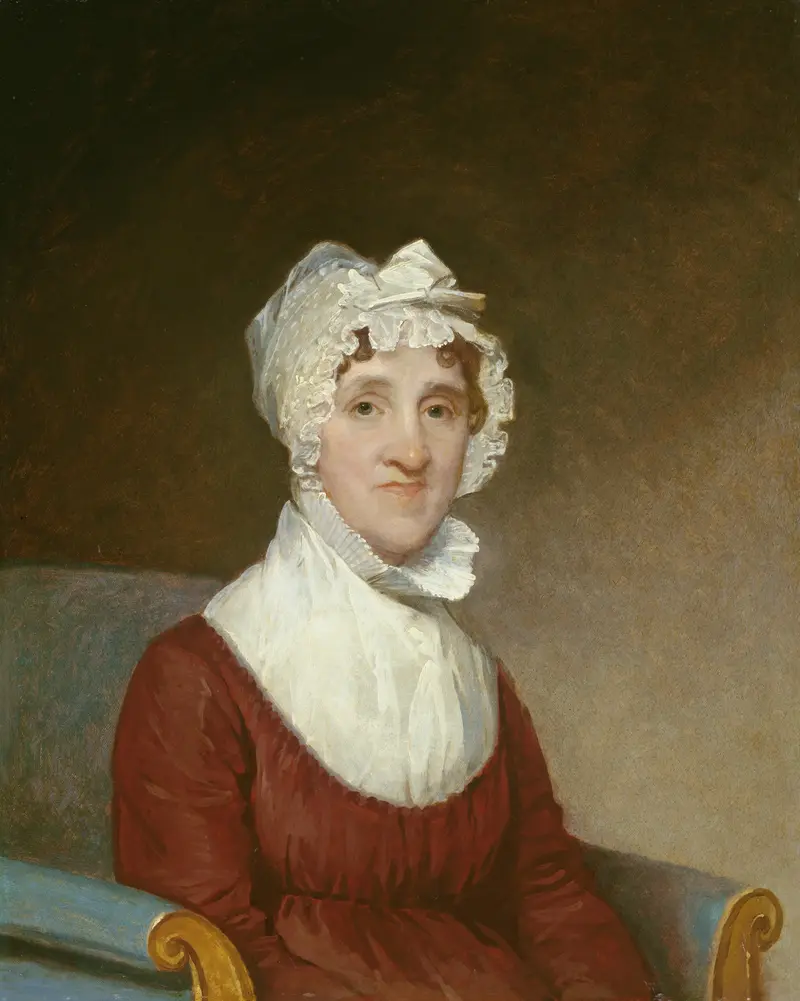
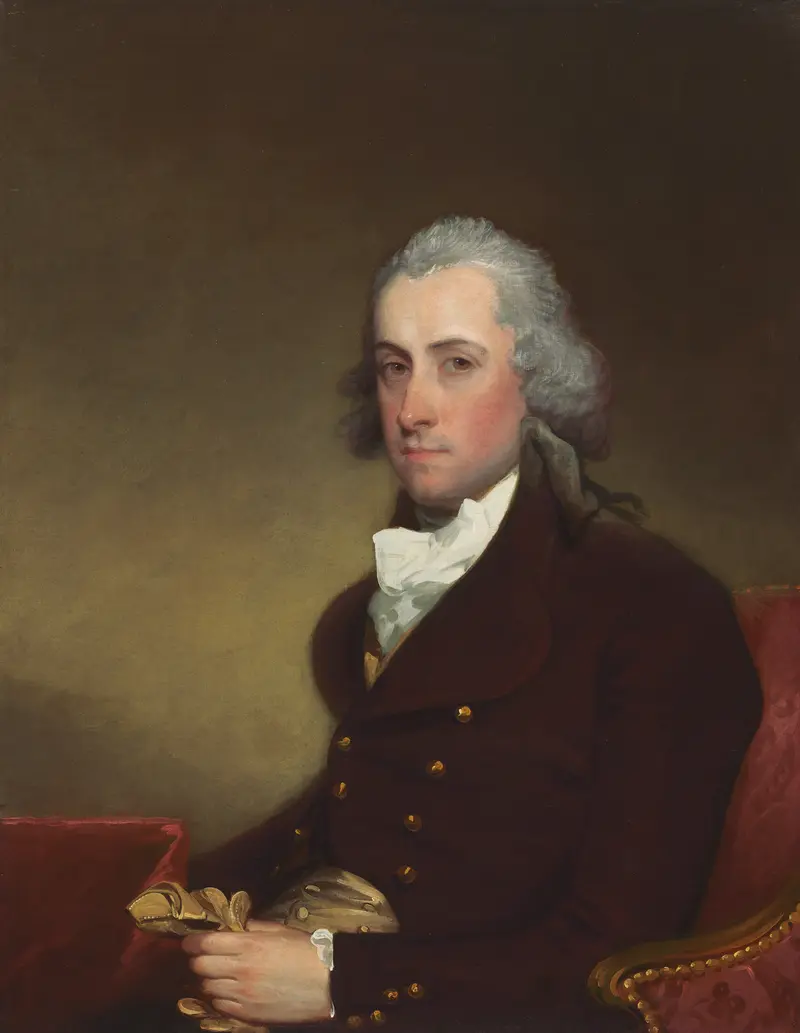
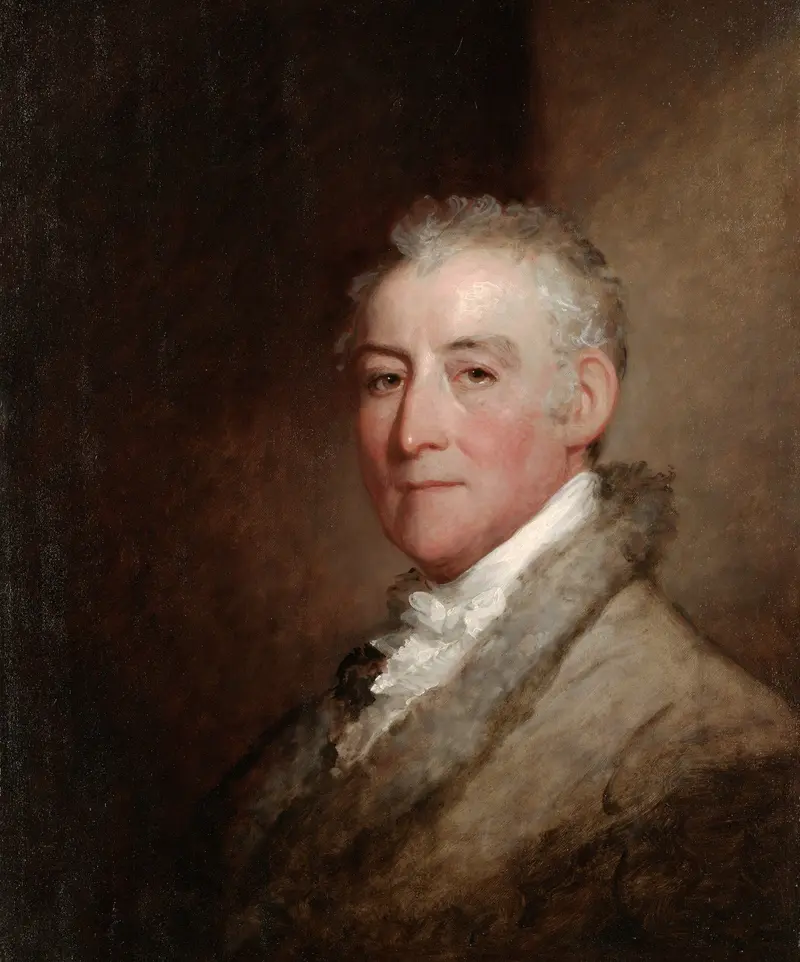
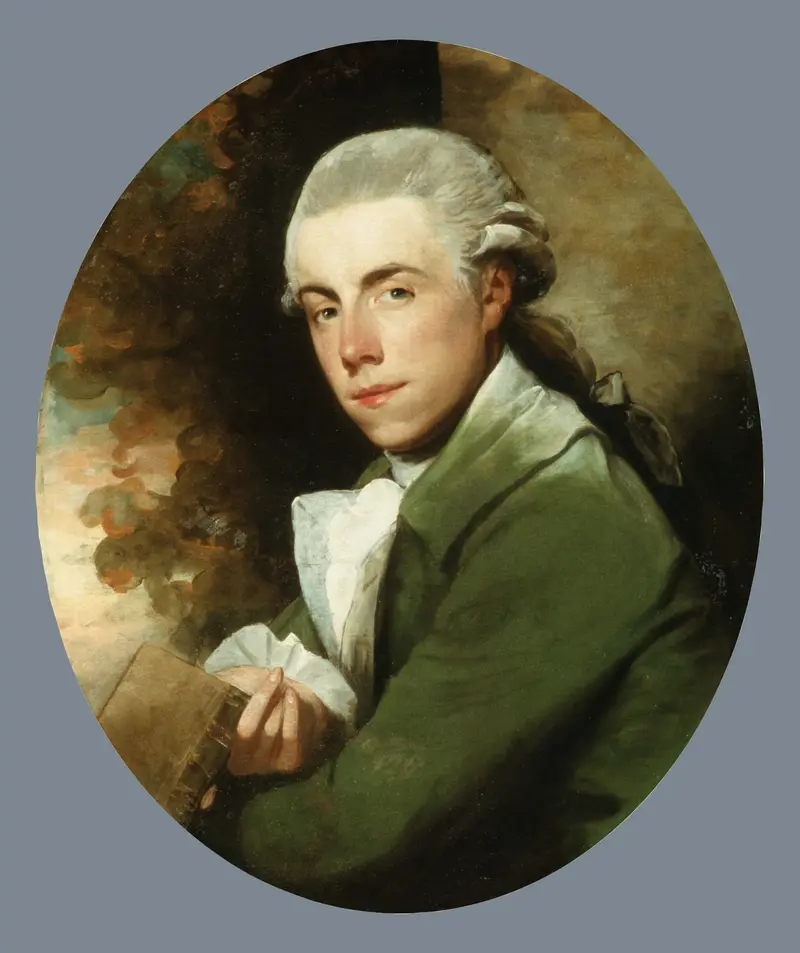
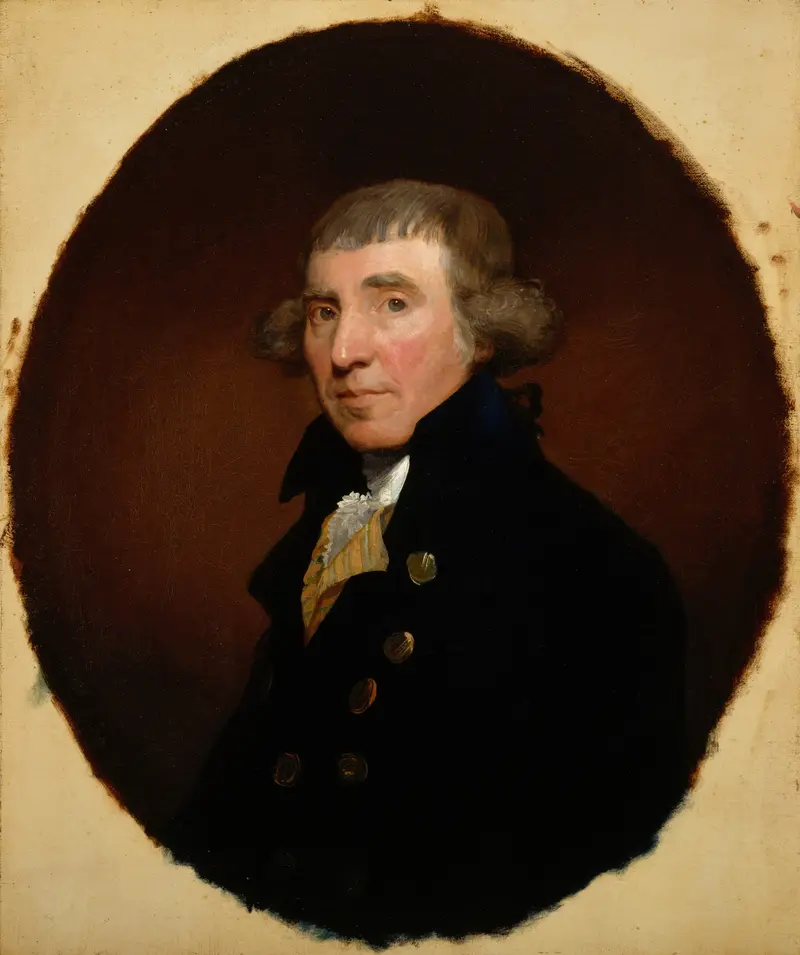
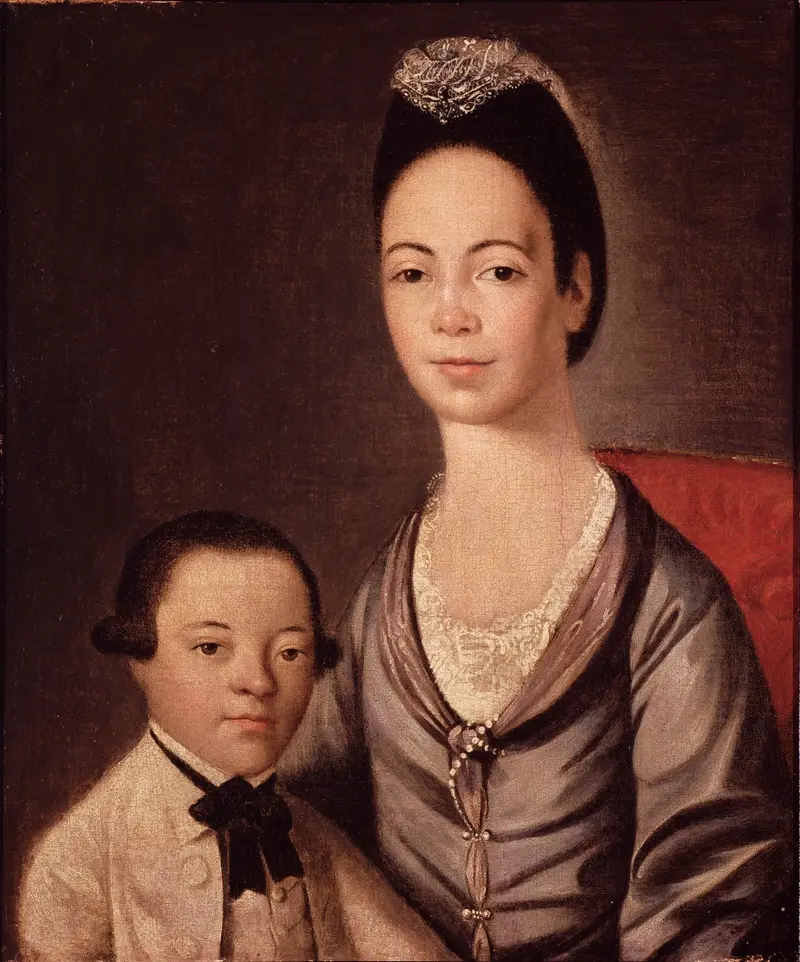
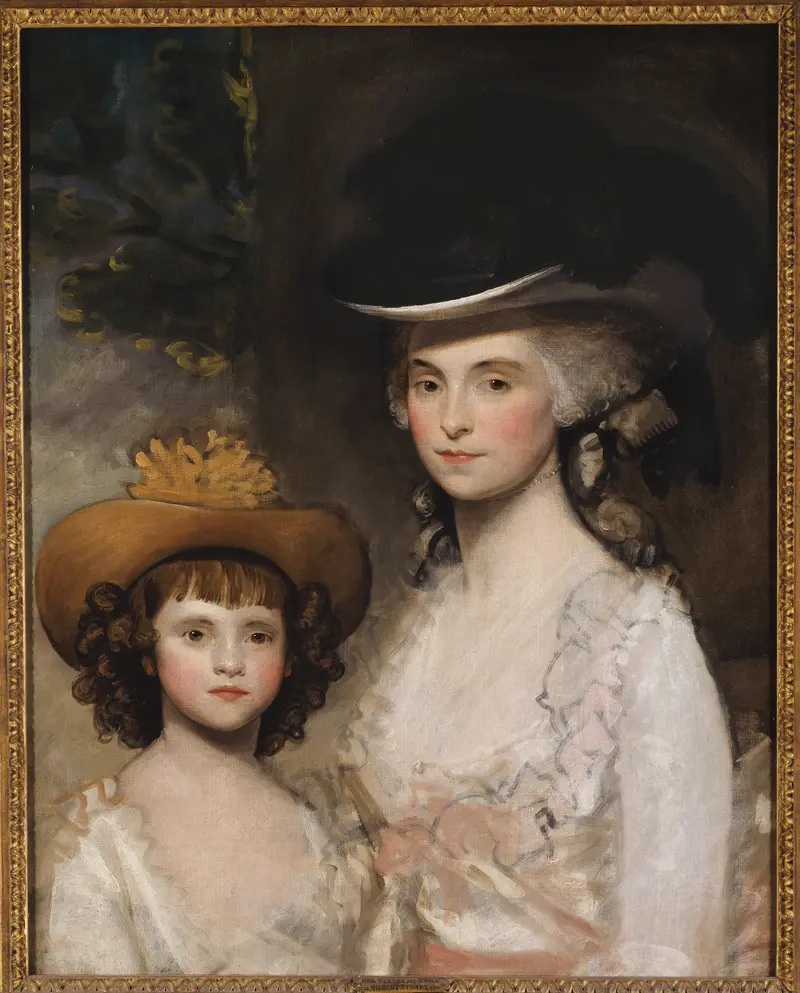

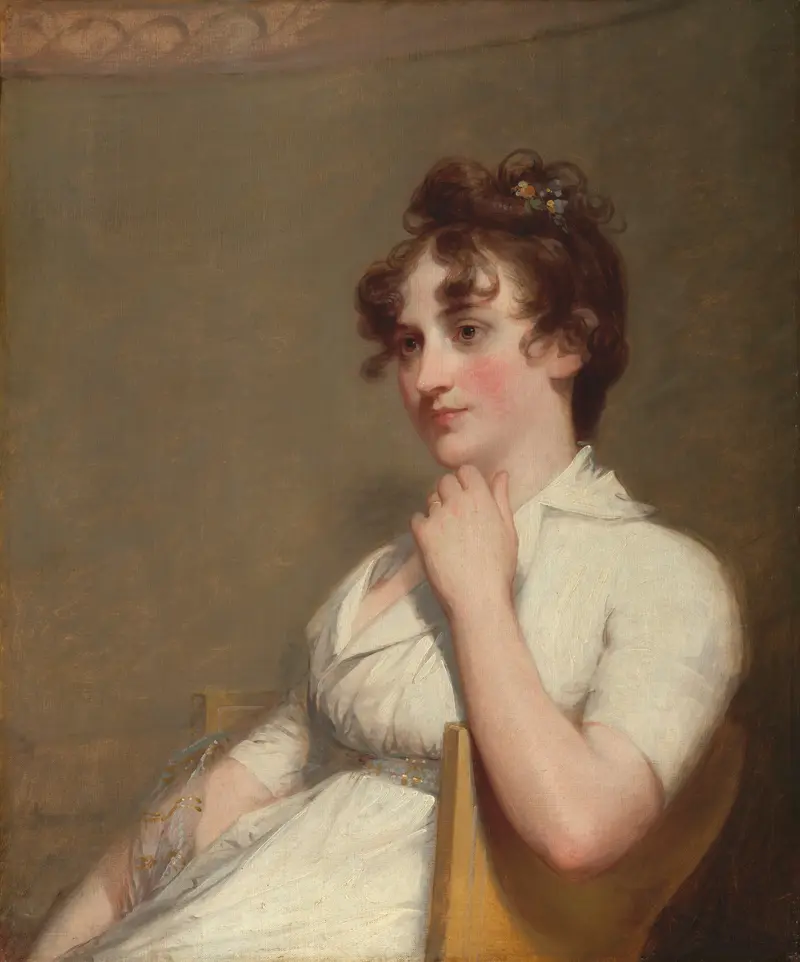
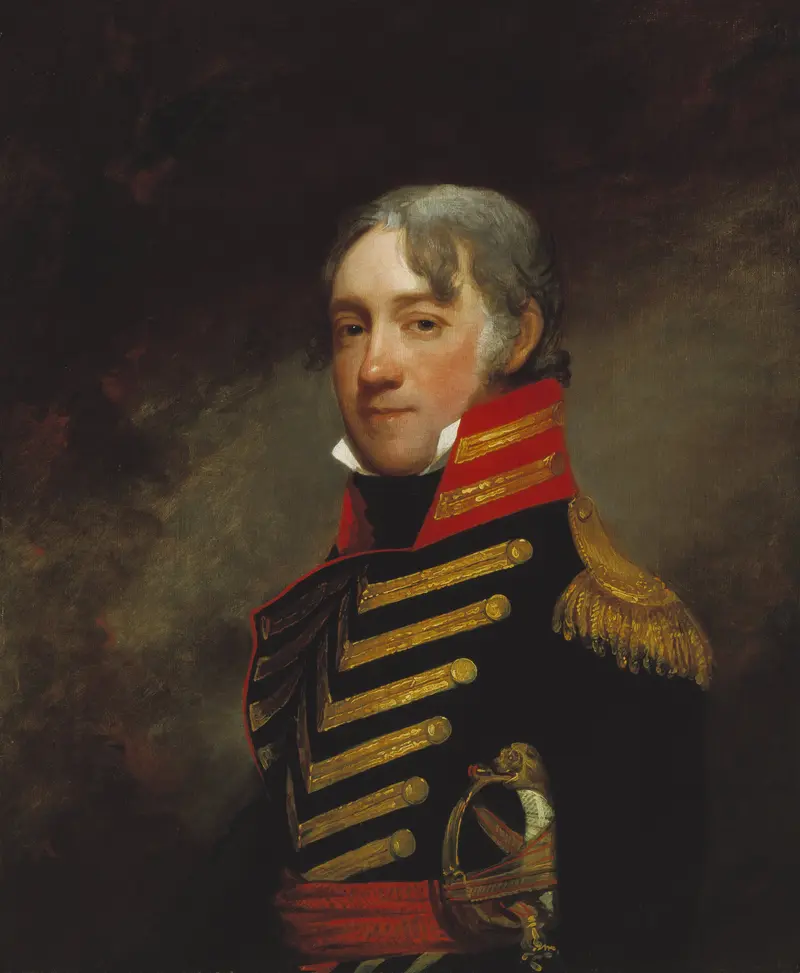
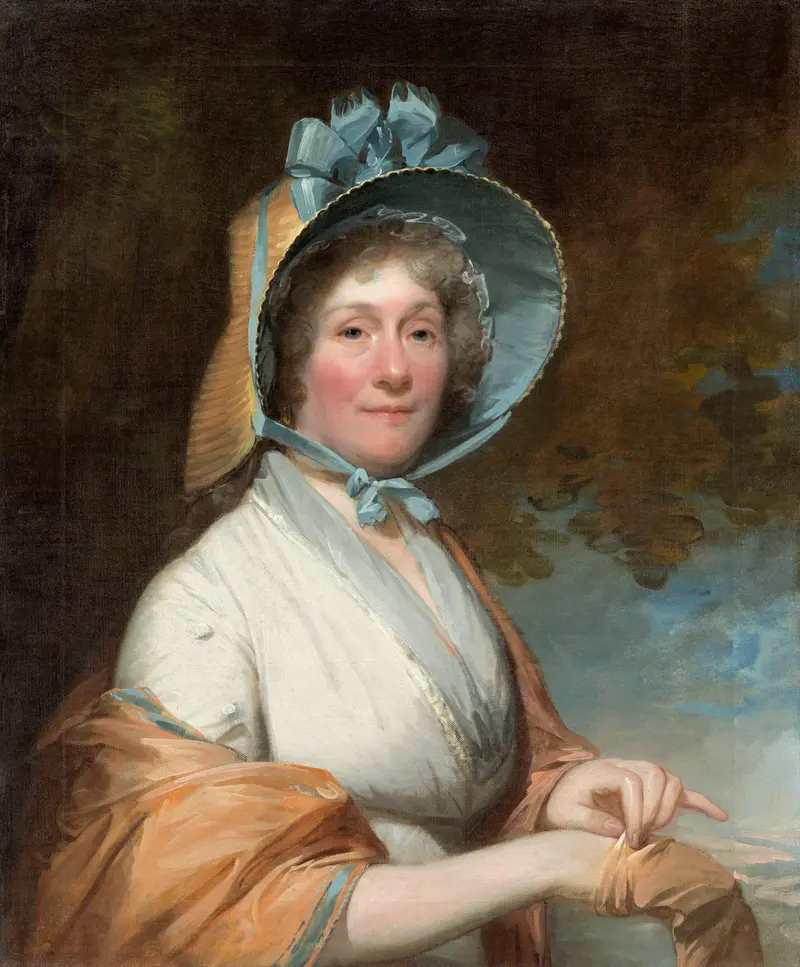
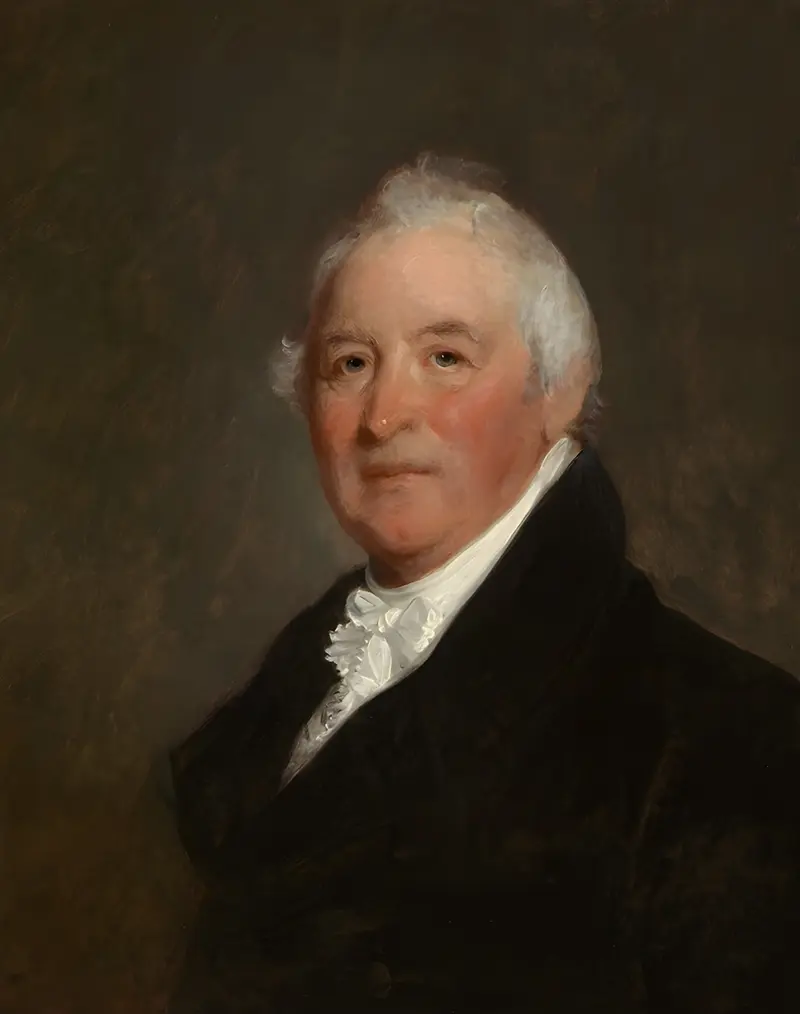
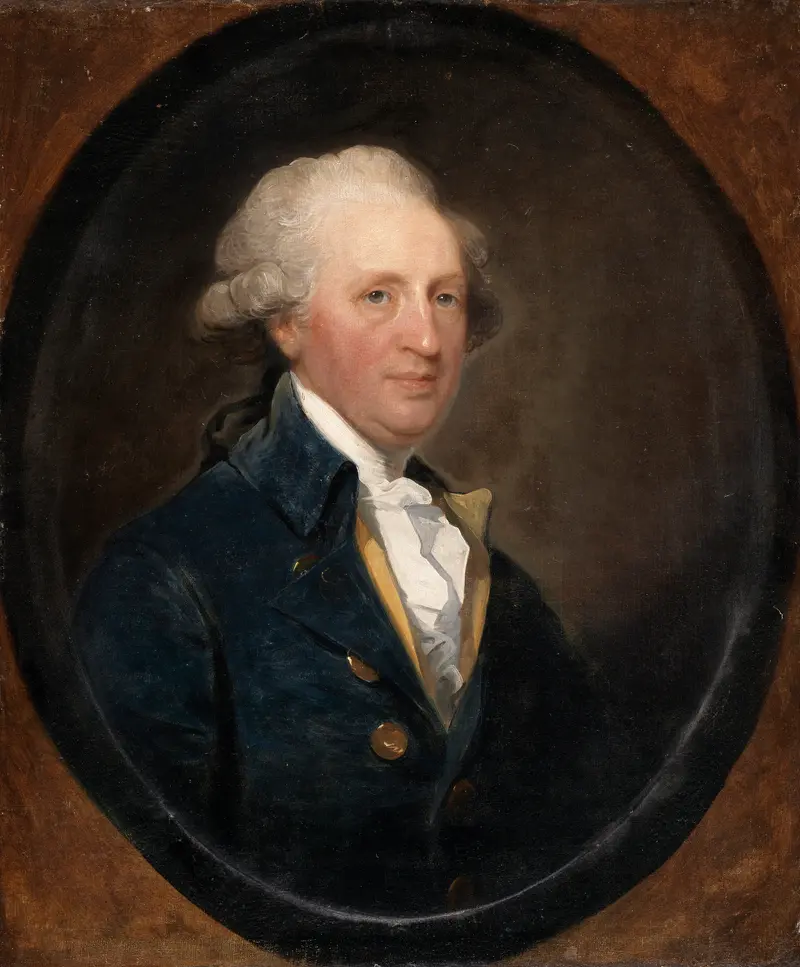
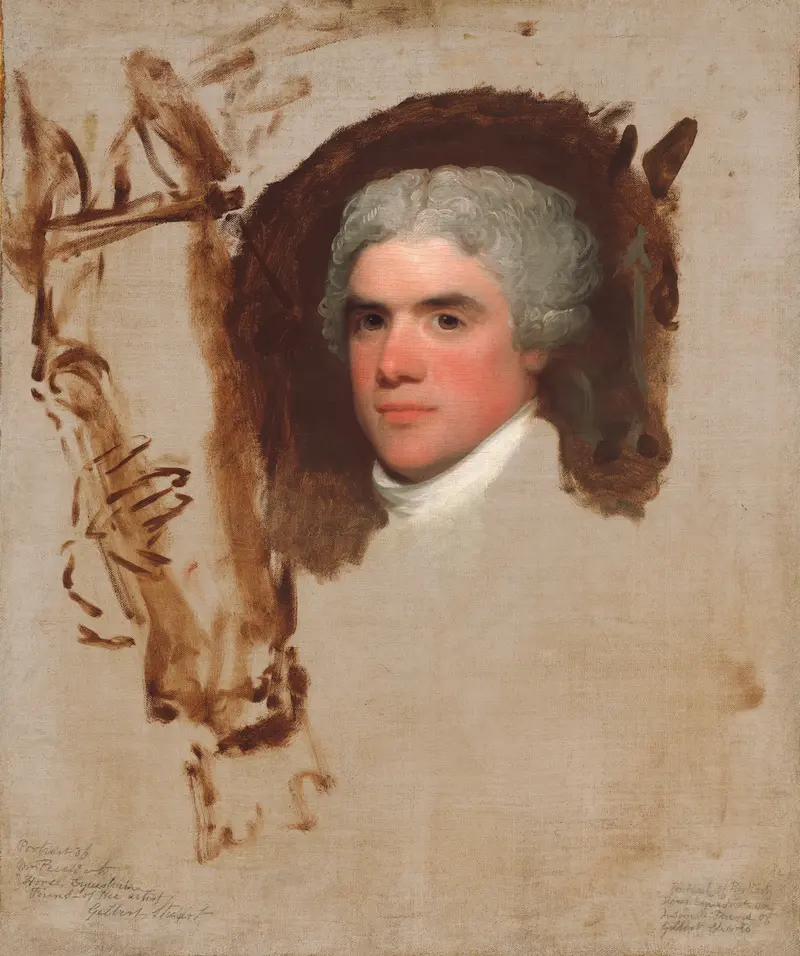
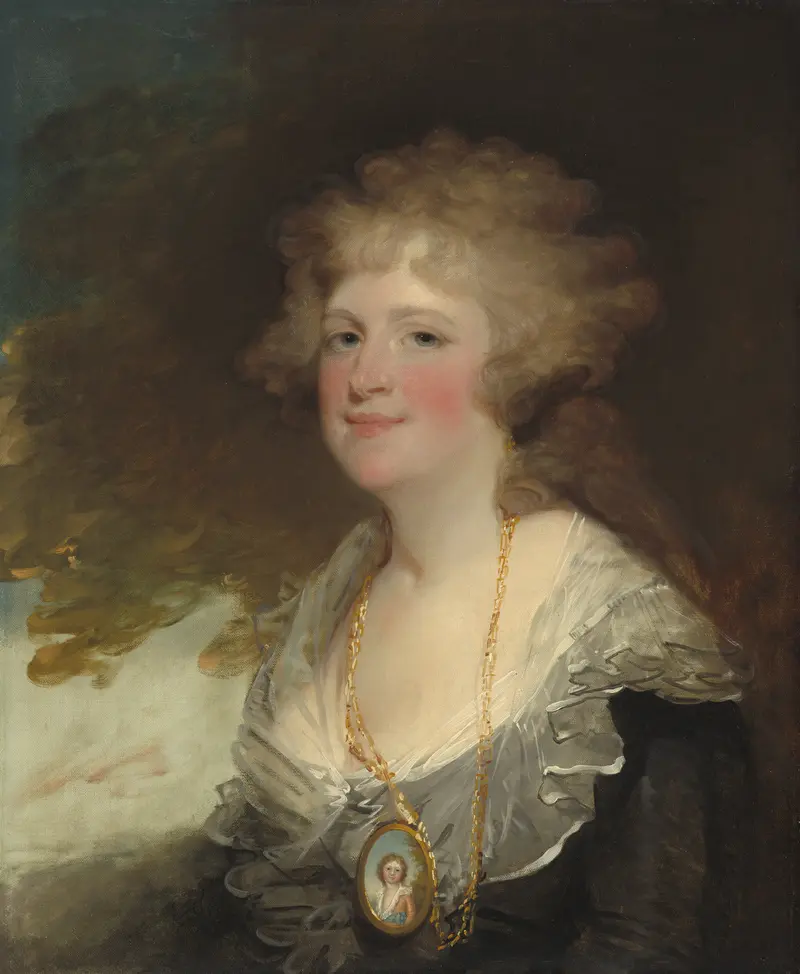
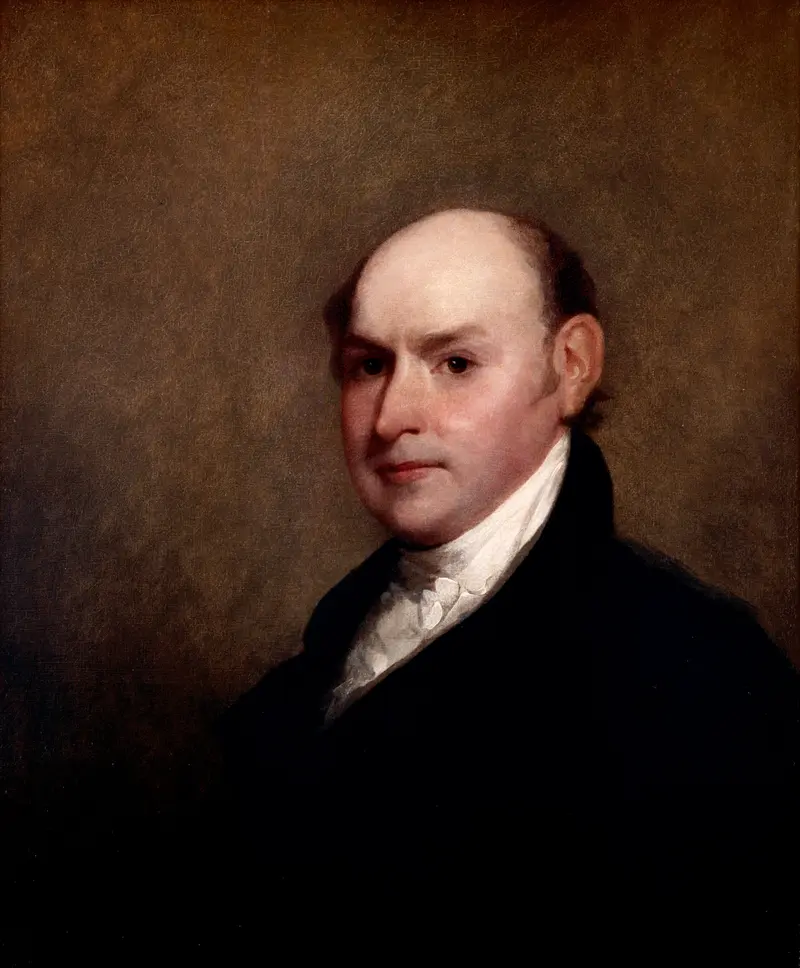
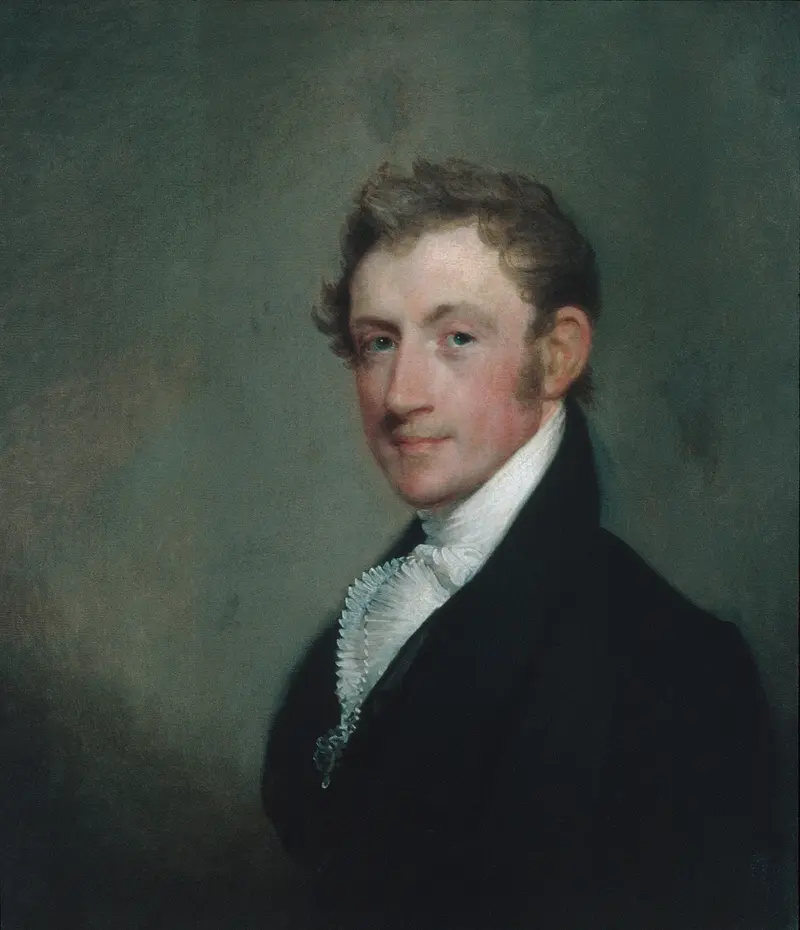
Famous Colonial American paintings
American colonial paintings known around the world, from portraits to the history paintings of the Revolution. Click any painting to see it up close and download it free.
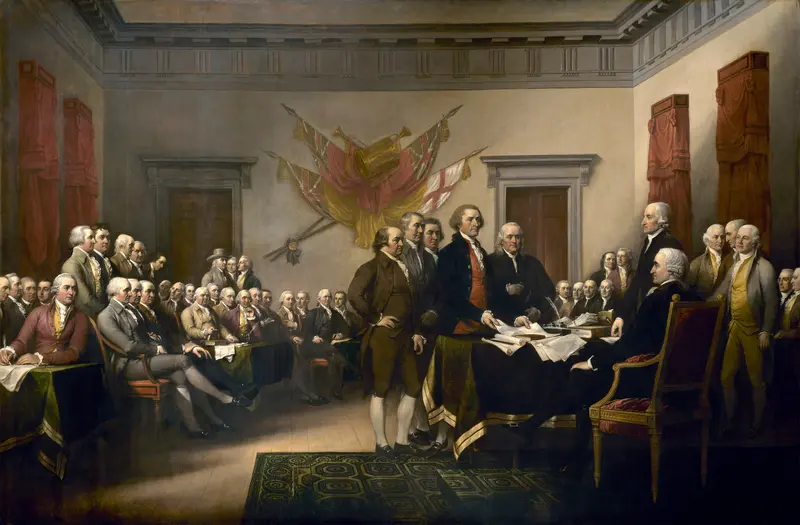 Declaration of IndependenceJohn Trumbull
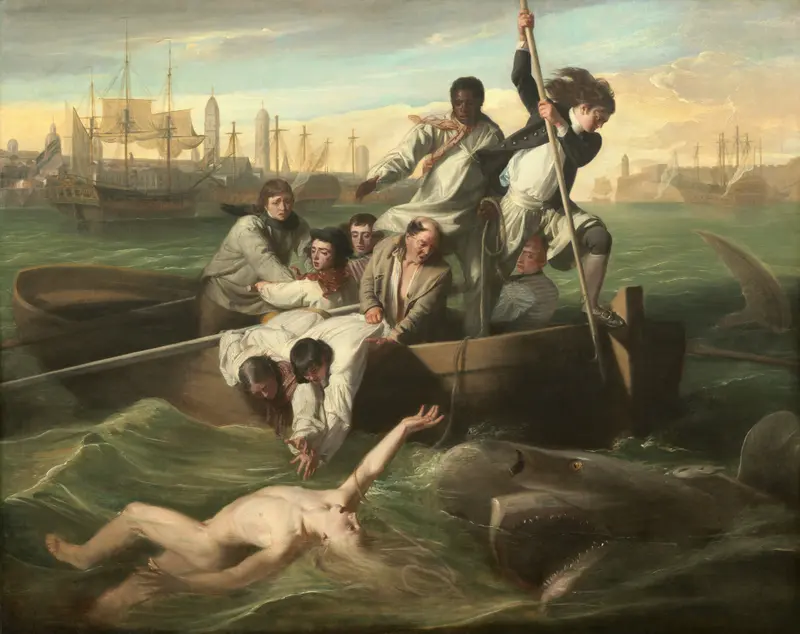 Watson and the SharkJohn Singleton Copley
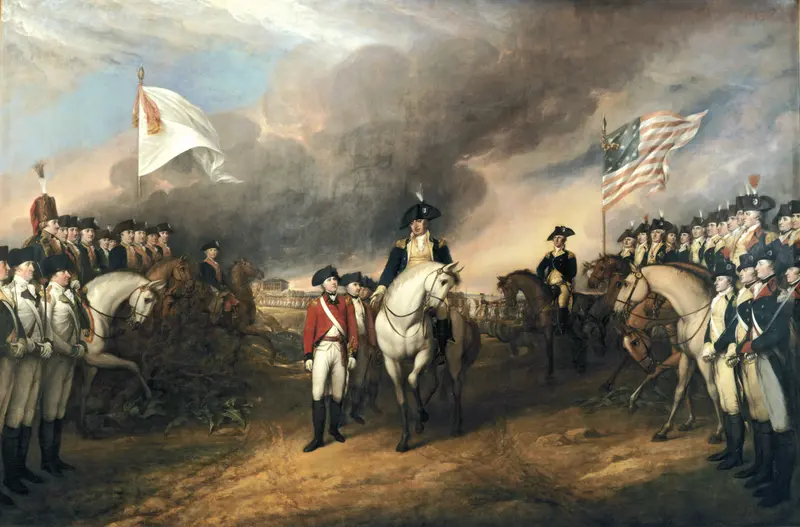 Surrender of Lord CornwallisJohn Trumbull
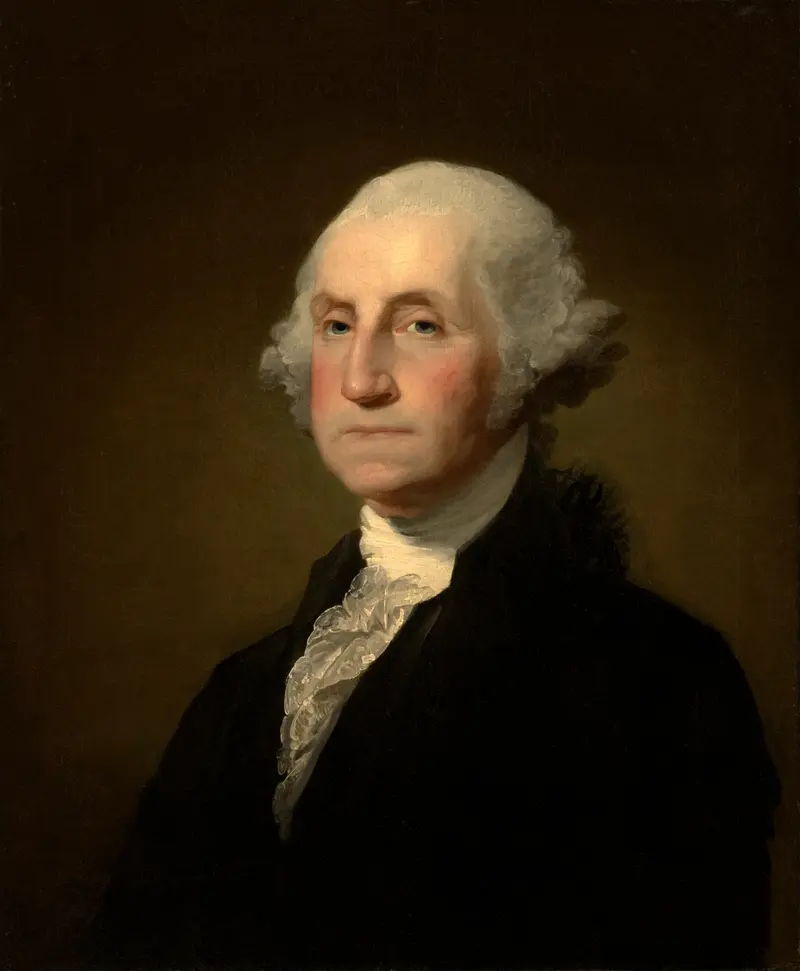 George Washington (Athenaeum type)Gilbert Stuart
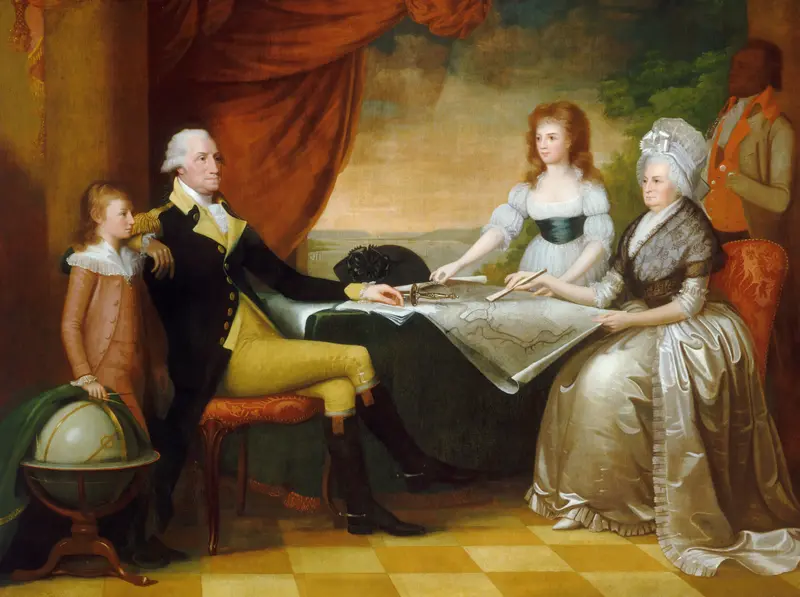 The Washington FamilyEdward Savage
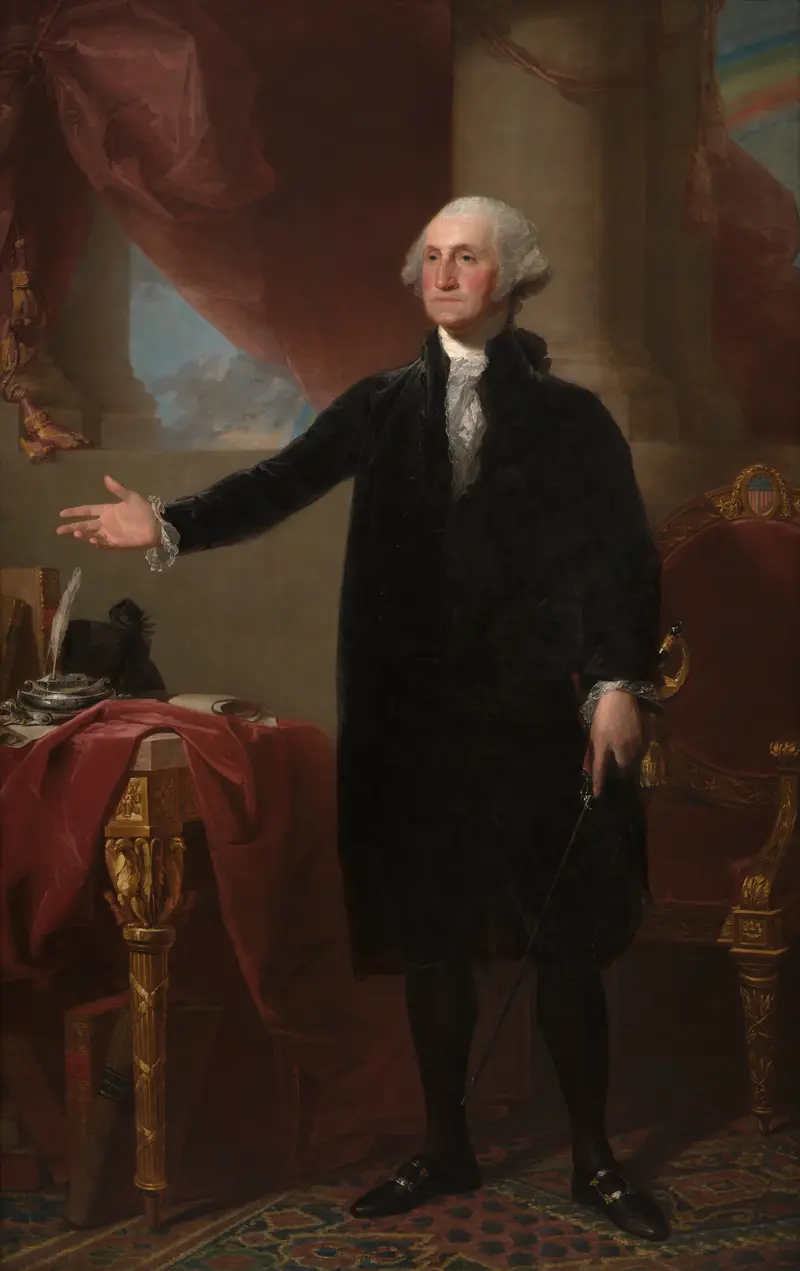 George Washington (Lansdowne Portrait)Gilbert Stuart
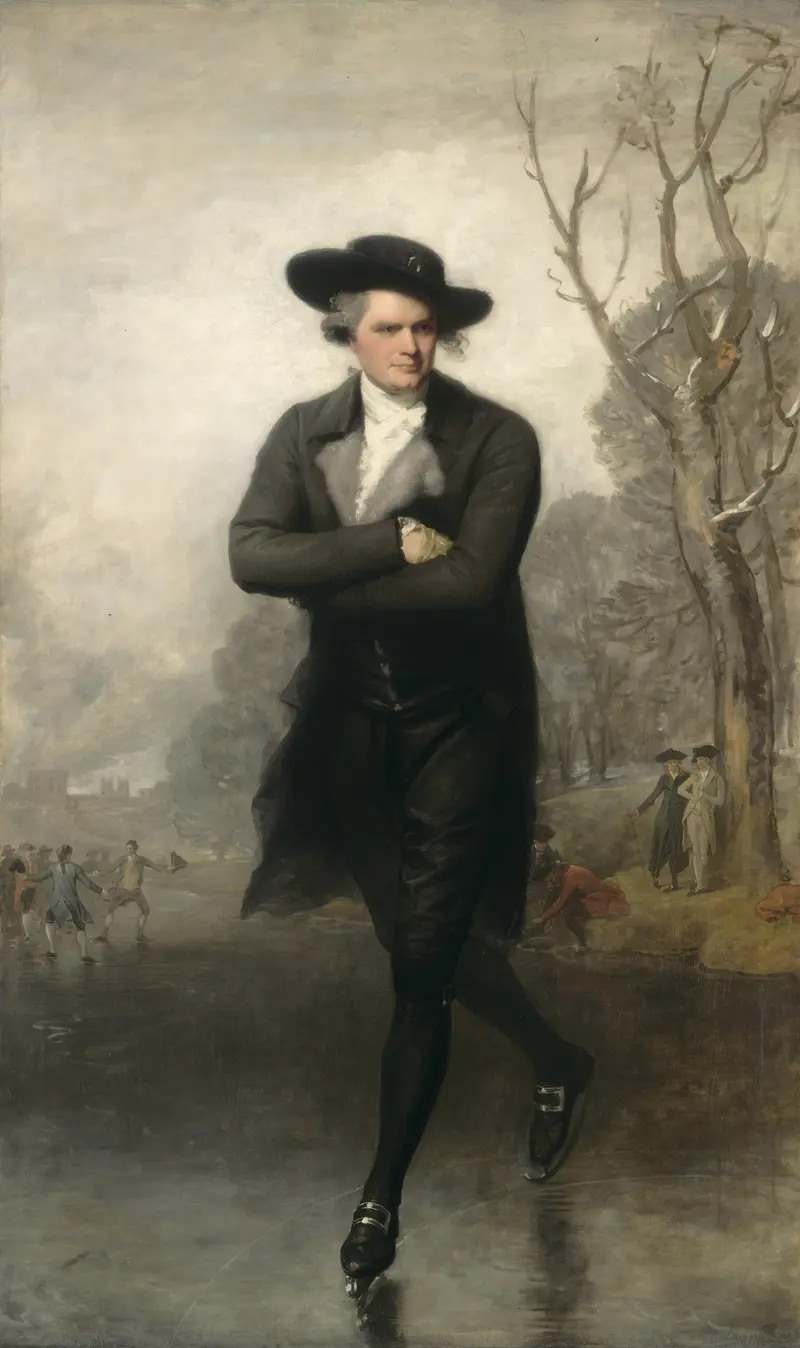 The Skater (Portrait of William Grant)Gilbert Stuart
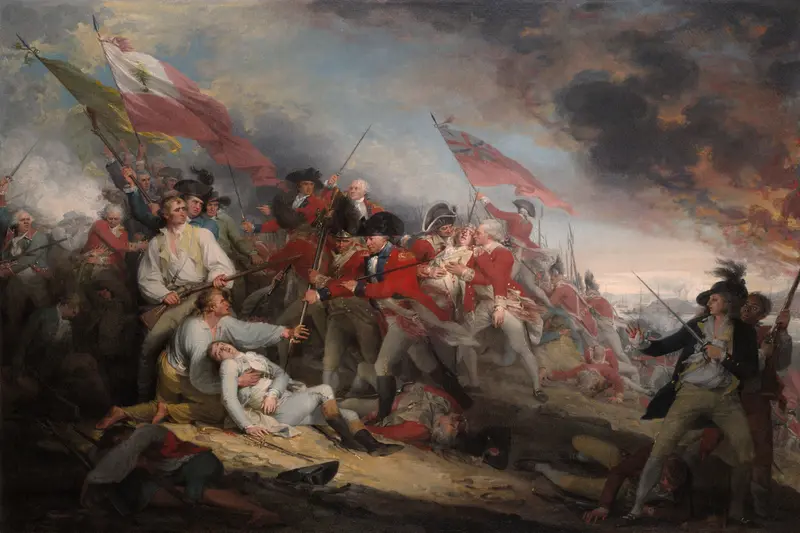 The Battle of Bunker's Hill, June 17, 1775John Trumbull
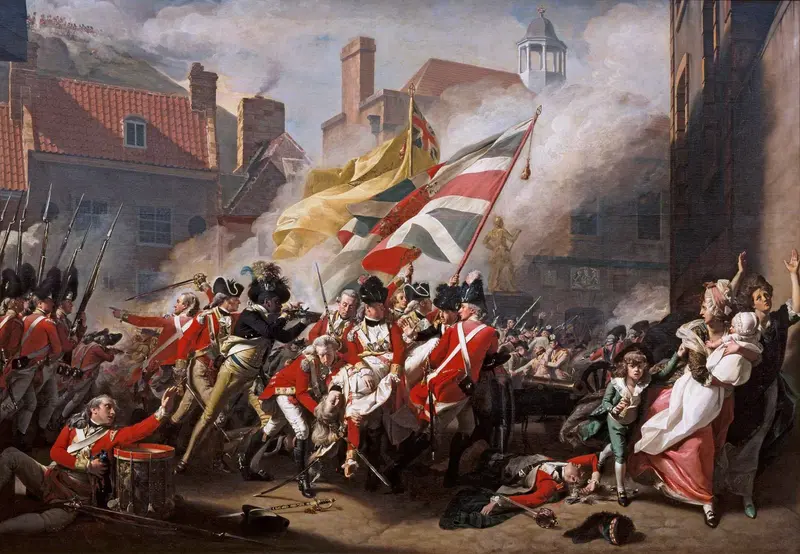 The Death of Major Peirson, 6 January 1781John Singleton Copley
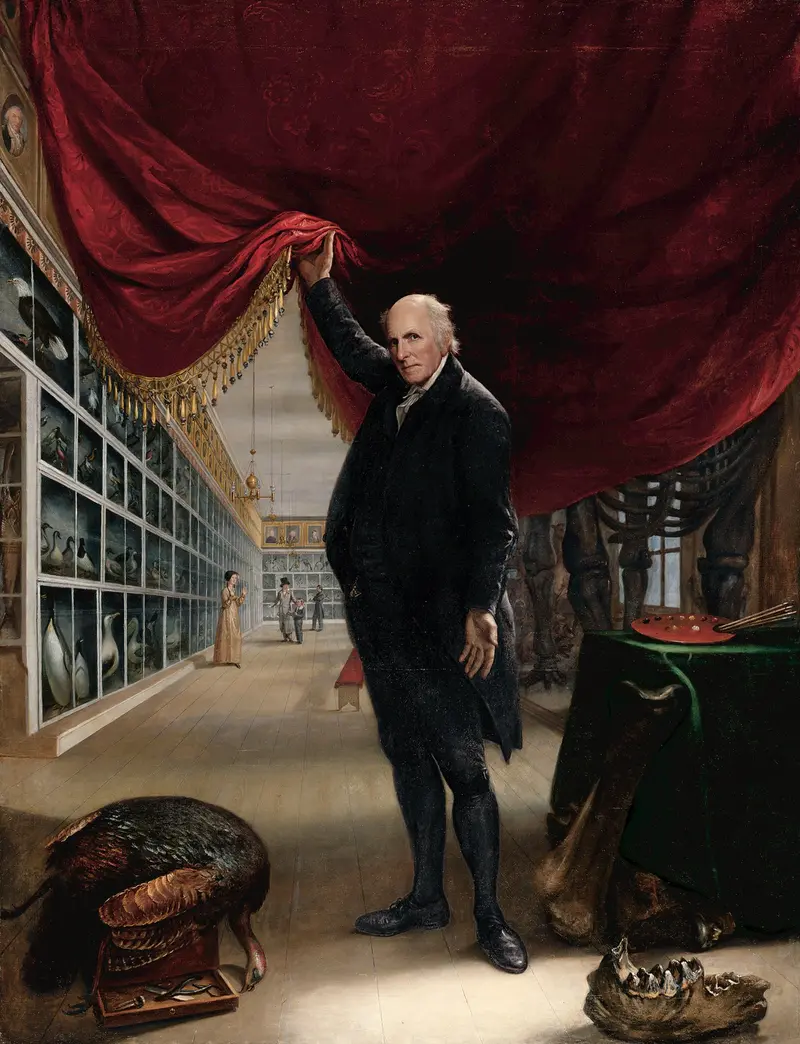 The Artist in His MuseumCharles Willson Peale
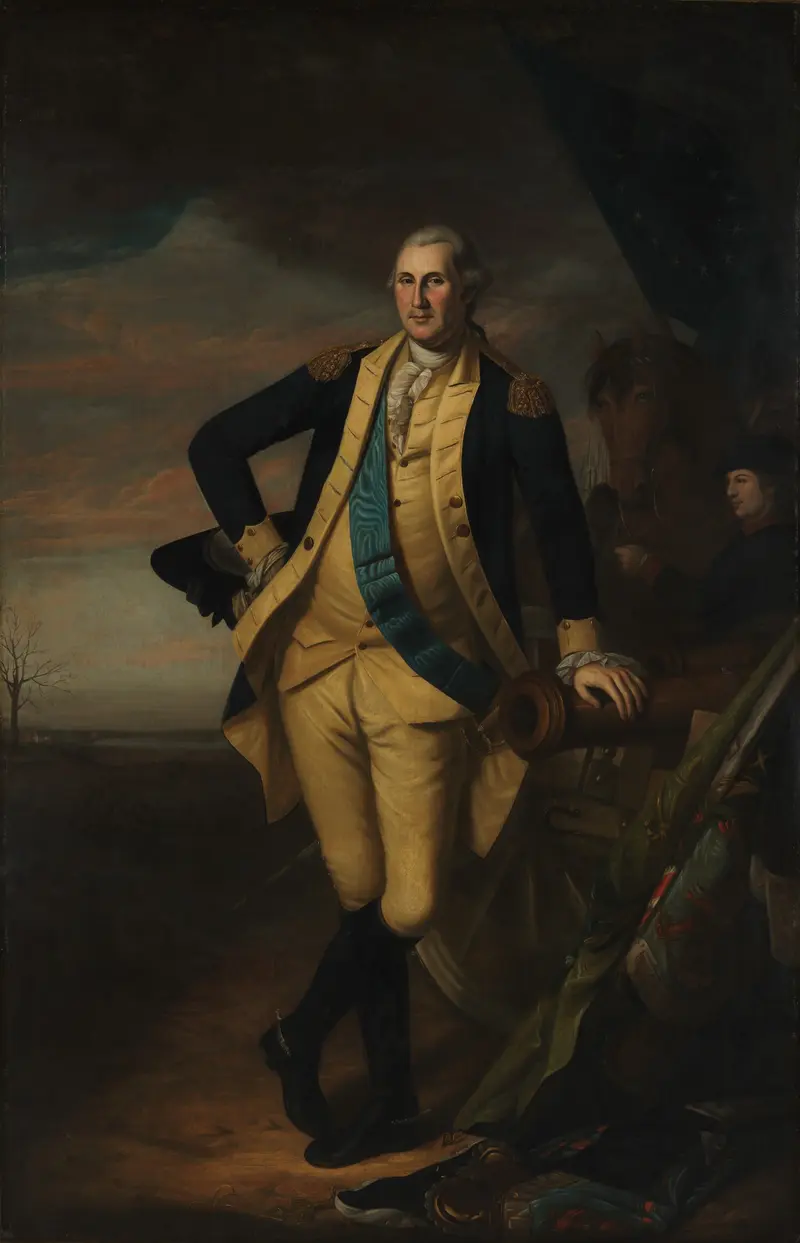 George Washington at PrincetonCharles Willson Peale
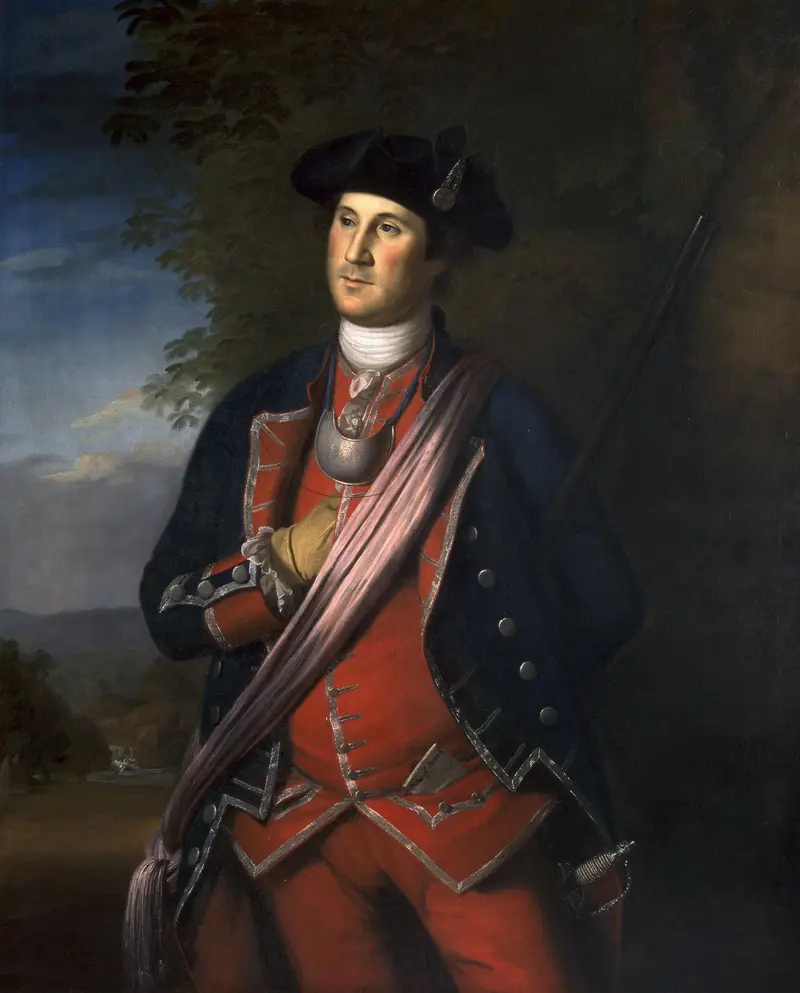 Washington in the Uniform of a British Colonial ColonelCharles Willson Peale
Famous American colonial painters
Nine painters at the heart of colonial American art, from John Smibert in 1720s Boston to Gilbert Stuart and John Trumbull, who painted the new nation's leaders. Each link opens all their paintings.
 John Smibert1688–1751. Scottish-born; he studied in London and Italy and settled in Boston by 1729, where wealthy colonists sought his formal portraits. Tate's 1946 survey of American painting began with his group portrait of Dean Berkeley, painted in 1729.
 Robert Fekec. 1707–c. 1751. Born in Oyster Bay, New York, he painted The Isaac Royall Family in 1741, then worked from Newport, Philadelphia and Boston; a visitor in 1744 called him a genius who had never had any teaching.
 Joseph BlackburnActive 1752–1777. English painter who came by way of Bermuda to Newport in 1754 and then Boston; his graceful poses and precise lace had an important early influence on Copley. He returned to England in 1764.
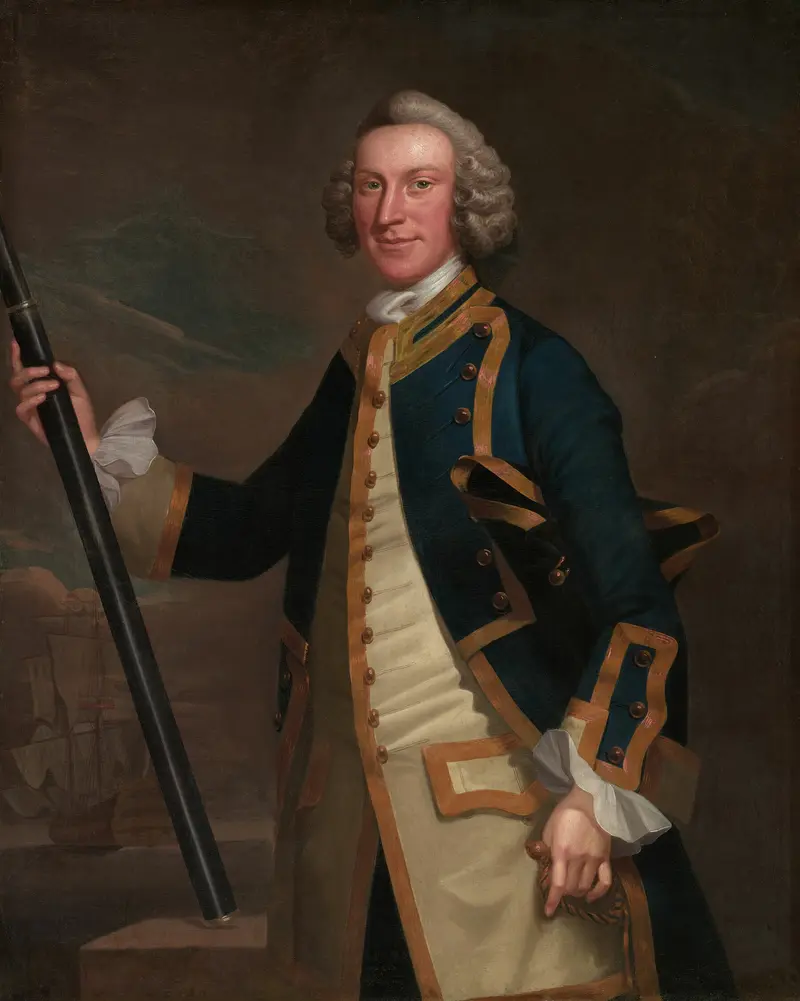 John WollastonActive 1742–1775. London-trained, he reached New York in 1749 and painted more than two hundred colonial portraits from New York to Maryland, Virginia and Charleston, traveling more widely than any other colonial painter.
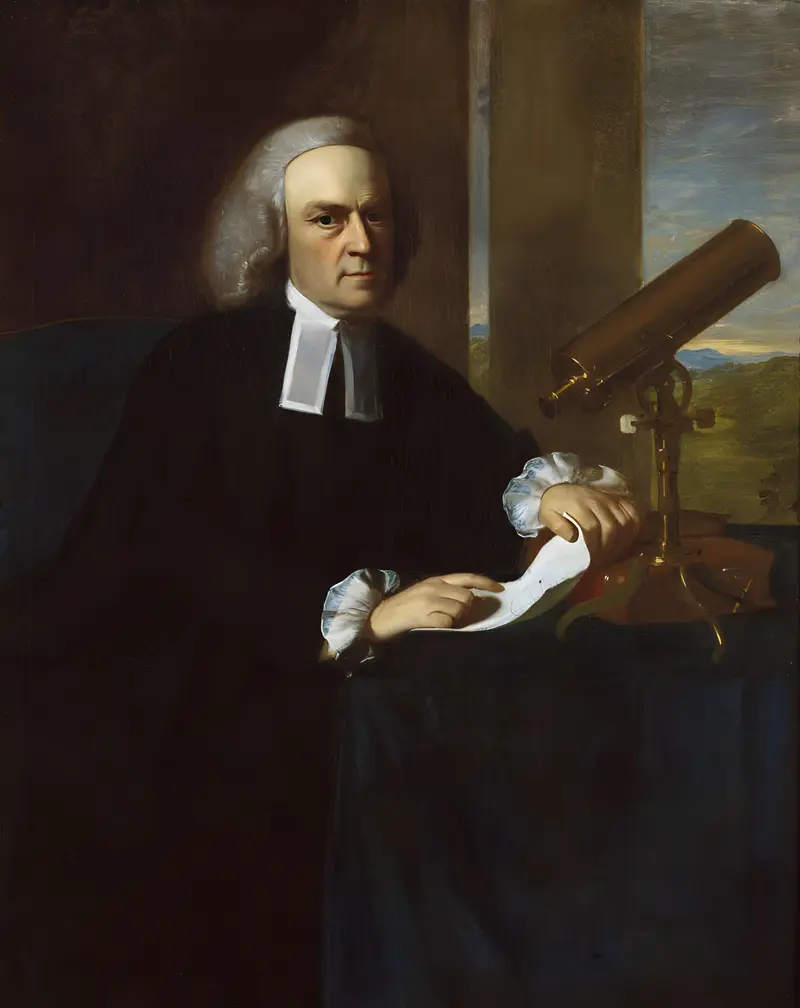 John Singleton Copley1738–1815. Boston-born; the National Gallery of Art calls him the most talented artist in colonial America. He painted Boston's merchants and patriots until 1774, then settled in London as a history painter.
 Charles Willson Peale1741–1827. A Maryland saddler turned painter, he studied with Benjamin West in London, served in the Pennsylvania militia and painted the first official portrait of George Washington in 1779; later he ran a museum in Philadelphia.
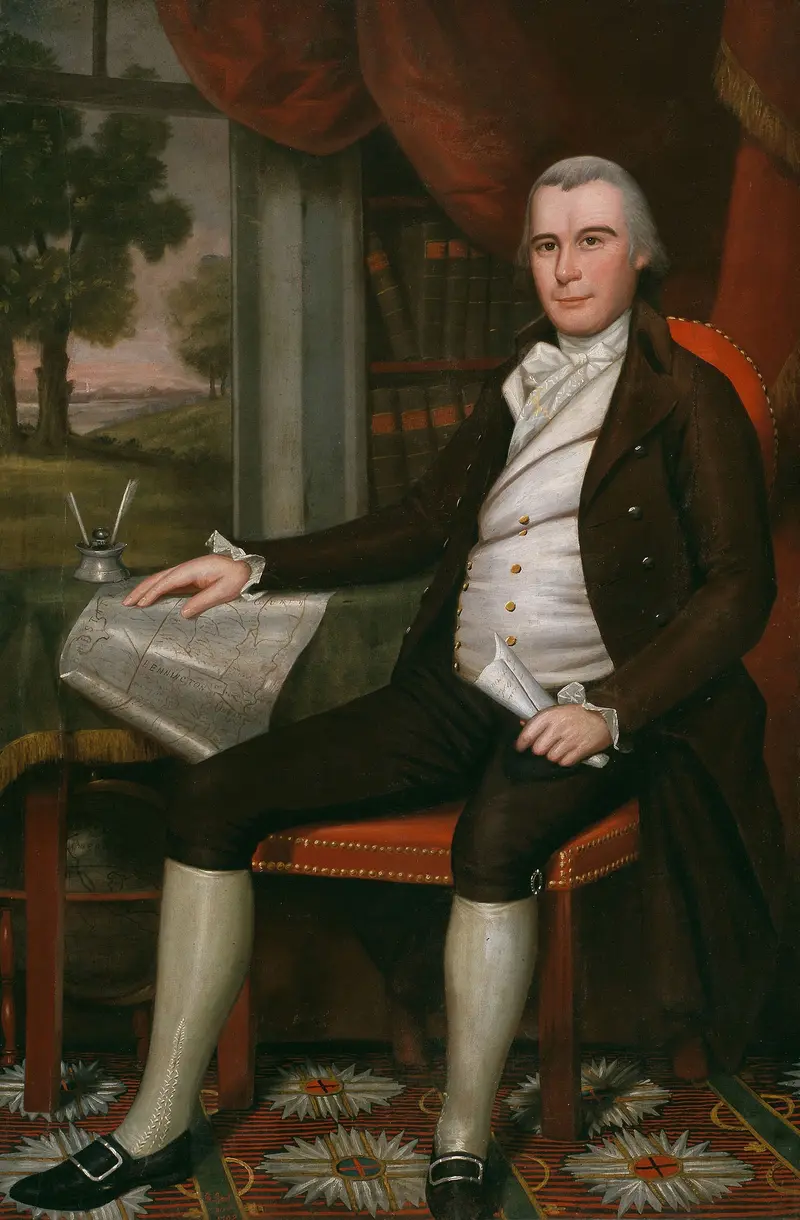 Ralph Earl1751–1801. Painted the Connecticut patriot Roger Sherman, fled to England as a Loyalist in 1778 and studied with Benjamin West, then returned in 1785 to paint the rural gentry of Connecticut, New York and Vermont.
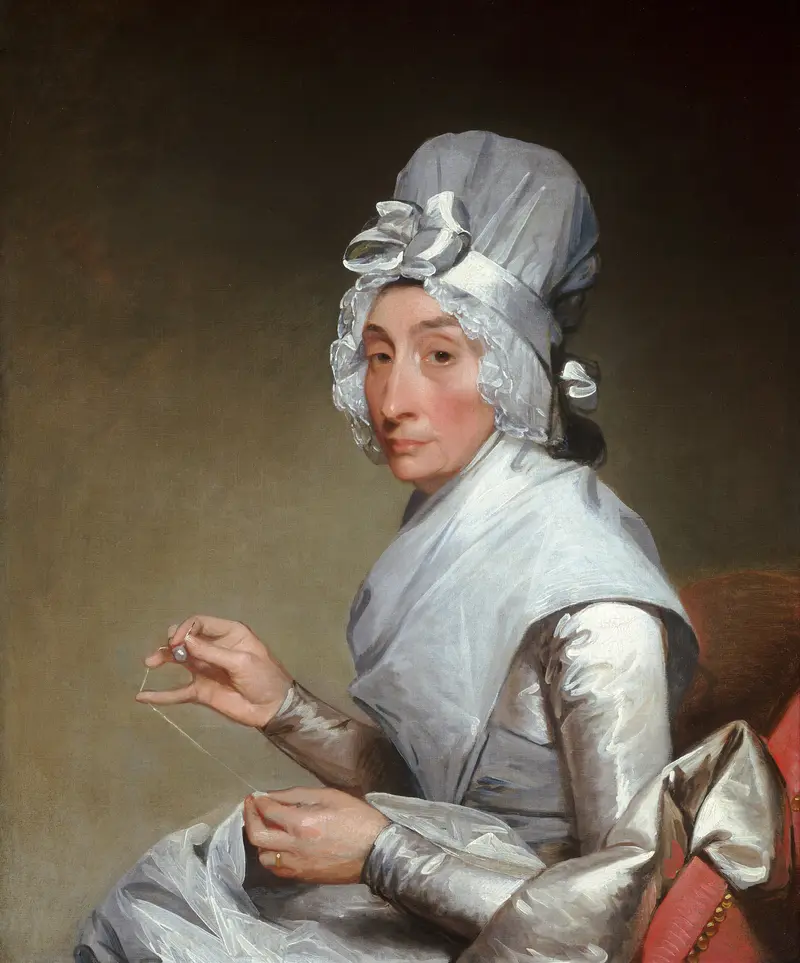 Gilbert Stuart1755–1828. Born in Rhode Island and trained by Cosmo Alexander and Benjamin West, he made his name in London with The Skater in 1782. Back in America from 1793, he painted the first five presidents and Washington over a hundred times.
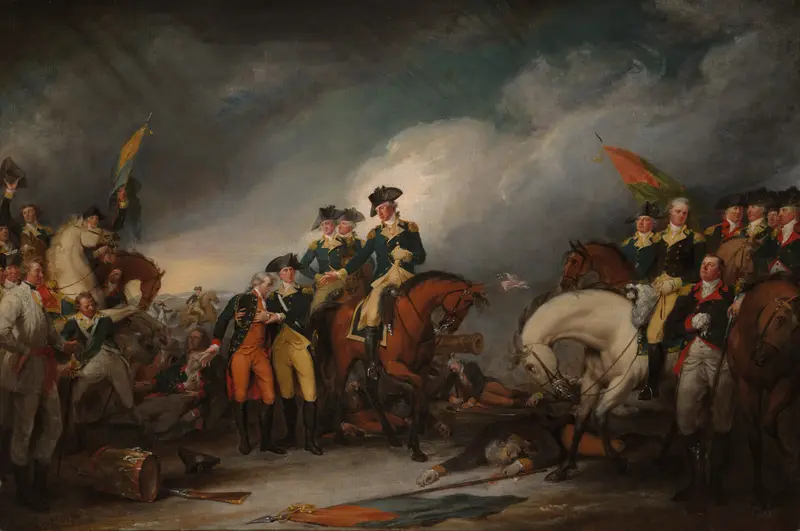 John Trumbull1756–1843. Served with a Connecticut regiment early in the Revolution, studied with West in London and from 1786 painted the great scenes of the war; in 1817 Congress commissioned four of them for the Capitol.
Colonial portraits of women
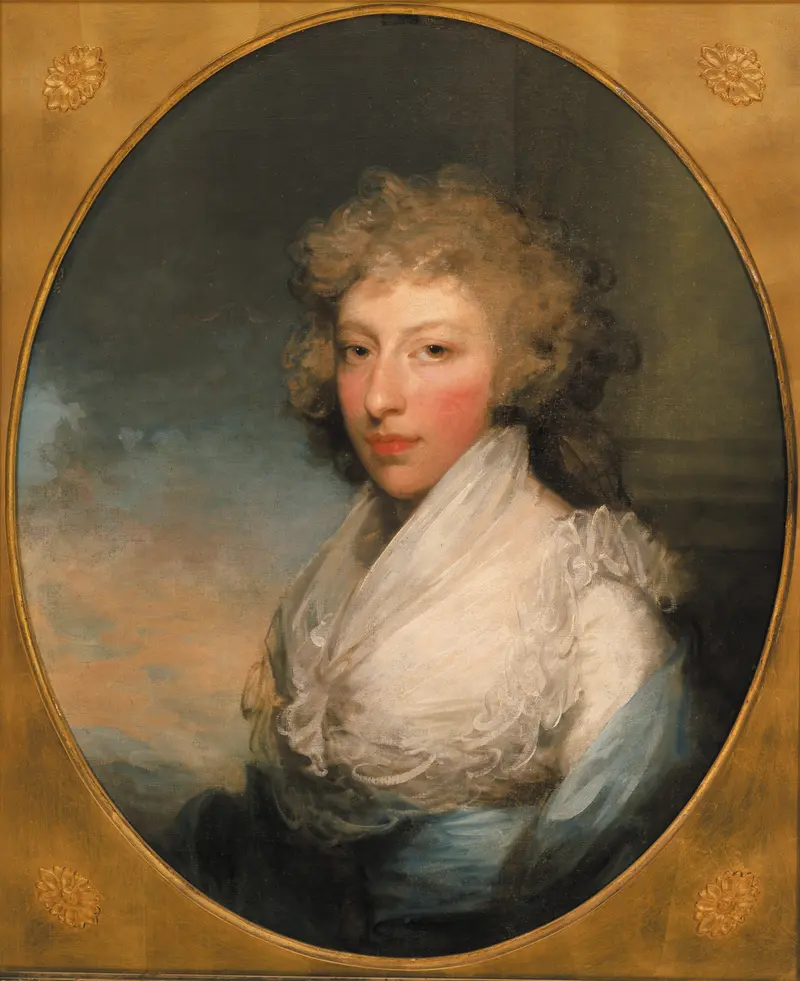
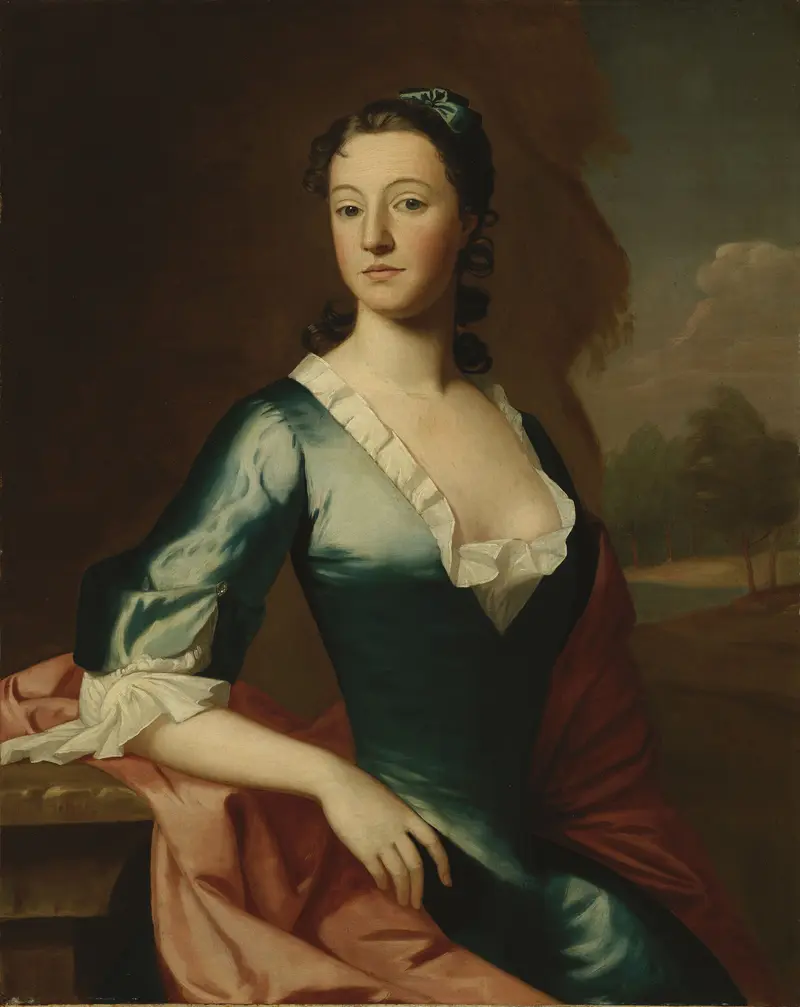
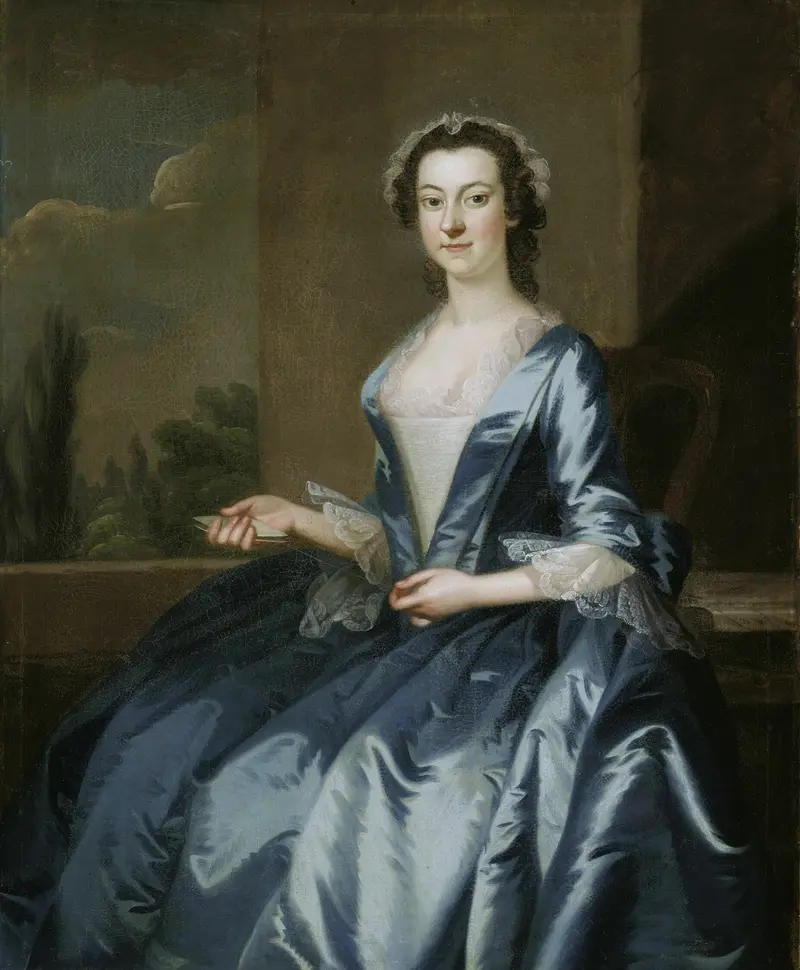
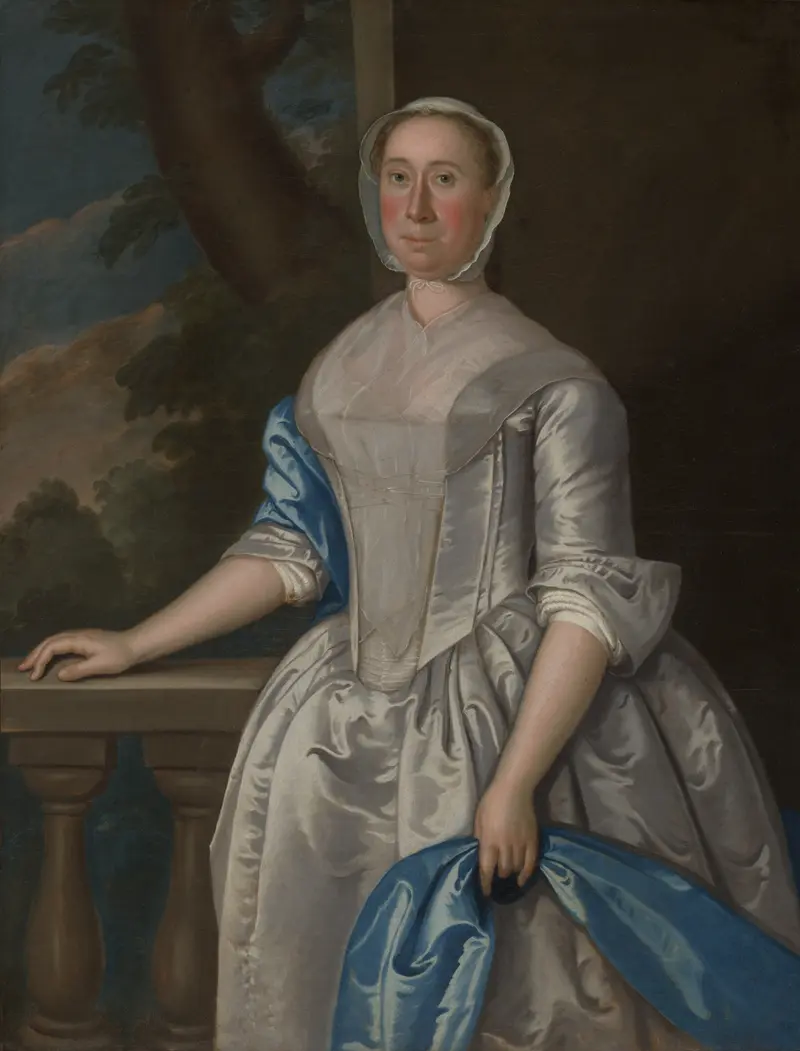
Women sat for their portraits in their finest silks. Harvard Art Museums notes that indigo-dyed silk robes à l'anglaise, like the one Hannah Speakman Rowe wears for Robert Feke, were highly desirable in mid-18th-century Boston and showed the wearer's access to luxury goods from the transatlantic trade.

Early American art: portraits of the Founders
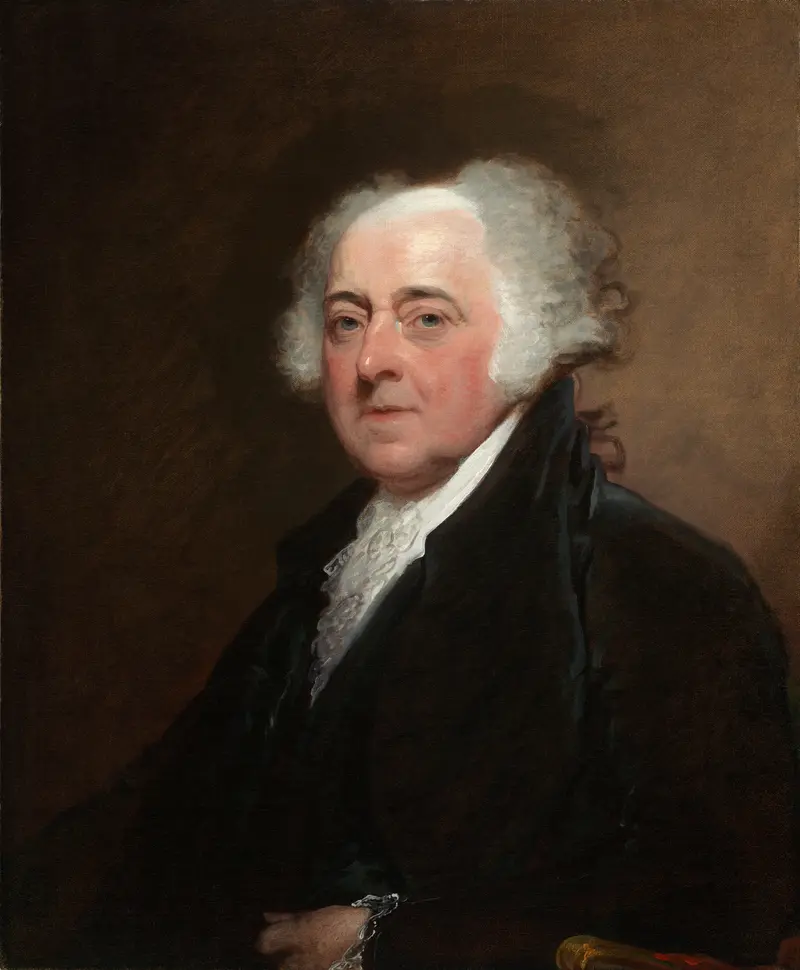
After independence the painters trained in the colonial years recorded the leaders of the new republic. The National Gallery of Art calls Gilbert Stuart the pre-eminent portraitist of Federal America; his sitters included the first five presidents.
Characteristics of Colonial American art: how to recognize it
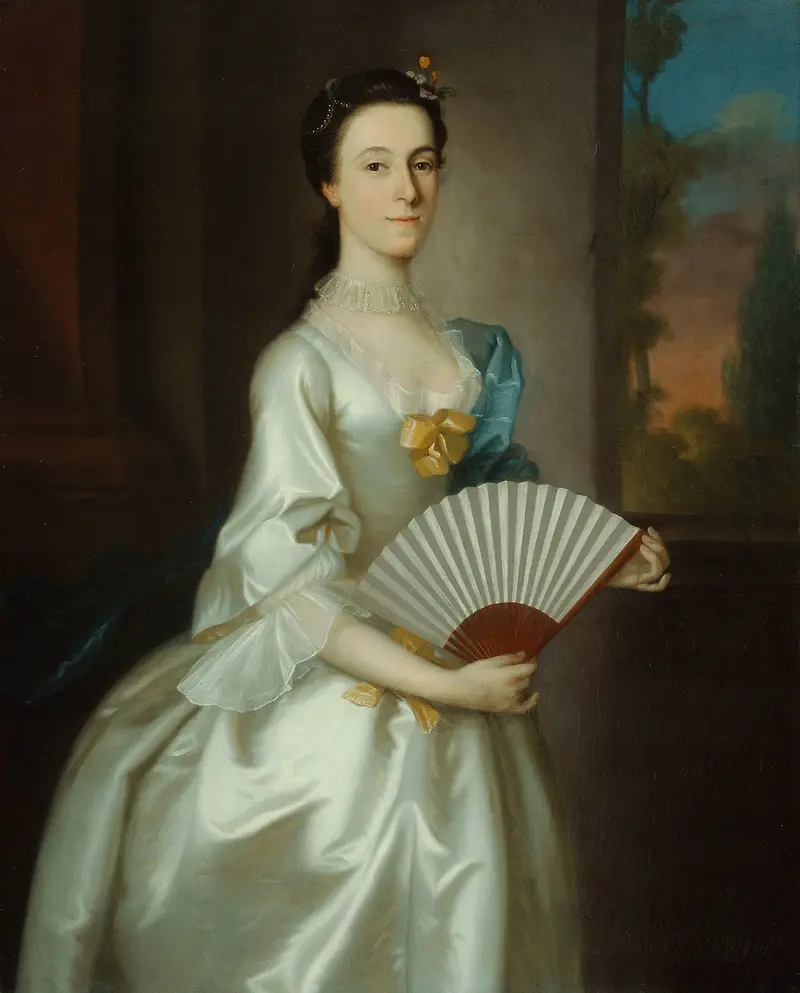
Imported silks and lace
Abigail Chesebrough, 20, wears imported silk and lace that show off her Newport family's wealth. The Art Institute of Chicago notes that her father, a merchant, made his fortune in the triangular trade in enslaved people, molasses and rum.
Abigail Chesebrough (Mrs. Alexander Grant), Joseph Blackburn

Ships, ledgers and silk banyans
Copley seats the Boston merchant Nicholas Boylston in a satin cap and a silk banyan, with ledgers at his elbow and the family's ship behind him. Harvard Art Museums says such props point to the source of the family's wealth, which included the trade in enslaved Africans, while hiding it.
Nicholas Boylston (1716-1771), John Singleton Copley

Poses borrowed from English prints
Feke modeled the Inmans' poses, gestures and fine clothes on engravings after court portraits by Sir Godfrey Kneller and Sir Peter Lely, Harvard Art Museums says. Copley, too, copied the pose, gown and background of his Mrs. Daniel Hubbard from a British engraving, the Art Institute of Chicago notes.
Susannah Speakman Inman (Mrs. Ralph Inman) (1727-1761), Robert Feke
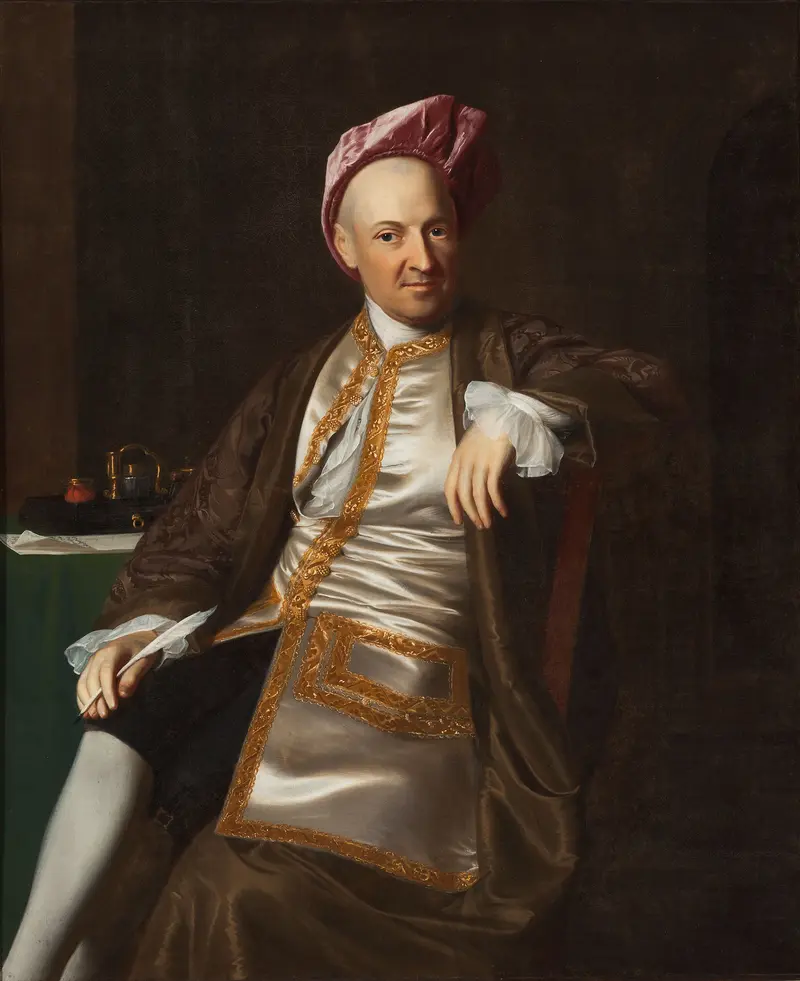
Real faces, invented settings
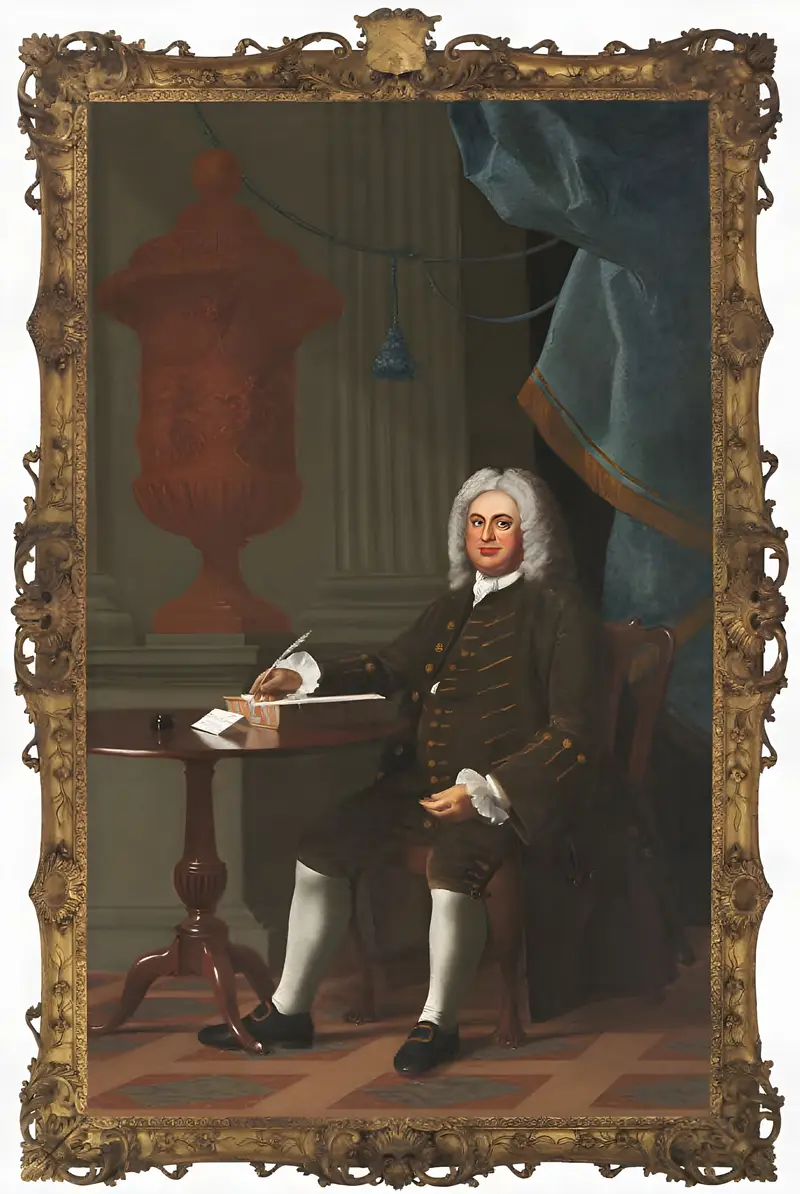
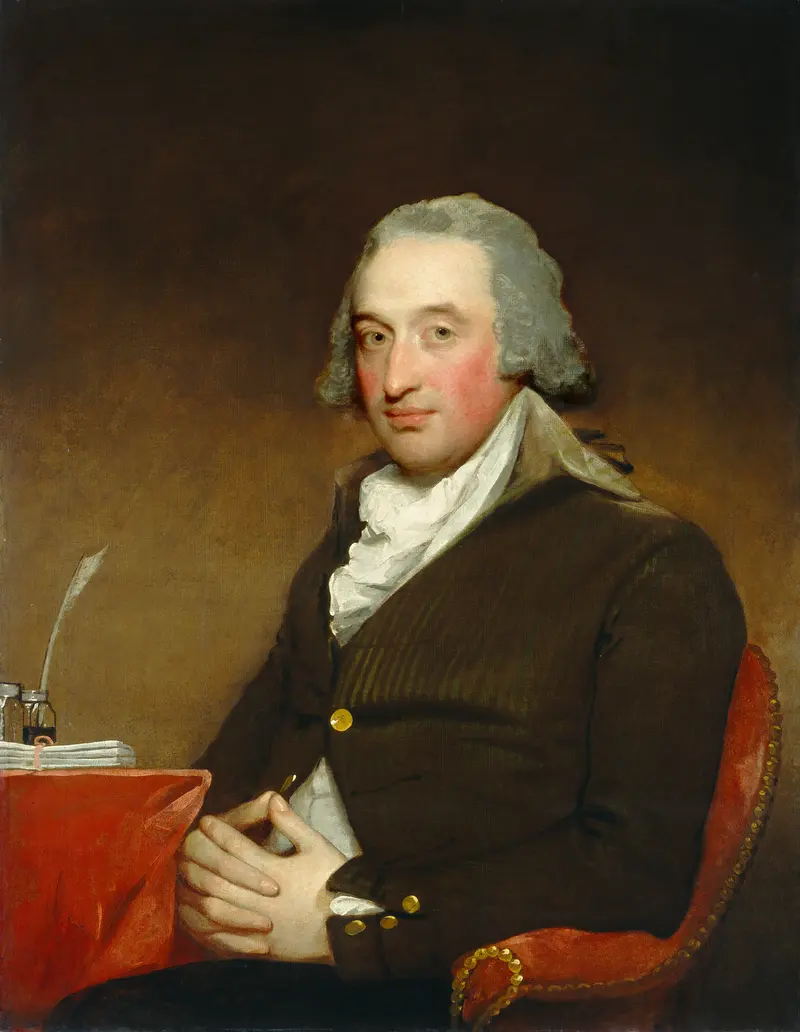
Thomas Boylston II sits with a quill in hand, in a gold silk waistcoat and a loose brown silk robe. Harvard Art Museums calls Copley's Boston likenesses a blend of fact and fiction: faces and clothes painted in detail, settings invented to convey the family's wealth and status.
Thomas Boylston II (1721-1798), John Singleton Copley
The Revolution as history painting
Trumbull gathered the founders in one room, painted from life or from life portraits, and left out men he had no reliable likeness of. In 1785 he wrote to his father that his great wish was to paint the principal events of the late war; in 1817 Congress commissioned four of them for the Capitol.
Declaration of Independence, John Trumbull

Washington, again and again
Stuart's first portrait type of Washington, from sittings in Philadelphia in 1795, shows the right side of his face. Thirty-two gentlemen signed up for copies, and Stuart made about a dozen replicas of this type, including this Vaughan portrait, before he came to prefer his Athenaeum portrait of 1796, the National Gallery of Art says.
George Washington (Vaughan portrait), Gilbert Stuart
Before and after Colonial American art
 Baroquec. 1590–1750
- Colonial American17th–18th century
 Rocococ. 1715–1770s
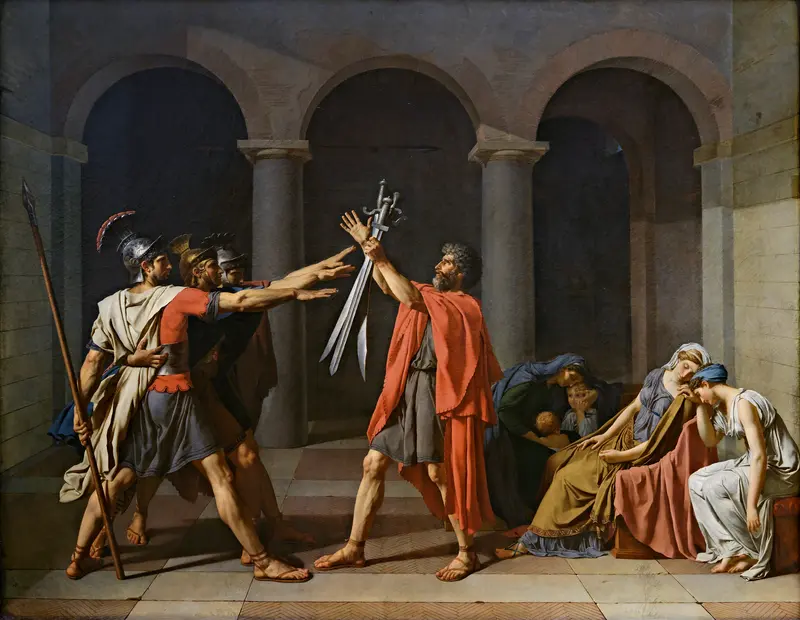 Neoclassicismc. 1750–1850
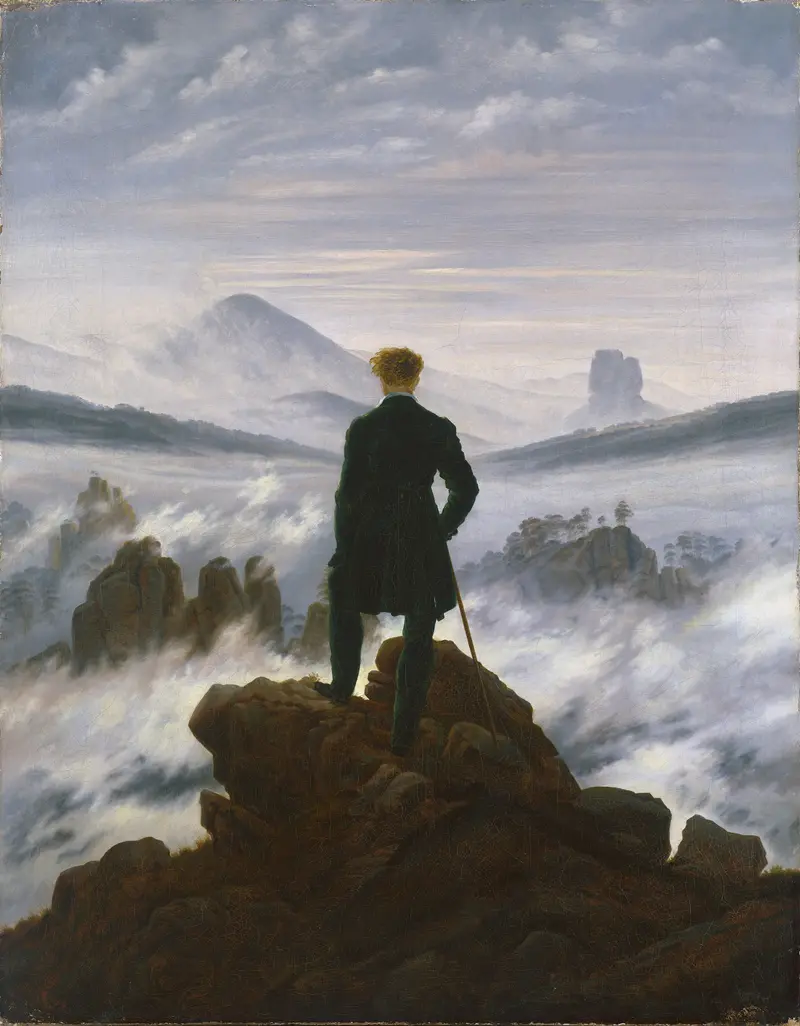 Romanticismc. 1780–1850
Colonial American art vs Neoclassicism and Folk art
| Compared | Colonial American | Neoclassicism | Folk art |
|---|---|---|---|
| When | 17th–18th century | c. 1750–1850 | 18th–20th century |
| Where | Britain's North American colonies | Europe, above all France and Britain | Worldwide; ours come mostly from the United States |
| Subject | Portraits of merchants, ministers and their families | Ancient Greek and Roman history and myth | Portraits, landscapes, religious and historical scenes |
| Look | Lifelike faces, costly fabrics, props that show wealth | Crisp lines, symmetry, austere design | Bold color, simple outlines, flat decorative design |
| Famous example | Copley, Nicholas Boylston | David, Oath of the Horatii | Edward Hicks, The Peaceable Kingdom |
| Key artists | Smibert, Feke, Copley, Peale, Stuart | Jacques-Louis David, Ingres, Angelica Kauffmann | Edward Hicks, Ammi Phillips, Erastus Salisbury Field |
List of famous Colonial American paintings and their artists
The famous Colonial American paintings: who painted them, when, and where each one is today.
Show the listHide the list
| Painting | Painted by | Year | Medium | Size | Located in | City |
|---|---|---|---|---|---|---|
| Declaration of Independence | John Trumbull | 1817–1818 | Oil on canvas | 366 × 549 cm (144.1 × 216.1 in) (12 × 18 ft) | United States Capitol | Washington, D.C. |
| Watson and the Shark | John Singleton Copley | 1778 | Oil on canvas | 182.1 × 229.7 cm (71.7 × 90.4 in) | National Gallery of Art Washington | Washington, D.C. |
| Surrender of Lord Cornwallis | John Trumbull | 1819–1820 | Oil on canvas | 366 × 549 cm (144.1 × 216.1 in) (12 × 18 ft) | United States Capitol | Washington, D.C. |
| George Washington (Athenaeum type) | Gilbert Stuart | c. 1796–1803 | Oil on canvas | 73.5 × 61.1 cm (28.9 × 24.1 in) | Clark Art Institute | Williamstown, Massachusetts |
| The Washington Family | Edward Savage | 1789–1796 | Oil on canvas | 213.6 × 284.2 cm (84.1 × 111.9 in) | National Gallery of Art Washington | Washington, D.C. |
| George Washington (Lansdowne Portrait) | Gilbert Stuart | 1796 | Oil on canvas | 247.6 × 158.7 cm (97.5 × 62.5 in) | National Portrait Gallery, Smithsonian | Washington, D.C. |
| The Skater (Portrait of William Grant) | Gilbert Stuart | 1782 | Oil on canvas | 244.5 × 147.4 cm (96.3 × 58 in) | National Gallery of Art Washington | Washington, D.C. |
| The Battle of Bunker's Hill, June 17, 1775 | John Trumbull | 1786 | Oil on canvas | 65.1 × 95.6 cm (25.6 × 37.6 in) | Yale University Art Gallery | New Haven, Connecticut |
| The Death of Major Peirson, 6 January 1781 | John Singleton Copley | 1782–1784 | Oil on canvas | 251.5 × 365.8 cm (99 × 144 in) | Tate Britain | London |
| The Artist in His Museum | Charles Willson Peale | 1822 | Oil on canvas | 263.5 × 202.9 cm (103.7 × 79.9 in) | Pennsylvania Academy of the Fine Arts | Philadelphia |
| George Washington at Princeton | Charles Willson Peale | c. 1779–1781 | Oil on canvas | 241.3 × 156.8 cm (95 × 61.7 in) | Metropolitan Museum of Art | New York |
| Washington in the Uniform of a British Colonial Colonel | Charles Willson Peale | 1772 | Oil on canvas | Washington and Lee University | Lexington, Virginia | |
| Sea Captains Carousing in Suriname | John Greenwood | c. 1755–1758 | Oil on bed ticking | 95.9 × 190.5 cm (37.8 × 75 in) | Saint Louis Art Museum | St. Louis, Missouri |
Colonial American art: questions and answers
What does Colonial American art mean?
Colonial American art means the art made in Britain's North American colonies, mostly in the 17th and 18th centuries, before the Revolution. The Getty's Art & Architecture Thesaurus, which also lists it as Early American, says the term generally refers to the British colonies on the East Coast, not the French or Spanish ones, and may also cover styles that lasted into the early 1800s after independence. In painting it means above all portraits: the National Gallery of Art in Washington says portraiture was the genre most often commissioned in colonial and Federal America.
Sources: Getty AAT: Colonial North American · National Gallery of Art: American Paintings of the Eighteenth Century (Ellen G. Miles, 1995)
What are the characteristics of colonial American paintings?
Colonial American paintings are mostly portraits that show off a family's wealth: silk, satin and lace, imported goods, and props such as ledgers, books and a ship seen through a window. Painters often borrowed poses from English prints; Harvard Art Museums says Robert Feke modeled his sitters' clothes, gestures and poses on engravings after Sir Godfrey Kneller and Sir Peter Lely. Faces were painted closely from life, while the settings were often invented: Harvard calls Copley's Boston likenesses a blend of fact and fiction.
Sources: Harvard Art Museums: Susannah Speakman Inman · Harvard Art Museums: Sarah Morecock Boylston · Art Institute of Chicago: Richard Bill
When was the colonial period in American art?
The colonial period in American art runs from the 1600s to the Revolution of 1776. The Getty's art vocabulary places the colonial style primarily in the 17th and 18th centuries, and the oldest portraits in our collection known to have been painted in the colonies, such as Wait Still Winthrop, date from about 1700. The Revolution split the painters: Copley left Boston for London in 1774, and the National Gallery of Art notes that of the three most talented painters born in the colonies, Charles Willson Peale, Benjamin West and Copley, only Peale lived in America after the war.
Sources: Getty AAT: Colonial North American · Harvard Art Museums: Wait Still Winthrop · National Gallery of Art: American Paintings of the Eighteenth Century (Ellen G. Miles, 1995)
Who were the famous American colonial painters?
The best-known American colonial painters are John Singleton Copley, Gilbert Stuart, Charles Willson Peale and Benjamin West, together with John Smibert, Robert Feke, Joseph Blackburn and John Trumbull. The National Gallery of Art calls Copley the most talented artist in colonial America and Stuart the pre-eminent portraitist of Federal America. Tate's 1946 exhibition of American painting began the story with Smibert's group portrait of Dean Berkeley of 1729 and called Robert Feke the first native-born painter of note.
Sources: National Gallery of Art: American Paintings of the Eighteenth Century (Ellen G. Miles, 1995) · Tate: American Painting (1946 exhibition)
Why are most colonial American paintings portraits?
Most colonial American paintings are portraits because portraits were what colonial patrons paid for. The National Gallery of Art says portraiture was the genre most frequently commissioned in colonial and Federal America, and that John Wollaston, who painted more than two hundred portraits in the colonies, was meeting a growing demand for formal portraits for the new homes of merchants and landowners. A portrait recorded a family's wealth and standing: Copley's Boylston portraits at Harvard show the family in imported silks, with ledgers and a company ship.
Sources: National Gallery of Art: American Paintings of the Eighteenth Century (Ellen G. Miles, 1995) · Harvard Art Museums: Nicholas Boylston
Who was John Singleton Copley?
John Singleton Copley (1738–1815) was a Boston-born portrait painter whom the National Gallery of Art calls the most talented artist in colonial America. Trained by his stepfather, the English engraver Peter Pelham, he painted 350 portraits between 1753 and 1774, mostly of Bostonians, the Art Institute of Chicago says; his sitters included Paul Revere, John Hancock, Samuel Adams and Mercy Otis Warren. In 1774 he left for London, where Watson and the Shark (1778) made his name as a history painter.
Sources: National Gallery of Art: American Paintings of the Eighteenth Century (Ellen G. Miles, 1995) · Art Institute of Chicago: Daniel Hubbard
What is the story behind Watson and the Shark?
Watson and the Shark shows a real attack: in 1749 the 14-year-old Brook Watson was seized by a shark while swimming in Havana Harbor and lost his right foot before sailors pulled him out. Copley showed the painting at the Royal Academy in 1778, where it caused a sensation; Watson, by then a London merchant and later Lord Mayor of London, kept it and left it to Christ's Hospital. The National Gallery of Art notes that the harpooner's pose recalls Raphael's Saint Michael driving Satan out of heaven. Copley painted three versions, now in Washington, Boston and Detroit.
Sources: National Gallery of Art: Watson and the Shark (Google Arts & Culture) · National Gallery of Art: American Paintings of the Eighteenth Century (Ellen G. Miles, 1995)
Who painted the famous portrait of George Washington?
Gilbert Stuart painted the best-known portrait of George Washington, the unfinished Athenaeum portrait of 1796, which is the image on the one-dollar bill. Harvard Art Museums says Stuart made more than a hundred portraits of Washington in three types: the Athenaeum, the Vaughan, which shows the right side of his face, and the full-length Lansdowne. The earliest known portrait of Washington is older: Charles Willson Peale painted him in 1772 in the uniform of the Virginia Regiment, and in 1779 Pennsylvania commissioned Peale's full-length, the first official portrait of Washington.
Sources: Harvard Art Museums: George Washington (Vaughan type) · Encyclopedia Virginia (Virginia Humanities): George Washington as a Colonel in the Virginia Regiment · National Gallery of Art: American Paintings of the Eighteenth Century (Ellen G. Miles, 1995)
Who painted the Declaration of Independence painting?
John Trumbull painted the famous Declaration of Independence in the U.S. Capitol, between 1817 and 1818. It shows the draft being presented to Congress on June 28, 1776, not the signing, and Trumbull included 47 men, painted from life or from life portraits, to preserve the faces of the founders. The Architect of the Capitol says an 1820 engraving by Asher B. Durand made it his most famous painting; it is pictured on the back of the two-dollar bill. A smaller first version, begun in 1786, is at the Yale University Art Gallery.
Sources: Architect of the Capitol: Declaration of Independence · National Gallery of Art: American Paintings of the Eighteenth Century (Ellen G. Miles, 1995)
Is colonial American art the same as folk art?
No. Colonial American art in the usual sense is the work of trained or professional portrait painters, while folk art is made by artists without academic training. The National Gallery of Art keeps them apart: its catalogue of 18th-century American paintings covers trained artists, and works by self-taught painters have a separate catalogue of American naive paintings. The line is not always sharp, since it describes Joseph Badger as apparently self-taught. Self-taught portrait painters such as Ammi Phillips are on our folk art page.
Sources: National Gallery of Art: American Paintings of the Eighteenth Century (Ellen G. Miles, 1995)
What is Spanish colonial art?
Spanish colonial art is the art made in Spain's colonies in the Americas, such as New Spain, and it is a separate tradition from Colonial American art. The Getty's art vocabulary says Colonial North American generally refers to the British colonies on the East Coast, not to the French or Spanish colonies. American museums collect both: the Smithsonian American Art Museum says its collection begins with works from New Spain and New England, including a painting of Saint Barbara made in Puerto Rico about 1680–90.
Sources: Getty AAT: Colonial North American · Smithsonian American Art Museum: Early American Art
Where can you see colonial American paintings?
The largest groups are in Washington and Boston. The National Gallery of Art says its paintings by Copley are rivaled only by those in collections in his native Boston; it also owns Gilbert Stuart's The Skater and Edward Savage's The Washington Family. The National Portrait Gallery in Washington has Stuart's Lansdowne portrait and owns his Athenaeum portrait jointly with the Museum of Fine Arts, Boston. Harvard Art Museums in Cambridge holds Copley's Boylston family portraits, and Trumbull's four Revolutionary paintings hang in the Rotunda of the U.S. Capitol.
Sources: National Gallery of Art: American Paintings of the Eighteenth Century (Ellen G. Miles, 1995) · National Gallery of Art: The Washington Family (Google Arts & Culture) · National Portrait Gallery, Washington: George Washington (Lansdowne Portrait) (Google Arts & Culture) · National Portrait Gallery, Washington: The Athenaeum Portrait (Google Arts & Culture) · Harvard Art Museums: Nicholas Boylston · Architect of the Capitol: Declaration of Independence
How did the American Revolution change colonial art?
The Revolution split the colonial painters. Copley, whose sitters included Paul Revere and Samuel Adams, left Boston for London in 1774 as fighting approached, and Ralph Earl, a Loyalist, fled to England in 1778. Charles Willson Peale served with the Pennsylvania militia and painted his fellow officers, and the National Gallery of Art says he was the only one of the three most talented colonial-born painters to live in America after the war. John Trumbull, who had served with a Connecticut regiment, made the war itself his subject, starting with Bunker's Hill in 1786.
Sources: National Gallery of Art: American Paintings of the Eighteenth Century (Ellen G. Miles, 1995)
Is colonial American art in the public domain, and can I download it free?
Yes. The famous colonial American paintings are all by artists who died long ago, from John Greenwood in 1792 to John Trumbull in 1843, so they are in the public domain in the United States and in countries where copyright ends 70 years after the artist's death. You can download them free and use them for anything, including commercial projects. A few countries have their own rules on photographs of artworks, so check them if you publish outside the U.S.
Sources: Cornell University Library: Copyright Term and the Public Domain
How we chose the famous paintings
The famous paintings on this page are the colonial-era American paintings known most widely around the world, measured by the number of languages that have an encyclopedia entry about each one, checked in November 2026. We count paintings by artists born or trained in Britain's American colonies and, as the Getty's art vocabulary allows, the work they carried into the early 1800s, such as Copley's history paintings made in London and John Trumbull's paintings of the Revolution for the U.S. Capitol. No painter has more than three.
Only paintings in our collection are shown, so a few well-known pictures, such as Copley's Boy with a Flying Squirrel and Peale's Staircase Group, are not here. When a painting exists in several versions, we count the entries on the work and say which version we show: Stuart's Athenaeum portrait of Washington is a replica at the Clark Art Institute, Peale's George Washington at Princeton is his replica at the Met, and for Copley's Watson and the Shark and Trumbull's Bunker's Hill we show the first version. Benjamin West's American subjects, such as The Death of General Wolfe, are on our Neoclassicism page, and self-taught portrait painters are on our folk art page.
Dates, sizes and locations come from the museums' own records and from Wikidata.
Spotted a mistake? Tell us and we will correct it.