
Sitting bioy peeling vegetables — History & Facts
What draws the eye first in Sitting boy peeling vegetables is the quiet absorption of its young subject, his head bowed and hands busy with a simple task. The palette is earthy, the brushwork loose yet purposeful, and the background is pared down to a haze of textured light, so that the boy’s concentration becomes the true center of gravity. Every detail — the tilt of the cap, the roughness of his jacket, the way his feet anchor him to the ground — feels chosen to speak of ordinary life, of work that is neither celebrated nor pitied, but simply done.
The knife in his hand and the scattered peelings at his feet are not just props; they are the evidence of a moment unfolding, a small ritual repeated in countless kitchens and cottages. This study belongs to a world where genre painting flourished as a mirror for the lives of everyday people, particularly in the 19th-century Swiss and German-speaking regions where Albert Anker worked. Such images were often commissioned or collected by a rising middle class eager to see their own values — diligence, humility, domesticity — reflected on canvas. The present work, documented as a study for the painting Traute Familienszene am Kachelofen, appeared at Sotheby’s in Zürich in 2012, a reminder of how many of these intimate scenes now circulate far from the homes they once depicted.
History has kept few traces of this particular boy, but the painting invites us to linger in his world, to look again at the dignity of the everyday.
More Artworks by Albert Anker

Portrait Of A Girl
Albert Anker
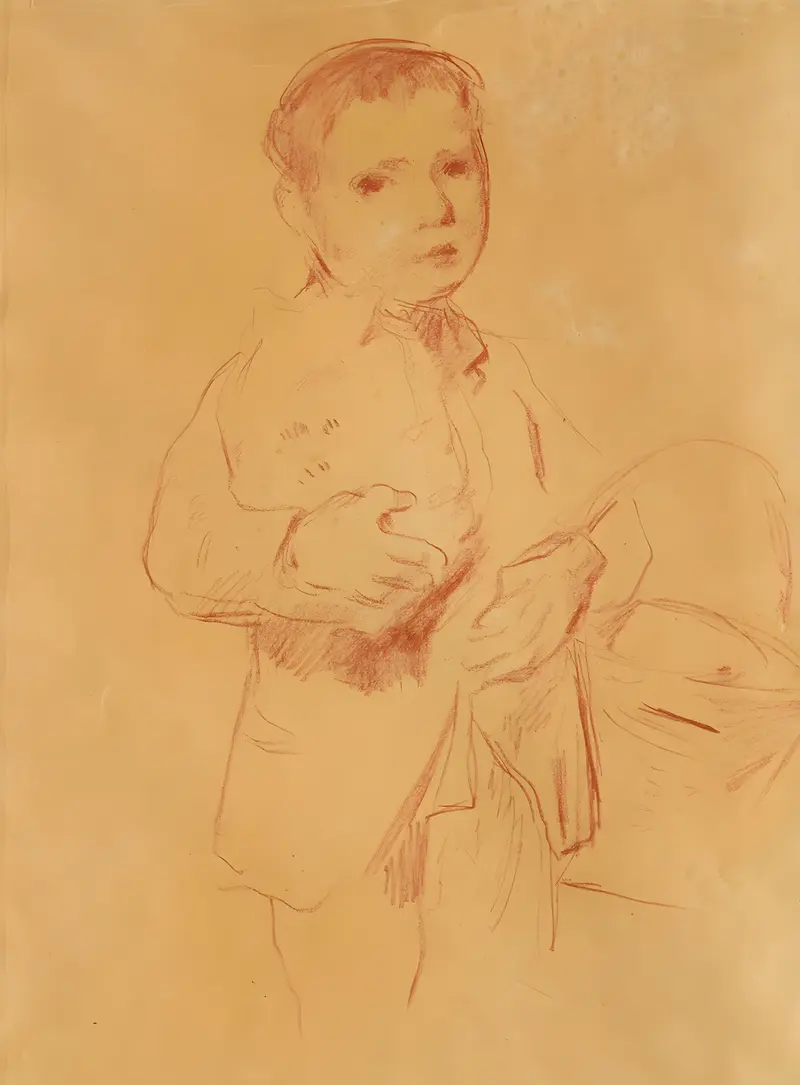
Boy with a basket
Albert Anker
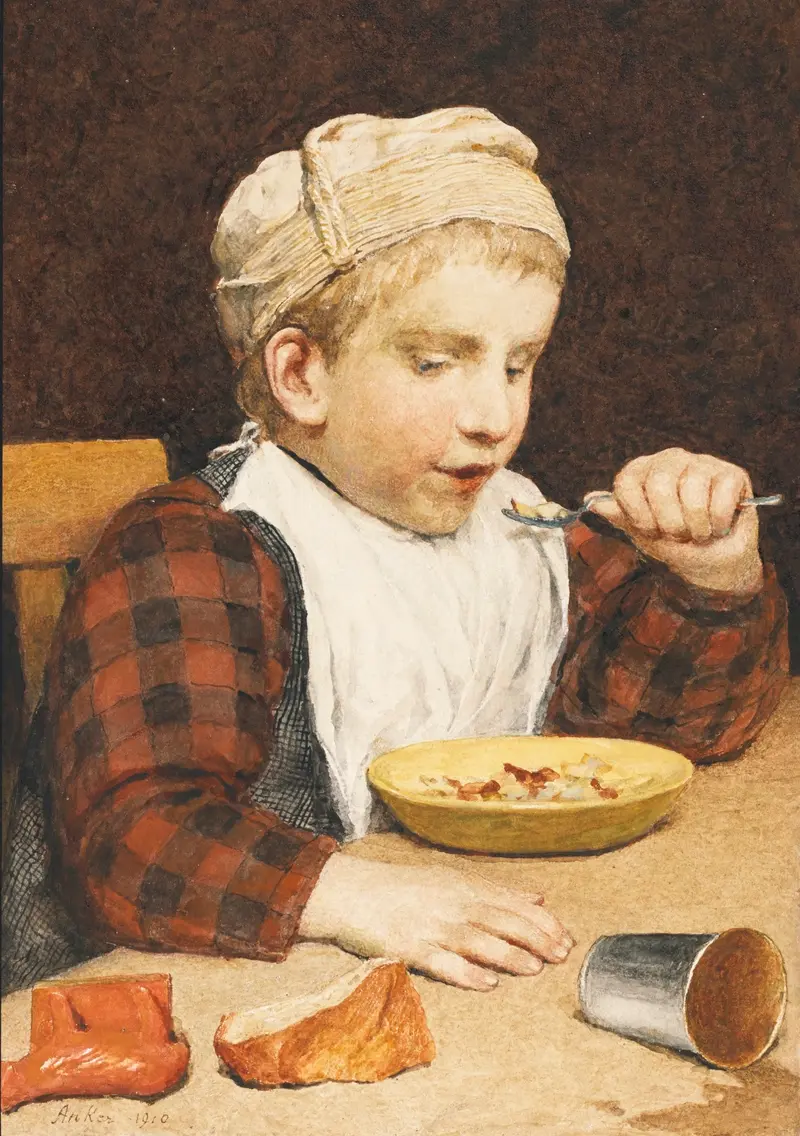
Knabe Mit Mütze Beim Essen
Albert Anker
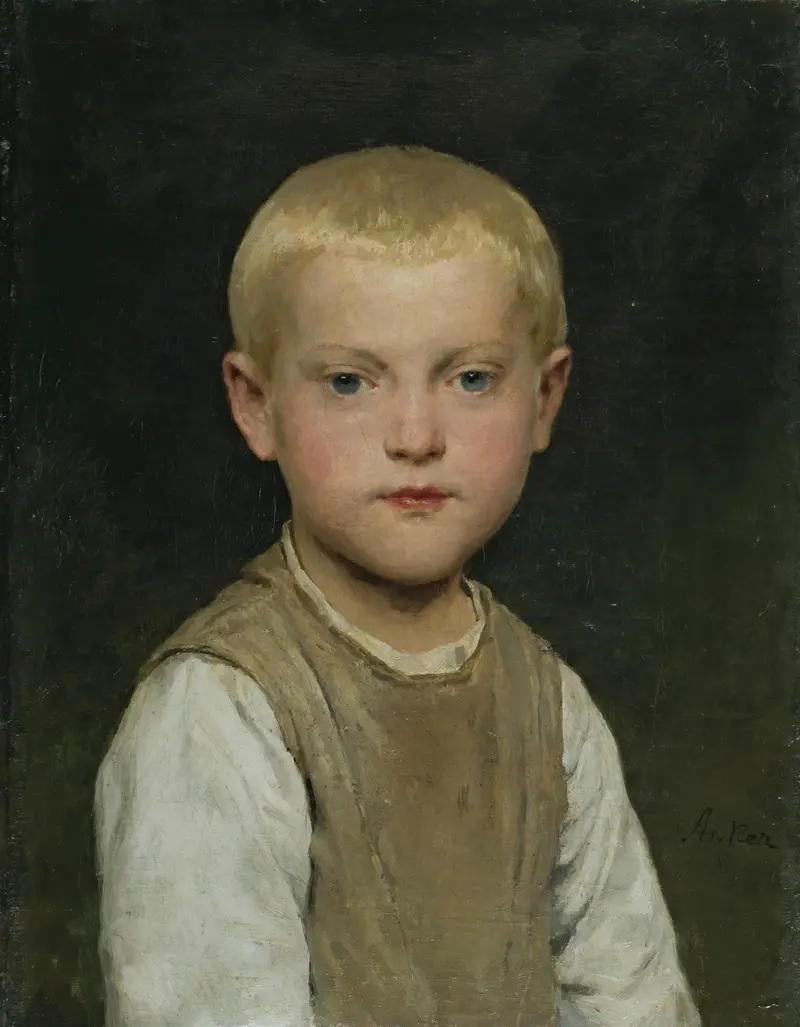
Knabenbildnis (Dr Heiri)
Albert Anker
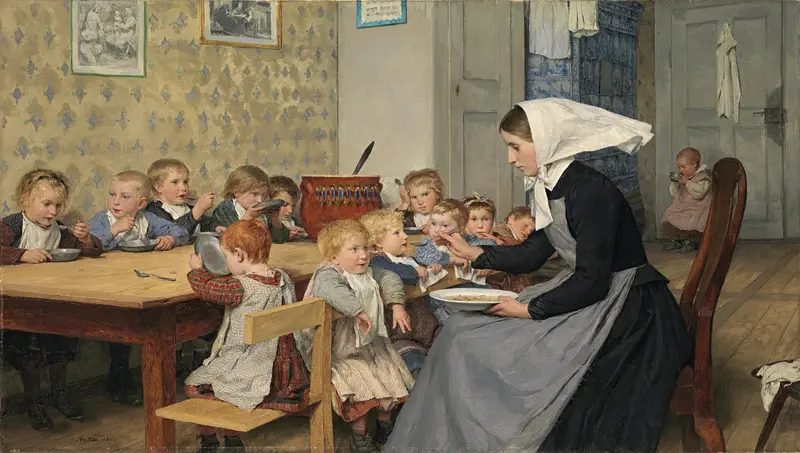
Die Kinderkrippe I
Albert Anker

L’instituteur et le pasteur
Albert Anker
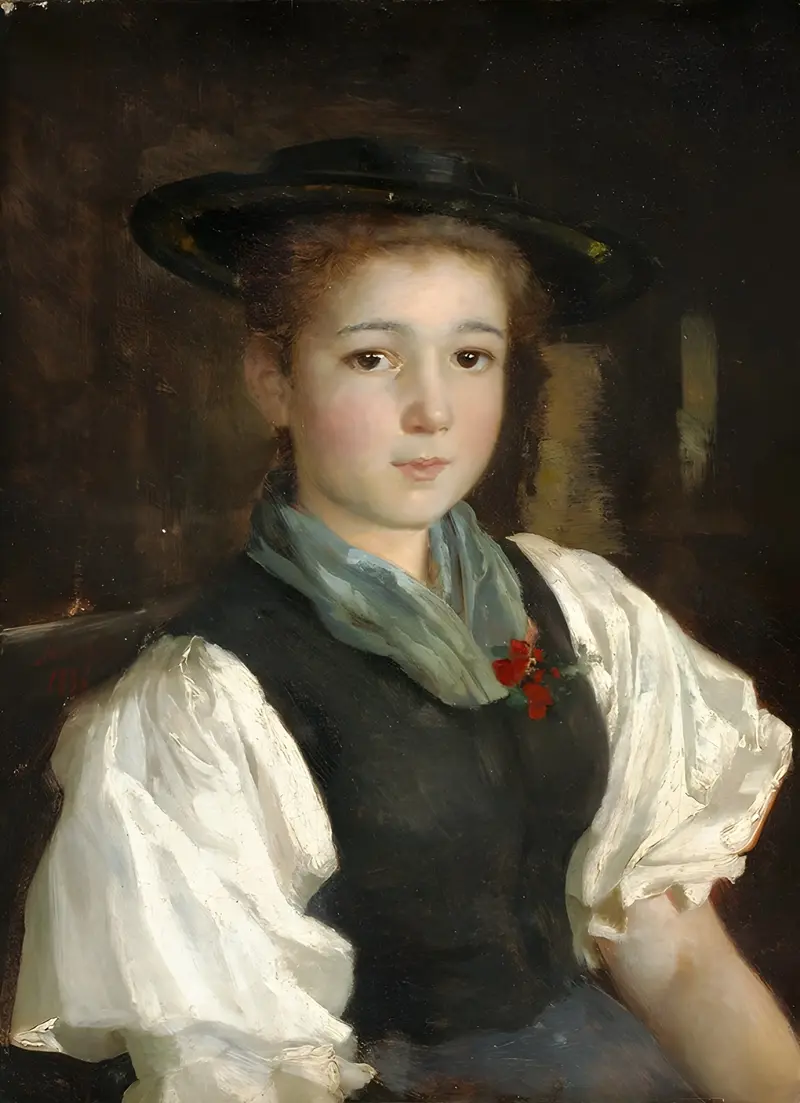
Bauernmädchen (Farm Girl)
Albert Anker
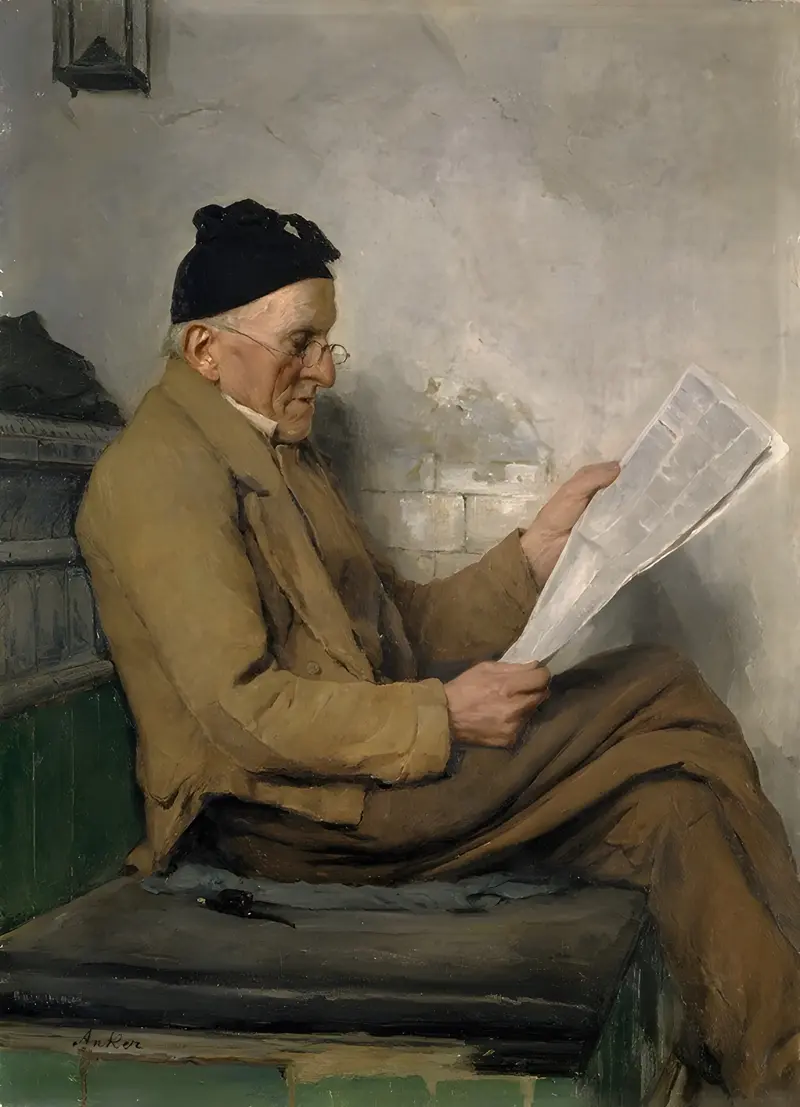
Farmer Reading on the Stove Bench
Albert Anker
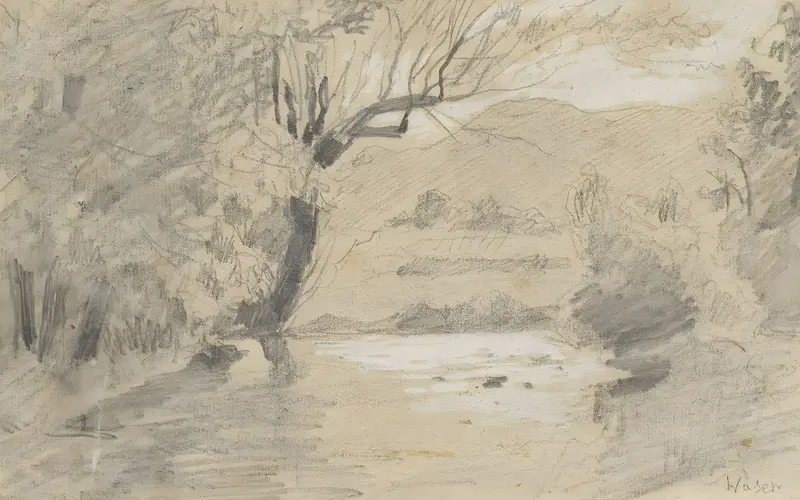
Flusslandschaft in Wasen (Emmental)
Albert Anker
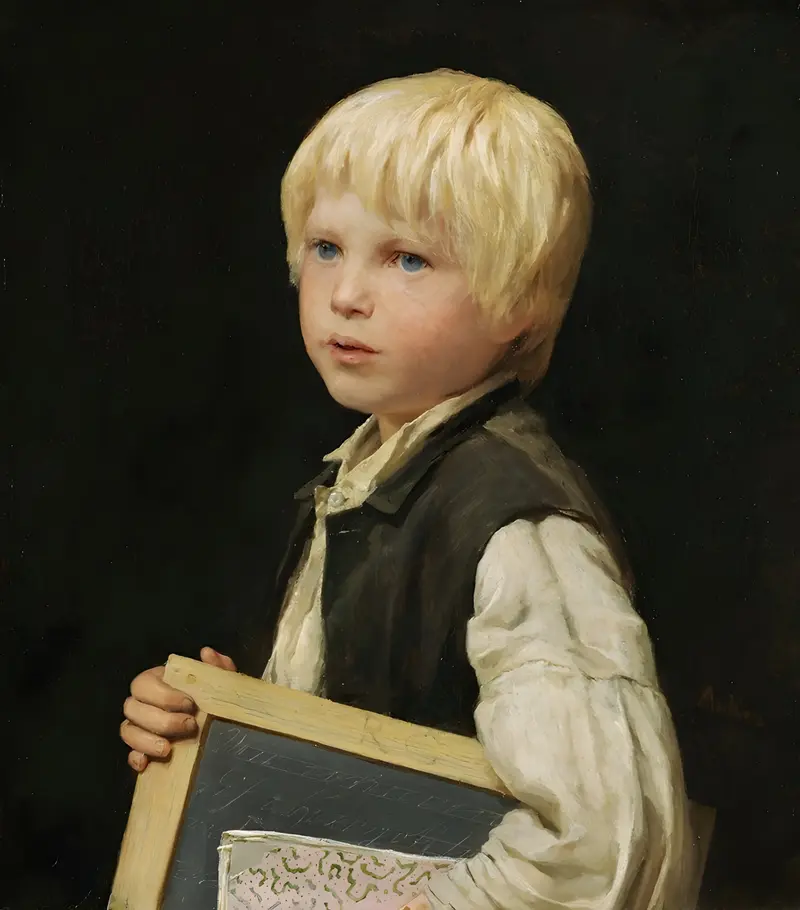
School Boy
Albert Anker
More Genre Scene Art

Banquet of the Officers of the St George Civic Guard
Frans Hals

Rembrandt and Saskia in the Scene of the Prodigal Son
Rembrandt van Rijn

Bal du moulin de la Galette
Pierre-Auguste Renoir

Quadrille at the Moulin Rouge
Henri de Toulouse-Lautrec

A Burial at Ornans
Gustave Courbet

When Will You Marry?
Paul Gauguin