Sketch of a Tree — History & Facts
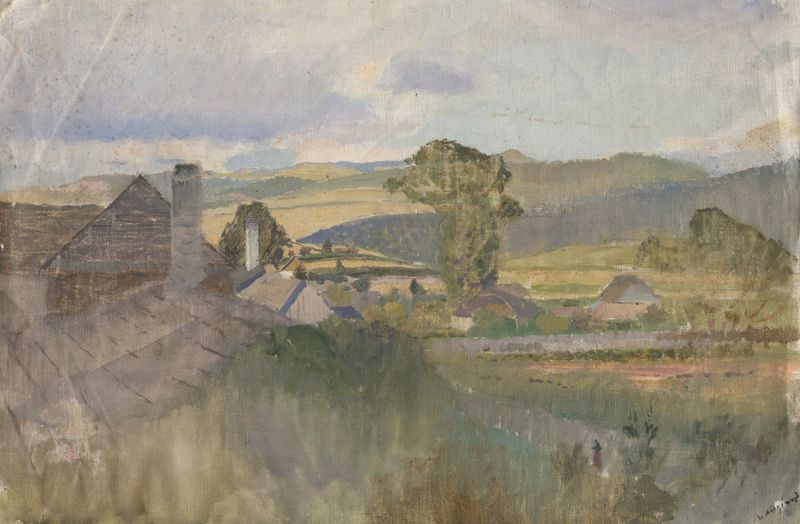
In silence, it holds the weight of our emotions, exposing the fragility of existence and the fear that often lurks just beneath the surface. Focus on the towering tree that dominates the canvas, its gnarled branches stretching out like skeletal fingers. Notice how the muted palette of earthy browns and deep greens captures a somber mood, while the texture of the strokes reveals the artist's hand, almost as if he is conversing with the wood itself. The tree stands alone, surrounded by an airy expanse that invites contemplation, invoking a sense of solitude and introspection. Within this solitary figure lies a multitude of narratives.
The tree, a symbol of endurance, contrasts starkly with the emptiness around it, suggesting both resilience and isolation. The delicate interplay of light and shadow emphasizes the tree's intricate bark, evoking the passage of time while hinting at the fear of decay. Such contrasts between strength and vulnerability, life and death, resonate deeply, urging the viewer to confront their own insecurities and existential fears. In 1872, during a period marked by shifts in artistic expression, Mednyánszky created this work in Hungary, where he was grappling with personal loss and the societal changes brought on by modernization.
This sketch reflects not only his technical prowess but also a longing for solace in nature amidst a world in flux. The artistic community was embracing new ideas, yet this simple portrayal of a tree serves as a poignant reminder of the deep-rooted human connection to the environment and the fears it embodies.
More Artworks by Ladislav Mednyánszky
Browse all →
Winter Landscape
Ladislav Mednyánszky
Out of Cemetery
Ladislav Mednyánszky

Lomnický Peak
Ladislav Mednyánszky

Nad riekou
Ladislav Mednyánszky
Edge of the Forest in the Moonlight
Ladislav Mednyánszky

View of the Ruins of Súľov
Ladislav Mednyánszky

Landscape with a Lake
Ladislav Mednyánszky
A Spring Landscape at the Foot of the Tatras
Ladislav Mednyánszky

A Wintry Forest
Ladislav Mednyánszky
Village below the Tatras
Ladislav Mednyánszky