
Sketch with a Castle on a Mountaintop — History & Facts
Where does light end, and longing begin? The interplay of illumination and shadow in Sketch with a Castle on a Mountaintop invites us to ponder the delicate balance between aspiration and reality. Look to the left of the canvas, where the castle stands resilient against a backdrop of ethereal clouds. The gentle strokes of Gilpin’s brush create an atmospheric haze that envelops the structure, blurring the line between the tangible and the imagined. Notice how the sunlight cascades down the mountaintop, casting soft reflections on the rocks and highlighting the vibrant hues of green and blue that breathe life into the landscape.
The composition draws the eye upward, urging the viewer to ascend alongside the castle, enshrouded in the promise of discovery. Delving deeper, the castle symbolizes an idealized vision of strength and permanence, yet it rests precariously atop a rugged mountain, embodying the tension between ambition and the challenges of existence. The juxtaposition of the delicate clouds and the solid fortress speaks to the fragility of human dreams when confronted with nature's vastness. Every stroke serves to amplify this contrast, suggesting that while aspirations can soar high, they are often grounded by reality's weight. William Gilpin created this work in England, between 1762 and 1783, during a time when landscape painting was evolving into a significant genre.
This period was marked by a growing appreciation for the sublime elements of nature and its ability to provoke profound emotional responses. As an early advocate of the picturesque, Gilpin sought to capture not just the beauty of landscapes but also their capacity to inspire a reflective meditation on human aspiration amidst nature's grandeur.
More Artworks by William Gilpin
Browse all →
Bridgnorth Bridge, Shropshire
William Gilpin
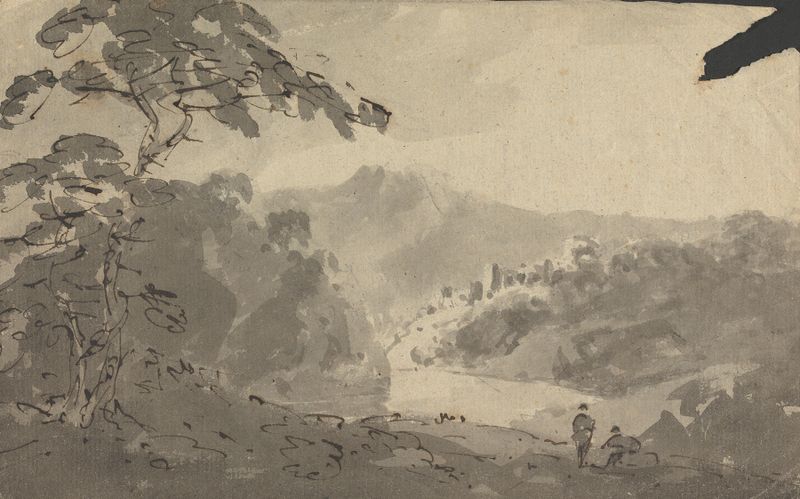
Two Men Looking Into Landscape with Castle, River and Mountain Scene
William Gilpin
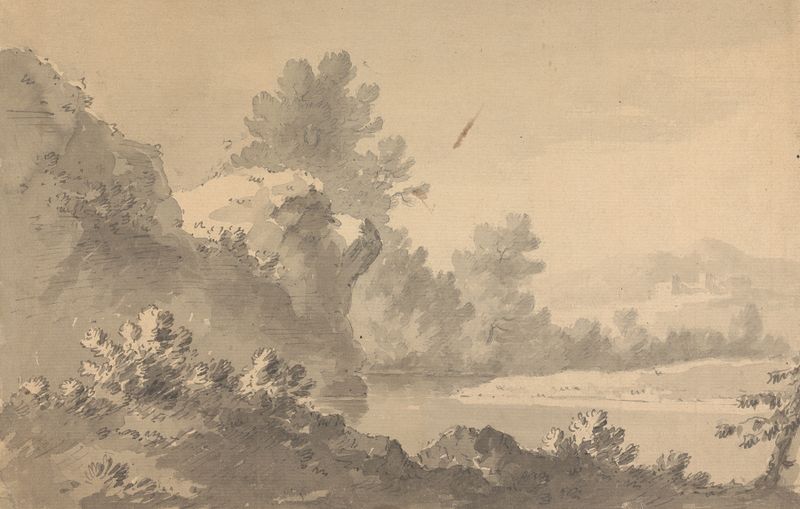
River Landscape with Castle in the Distance
William Gilpin
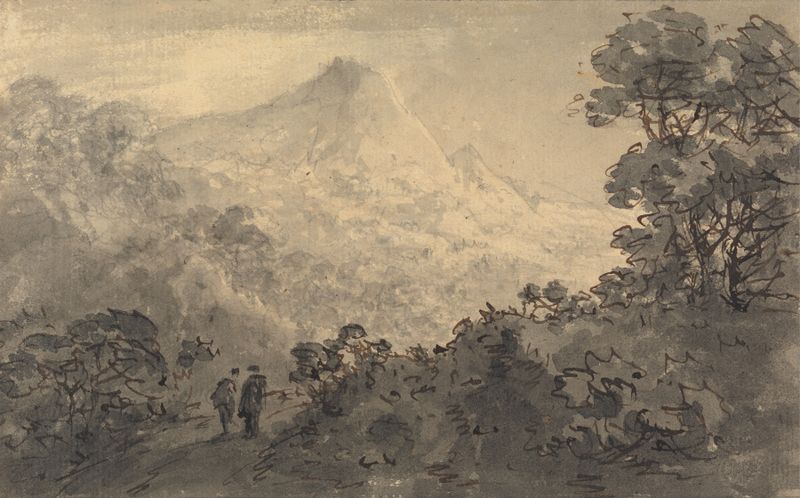
Snowdon
William Gilpin

Hilly Landscape
William Gilpin
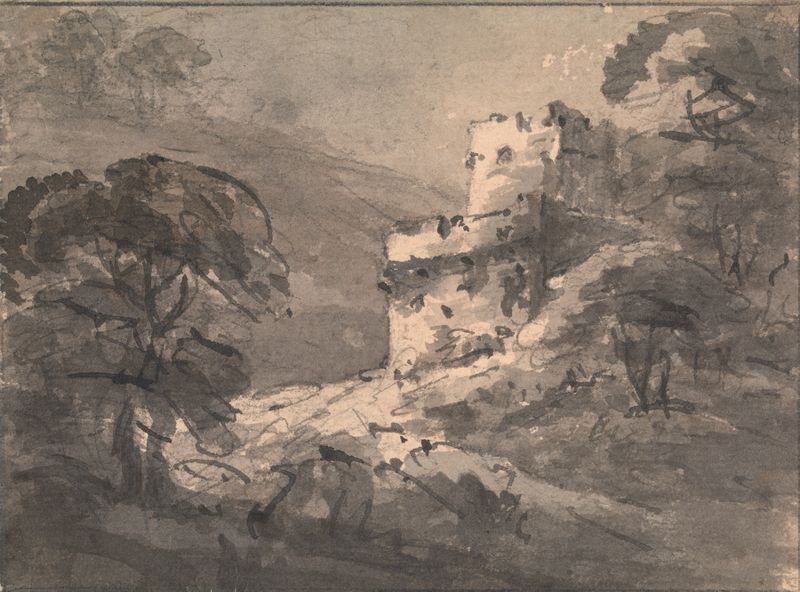
Landscape with a Ruined Castle on the Right
William Gilpin

Mountainous Landscape with Trees – High Crags to the Right
William Gilpin

View of Castle Ruin
William Gilpin
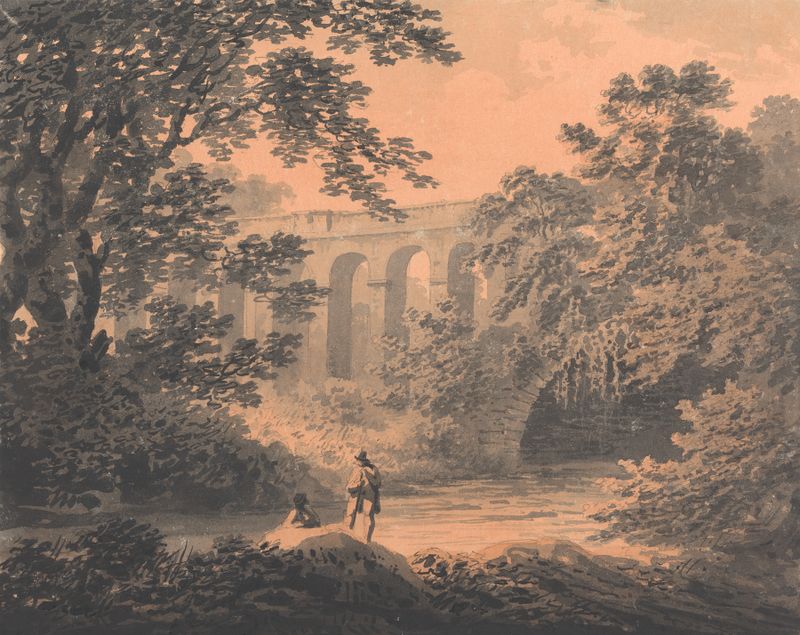
Bridge on the Malton Road from York
William Gilpin

Landscape with Two Trees and Castle
William Gilpin





