
Skizze aus Murnau — History & Facts
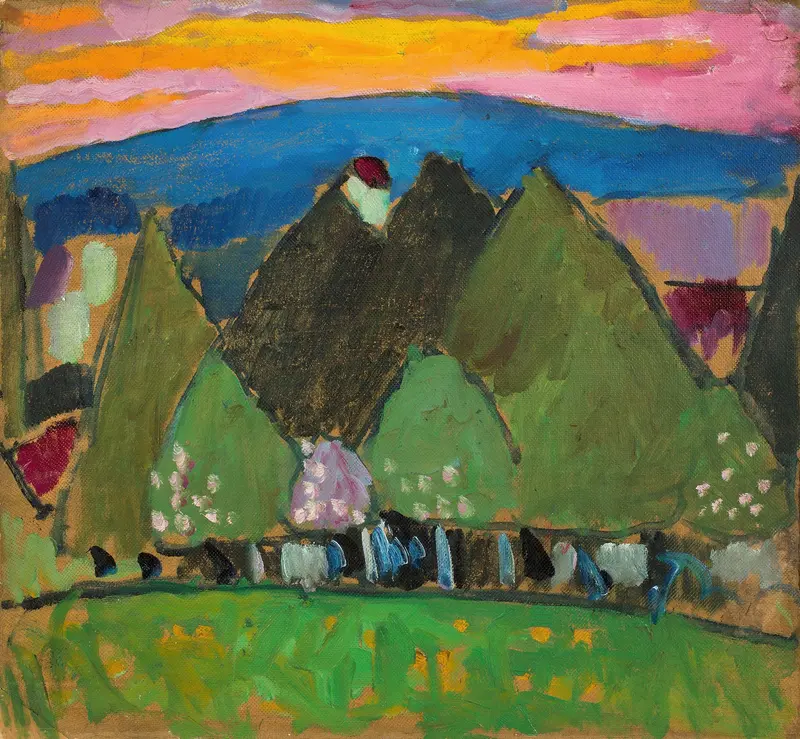
A street bends gently away from the viewer, yet it is the riot of color, not the architecture, that pulls you forward. In Skizze aus Murnau, Alexej von Jawlensky transforms a quiet village scene into a vibrant experiment: the buildings and trees pulse with thick, energetic strokes of orange, green, and violet, as if the town itself is caught mid-breath. The sky, a swirling field of blue and mauve, presses down with a sense of movement that refuses to let the scene settle.
Every brushstroke seems to ask the viewer to look again—what is solid, what is shadow, what is memory? The road, painted in bands of pink and yellow, leads not just into the town, but into the artist’s own vision. Painted between 1908 and 1909, this work belongs to a moment when artists like Jawlensky and his peers in the Munich avant-garde were breaking away from realism, searching for a new language of color and form. Murnau, a small Bavarian town, became a laboratory for these experiments, its ordinary streets and houses reimagined as fields of emotional intensity. The painting’s loose, sketch-like handling and bold palette reflect the influence of Fauvism and the beginnings of Expressionism, movements that prized the artist’s inner response over faithful representation.
Today, housed in the Lenbachhaus collection, this painting stands as a vivid trace of a time when the world was being seen—and painted—anew. Let your eyes wander through its colors; notice how each patch of paint insists on its own reality.
More Artworks by Alexej von Jawlensky

Murnau
Alexej von Jawlensky
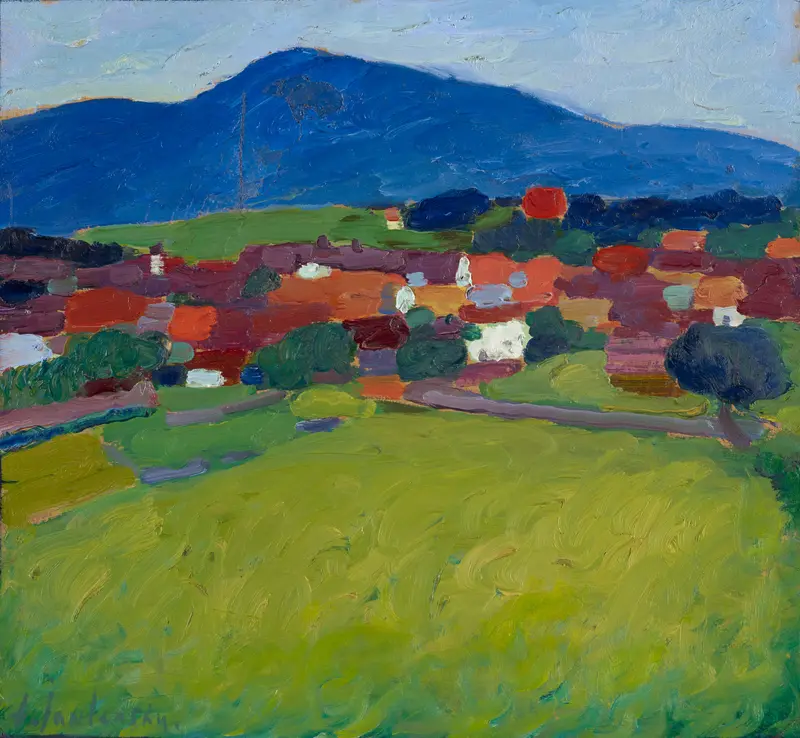
The Village Of Murnau
Alexej von Jawlensky
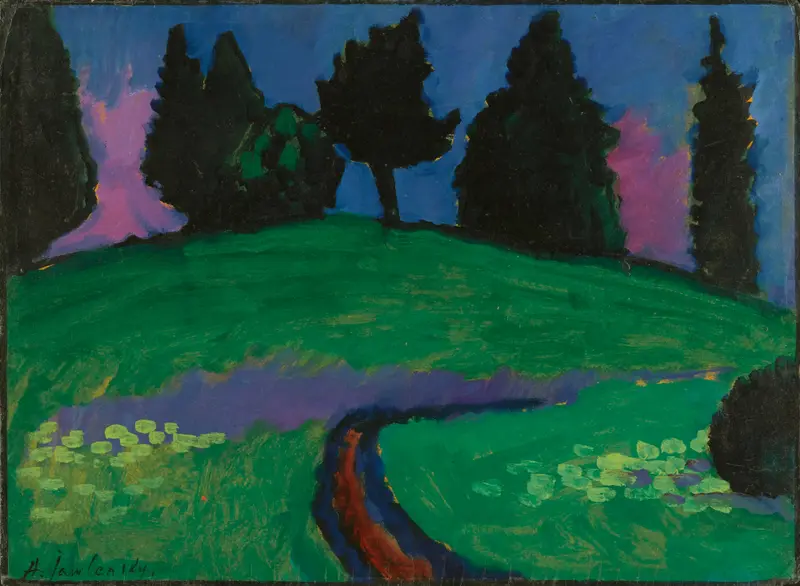
Dunkle Bäume über Grünem Hang (Dark Trees Over Green Slope)
Alexej von Jawlensky
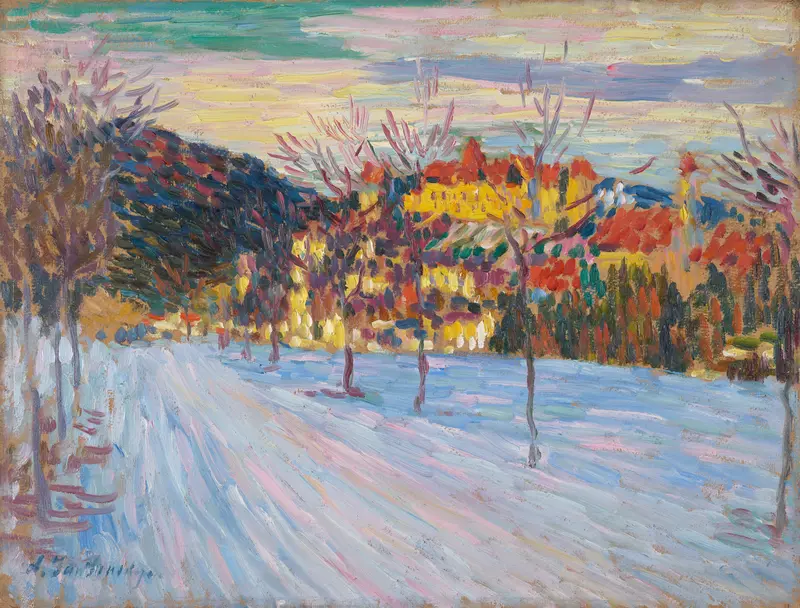
Füssen
Alexej von Jawlensky
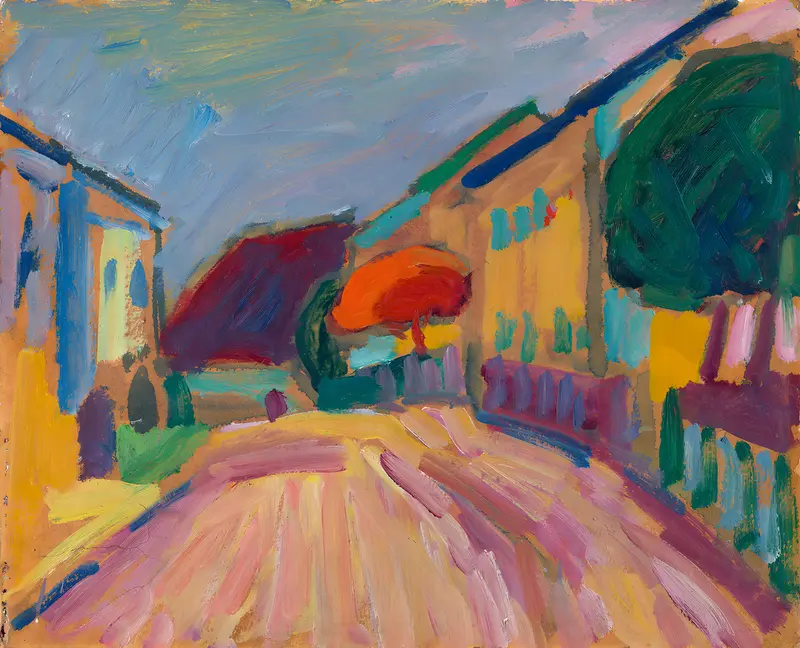
Sketch from Murnau
Alexej von Jawlensky
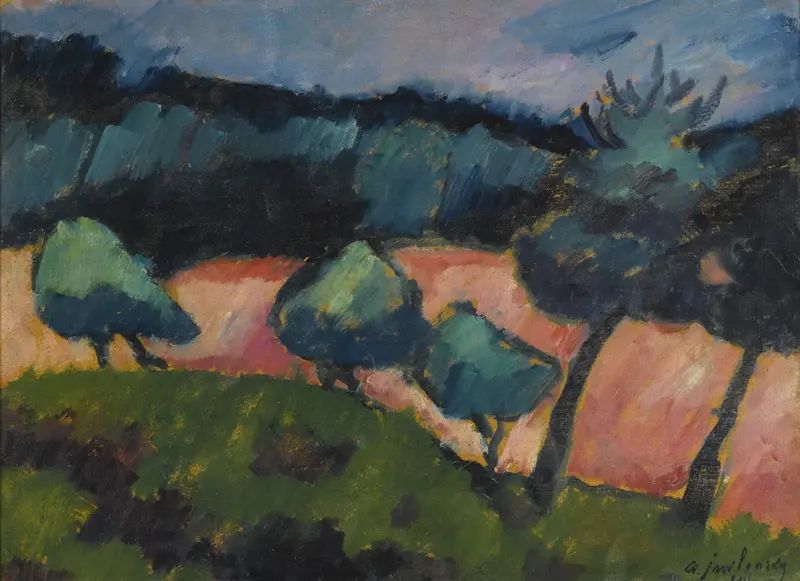
Bäume und Dünen in Prerow (Trees and dunes in Prerow)
Alexej von Jawlensky
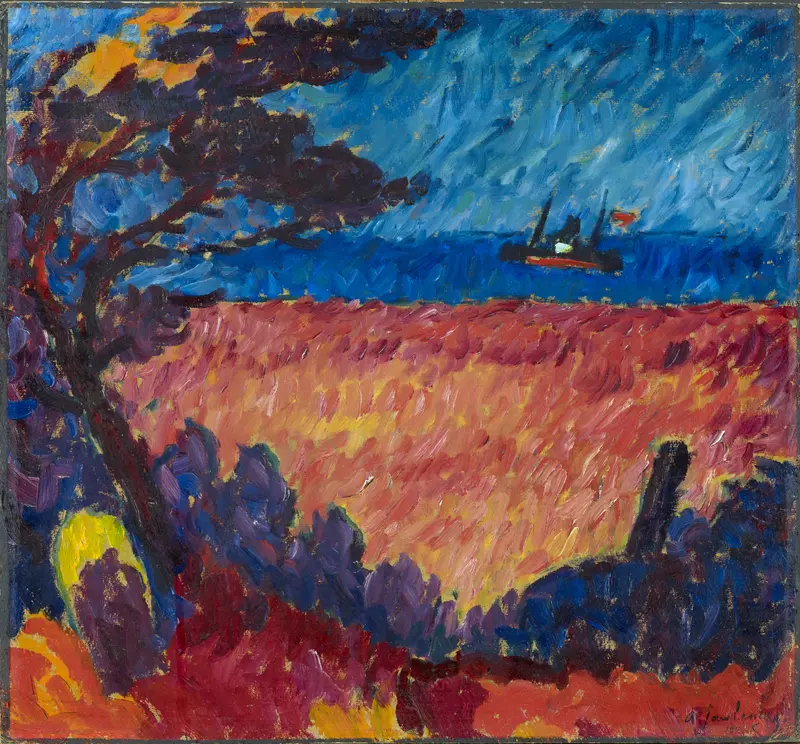
At The Baltic Sea
Alexej von Jawlensky
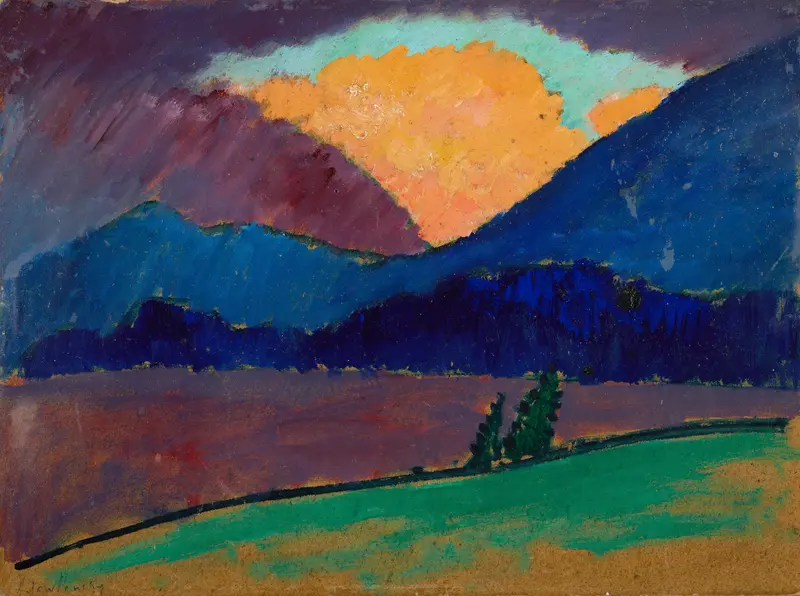
Summer evening in Murnau
Alexej von Jawlensky
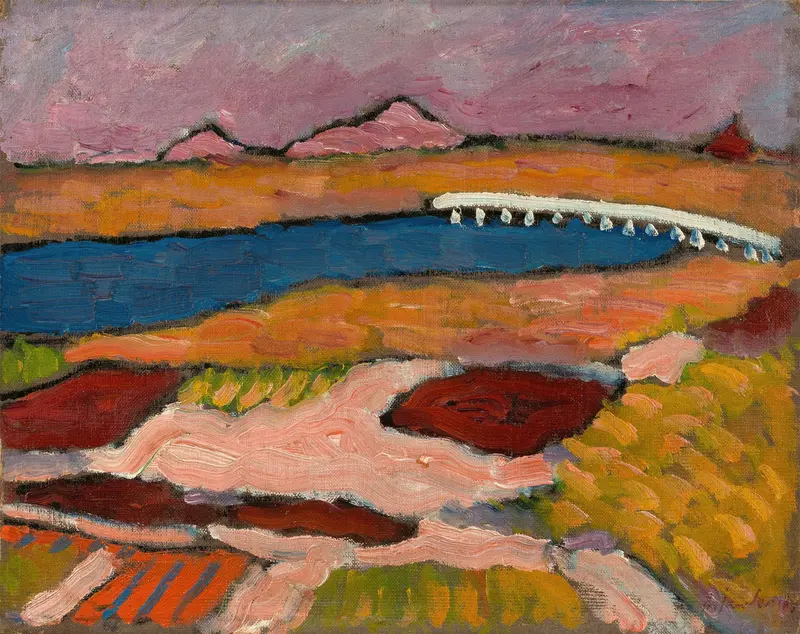
Prerow (Darß), Pommern
Alexej von Jawlensky
Landschaft mit Bäumen
Alexej von Jawlensky
More Landscape Art

The Starry Night
Vincent van Gogh

View of Delft
Johannes Vermeer

Water Lilies
Claude Monet

The Grand Canal, Venice, looking north-west from the Ca' Corner to the Ca' Contarini degli Scrigni, with the campanile of Santa Maria della Carità
Canaletto

Windsor Castle
Canaletto

The Grand Canal looking North-East from the Palazzo Dolfin-Manin to the Rialto Bridge
Canaletto