
Séminaire St-Nicolas du Chardonnet — History & Facts
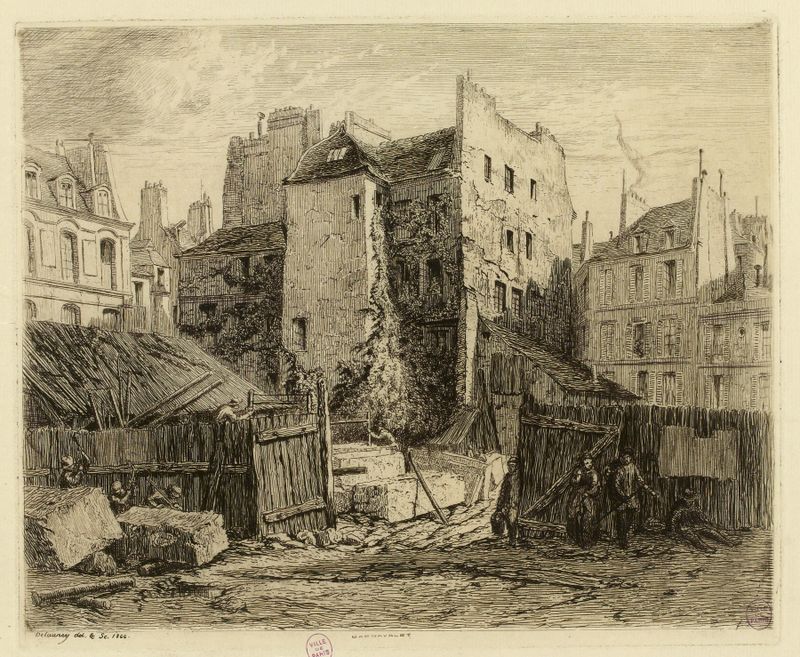
In Séminaire St-Nicolas du Chardonnet, the viewer confronts a haunting juxtaposition of decay and grandeur, where time’s relentless passage mingles with a fragile elegance. Look to the right at the striking, crumbling façade of the building, its once-vibrant colors now muted, speaking volumes about the impermanence of human creations. Notice how the artist employs delicate brushstrokes to capture the intricate details of the architecture, each chipped stone a testament to the forces of nature and history. The muted palette underscores the melancholic beauty of the scene, while hints of sunlight filter through, illuminating pockets of the structure, suggesting a whisper of hope amid the decay. The interplay of light and shadow in the painting reveals deeper emotional tensions.
The glow against the dilapidation symbolizes the fleeting moments of beauty in life, while the somber colors evoke a sense of nostalgia for what once was. This duality invites reflection: is the decay a sign of loss, or does it remind us of the impermanence that makes beauty so poignant? The looming structure stands as a metaphor for the transience of human endeavors, a silent observer of the passage of time. In 1866, Alfred Alexandre Delauney created this piece during a period of significant change in Europe. Living in France, he was witness to the social and political upheavals that shaped the era.
As the art world was moving towards impressionism, he remained anchored in a more traditional style, balancing the tension between realism and emerging modernity in his work. This painting reflects both his personal engagement with the past and the broader shifts occurring around him.
More Artworks by Alfred Alexandre Delauney
Browse all →
Eglise St-Etienne du Mont, côté nord
Alfred Alexandre Delauney
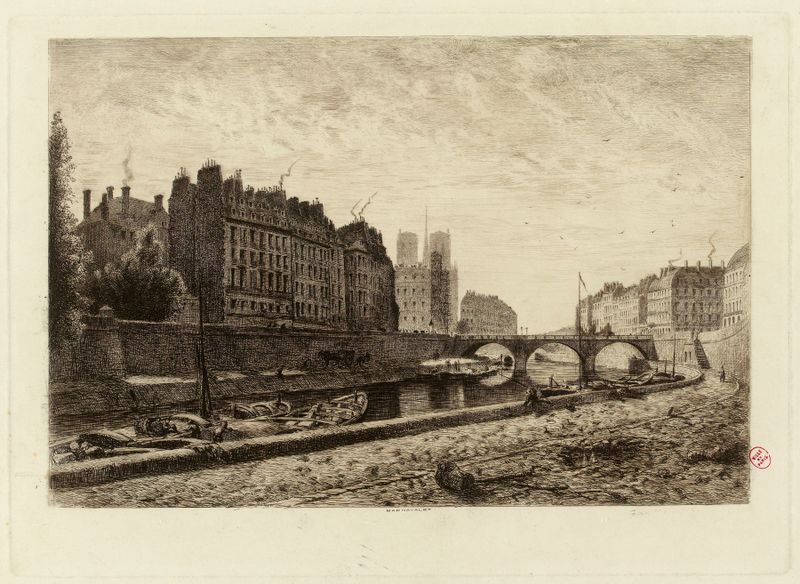
Pont St-Michel
Alfred Alexandre Delauney

Ancienne poterne du Palais de Justice, quai des Orfèvres
Alfred Alexandre Delauney
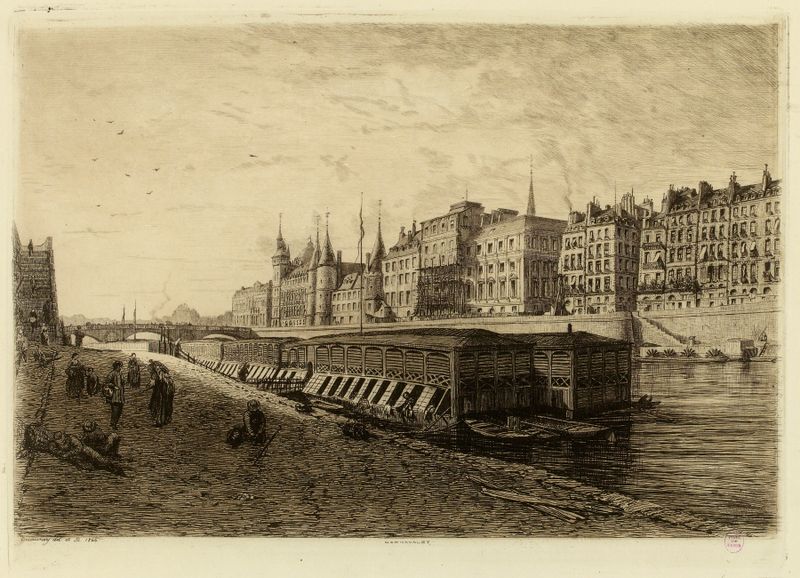
Quai de l’Horloge
Alfred Alexandre Delauney
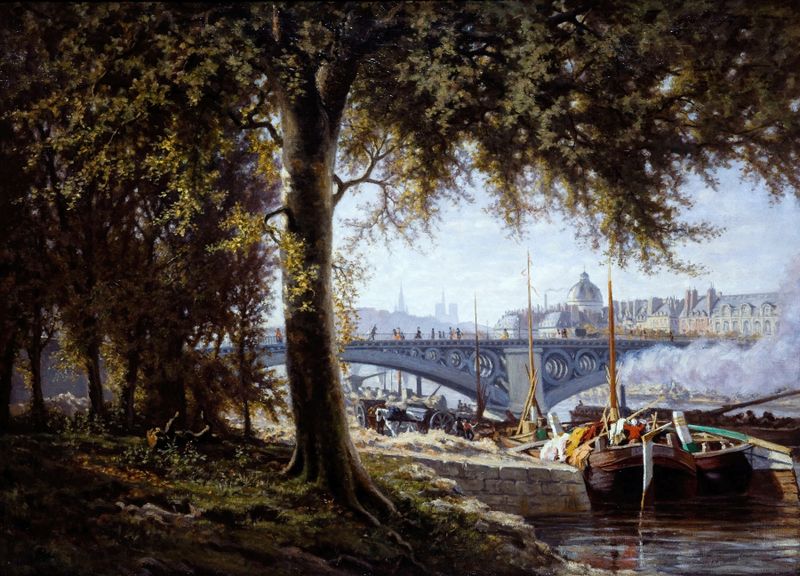
Le Pont des Saints-Pères
Alfred Alexandre Delauney

Pont-Neuf et quai Conti
Alfred Alexandre Delauney
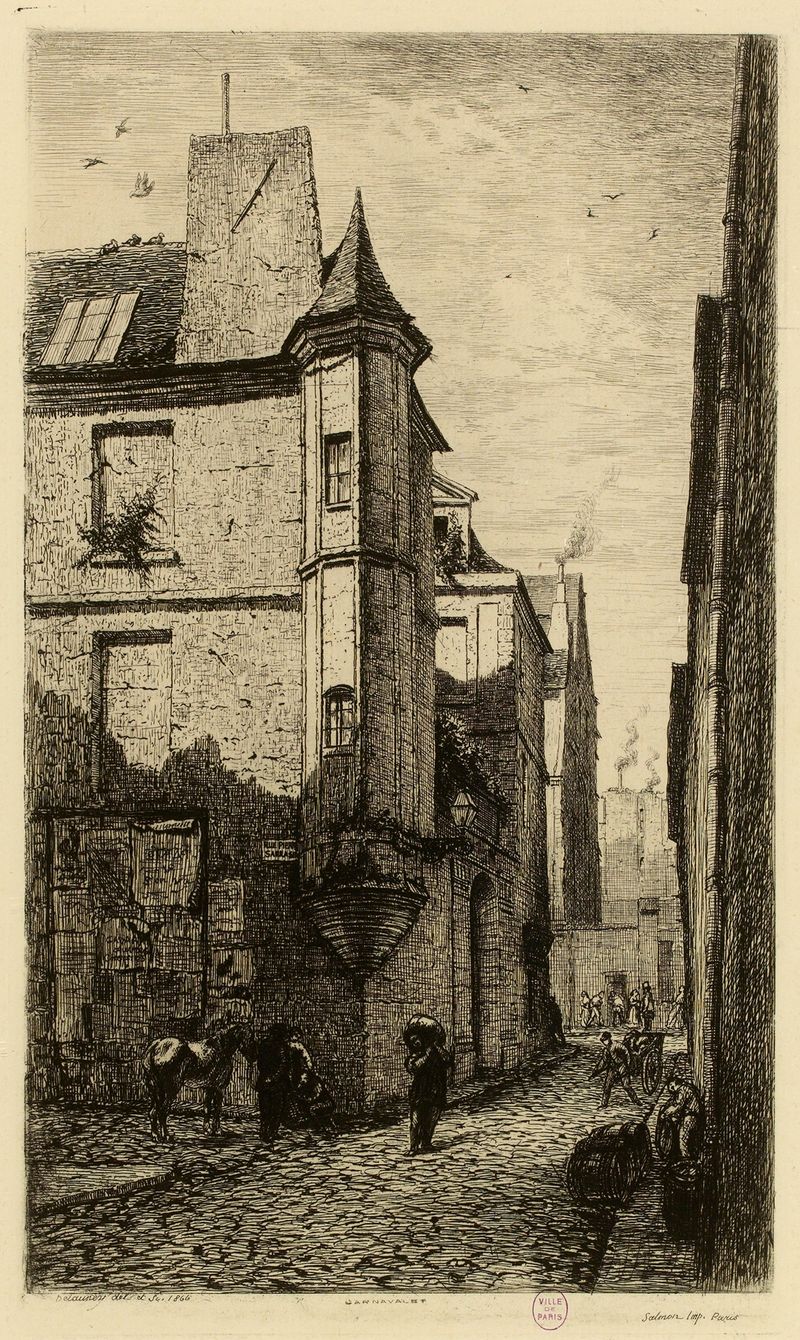
Tourelle rue Hautefeuille
Alfred Alexandre Delauney
Maisons rue du Cloître Notre-Dame
Alfred Alexandre Delauney
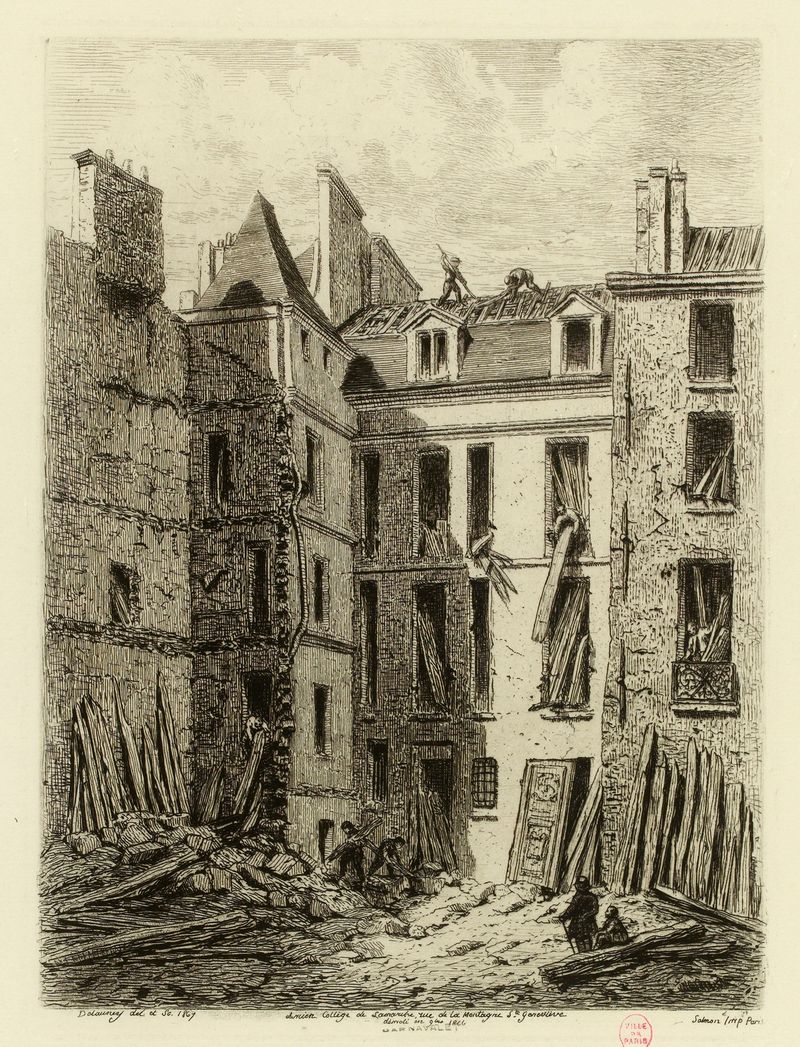
Ancien collège de Lamarche rue de la Montagne Ste-Geneviève, démoli en octobre 1866
Alfred Alexandre Delauney

Rue Grenier sur l’eau à Paris
Alfred Alexandre Delauney
More Architecture Art
Browse all →
The statue of Liberty
Frédéric Auguste Bartholdi

View of Houses in Delft, Known as ‘The Little Street’
Johannes Vermeer

View of Houses in Delft, Known as ‘The Little Street’
Johannes Vermeer

The Cathedral in Rouen. The portal, Grey Weather
Claude Monet

The yellow house
Vincent van Gogh

The Church in Auvers-sur-Oise, View from the Chevet
Vincent van Gogh