
Soldat im Strohlager — History & Facts
A shaft of warm, golden light draws you to the quietest corner of this barn, where a lone soldier sits absorbed in his own world, pen in hand. The straw beneath him forms a makeshift bed, but tonight it is a desk, a sanctuary, a pause from the routines of duty. The soldier’s blue uniform and cap are crisply painted, his posture intent, suggesting a letter home or a moment of private record-keeping.
Around him, coats and packs hang in orderly rows, hinting at the silent presence of others who share this improvised barracks. The barn’s sturdy beams and rough-hewn walls enclose the scene, their ochre shadows deepening the sense of shelter and stillness. Works like Soldat im Strohlager by Albert Anker, painted around 1886, belong to a moment in European art when everyday life—especially the quiet, uncelebrated moments—became worthy subjects. Such paintings often served to humanize the experience of ordinary people, in this case, a conscripted soldier, at a time when military service was a universal rite of passage in Switzerland and much of Europe.
The setting’s humble details—the straw, the hanging coats, the scattered tin cups—reflect a world in which comfort was makeshift and privacy rare. This painting surfaced at Koller Auktionen in 2013, a reminder that many such works, though not widely known, preserve the textures of a vanished era. Look again at the soldier’s absorbed expression; it is here, in the hush of the straw, that history feels most immediate.
More Artworks by Albert Anker

Portrait Of A Girl
Albert Anker
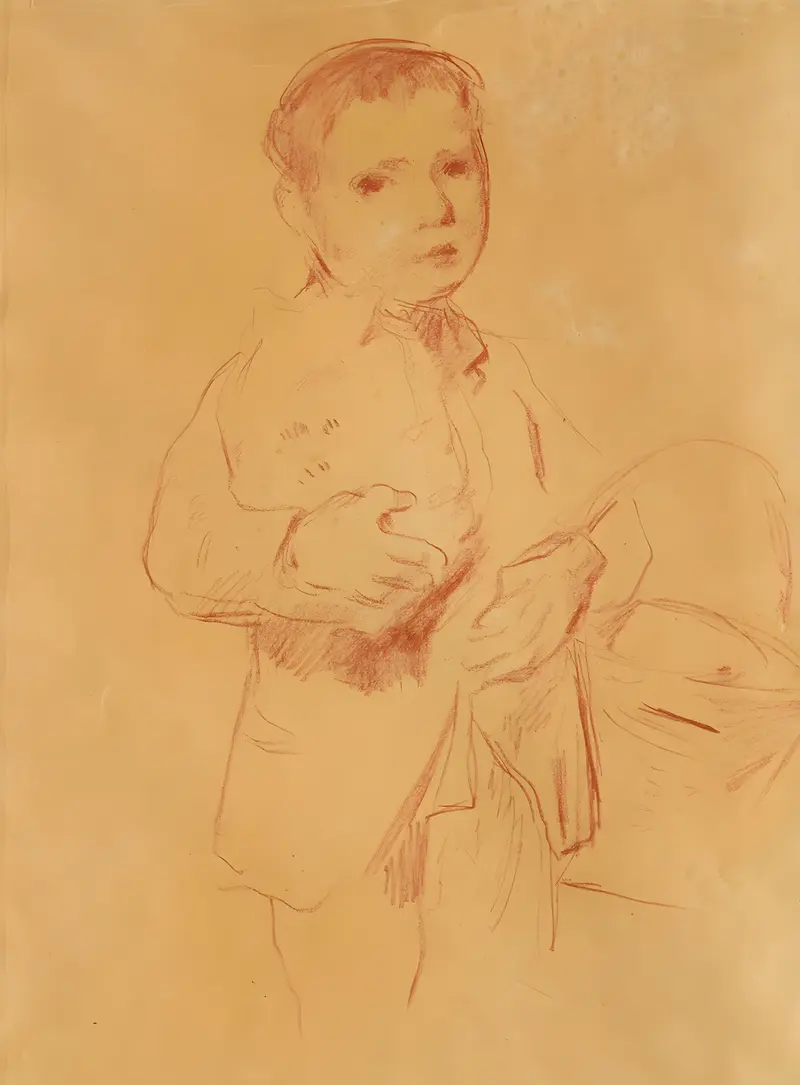
Boy with a basket
Albert Anker
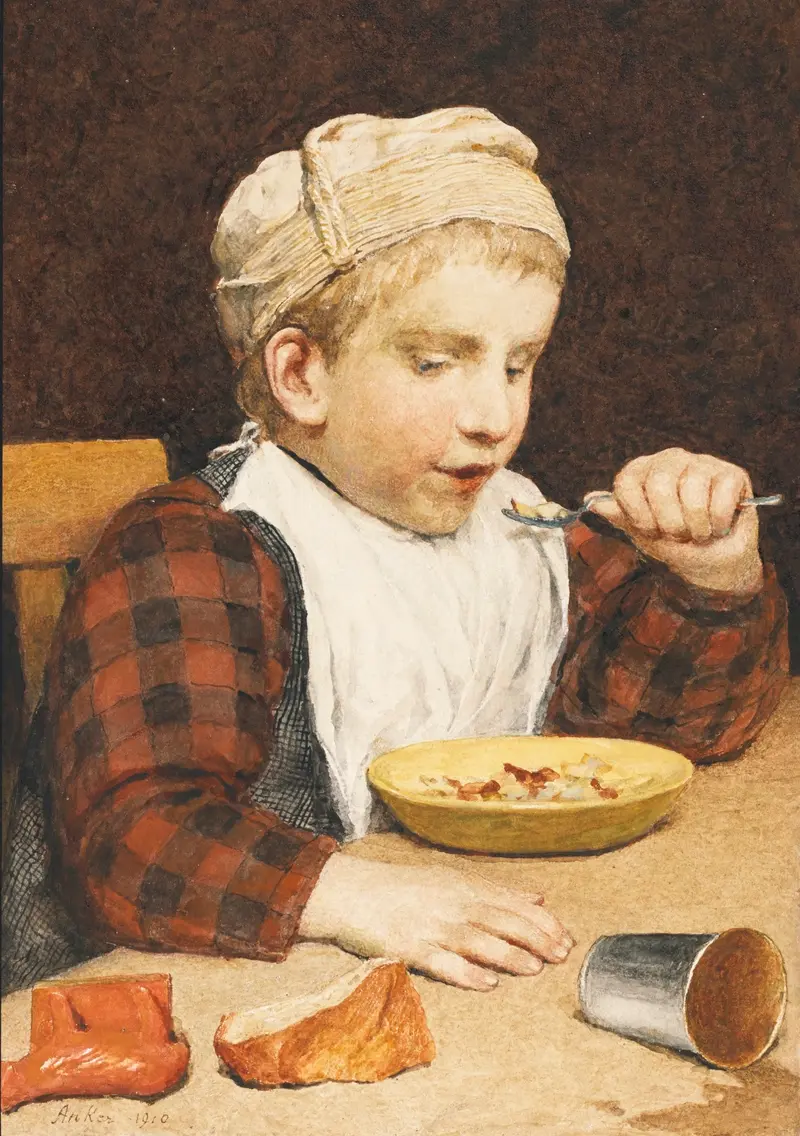
Knabe Mit Mütze Beim Essen
Albert Anker
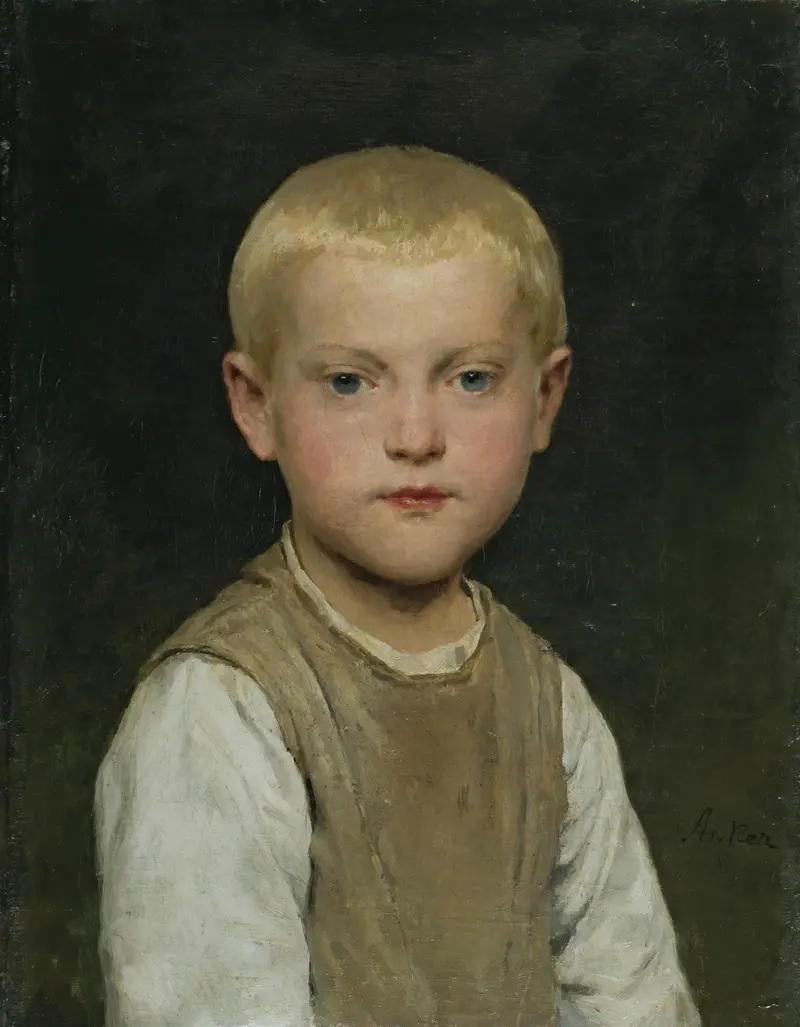
Knabenbildnis (Dr Heiri)
Albert Anker
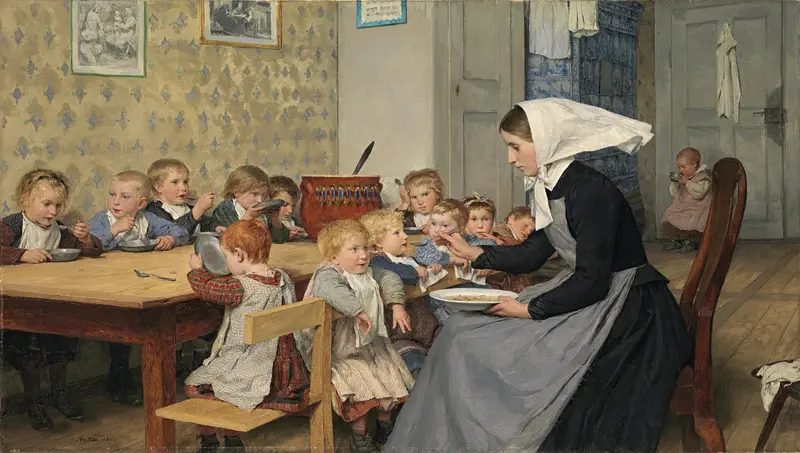
Die Kinderkrippe I
Albert Anker

L’instituteur et le pasteur
Albert Anker
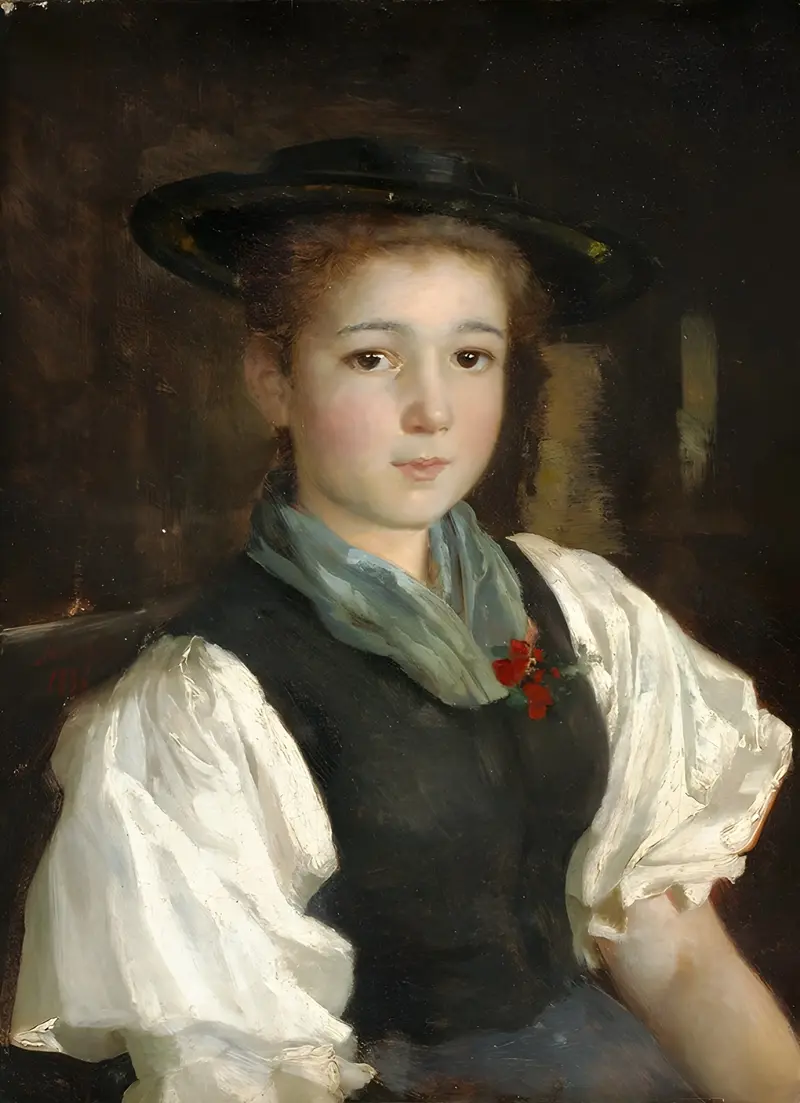
Bauernmädchen (Farm Girl)
Albert Anker
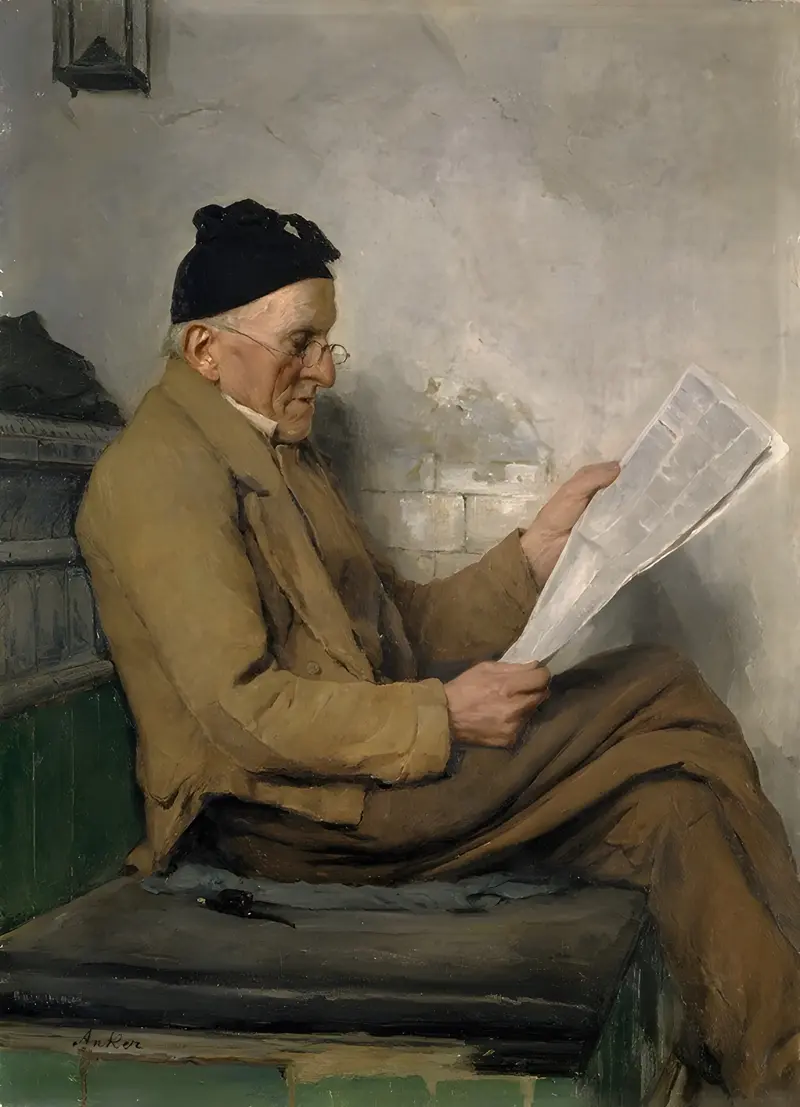
Farmer Reading on the Stove Bench
Albert Anker
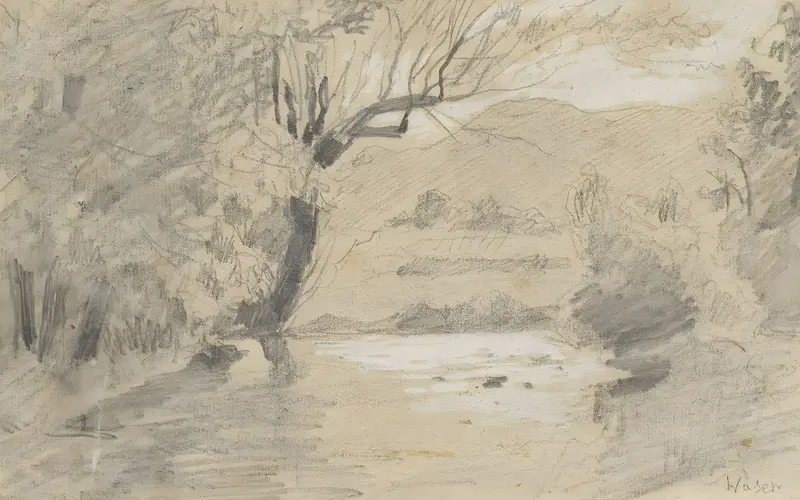
Flusslandschaft in Wasen (Emmental)
Albert Anker
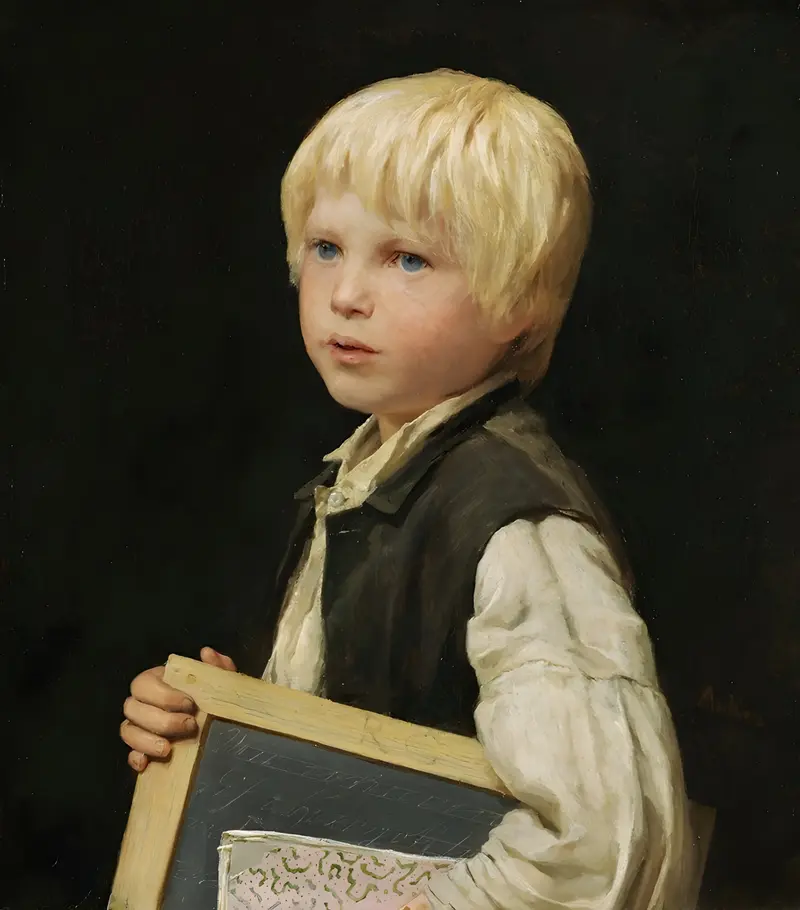
School Boy
Albert Anker
More Genre Scene Art

Banquet of the Officers of the St George Civic Guard
Frans Hals

Rembrandt and Saskia in the Scene of the Prodigal Son
Rembrandt van Rijn

Bal du moulin de la Galette
Pierre-Auguste Renoir

Quadrille at the Moulin Rouge
Henri de Toulouse-Lautrec

A Burial at Ornans
Gustave Courbet

When Will You Marry?
Paul Gauguin