Soleil couchant sur la Seine à Lavacourt, effet d’hiver — History & Facts
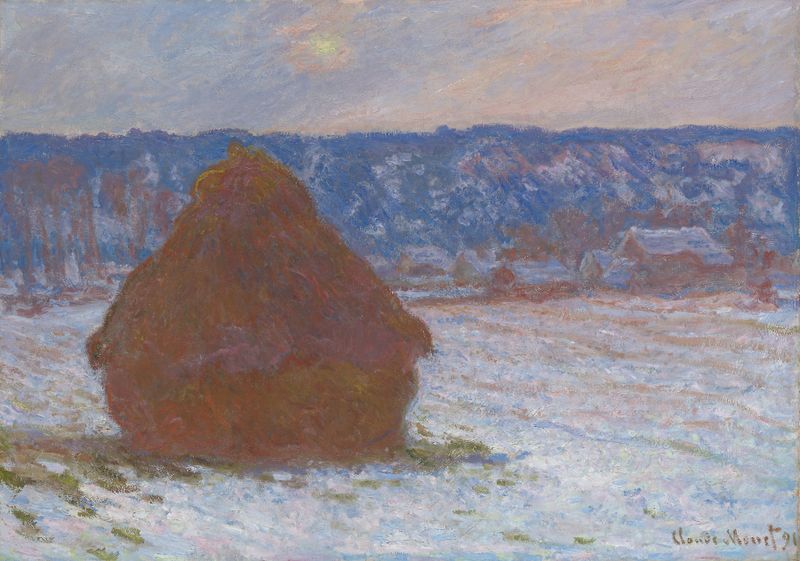
When did color learn to lie? In Soleil couchant sur la Seine à Lavacourt, effet d’hiver, the hues stretch and stretch, whispering secrets of fleeting moments and inevitable mortality. It captures a winter evening, a delicate balance between the vibrancy of life and the encroaching chill of darkness. Look to the left where soft orange light spills across the Seine, the sun seemingly melting into the water's surface. The cool blues and grays of the river juxtapose the warmth of the sunset, creating a dialogue between life and loss.
Monet's brushstrokes dance across the canvas with a fluidity that evokes movement yet freezes time, allowing us to linger in this tranquil yet poignant moment. Underneath the serene surface, a poignant contrast emerges. The ephemeral beauty of the sunset symbolizes the transience of existence, while the wintry scene hints at the inevitability of death. The reflections in the water shimmer with life, yet the advancing twilight suggests that each day is but a fleeting treasure.
Here, nature's vibrancy is both a celebration and a reminder of what is to come, deepening the emotional resonance of the painting. In 1880, Monet created this piece during a period of experimentation with light and color, striving to capture the ephemeral qualities of nature. He was living in France, deeply influenced by Impressionism—a movement that sought to depict the world not just as it appeared, but as it felt. This work reflects the artist's ongoing pursuit of the interplay between light and shadow, as well as his personal grappling with themes of beauty and mortality.