
Sous-bois — History & Facts
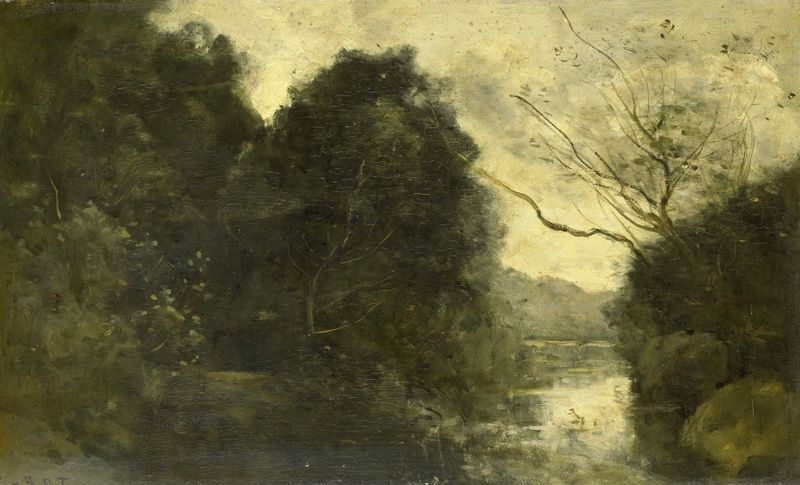
In the lush embrace of nature, reflections can obscure more than they reveal, suggesting depths of emotion that lie beneath the surface. Look closely at the serene water in Sous-bois, where the trees frame the scene with their leafy arms, creating a tapestry of greens and browns. The delicate interplay of light and shadow dances upon the water's surface, inviting your gaze to trace the ripples that suggest movement and life. Notice how the brushstrokes blend the colors, each stroke a whisper of Corot's hand, guiding you through the tranquil solitude of the woods. Yet, within this tranquility lies an unsettling tension.
The dark, enveloping foliage suggests a closeness that can be both protective and suffocating, while the shimmering water reflects a world that is at once beautiful and elusive. Each element—nature’s splendor and the night's encroaching shadows—holds a mirror to human emotions, leading the viewer to contemplate the duality of serenity and despair. Created during a time of shifting artistic paradigms in the mid-19th century, this painting reflects Corot's mastery of landscape and his engagement with the Barbizon school. It emerged amid his exploration of plein air techniques, allowing him to capture the essence of the moment.
This period marked a transition in his life as he sought to express a deeper connection to nature, mirroring the broader movements in art that were beginning to embrace the intuitive and the emotional.
More Artworks by Jean-Baptiste-Camille Corot
Browse all →
View of Genoa
Jean-Baptiste-Camille Corot
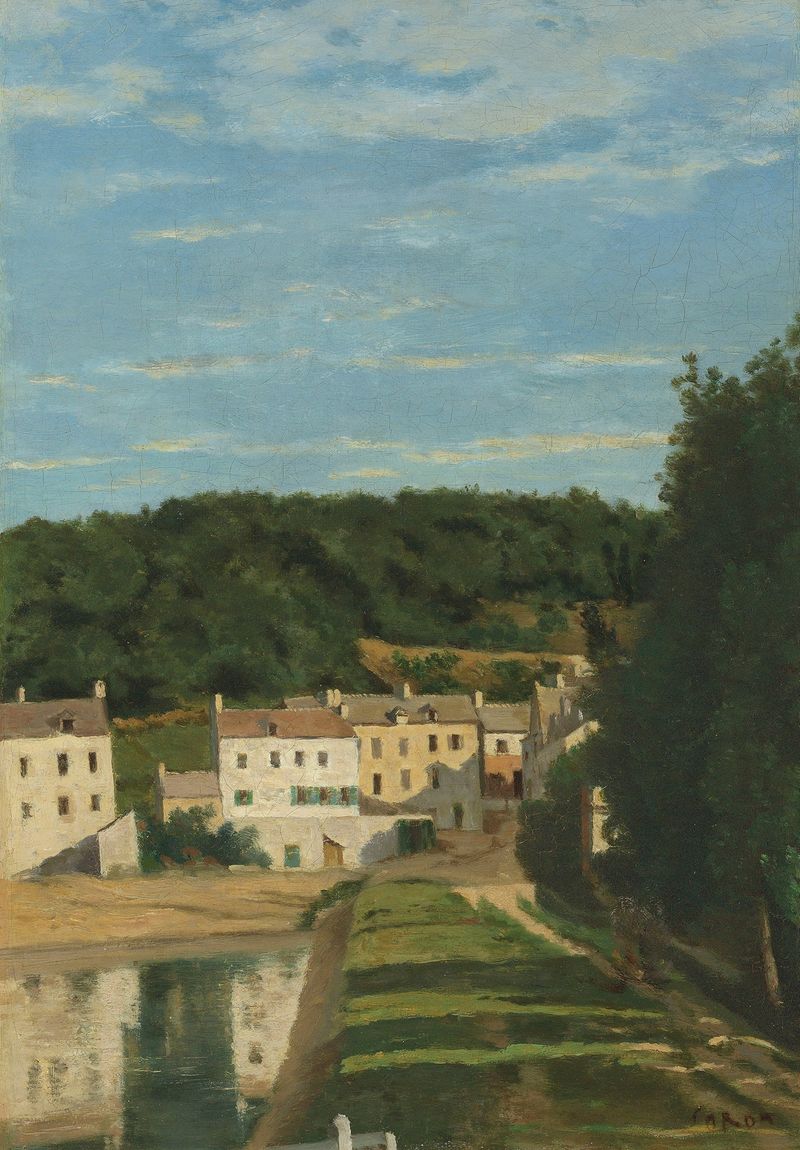
Les Maisons Cabassud À Ville D’avray
Jean-Baptiste-Camille Corot

La solitude. Souvenir de Vigen (Limousin)
Jean-Baptiste-Camille Corot
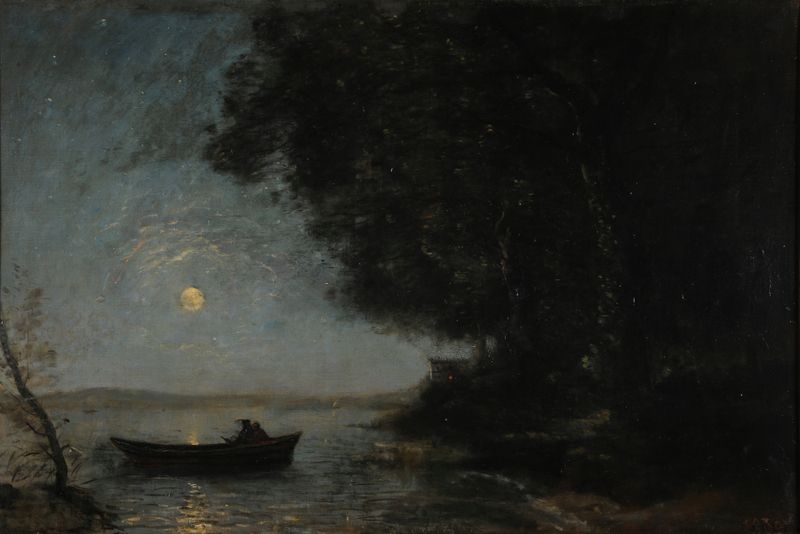
Le lac ; effet de nuit
Jean-Baptiste-Camille Corot
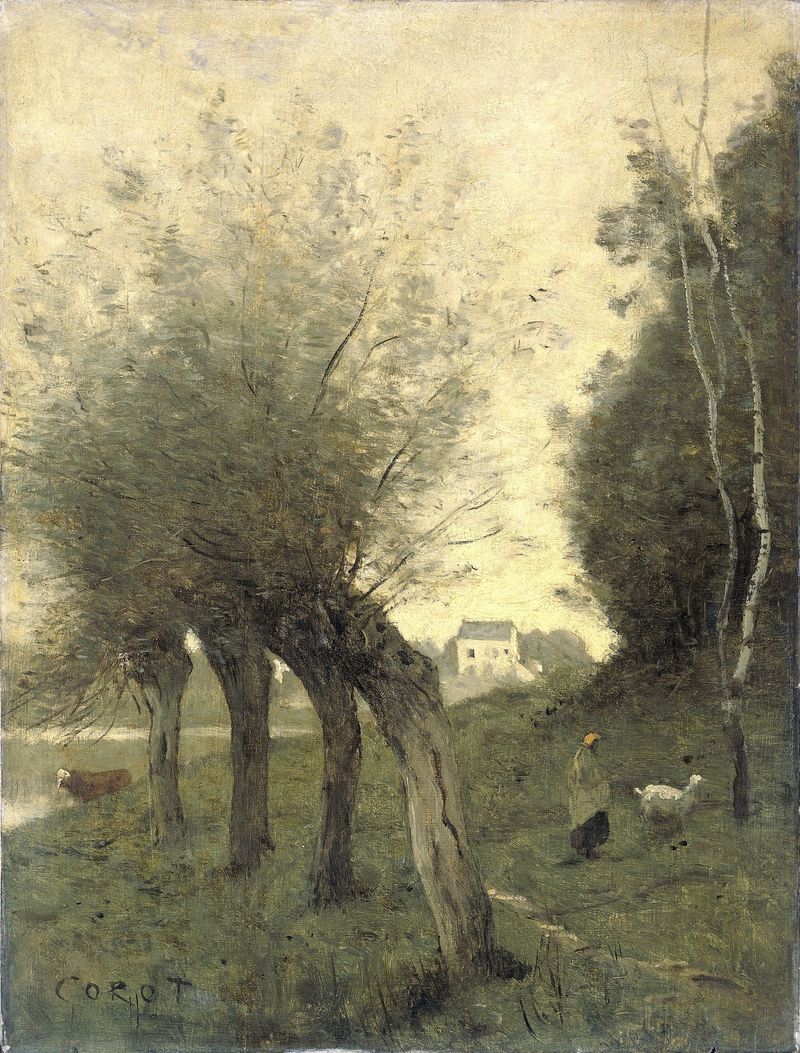
Landscape with Pollard Willows
Jean-Baptiste-Camille Corot
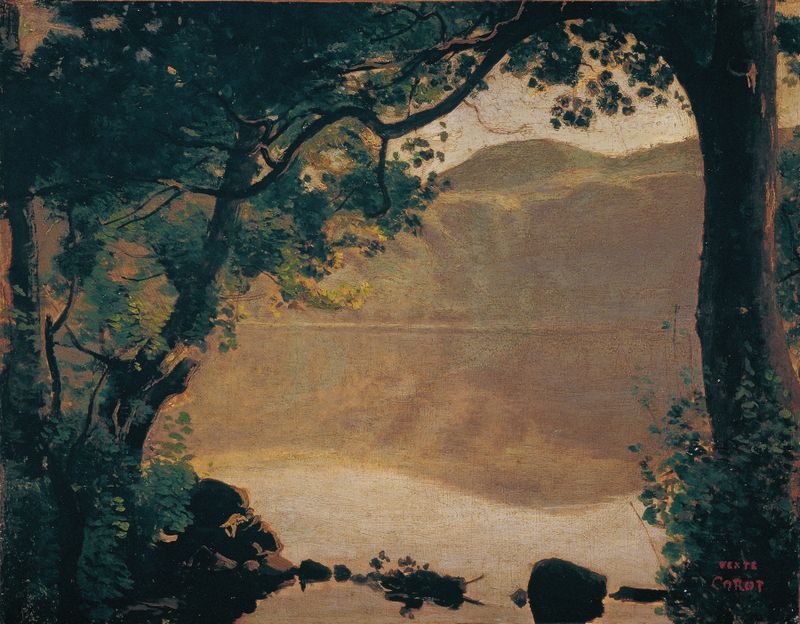
Der Nemisee
Jean-Baptiste-Camille Corot
Les Étangs De Ville D’avray
Jean-Baptiste-Camille Corot
Pond in the Woods
Jean-Baptiste-Camille Corot
Ville D’avray; L’abreuvoir Des Chevaux
Jean-Baptiste-Camille Corot
Le vallon au cavalier
Jean-Baptiste-Camille Corot





