
Spanish Ledges — History & Facts
When did color learn to lie? In an era where truth and perception teetered on the brink of revolution, artists like Childe Hassam explored the very fabric of reality through vibrant hues. Look to the center of the canvas, where luminous reds and deep blues collide, creating a tapestry of visual tension. The interplay of light and shadow shapes the ledges, rendering them almost sculptural in their presence. Notice how the delicate brushwork evokes movement, as if the colors themselves breathe, inviting viewers into a landscape that feels both real and imagined.
The juxtaposition of the bold palette against softer, muted tones adds depth, urging one to engage deeply with the underlying emotional currents. Amidst this riot of color, the ledges stand as both a literal and metaphorical threshold. They represent a boundary, a divide between the known and the unknown, embodying the artist's contemplation of change and transformation. The chaotic arrangement hints at a world in flux, where the conventional is challenged, and new perspectives emerge.
Here, the vivid colors are not just aesthetic choices; they bear witness to a time when artistic expression rebelled against tradition and sought to harness emotion in dazzling displays. In 1912, Hassam was living in New England, exploring the shifting influences of Impressionism and developing his signature style. The art world was buzzing with the advent of modernity, and American artists were increasingly asserting their identities. This painting captures Hassam at a pivotal moment, reflecting the excitement and turbulence of an era poised at the edge of change, where every stroke of the brush echoed the revolutionary spirit of the time.
More Artworks by Childe Hassam
Browse all →
Beach at Newport
Childe Hassam

Washington Arch, Spring
Childe Hassam

Thaxter’s Garden
Childe Hassam

New England Headlands
Childe Hassam

Rocks At Appledore, Morning
Childe Hassam
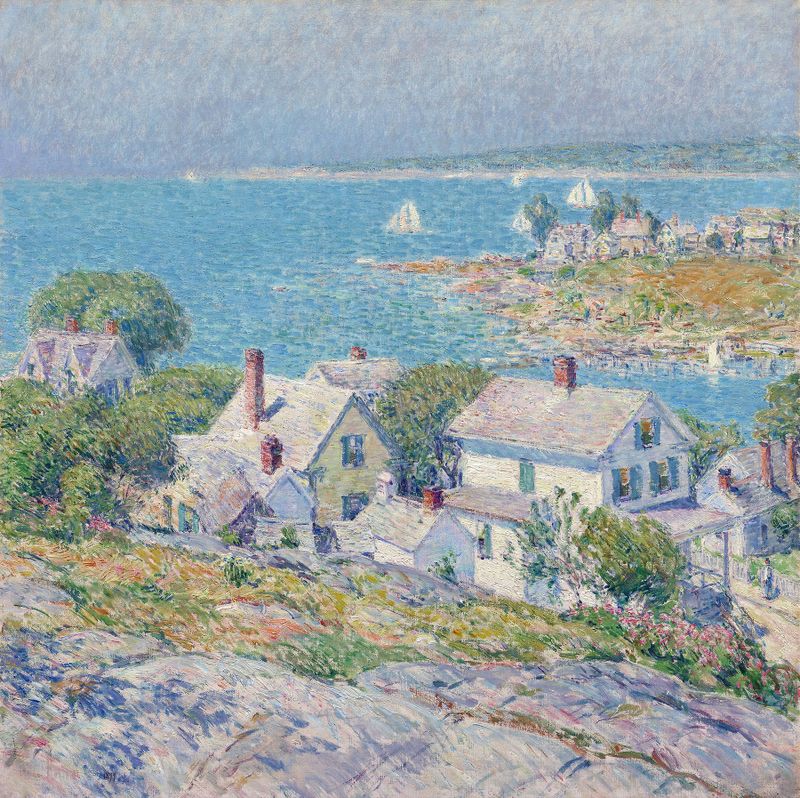
New England Headlands
Childe Hassam
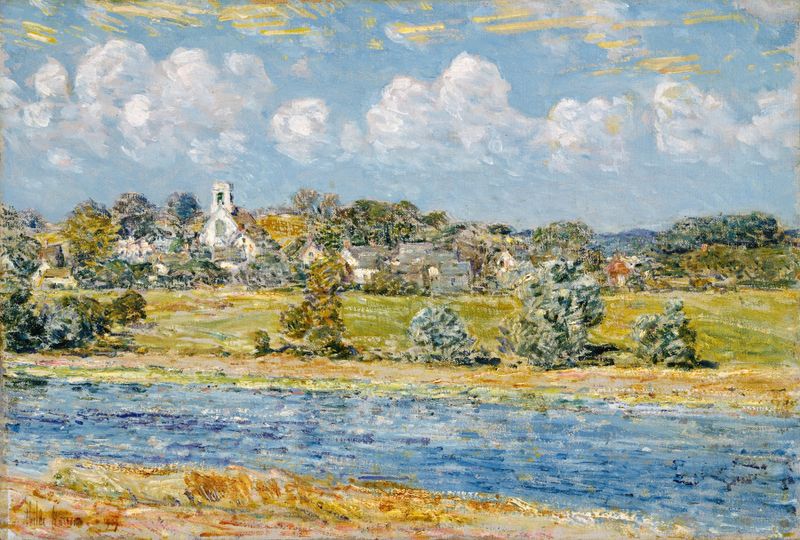
Landscape at Newfields, New Hampshire
Childe Hassam

Piazza di Spagna, Rome
Childe Hassam

The Harbor
Childe Hassam

Late Afternoon, New York, Winter
Childe Hassam





