
Spanish woman — History & Facts
What first seizes the eye in Spanish woman by Alexej von Jawlensky is the face itself: mask-like, monumental, yet alive with the heat of color. The woman’s gaze, unwavering and slightly off-center, draws you in with its suggestion of both strength and secrecy. Jawlensky’s brushwork is bold, almost sculptural, giving the features a carved solidity while streaks of turquoise and violet animate the cheeks and chin.
The fiery red garment anchors the figure, while the background swirls with earthy shadows, as if the sitter is emerging from memory or dream. Every contour and patch of color seems to signal something inward—an emotion, a heritage, a role—without ever quite revealing its name. Painted in 1913, this work belongs to a moment when artists across Europe were breaking away from realism to seek the expressive power of color and form. Jawlensky, a Russian-born painter working in Germany, was closely allied with the Expressionist movement, which prized inner truth over outward likeness.
Portraits like this were not made for aristocratic patrons or to commemorate events, but to explore the possibilities of painting itself—how a face could become a vessel for mood, memory, or even spiritual searching. History has kept few traces of this specific work’s early journey, but its presence in the Sotheby’s reference collection marks it as a testament to a restless, searching age. Let your eyes return to the painting, and notice how each brushstroke seems to pulse with the energy of its time.
More Artworks by Alexej von Jawlensky

Murnau
Alexej von Jawlensky
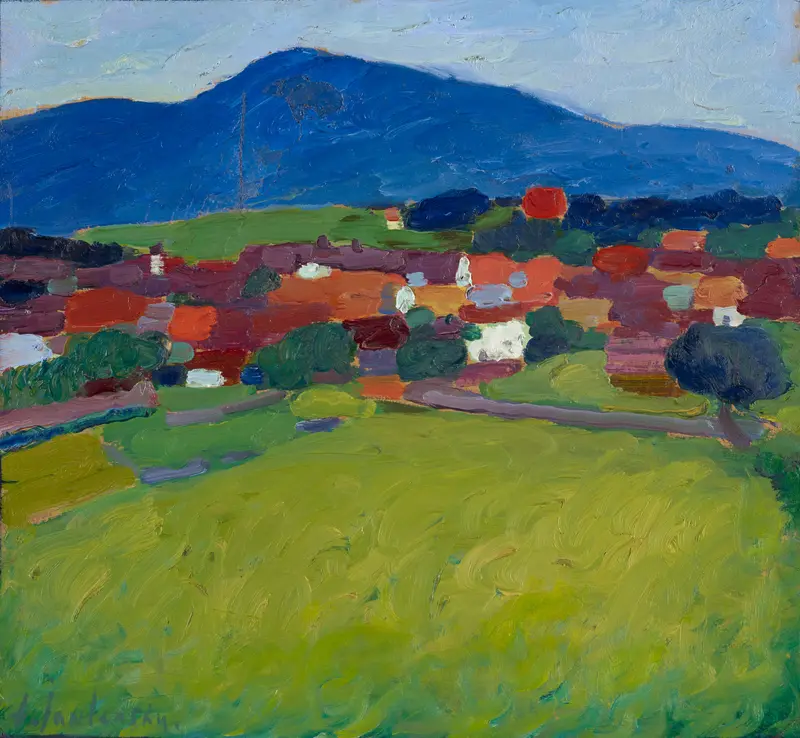
The Village Of Murnau
Alexej von Jawlensky
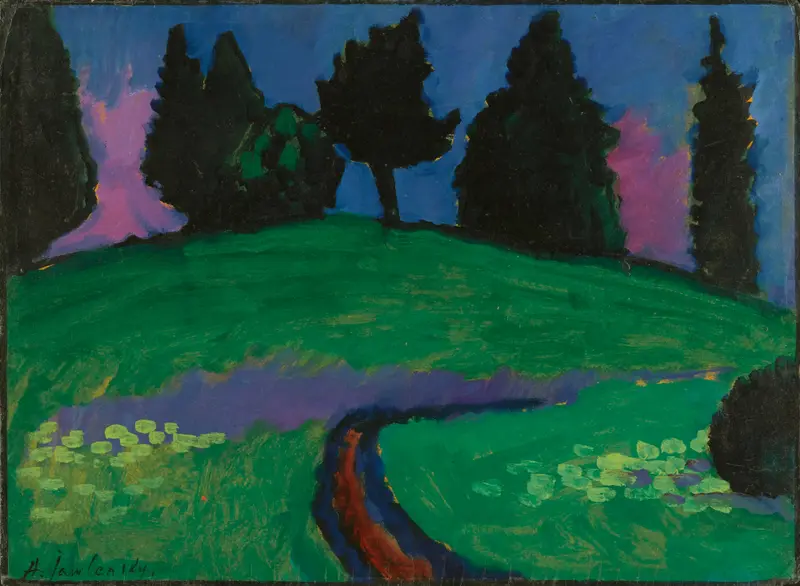
Dunkle Bäume über Grünem Hang (Dark Trees Over Green Slope)
Alexej von Jawlensky
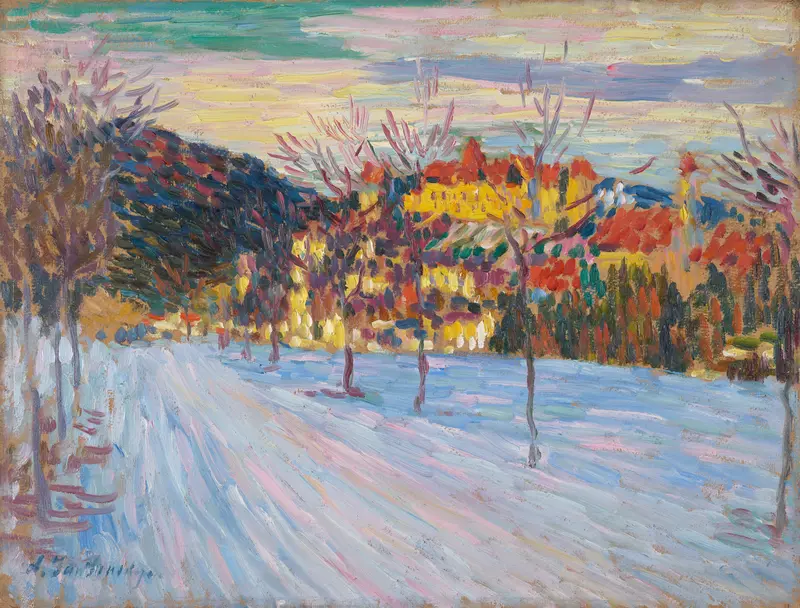
Füssen
Alexej von Jawlensky
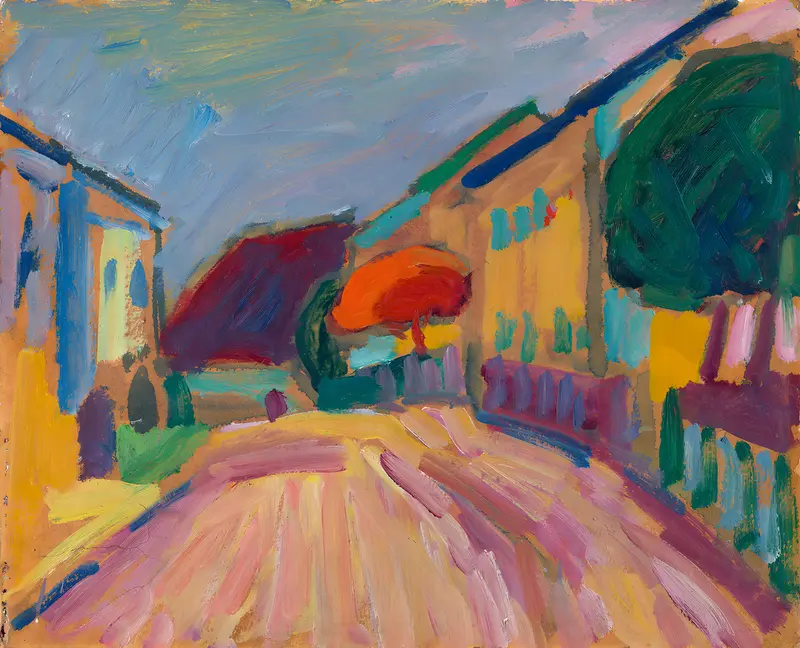
Sketch from Murnau
Alexej von Jawlensky
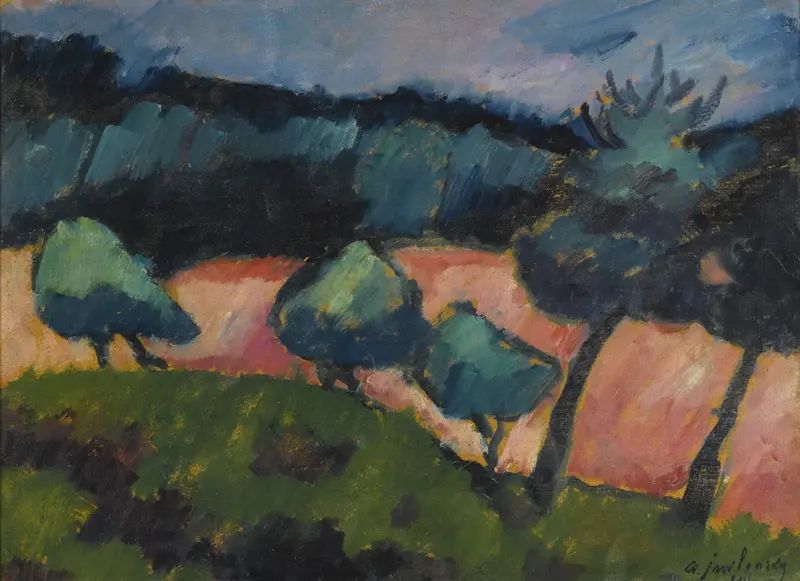
Bäume und Dünen in Prerow (Trees and dunes in Prerow)
Alexej von Jawlensky
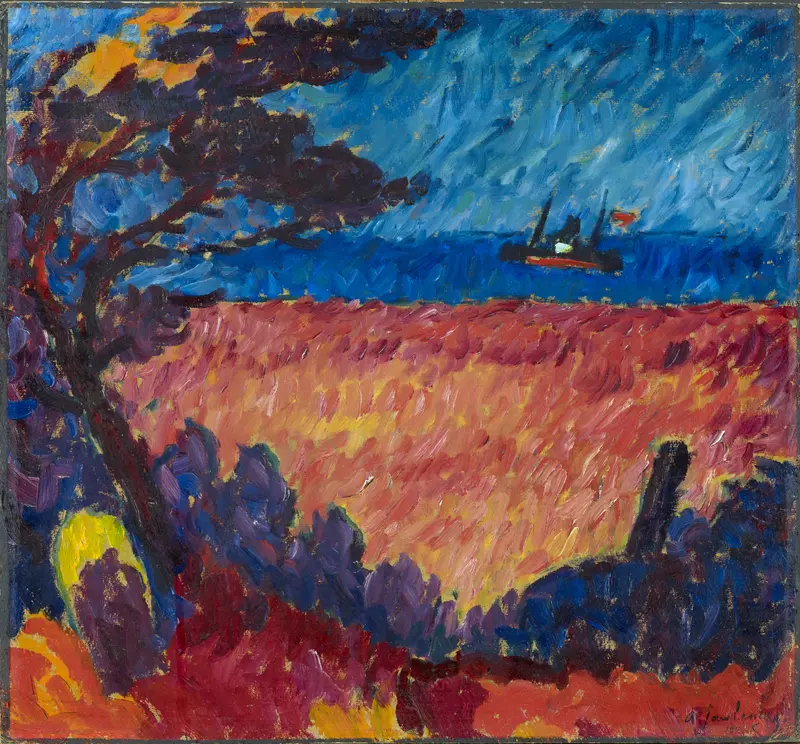
At The Baltic Sea
Alexej von Jawlensky
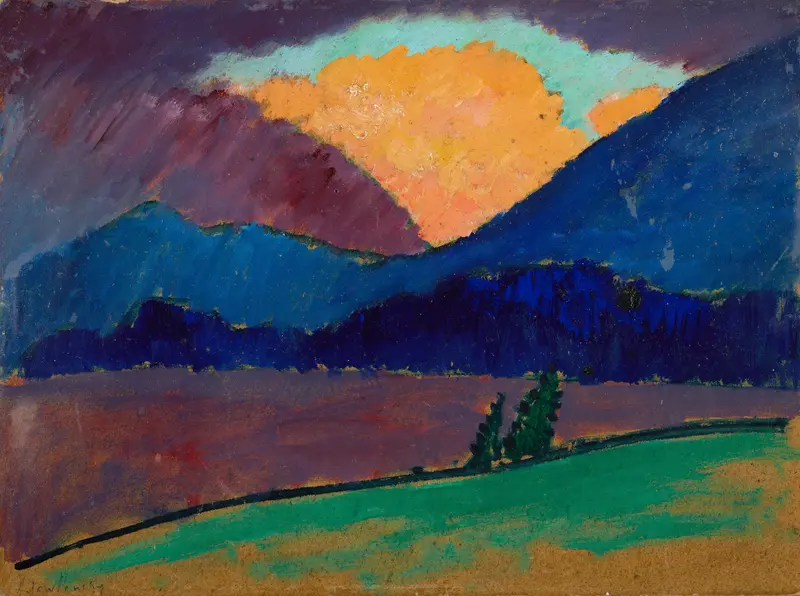
Summer evening in Murnau
Alexej von Jawlensky
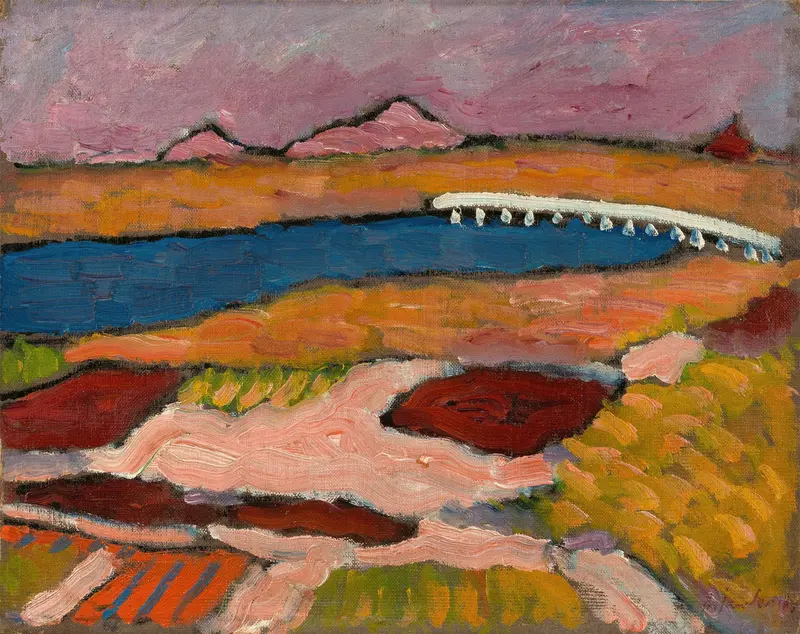
Prerow (Darß), Pommern
Alexej von Jawlensky
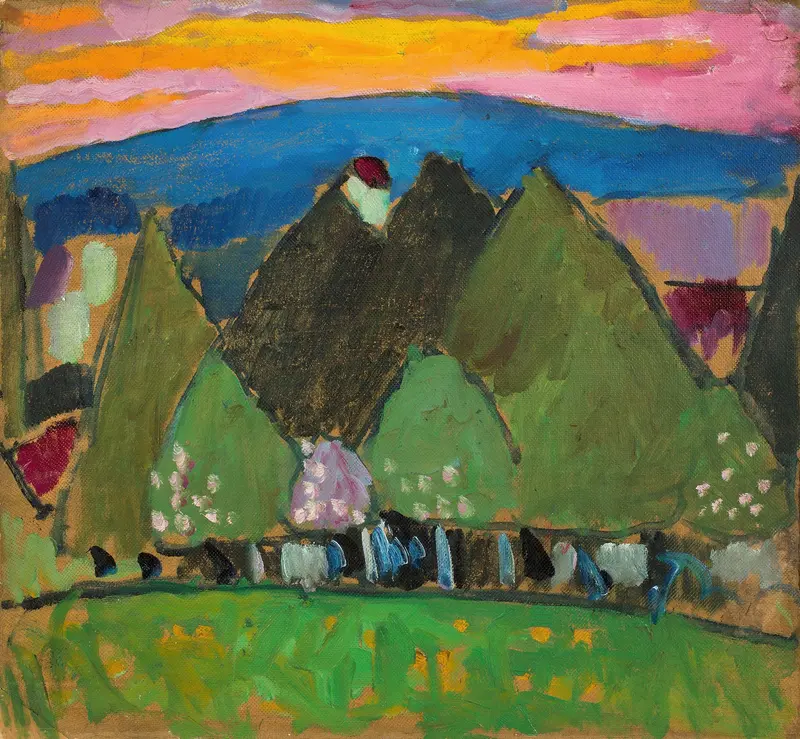
Landschaft mit Bäumen
Alexej von Jawlensky





