
Spinnende Bäuerin in italienischer Berglandschaft — History & Facts
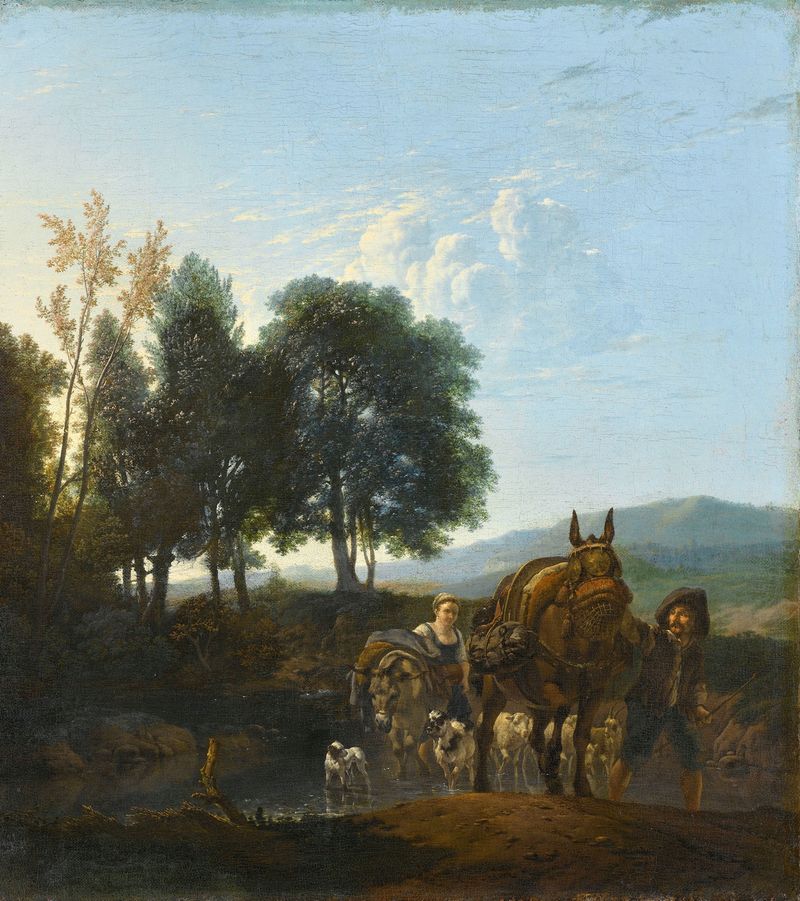
Can paint confess what words never could? In Spinnende Bäuerin in italienischer Berglandschaft, the silence of a rural moment echoes the unspeakable depths of human existence—a void filled with simplicity and beauty. Look to the left at the spinning woman, her hands deftly working the spindle. The soft, muted palette of earthy browns and greens cradles her figure, set against the backdrop of the gentle Italian hills. Notice how the light falls upon her shoulder, illuminating the texture of her garments, while shadows cradle the contours of her face, revealing a contemplative expression.
Each stroke pulsates with life, drawing you deeper into her world, where the stillness of her task contrasts with the dynamic landscape. Amidst the serene atmosphere, small yet profound details emerge. The faint wisps of thread escaping the spindle suggest a connection to time and tradition, hinting at the cycles of life and labor. In the distance, the hills cradle a hazy sky, a metaphor for dreams and aspirations that might feel just out of reach.
The interplay of light and shadow captures the tension between existence and the void, leaving the viewer to ponder the weight of what remains unsaid in this intimate tableau. Created between 1662 and 1664, this piece emerged during a pivotal period in Dujardin's career while he was residing in Italy. The artist was exploring the interplay of light and landscape, influenced by the Baroque movement's emphasis on realism and emotional expression. This work reflects a deepening appreciation for the everyday life of rural subjects—an appreciation that resonated during a time when art began to shift towards depicting the authenticity of human experience.
More Artworks by Karel Dujardin
Browse all →
Italian Landscape with Girl Milking a Goat
Karel Dujardin
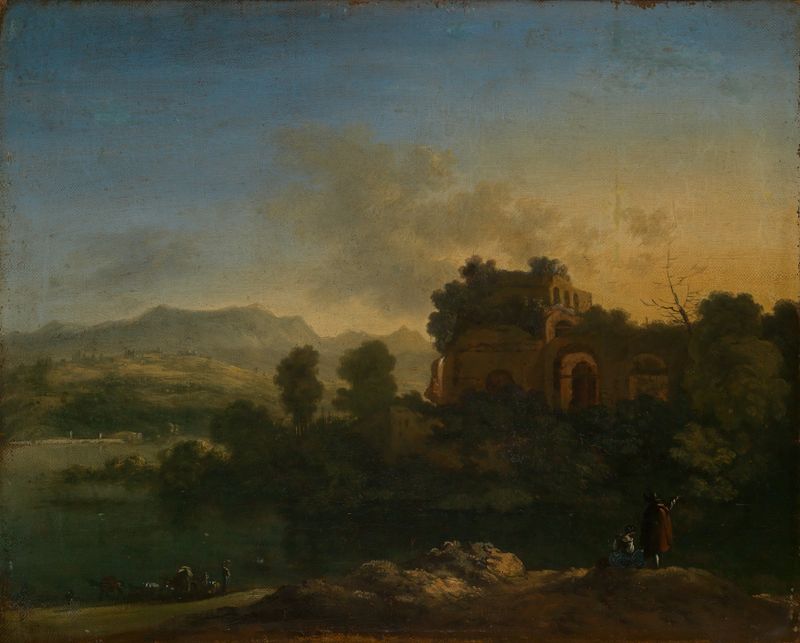
Südliche Landschaft mit Ruine
Karel Dujardin
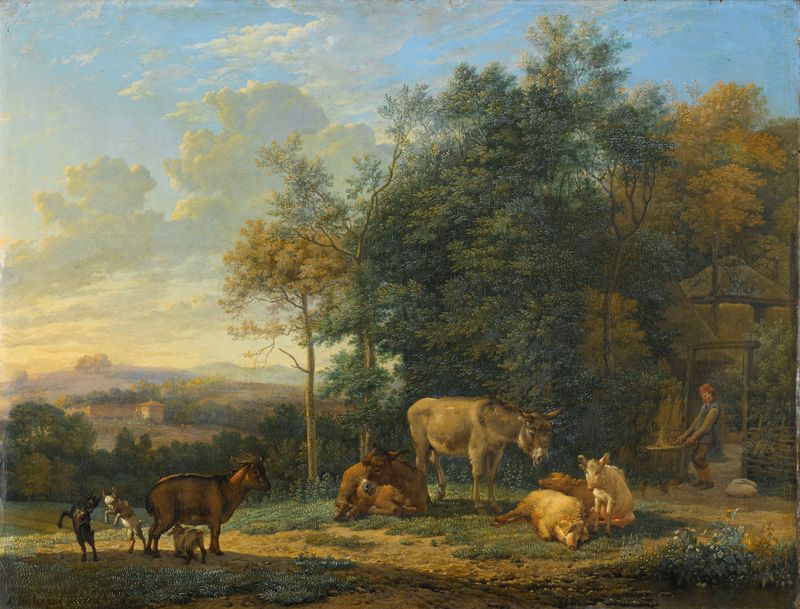
Landscape with Two Donkeys, Goats and Pigs
Karel Dujardin
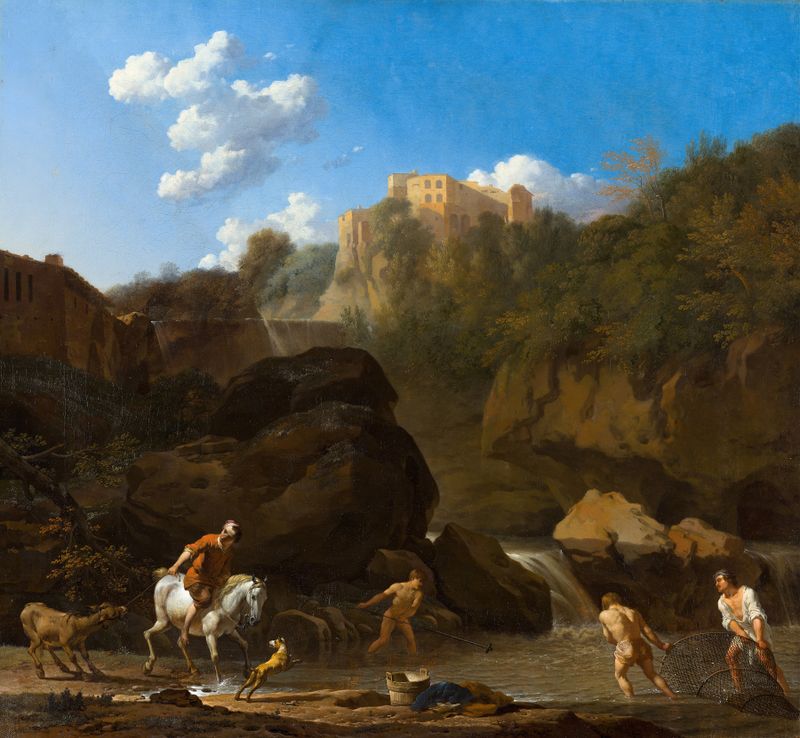
The Waterfalls at Tivoli
Karel Dujardin
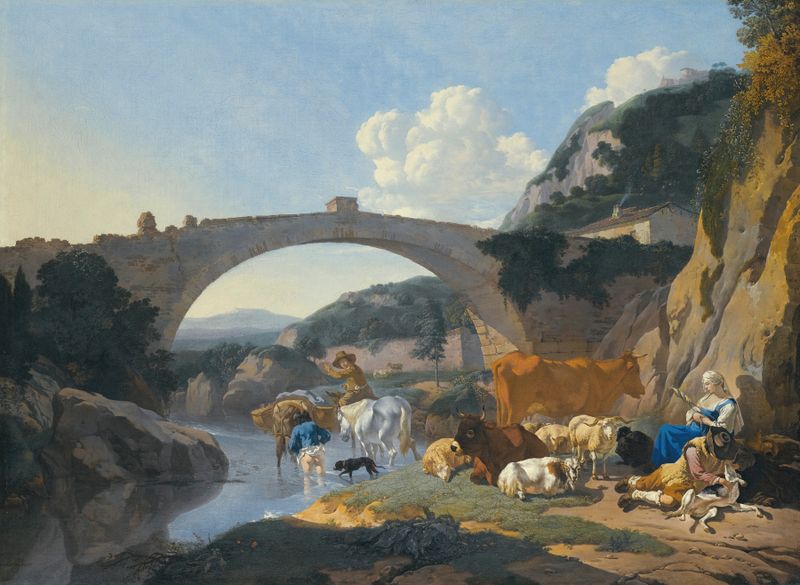
Italianate Landscape With Herders And Animals Resting By A River Under A Bridge
Karel Dujardin
Landscape with Mule Driver
Karel Dujardin





