
Spray of Gooseberries on a Stone Plinth — History & Facts
A single spray of gooseberries, poised on the edge of a stone plinth, commands attention not through abundance, but through restraint. The eye is drawn first to the luminous, almost translucent skins of the fruit, each berry rendered with a quiet intensity that makes them seem freshly plucked, their veins and subtle imperfections lovingly observed. The leaves, some lush and green, others tinged with gold, arch and twist above the fruit, casting soft shadows that anchor them to the cool, bare stone.
The composition is spare, yet every detail is purposeful: the play of light across the berries, the gentle curve of the stems, the way one pale fruit stands apart from its red companions. There is a hush here, a sense that time has paused for a moment of pure observation. Works like this, painted in 1700 by Adriaen Coorte, belong to a world where still life was both a celebration of nature’s quiet marvels and a meditation on the fleeting pleasures of the senses. In the Dutch Republic, such paintings were often made for private collectors who delighted in their intimacy and precision—objects for contemplation rather than display.
Coorte’s signature and the date, carefully inscribed in the lower left, remind us how personal and deliberate these small works were. History has kept few traces of Coorte himself, but paintings like Spray of Gooseberries on a Stone Plinth speak in a language of close looking and subtle beauty, inviting viewers to linger over what might otherwise be overlooked. Look again at the surface of each berry, and see how the ordinary becomes quietly extraordinary.
More Artworks by Adriaen Coorte
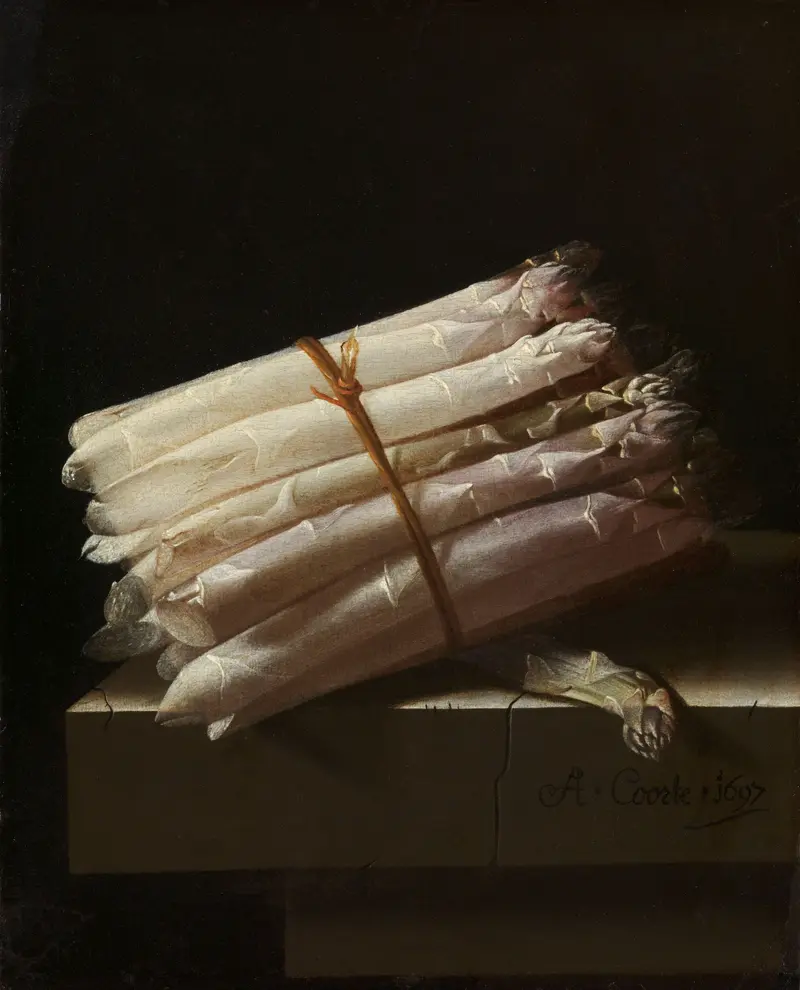
Still Life with Asparagus
Adriaen Coorte
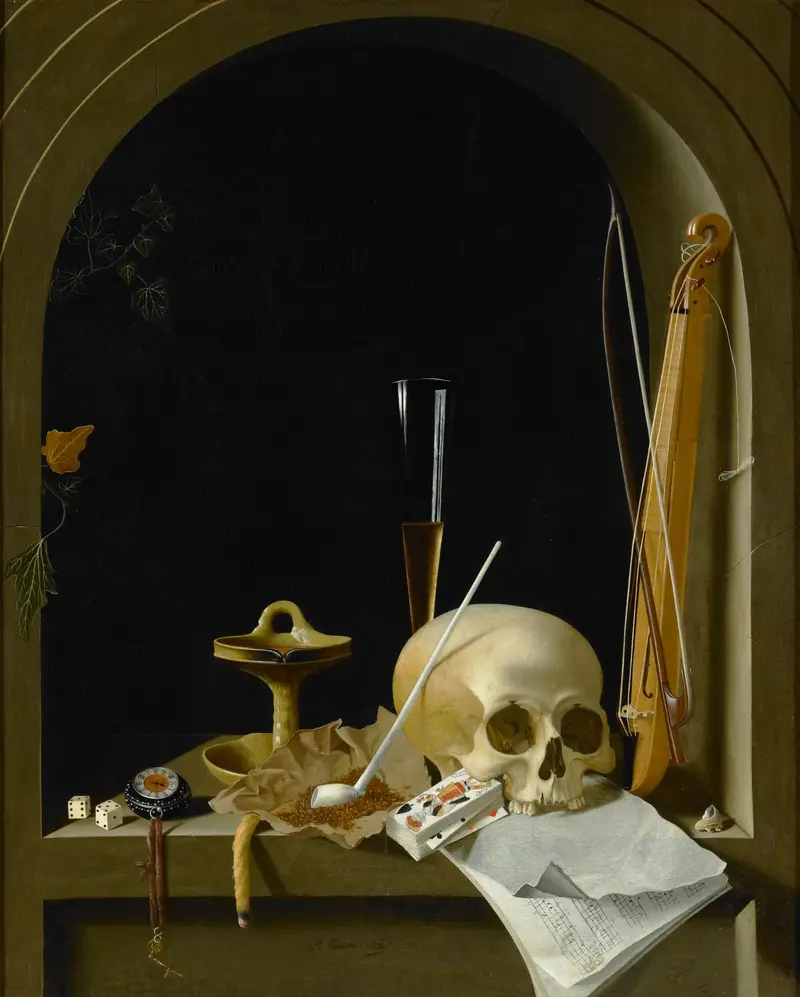
Vanitas still life in a niche
Adriaen Coorte
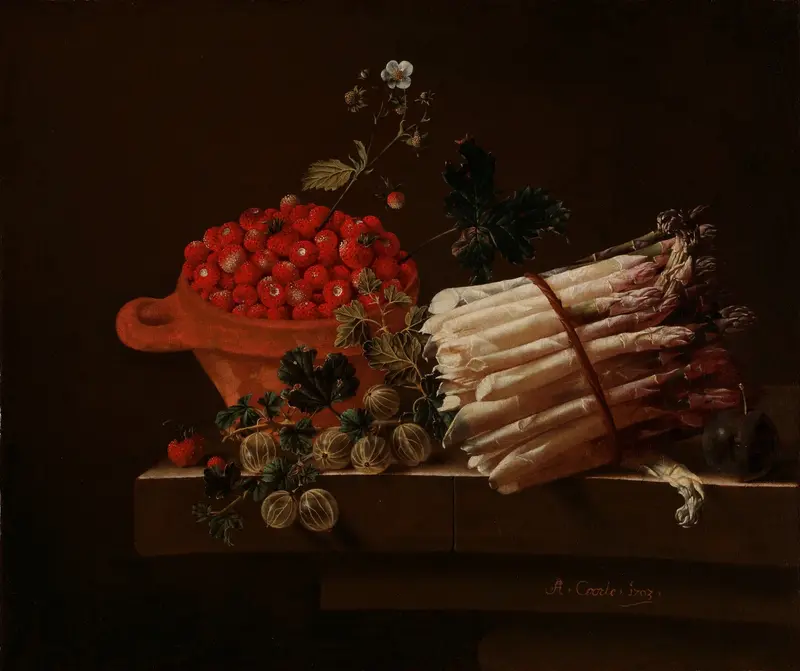
A Pot of Strawberries, Gooseberries, and a Bundle of Asparagus on a Stone Plinth
Adriaen Coorte
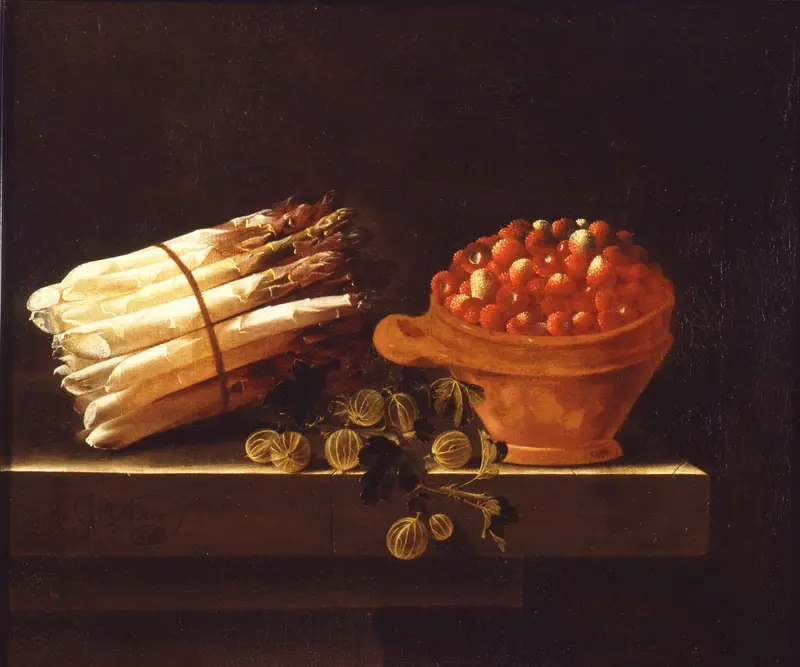
Asparagus, Gooseberries and Strawberries on a Stone Ledge
Adriaen Coorte
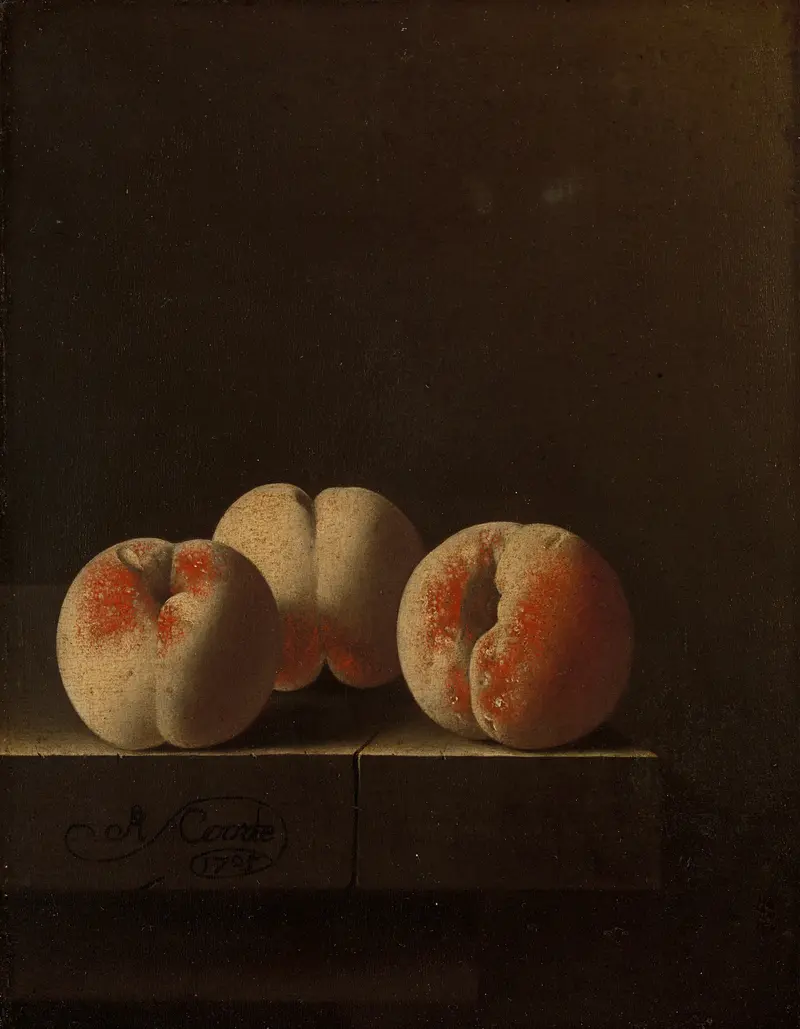
Drie perziken op een stenen plint SK A 5101 Rijksmuseum
Adriaen Coorte
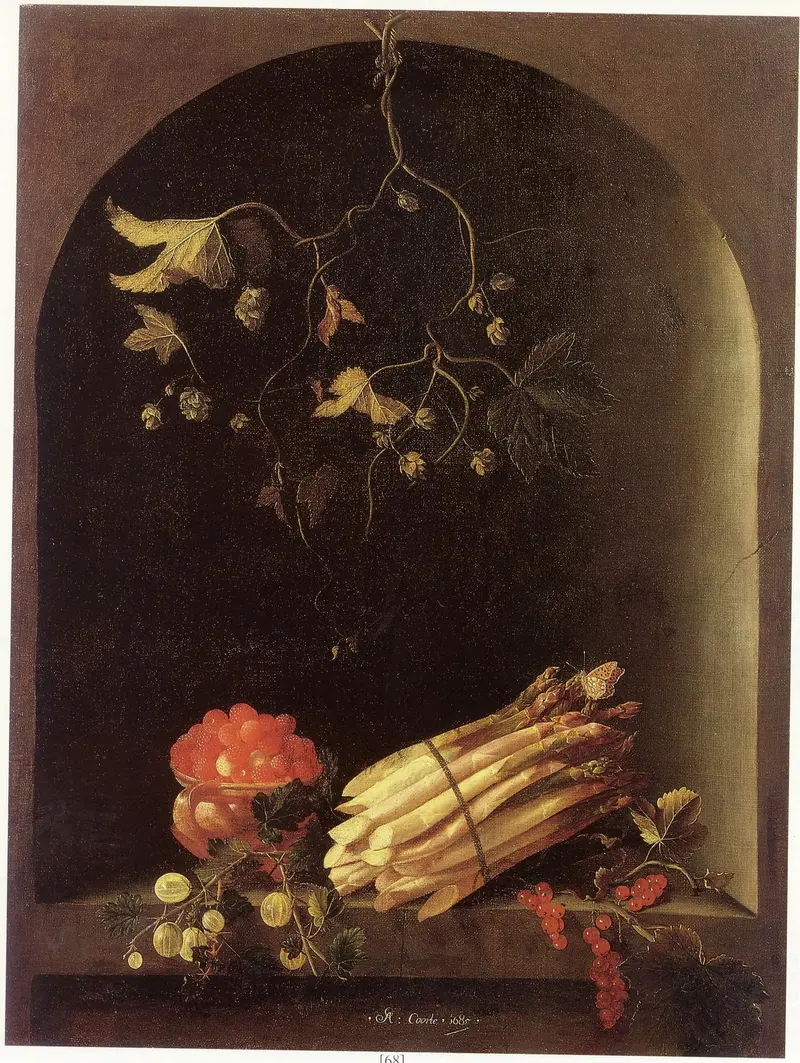
Strawberries, Asparagus, and Gooseberries in a Niche
Adriaen Coorte
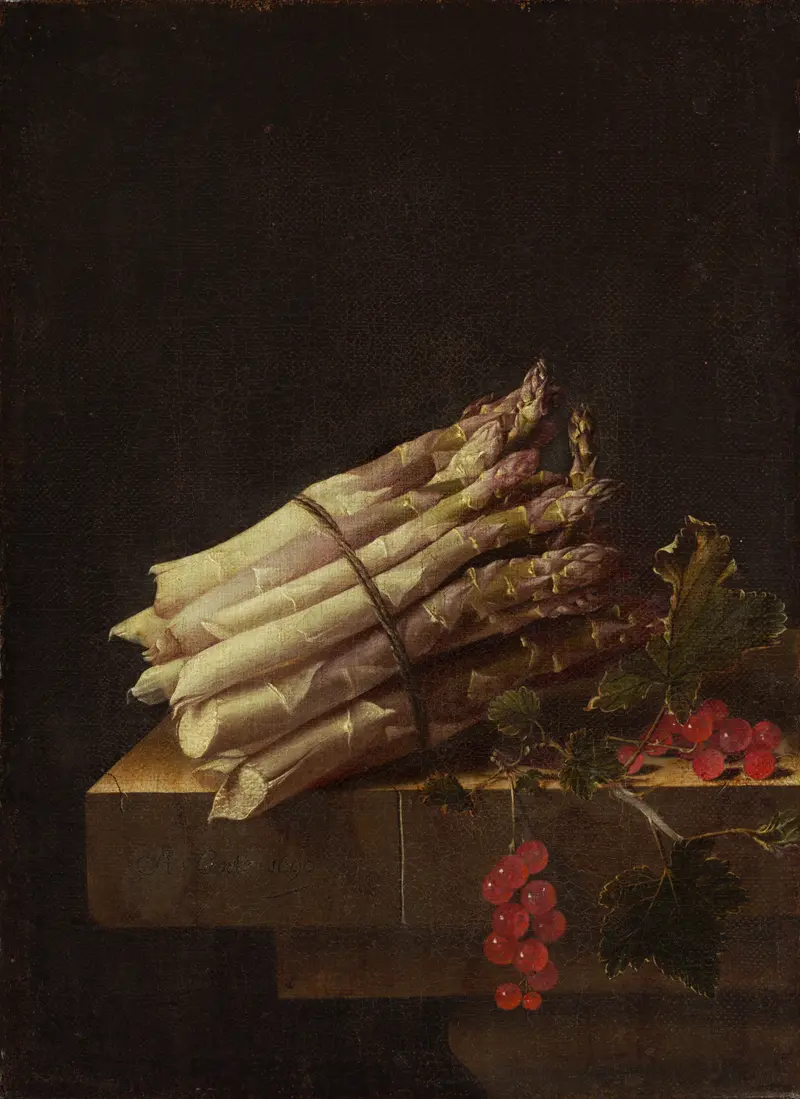
Still Life with Asparagus and Red Currants
Adriaen Coorte
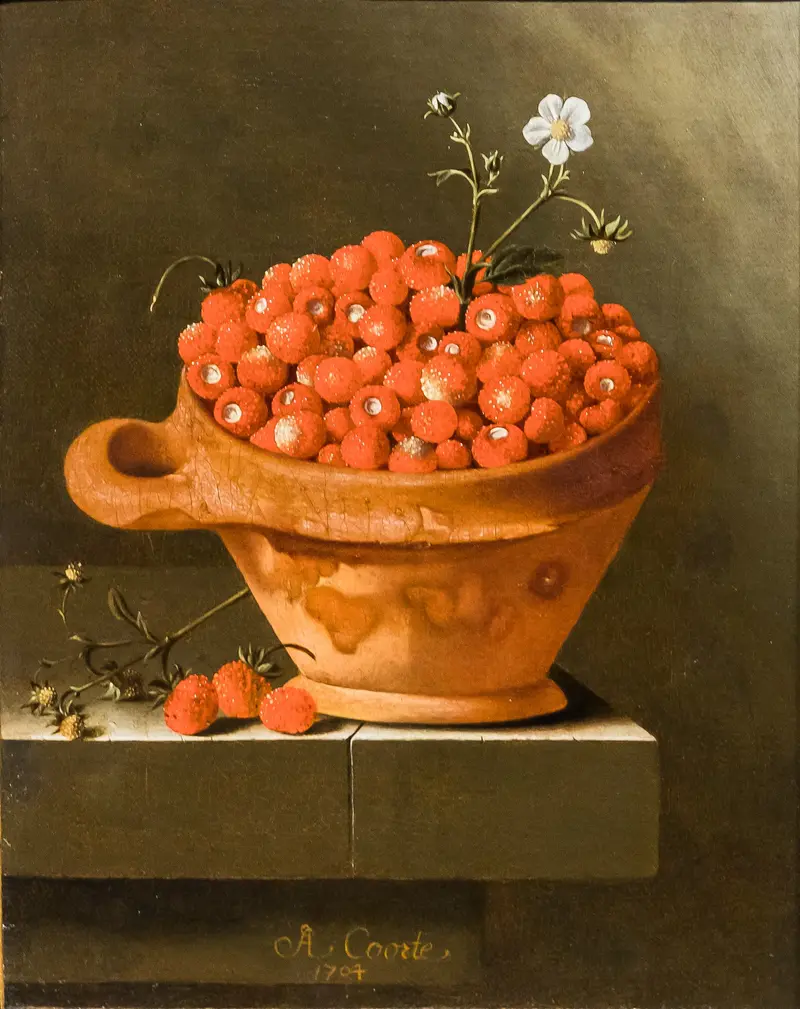
Still life with strawberries in a terracotta pot
Adriaen Coorte
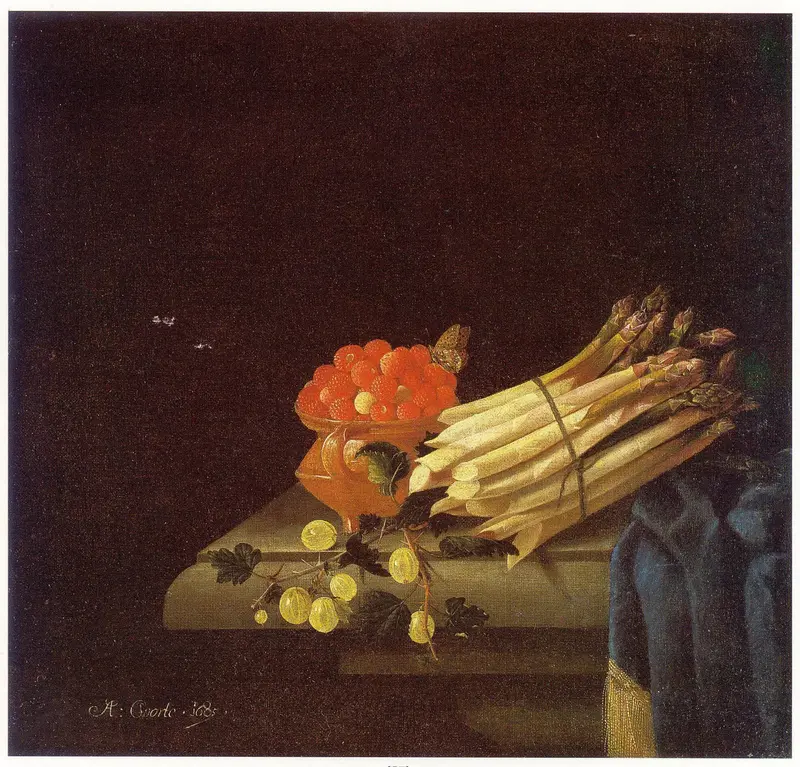
Strawberries, Asparagus, and Gooseberries with a Tablecloth
Adriaen Coorte
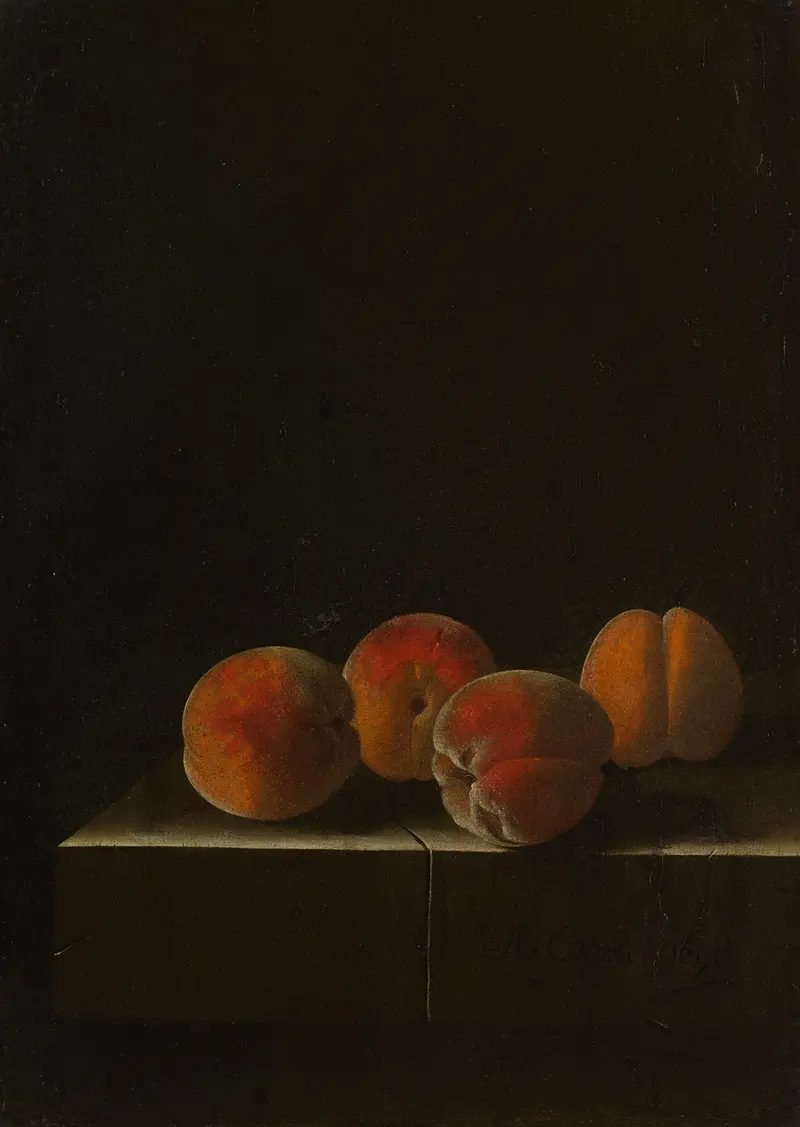
Four Apricots on a Stone Plinth
Adriaen Coorte





