Squat tea caddy with a grey blue glaze — History & Analysis
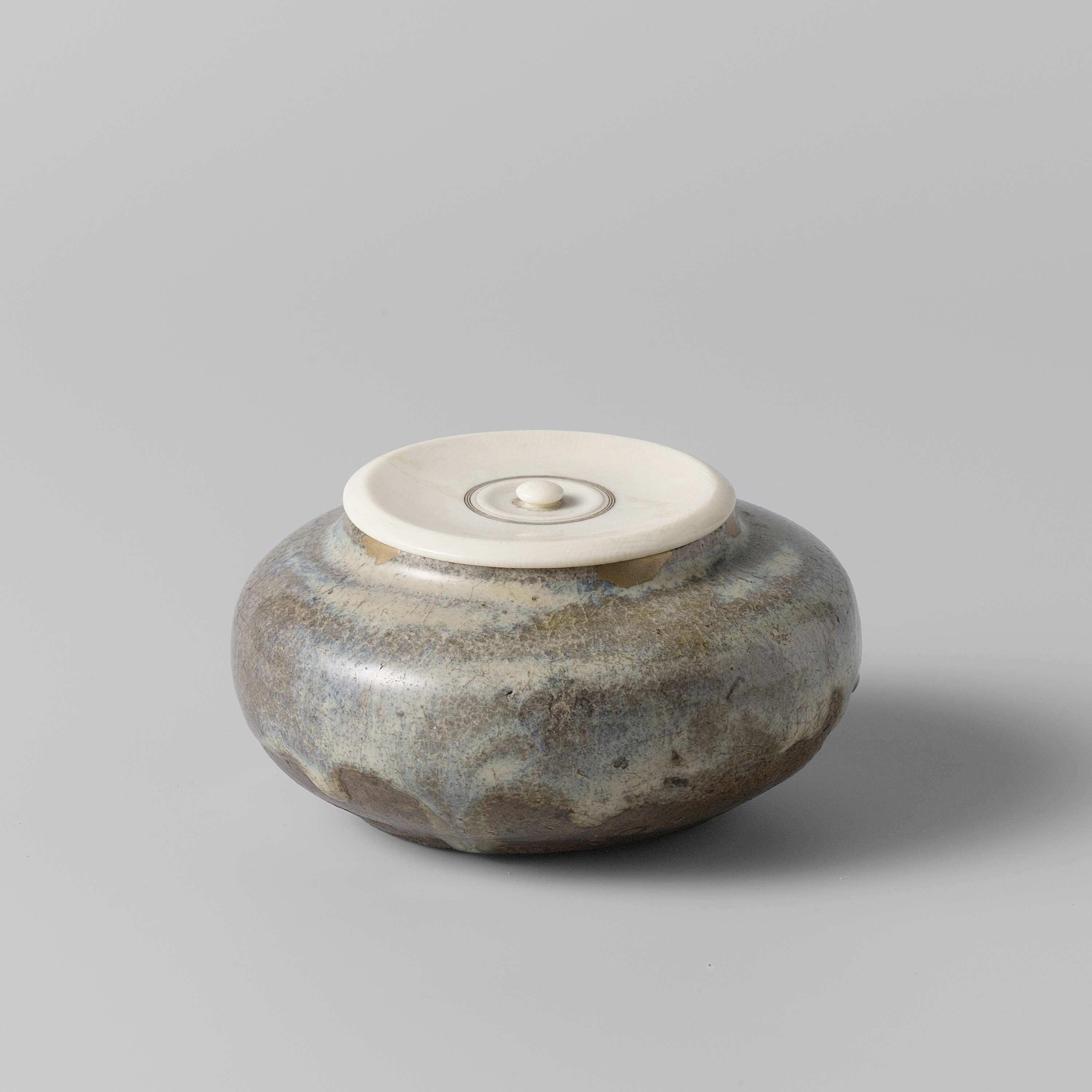
Did the painter know this moment would outlive them? In the quiet simplicity of the squat tea caddy, a dialogue emerges between its form and the chaos of the human experience. Look closely at the surface, where a grey-blue glaze envelops the caddy like a calming shroud, contrasting sharply with the jagged edges of life’s turmoil. Notice how the subtle variations in color create an illusion of depth, inviting the viewer to explore the imperfections that speak of authenticity and craft.
The gentle curves, while understated, offer a sense of stability, as if holding the weight of unspoken stories within. Yet, the madness of existence lurks in the details. The slight unevenness in the glaze hints at the artist’s hand — a reminder that beauty is often born from imperfection. This caddy, seemingly serene, dances on the edge of fragility; it embodies the delicate balance between order and chaos, much like the era in which it was created.
Such artifacts become vessels not just for tea, but also for memories, dreams, and the unpredictable nature of life. Crafted sometime between 1700 and 1850, this piece stands as a testament to the unknown artist's place in a pivotal period of decorative arts. It was an era when craftsmanship began to shift, moving from the grandiosity of baroque to the more intimate and personal forms of expression. Amidst a backdrop of societal upheaval and creative exploration, this caddy captures a fleeting moment of serenity, forever preserved in its quiet embrace.