
St. Mark’s in the Bowery — History & Facts
Can beauty exist without sorrow? In Childe Hassam's St. Mark’s in the Bowery, a longing for connection and solace weaves through the tranquil yet poignant portrayal of an iconic church nestled in New York's bustling landscape. The painting resonates with a sense of yearning that transcends its visual beauty, inviting viewers to explore the depths of their own emotions. Look to the center, where the church rises majestically against a backdrop of dense urban life.
Notice how the warm hues of sunlight bathe the building, casting gentle shadows that add depth to its intricate architecture. The soft blues and greens of the surrounding foliage invite the eye outward, creating a harmonious balance between manmade and natural elements. Every brushstroke captures not just form, but the spirit of the moment, revealing the artist’s deft understanding of light and texture. Beneath the surface, a tension simmers between the sacred and the mundane.
The church stands as a refuge amidst the chaos of the city, symbolizing a place of hope and yearning for peace. Yet, the encroaching urban landscape hints at inevitable change, evoking the bittersweet nature of progress and the fleeting moments of tranquility that can exist against the clamor of life. This sense of longing is palpable, drawing viewers into a contemplative space where beauty and sorrow coexist. In 1910, while living in New York, Hassam was deeply influenced by the vibrant atmosphere of the city.
This was a period of artistic exploration, as the American scene gained recognition alongside the rise of Impressionism. The artist sought to capture the essence of urban life, using this iconic church as a focal point to express both admiration and nostalgia. His work reflects a personal connection to the changing world around him, making *St.
Mark’s in the Bowery* a poignant commentary on beauty amid the transient nature of existence.
More Artworks by Childe Hassam
Browse all →
Beach at Newport
Childe Hassam

Washington Arch, Spring
Childe Hassam

Thaxter’s Garden
Childe Hassam

New England Headlands
Childe Hassam

Rocks At Appledore, Morning
Childe Hassam
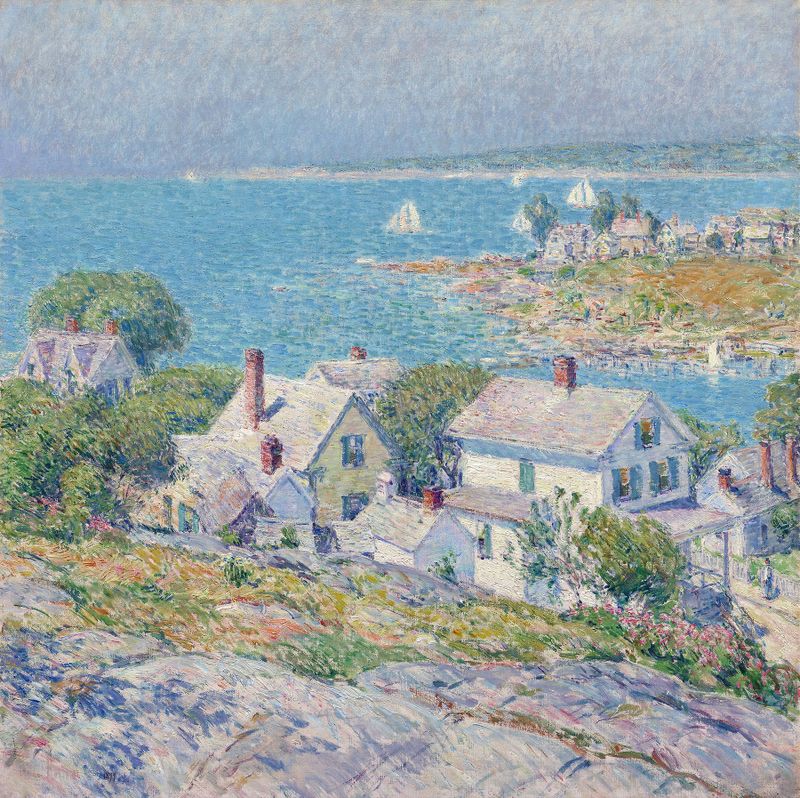
New England Headlands
Childe Hassam
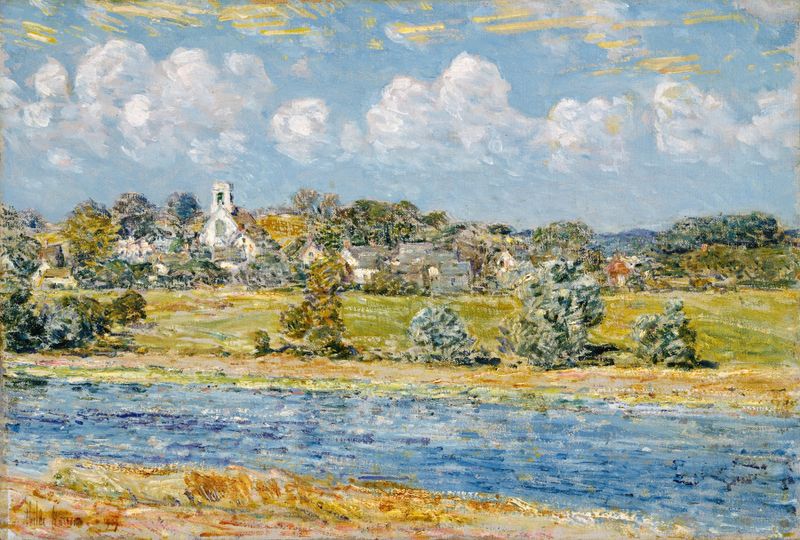
Landscape at Newfields, New Hampshire
Childe Hassam

Piazza di Spagna, Rome
Childe Hassam

The Harbor
Childe Hassam

Late Afternoon, New York, Winter
Childe Hassam
More Architecture Art
Browse all →
The statue of Liberty
Frédéric Auguste Bartholdi

View of Houses in Delft, Known as ‘The Little Street’
Johannes Vermeer

View of Houses in Delft, Known as ‘The Little Street’
Johannes Vermeer

The Cathedral in Rouen. The portal, Grey Weather
Claude Monet

The yellow house
Vincent van Gogh

The Church in Auvers-sur-Oise, View from the Chevet
Vincent van Gogh