
St. Michael's Church in Pereslavl — History & Facts
When Taras Shevchenko created St. Michael's Church in Pereslavl in 1838, he was still a serf, only a year away from winning his freedom thanks to the intervention of Russian intellectuals. This work stands as one of the earliest surviving pieces from his formative years, a period when he was honing his skills and absorbing the traditions of Ukrainian and Russian art.
The church itself, a landmark in the ancient town of Pereslavl, had long been a symbol of local identity and resilience, making Shevchenko’s choice of subject both personal and quietly political. In the scene, Shevchenko captures St. Michael’s Church at a moment of tranquil dignity, its domes rising above the trees and simple wooden houses of Pereslavl. The composition draws the eye upward, following the vertical thrust of the church’s spire—a gesture that echoes the spiritual aspirations of the community.
Details such as the careful rendering of the church’s brickwork and the soft interplay of light and shadow on its facade ground the image in a specific place and time. Unlike the grand, theatrical churches painted by Canaletto or the idealized structures in Ivan Aivazovsky’s seascapes, Shevchenko’s church feels lived-in and real, a testament to everyday faith. The precise medium of St. Michael's Church in Pereslavl remains uncertain, though it is often catalogued among Shevchenko’s early watercolors and drawings.
The work has spent much of its life in Ukrainian collections, valued both as a document of architectural heritage and as a window into the artist’s early development. Today, it is recognized as a key piece from the period just before Shevchenko’s emancipation, reflecting his growing confidence and his deepening connection to Ukrainian subjects. Its survival offers a rare glimpse into the world that shaped one of Ukraine’s most important cultural figures.
More Artworks by Taras Shevchenko
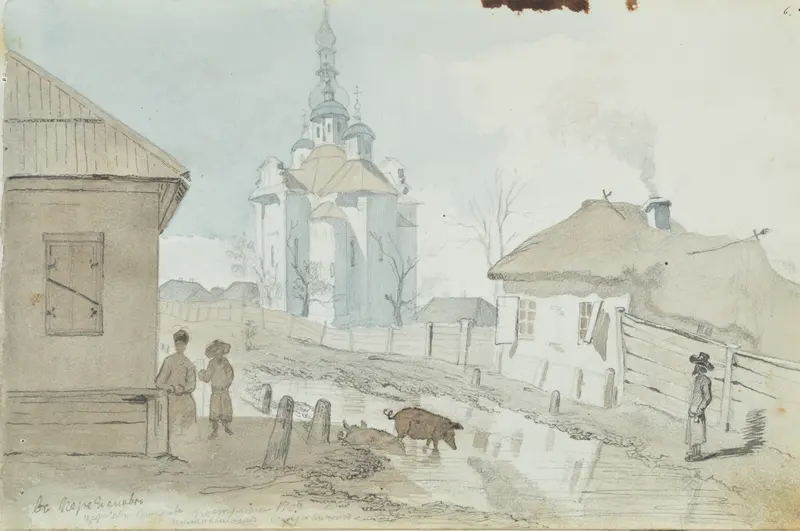
1845 Sh Sketchbook f.06r
Taras Shevchenko

1845 Sh Sketchbook f.04r
Taras Shevchenko

1848 Bilia vohnu
Taras Shevchenko
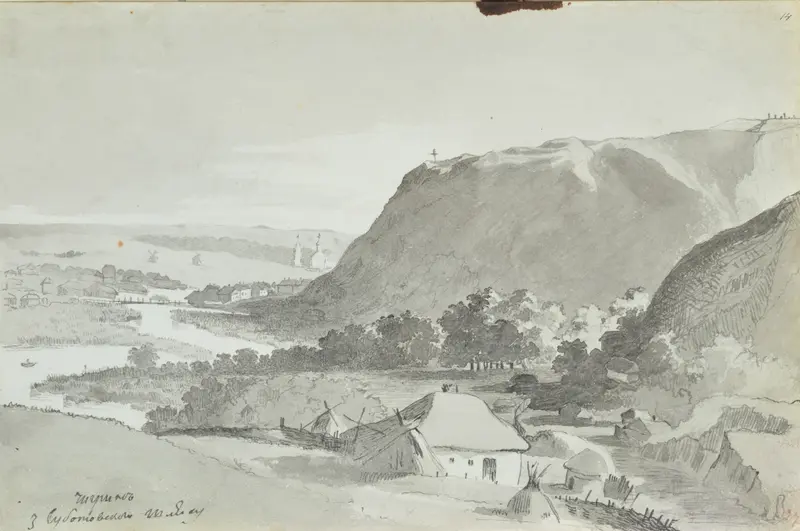
1845 Sh Sketchbook f.14r
Taras Shevchenko
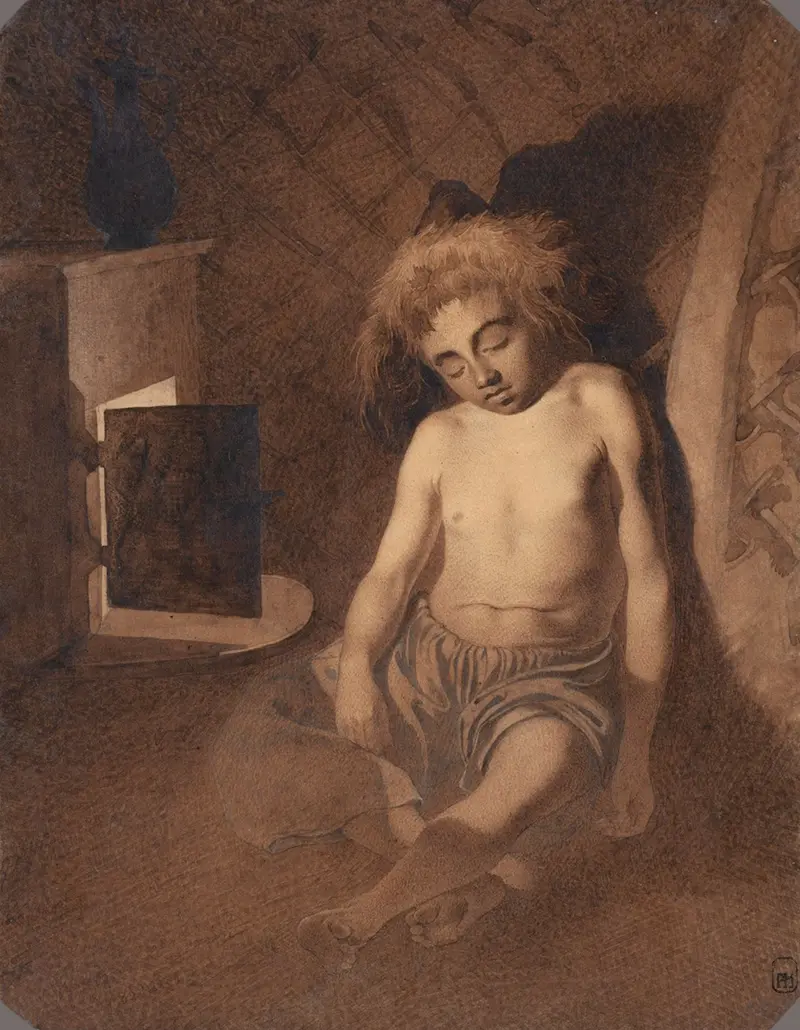
1848 Hlopcyk zasnuv
Taras Shevchenko
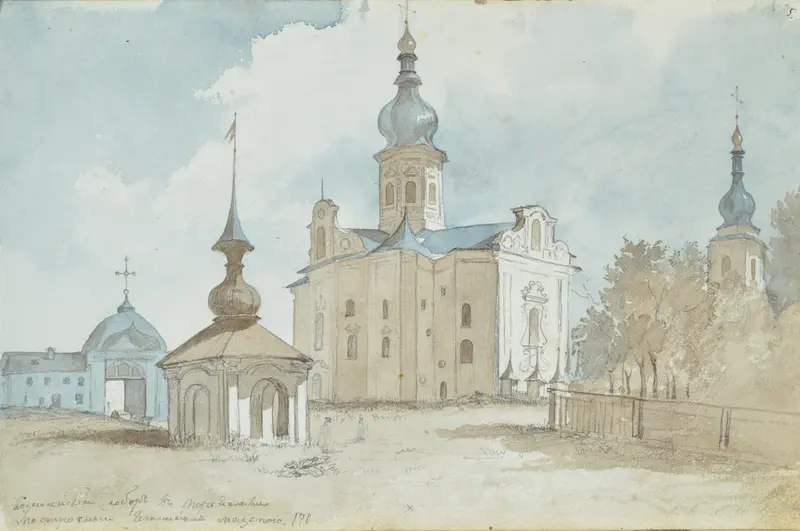
1845 Sh Sketchbook f.05r
Taras Shevchenko
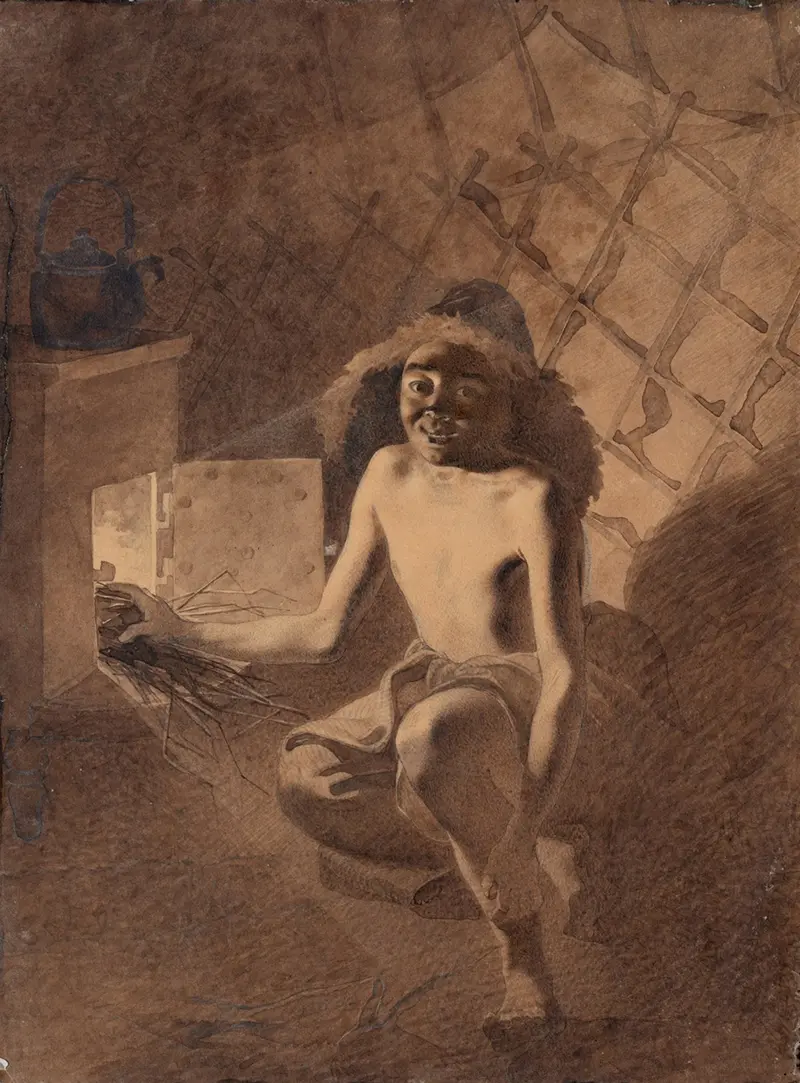
1848 Hlopcyk rozpalije
Taras Shevchenko
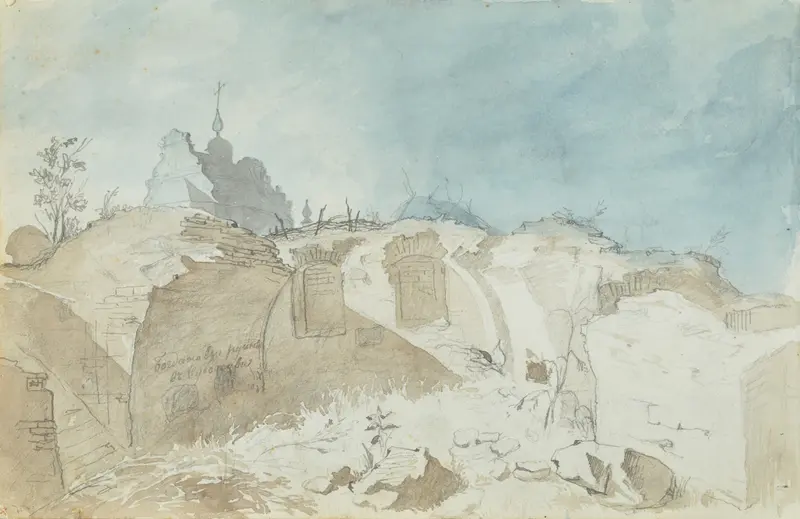
1845 Sh Sketchbook f.12v
Taras Shevchenko
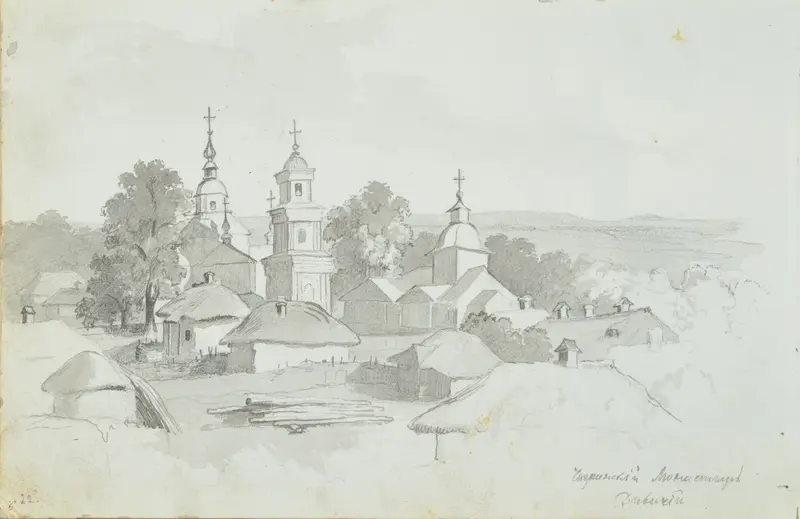
1845 Sh Sketchbook zz f.11v
Taras Shevchenko
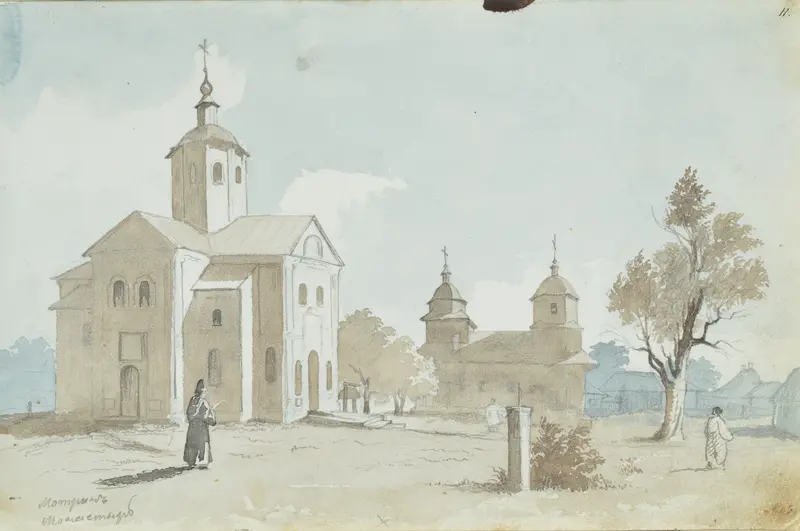
1845 Sh Sketchbook f.11r
Taras Shevchenko





