Stack of Wheat — History & Facts
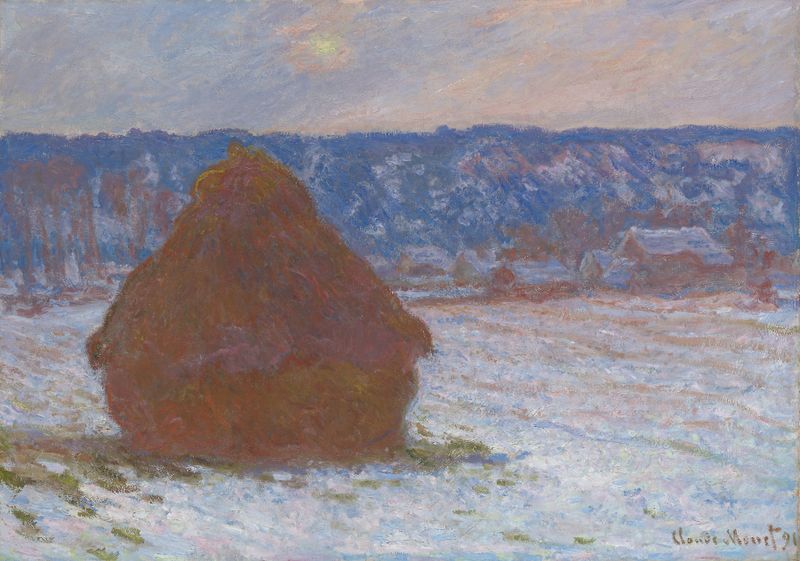
What secret hides in the quiet of the canvas? In Stack of Wheat, a serene landscape conceals a deeper tension, echoing the fragility of life and the looming specter of change. Look to the left at the golden stacks, standing proud against the backdrop of an overcast sky. Monet’s brushwork is loose yet deliberate, capturing the textured wheat with strokes that shimmer like sunlight caught between clouds. The gentle curves of the land draw the eye toward the horizon, where muted blues and grays hint at an approaching storm, contrasting with the warmth of the harvest.
This juxtaposition of vibrant life against an impending darkness speaks volumes about the duality of existence. Within this peaceful scene lies a palpable anxiety. The wheat, a symbol of sustenance and abundance, stands precariously against the threat of decay and ruin, hinting at the artist's own fears of loss and the relentless passage of time. The coolness of the sky serves as a reminder of nature's unpredictability, while the stacks represent both hope and the inevitable end of the growing season.
It is a delicate balance between celebration and mourning, capturing the essence of life’s transient beauty. In 1890, Monet painted this piece during a period of personal reflection in Giverny, France. He was grappling with the complexities of fame and the pressures of expectation from the art world. Impressionism was gaining recognition, yet the artist remained deeply aware of nature's impermanence, portraying his intimate relationship with the landscape around him.
This work encapsulates not only his artistic evolution but also the emotional landscape of an artist deeply connected to the cycles of life and nature.