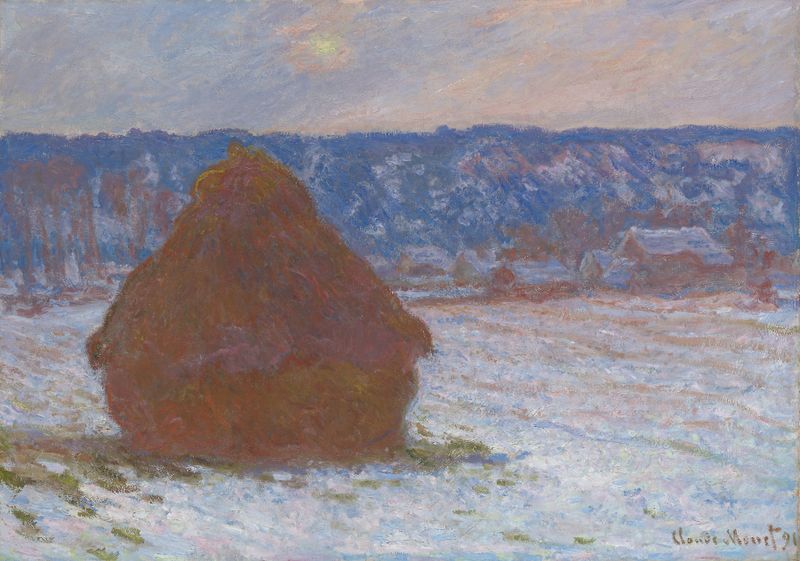
Stacks of Wheat (Sunset, Snow Effect) — History & Facts
Could a single brushstroke hold eternity? In the quiet, fading light of day, Stacks of Wheat (Sunset, Snow Effect) captures the fragile beauty of a moment suspended in time, a whispered testament to nature’s transience. Look to the foreground where the shimmering golden stacks rise against a backdrop of cool blues and purples. Monet’s masterful use of light and color creates a dynamic interplay; the wheat appears almost alive, illuminated by the ethereal glow of the sunset. Notice how the light wraps around each stack, casting soft shadows that suggest movement, inviting the viewer to linger a moment longer in this tranquil scene. Delve deeper into the textures—the way the brushstrokes coalesce into form, yet remain distinctly separate.
Each stroke symbolizes a fleeting moment, a meditation on the void between dusk and night, inviting contemplation of what lingers beyond our perception. Here, contrasts abound: the warmth of the golden wheat against the encroaching cold of the evening, both capturing the essence of a season’s end and the promise of renewal. During the winter of 1890-91, Monet worked in the fields of northern France, capturing the essence of a landscape transformed by snow and light. This period marked a significant evolution in his technique as he sought to convey the emotions elicited by nature through color and form.
Monet’s exploration of light and atmosphere during this time aligned with the broader Impressionist movement, reflecting both personal introspection and collective artistic innovation.