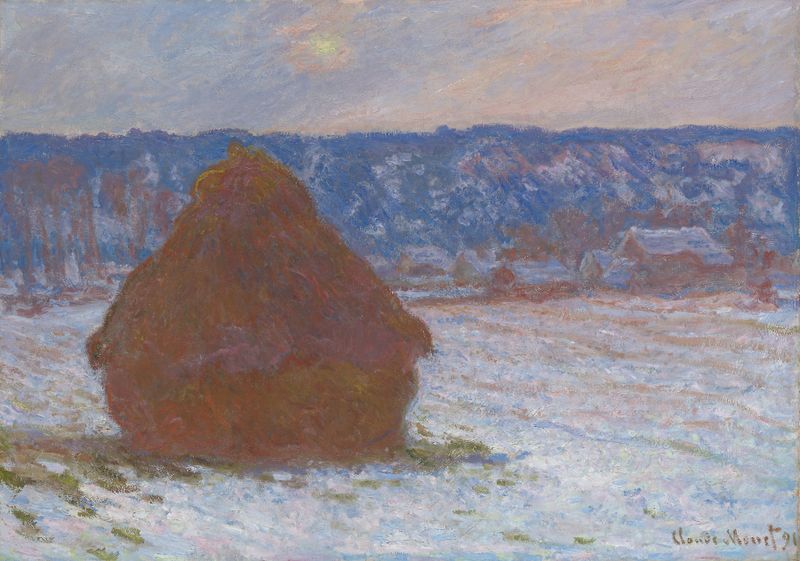
Stacks of Wheat (Sunset, Snow Effect) — History & Facts
In the calm of twilight, when the day surrenders to dusk, color becomes a language all its own, whispering secrets that only the quietest hearts can decipher. Look to the left at the golden stacks of wheat, standing like sentinels against the deepening blue of the sky. Notice how the warm hues blend and juxtapose with the cool tones; golden yellows and fiery oranges dance playfully with the soft purples and blues of the approaching night. The brushstrokes are both frenetic and soothing, conveying an atmosphere of gentle movement while evoking the stillness of nature.
This interplay of color not only captures the landscape but also transforms it into a meditative space. The painting breathes a sense of transience, where the fleeting beauty of daylight is held in suspension, hinting at the relentless passage of time. The contrast between the warmth of the wheat and the chill of the impending snow encapsulates a deeper emotional tension, inviting the viewer to contemplate the cycle of life and the inevitable change brought by seasons. Each element, from the luminous sky to the textured ground, reveals Monet’s profound connection to both the landscape and the ephemeral. During the years 1890-91, the artist found himself deeply engaged in exploring light and color in his beloved Giverny.
At this time, Impressionism had begun to solidify as a significant movement in art, with Monet at its forefront, pushing boundaries as he sought to capture the essence of nature. The world around him was rapidly changing, yet he remained rooted in the beauty of simple, unadorned scenes, celebrating the intimate relationship between man and the environment.