
Stadhuis van Den Haag — History & Facts
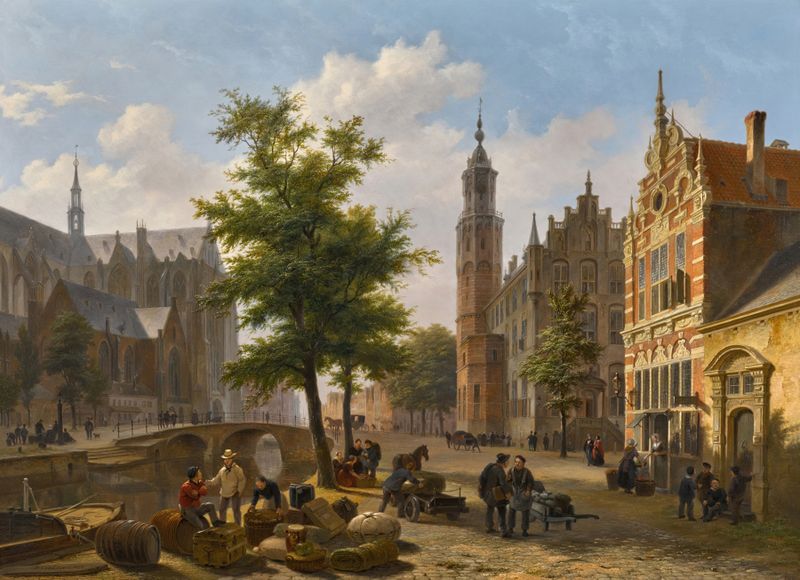
Where does light end, and longing begin? In the interplay of shadow and illumination, we find the essence of desire and all that it evokes. Focus your gaze on the exquisite façade of the Stadhuis van Den Haag, where the soft golden light bathes the intricate details, revealing the architecture in all its glory. Notice the delicate brushwork that captures every nuance of stone and sky; how the clouds swirl above, creating a dynamic contrast to the stately structure below. The colors evoke a sense of warmth, almost as if the building itself breathes in the light, inviting you closer. Yet, within this serene composition lies a deeper tension.
The juxtaposition of the vibrant blue sky with the solemnity of the municipal building speaks to the dichotomy of public duty and private longing. Each window, a portal to imagined lives within, suggests stories untold, while the shadows cast by the architecture hint at secrets hidden beneath the surface. This subtle interplay of clarity and obscurity invokes a sense of ecstasy, a yearning for connection within the confines of civic duty. In 1855, during a period of artistic exploration, Bartholomeus Johannes van Hove painted this work amidst the burgeoning Dutch romantic movement, where the beloved themes of landscape and architecture were redefined.
Living in The Hague, he was influenced by the city's rich history and vibrant culture, contributing to a broader conversation about the relationship between man and his environment in an era marked by change and introspection.
More Artworks by Bartholomeus Johannes van Hove
Browse all →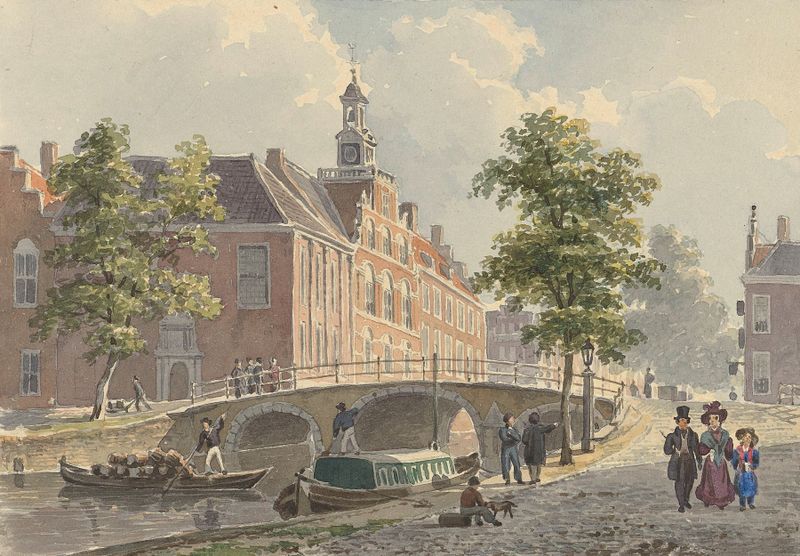
Het Spui te ‘s-Gravenhage, gezien naar het zuiden
Bartholomeus Johannes van Hove
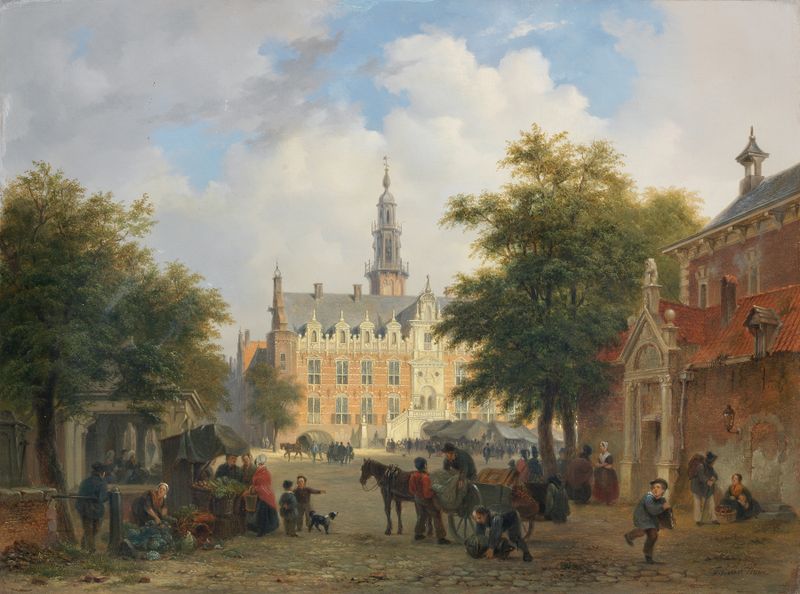
Street scene, Amsterdam
Bartholomeus Johannes van Hove

A Capriccio View Of The Hofvijver, The Hague
Bartholomeus Johannes van Hove
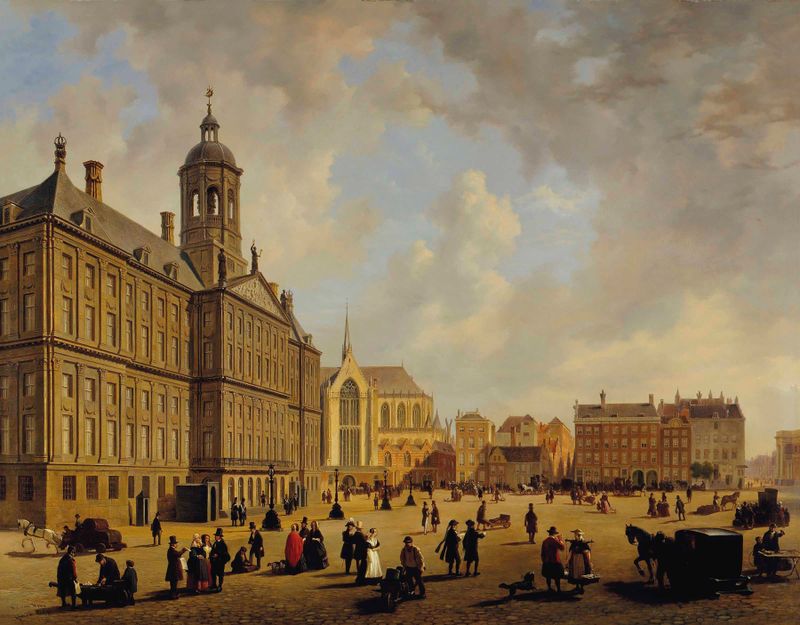
A bustling day in front of the City hall on the Dam Square, the Nieuwe Kerk in the distance, Amsterdam
Bartholomeus Johannes van Hove

Sommerliche Stadtansicht
Bartholomeus Johannes van Hove

Church Interior
Bartholomeus Johannes van Hove
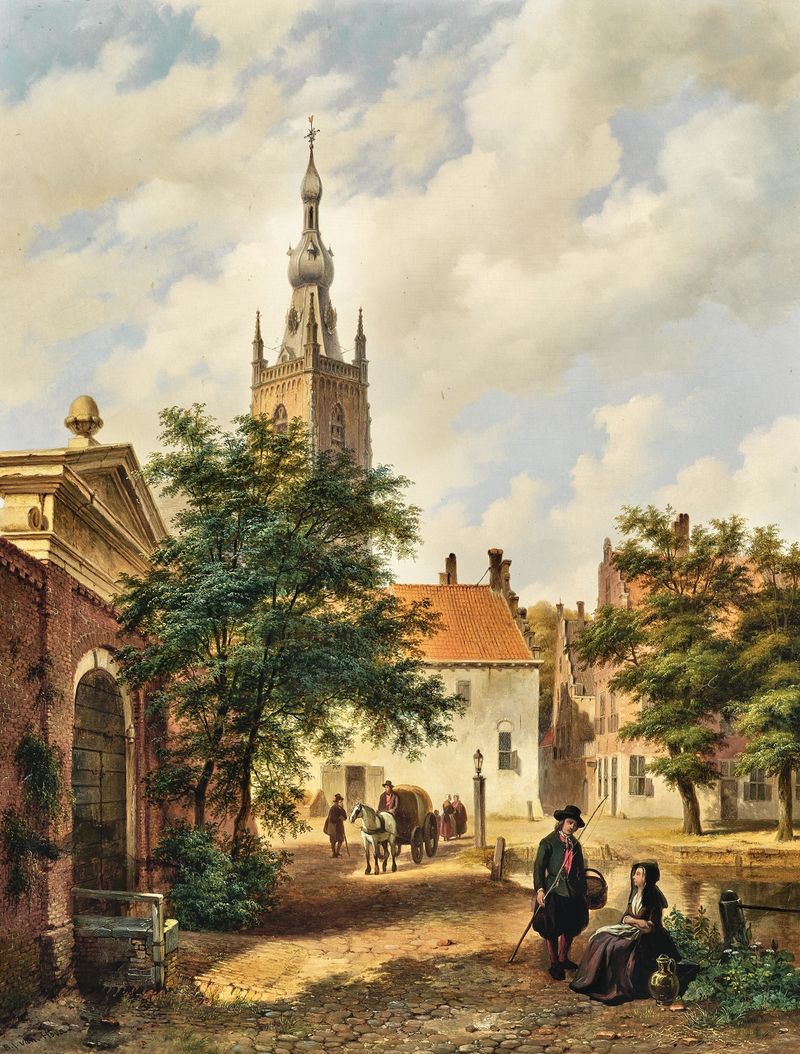
A View of a Village with a Church
Bartholomeus Johannes van Hove

Winterliche Stadtansicht
Bartholomeus Johannes van Hove
A Busy Market Place in a Dutch Town
Bartholomeus Johannes van Hove

View of a Dutch town
Bartholomeus Johannes van Hove
More Architecture Art
Browse all →
The statue of Liberty
Frédéric Auguste Bartholdi

View of Houses in Delft, Known as ‘The Little Street’
Johannes Vermeer

View of Houses in Delft, Known as ‘The Little Street’
Johannes Vermeer

The Cathedral in Rouen. The portal, Grey Weather
Claude Monet

The yellow house
Vincent van Gogh

The Church in Auvers-sur-Oise, View from the Chevet
Vincent van Gogh