Stadt und Eisenbahn I — History & Facts
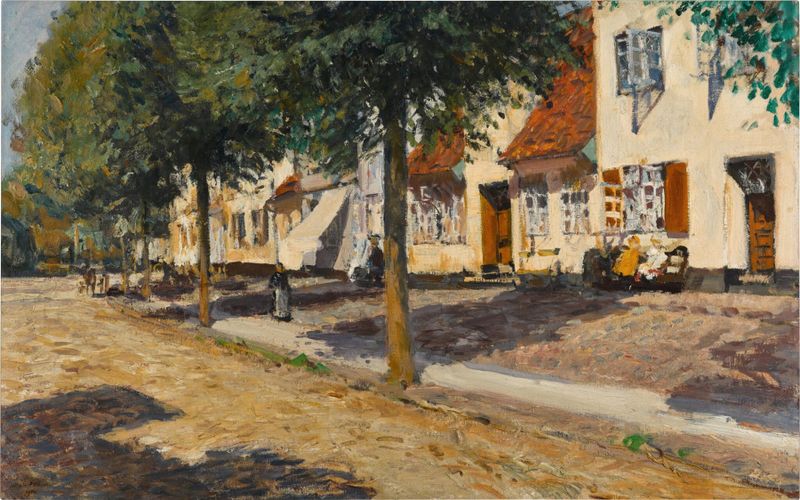
In the vibrant tension of colors, we find not just representation, but an emotional pulse that connects us to our innermost experiences. Look to the center where a cacophony of hues collides—the deep blues and fiery reds swirl together, drawing the eye into a dynamic interplay of movement. Notice how the sharp angular forms of the railway juxtapose with the organic shapes of the surrounding architecture, creating a rhythm that echoes the pulse of urban life. The bold brushstrokes and layered paint evoke a sense of urgency, as if the city itself is alive, breathing in the steam and smoke of the train. Delve deeper into the contrasts: the juxtaposition of industrial machinery against the soft, almost dreamlike background suggests a struggle between progress and nature.
The vibrant colors may reveal the artist's internal dialogue with modernity, celebrating innovation while simultaneously lamenting its costs. Each stroke captures fleeting moments of human existence, encapsulating both the excitement and anxiety of a society in transformation. Created in 1912, this work emerges from a period of profound change for its creator. Hübner, navigating the shifting landscape of early 20th-century Europe, found himself amid the burgeoning expressionist movement, which sought to capture the emotional truth behind the visible world.
His experiences during this tumultuous time infused his art with a sense of urgency and reflection, revealing layers of meaning that resonate even today.