Choppy sea — History & Facts
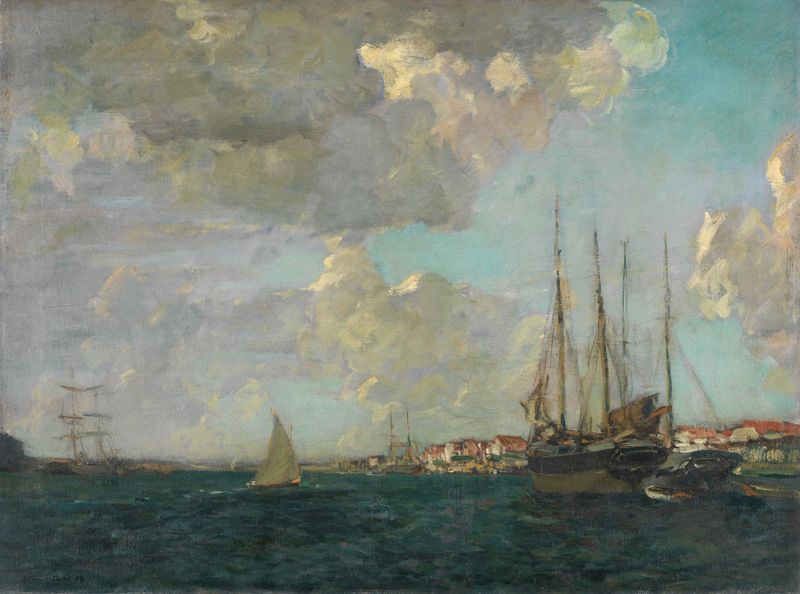
What secret hides in the quiet of the canvas? The depths of Ulrich Hübner's Choppy Sea invite us into a realm where the tumultuous energy of nature meets the stillness of reflection. Look to the center, where the sea churns with vibrant hues of blue and gray, each brushstroke capturing the chaos of the waves. Notice how the frothy white caps contrast against the darker waters, creating a dynamic tension that draws the eye. The light dances across the surface, glimmering like scattered diamonds, while the clouds above, heavy and foreboding, loom with an impending storm.
The interplay of color and texture reveals not just the physicality of the sea, but also the emotional weight of the scene. Here lies a duel between chaos and calm, the sea embodying both beauty and danger. Small details—a hint of a distant ship struggling against the waves—whisper of struggle and resilience. The tumult of the ocean reflects our own inner tempests, suggesting a deeper connection to the unpredictability of life.
In this moment, nature becomes a mirror, evoking awe and contemplation in the viewer. In 1909, Hübner painted this work during a pivotal moment in the artistic landscape, influenced by the burgeoning expressionist movement. While absorbing the transformative energy of the early twentieth century, he sought to blend realism with emotional resonance. The choppy seas of his homeland served not only as a muse but as a canvas for his exploration of human emotion amid the vast and unpredictable forces of nature.