
Stadttor in Tunis — History & Facts
In a world steeped in constant progress, there lies an undercurrent of decay that speaks volumes about our existence, echoing in the forgotten corners of time. Begin your journey by examining the mighty archway that dominates the canvas, enveloping you in its crumbling elegance. Look closely at the weathered stones, each telling tales of the past, layered in hues of ochre and muted gray. Notice how the light filters through the arch, casting a soft glow that intertwines the brilliance of history with the shadows of neglect, creating an emotional dichotomy of beauty and ruin. As you delve deeper, consider the contrast between the robust structure of the gate and the delicate hints of vegetation encroaching upon it, suggesting nature’s quiet reclamation.
The juxtaposition of the sturdy architectural lines against the organic forms speaks to the inevitable cycle of life and decay. This tension invites reflection on the transient nature of human endeavor, a poignant reminder that all creations, no matter how grand, will one day yield to time. During the period when this piece was created, the artist found himself immersed in the vibrant vistas of North Africa, captivated by the interplay between culture and history. Although the exact date remains uncertain, it is likely that Wuttke painted amidst the rising allure of Orientalism in Europe, where artists sought to capture the exotic essence of distant lands, influencing the perception of far-off places and their stories.
More Artworks by Carl Wuttke
Browse all →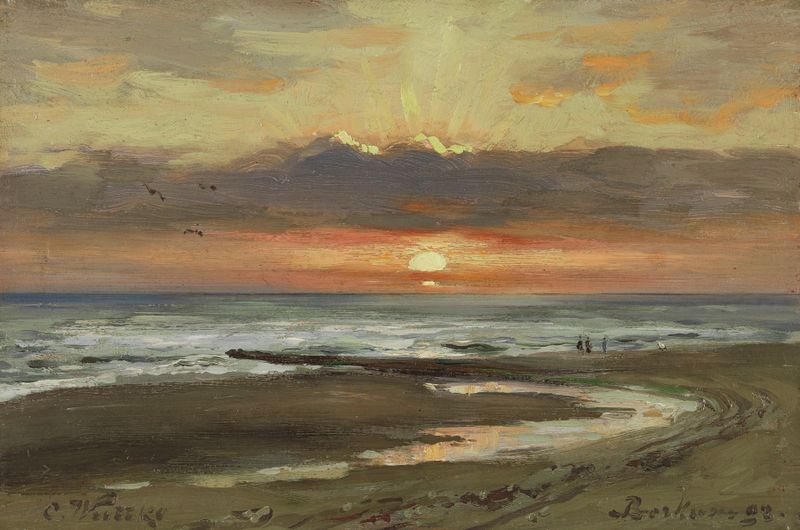
Sonnenuntergang auf Borkum
Carl Wuttke

Orientalischer Basar
Carl Wuttke

Blick vom antiken Theater in Taormina auf den Ätna
Carl Wuttke
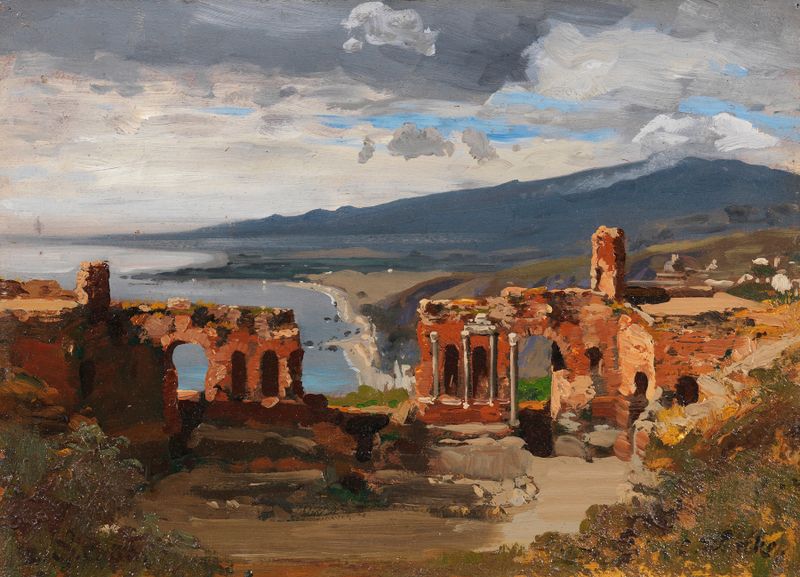
Blick vom antiken Theater in Taormina auf den Ätna
Carl Wuttke
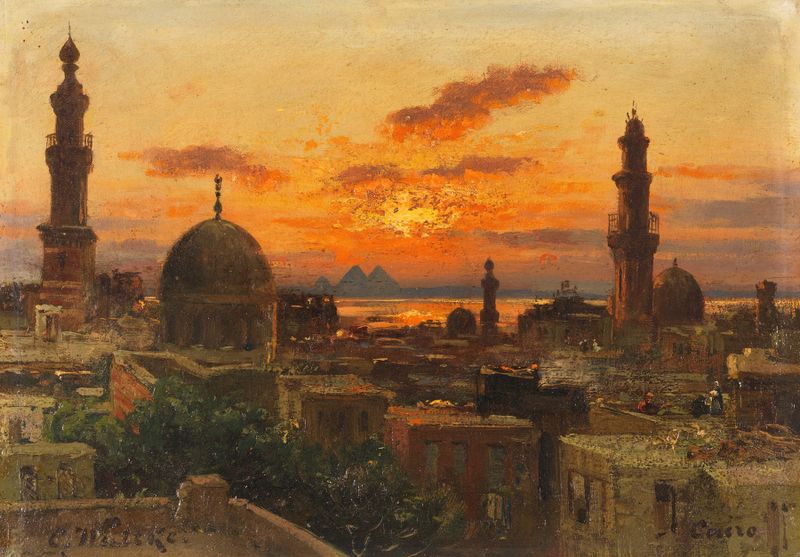
Kairo im Abendlicht
Carl Wuttke
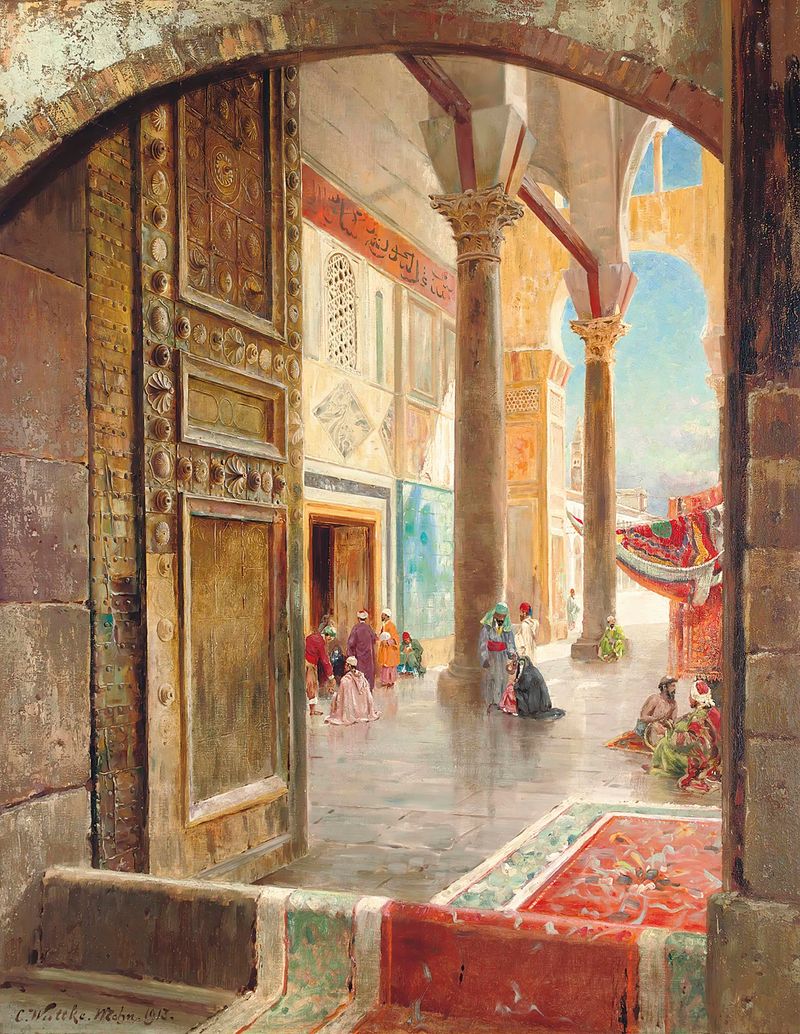
The Great Umayyad Mosque, Damascus
Carl Wuttke
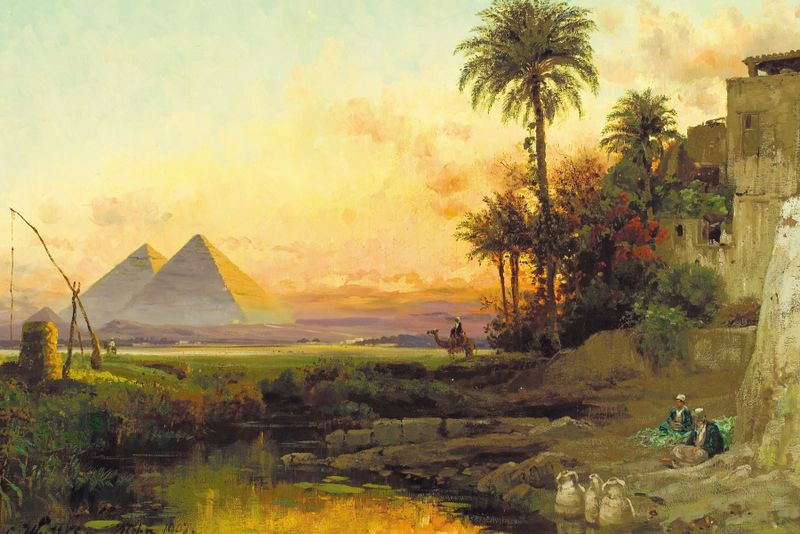
The Pyramids at Dusk
Carl Wuttke

Ansicht von Kairo mit dem Südtor der Stadtmauer
Carl Wuttke

Hügellandschaft in Westbengalen
Carl Wuttke
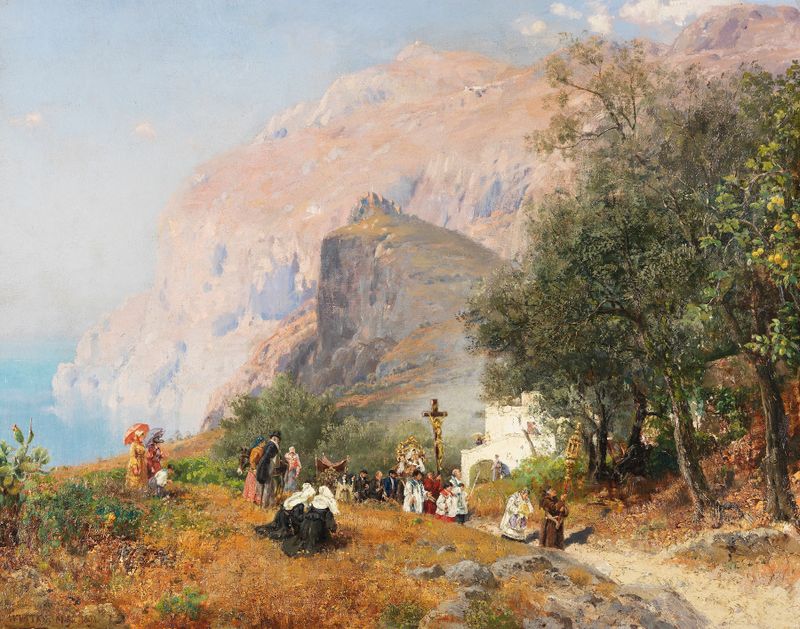
Prozession auf Capri
Carl Wuttke
More Architecture Art
Browse all →
The statue of Liberty
Frédéric Auguste Bartholdi

View of Houses in Delft, Known as ‘The Little Street’
Johannes Vermeer

View of Houses in Delft, Known as ‘The Little Street’
Johannes Vermeer

The Cathedral in Rouen. The portal, Grey Weather
Claude Monet

The yellow house
Vincent van Gogh

The Church in Auvers-sur-Oise, View from the Chevet
Vincent van Gogh