
Statue d’un Grand Homme — History & Facts
In a world where silence speaks volumes, the weight of history rests upon this solemn figure. The stillness of the moment invites reflection, urging the viewer to contemplate the depths of time and legacy. Look closely at the textured surface of the statue; notice how the subtle play of light reveals contours that seem to breathe. The careful manipulation of shadows creates an aura of reverence, drawing your gaze to the dignified features etched in stone.
The muted palette envelops the viewer, its shades whispering tales of triumph and struggle, while the smoothness of the craftsmanship contrasts starkly with the roughness of the surrounding space. In this work, the tension between permanence and transience unfolds. The statue embodies the weight of memory, serving as a bridge between the past and the present. Each detail, from the furrowed brow to the resolute stance, reflects both the immutable nature of honor and the fleeting essence of human experience.
The silence surrounding the figure invites an introspective exploration of what it means to be remembered. During the years he created this piece, Lepère was deeply engaged in capturing the spirit of the age, wrestling with the shifting currents of artistic expression in post-impressionist France. Between 1870 and 1918, he navigated the complexities of a rapidly changing world, immersing himself in the revival of traditional forms while embracing new techniques that echoed the sentiments of a modern era.
More Artworks by Auguste Louis Lepère
Browse all →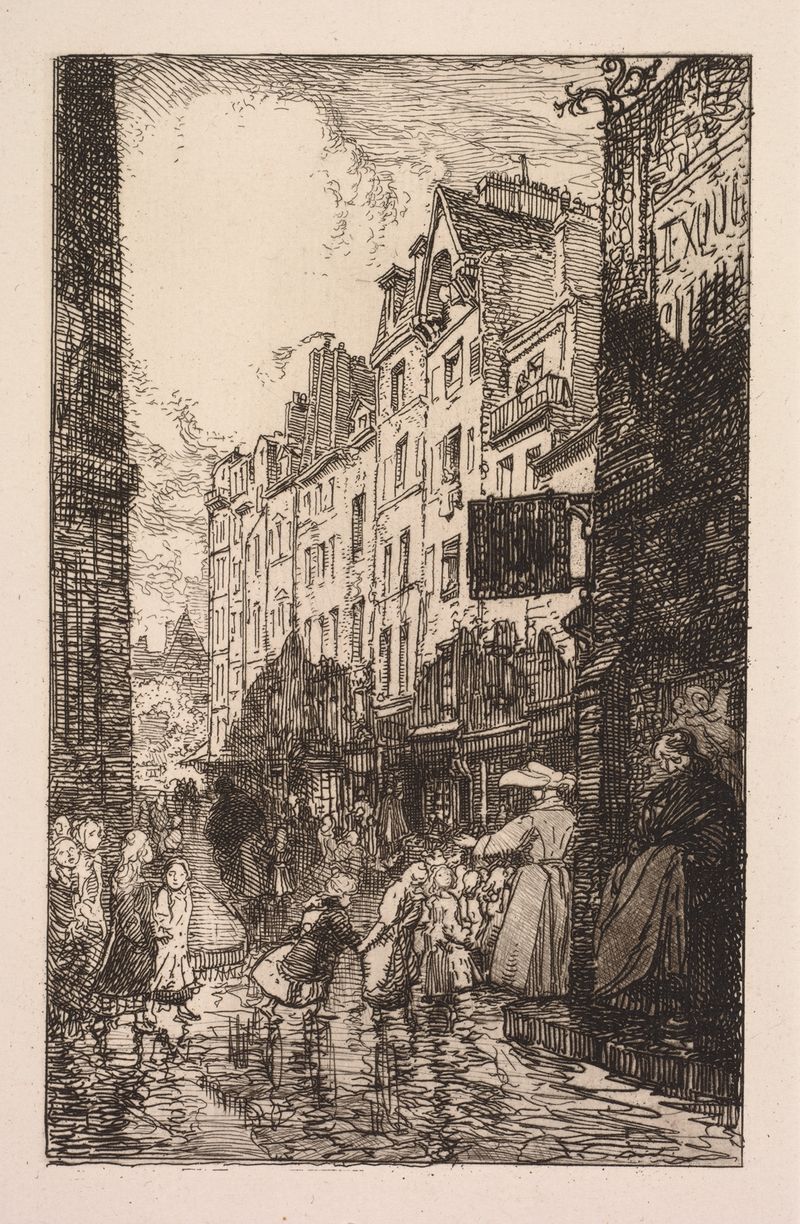
La Rue des Prêtres Saint-Séverin
Auguste Louis Lepère
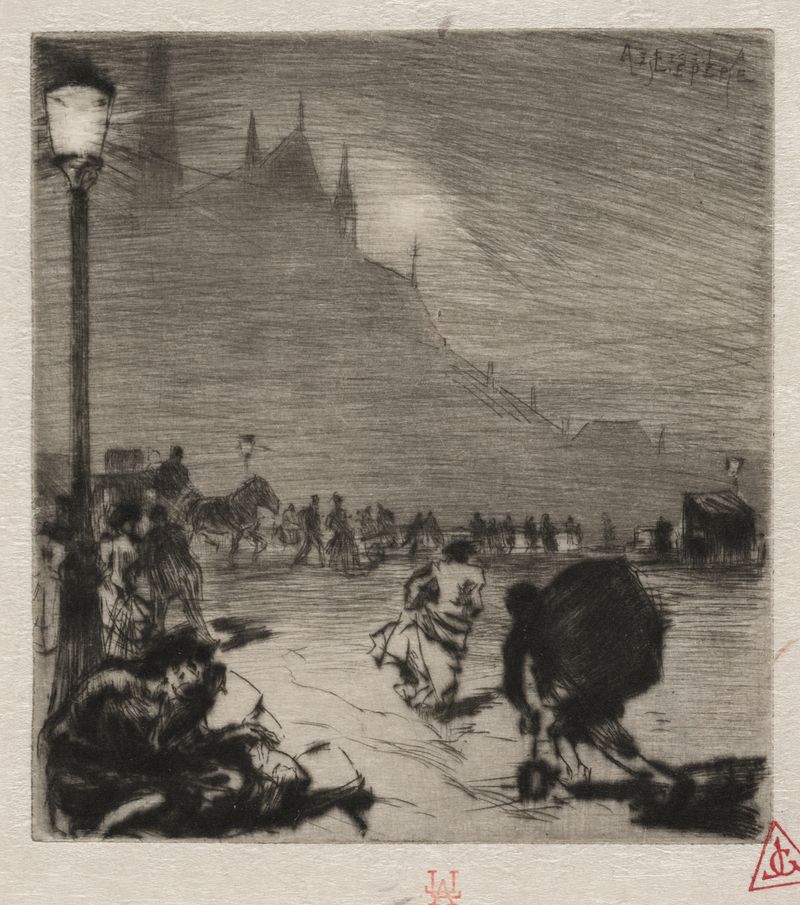
Au Coin du Pont-aux-Doubles
Auguste Louis Lepère
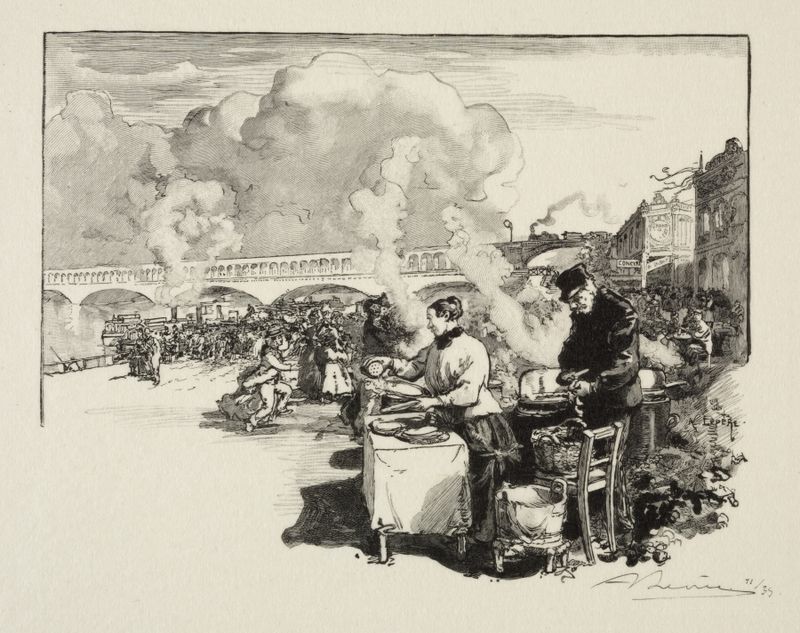
Debarcadère des bateaux-omnibus
Auguste Louis Lepère

La Seine, au quai de la Rapée
Auguste Louis Lepère
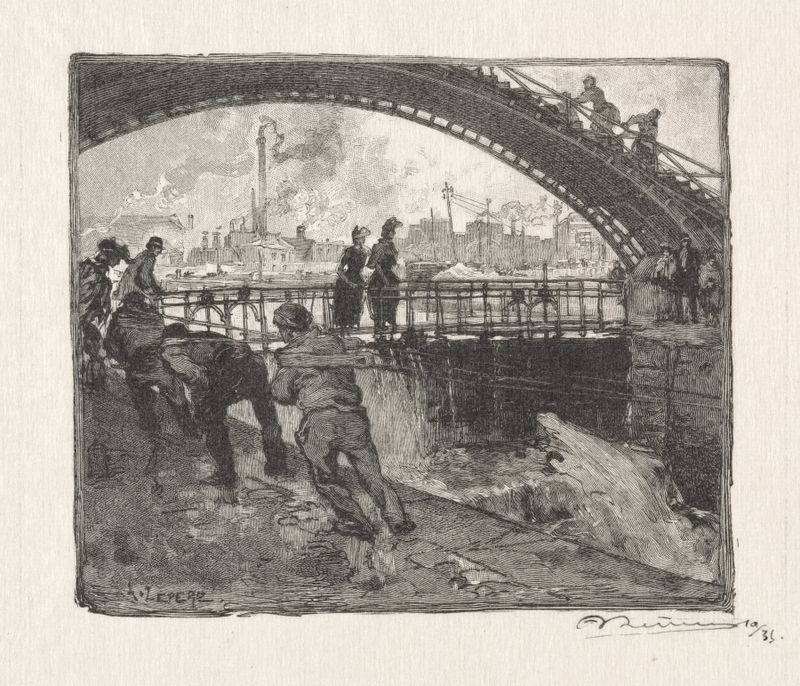
L’Ecluse du Canal St. Martin
Auguste Louis Lepère

Le Boulevard Montmartre, le Soir
Auguste Louis Lepère

Une Chasse au Mont Gérard
Auguste Louis Lepère
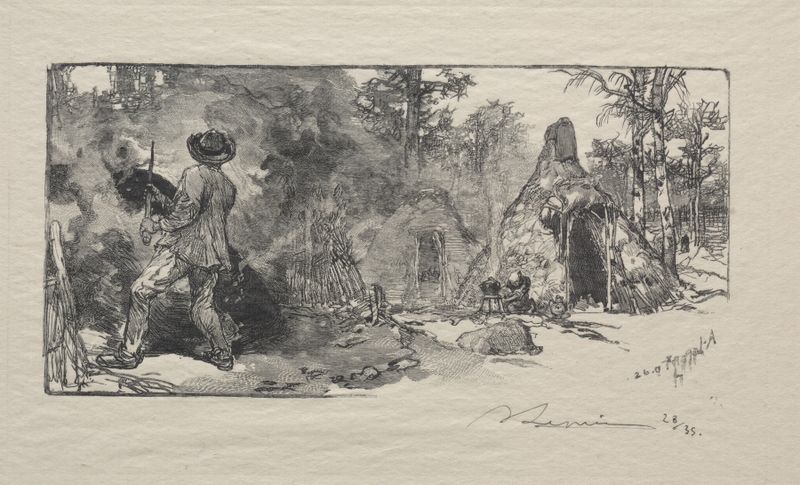
Les Charbonniere
Auguste Louis Lepère
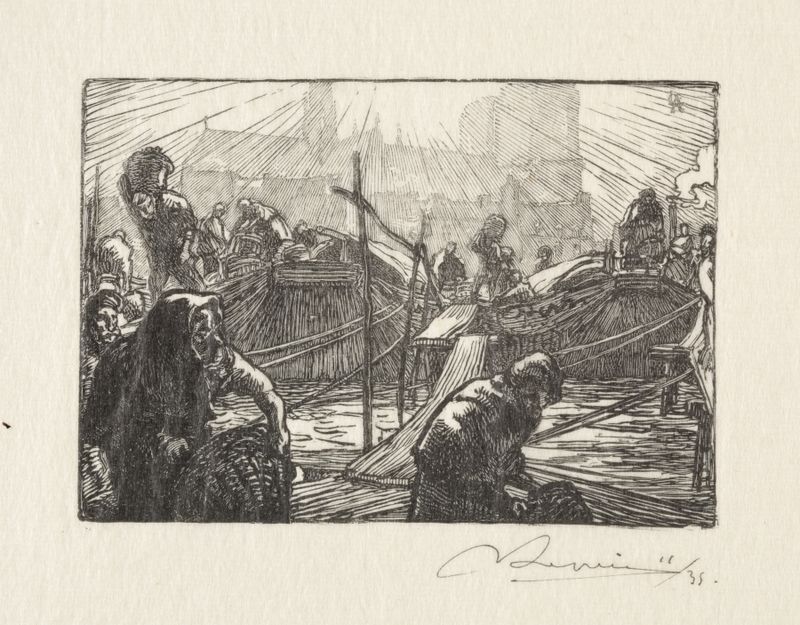
Notre Dame vue du Marché aux pommes
Auguste Louis Lepère

Le Palais des Arts Liberaux, Intèrieur
Auguste Louis Lepère





