
Steamwheeler on the Upper Mississippi — History & Facts
Can beauty exist without sorrow? In Steamwheeler on the Upper Mississippi, this question reverberates through the tranquil waters and vibrant colors, inviting contemplation on the duality of existence. To appreciate the artwork, look to the center where the steamwheeler proudly carries passengers across the expansive river. Notice how the artist employs a rich palette of blues and greens, contrasting with the warm, rustic tones of the boat. The billowing smoke rising from the vessel blends seamlessly into the sky, creating a harmonious union between progress and nature.
This careful balance of color and form guides the eye and evokes a sense of movement, as though the viewer can feel the gentle current of the Mississippi. Hidden within this idyllic scene lies the tension of an evolving America. The steam-powered boat, a symbol of innovation, signifies both freedom and the encroachment of industrialization on the pristine landscape. Yet, the serene setting hints at nostalgia for a simpler time, where the river flowed unhindered.
The juxtaposition of the boat’s mechanical nature against the natural beauty of the river speaks to an underlying sorrow—an acknowledgment of the inevitable changes brought by progress. Ferdinand Richardt painted this scene in 1865, a time when America was grappling with its identity post-Civil War. Living in New York, he was deeply influenced by the Romanticism movement, which celebrated nature and the sublime. In a world undergoing rapid transformation, his work reflects both the optimism of technological advancement and an awareness of the fragility of beauty.
More Artworks by Ferdinand Richardt
Browse all →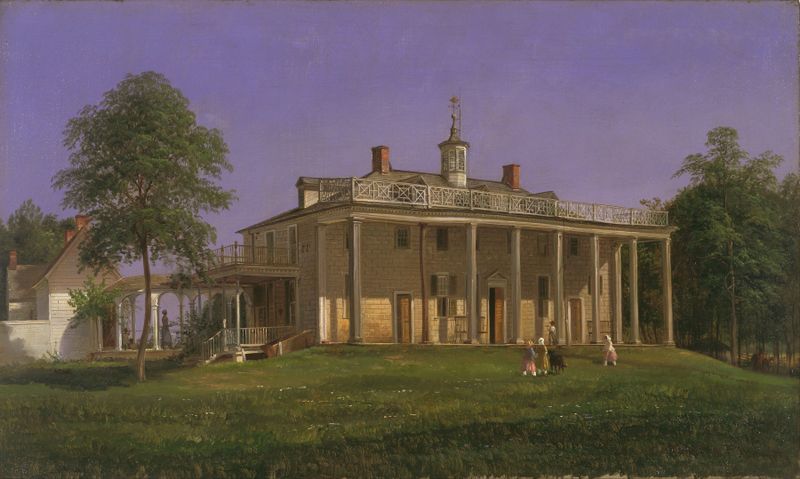
View of Mount Vernon
Ferdinand Richardt
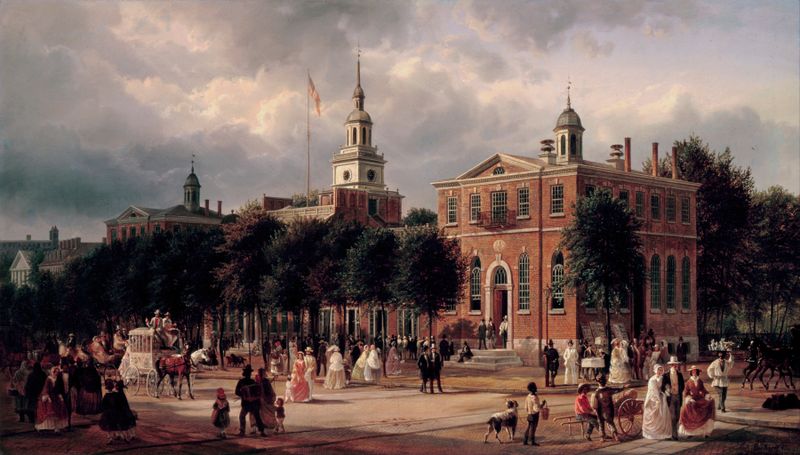
Independence Hall in Philadelphia
Ferdinand Richardt
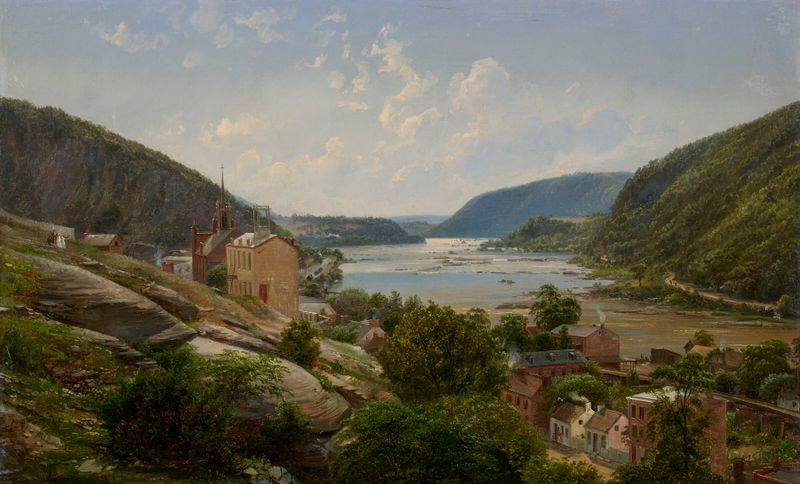
Harper’s Ferry, Virginia
Ferdinand Richardt
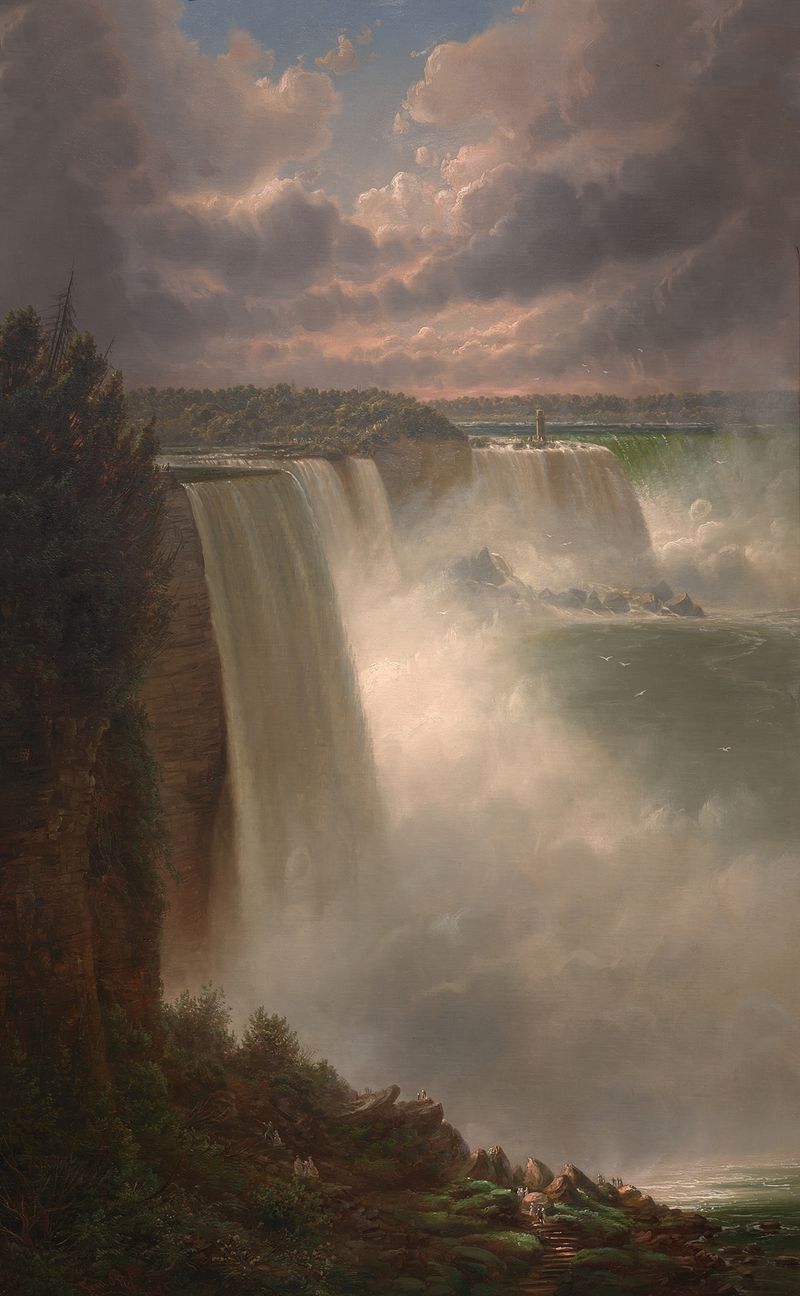
Niagara Falls
Ferdinand Richardt
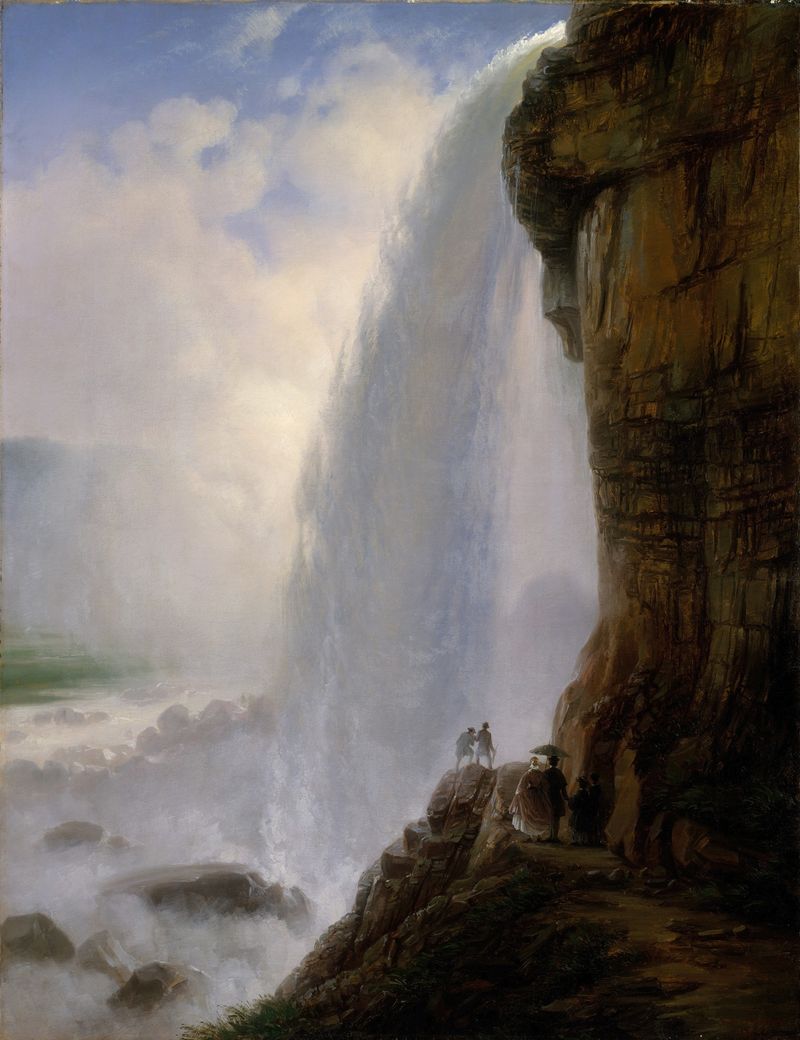
Underneath Niagara Falls
Ferdinand Richardt

View of the ruined castle of Hammershus
Ferdinand Richardt
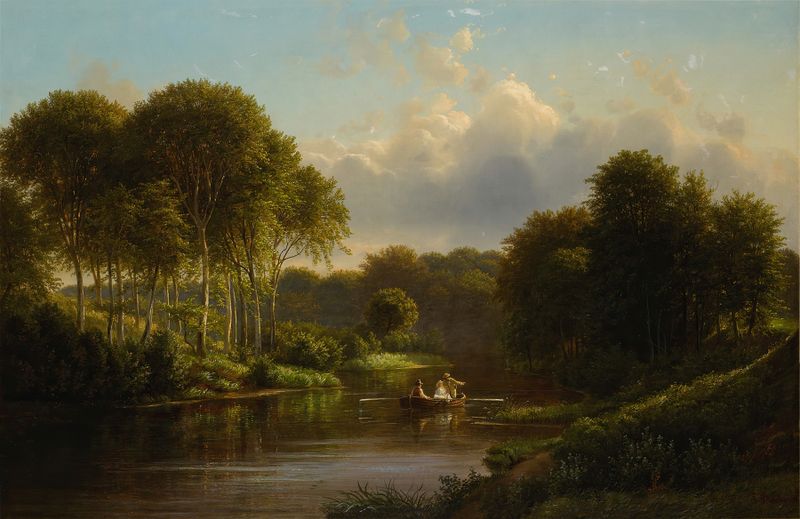
Boating on the Susquehanna
Ferdinand Richardt
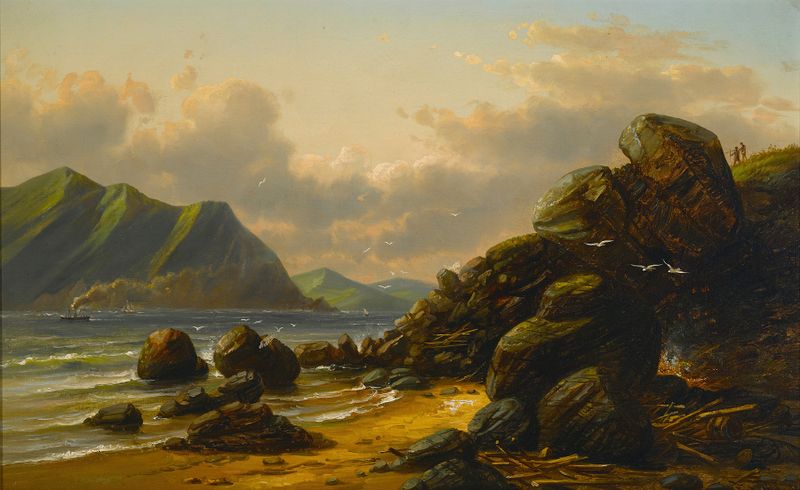
Land’s End, San Francisco
Ferdinand Richardt





