
Still Life of Asparagus — History & Facts
What first strikes the eye in Still Life of Asparagus is the hush that surrounds a simple bundle, as if the world has paused to let these pale stalks bask in a shaft of light. The asparagus, bound with a thin strip, sits on a stone ledge whose cool, flat surface anchors the composition. The artist, Adriaen Coorte, has chosen a low, almost reverent viewpoint, inviting us to consider the humble vegetable as worthy of close attention.
Each stalk is rendered with meticulous care: the fibrous ends, the papery sheaths, the subtle gradations from green to creamy white. The deep, velvety background isolates the subject, making the asparagus appear almost luminous, while the signature and date in the lower right corner quietly assert the painter’s presence. This painting belongs to the world of late seventeenth-century Dutch still life, a genre that delighted in elevating everyday objects to the realm of contemplation. In the prosperous Dutch Republic, such works were often commissioned by merchants or burghers eager to display both their refined taste and their appreciation for the bounty of nature.
The year 1699, inscribed by the artist, places this work in an era when collectors prized the precise observation of nature and the quiet drama of light and shadow. Little is recorded about the journey of this particular painting, now held by the Netherlands Institute for Art History, but its survival speaks to the enduring fascination with the ordinary made extraordinary. Stand before it a moment longer, and let your eye trace the delicate cracks and subtle shadows that turn a kitchen staple into a meditation on seeing.
More Artworks by Adriaen Coorte
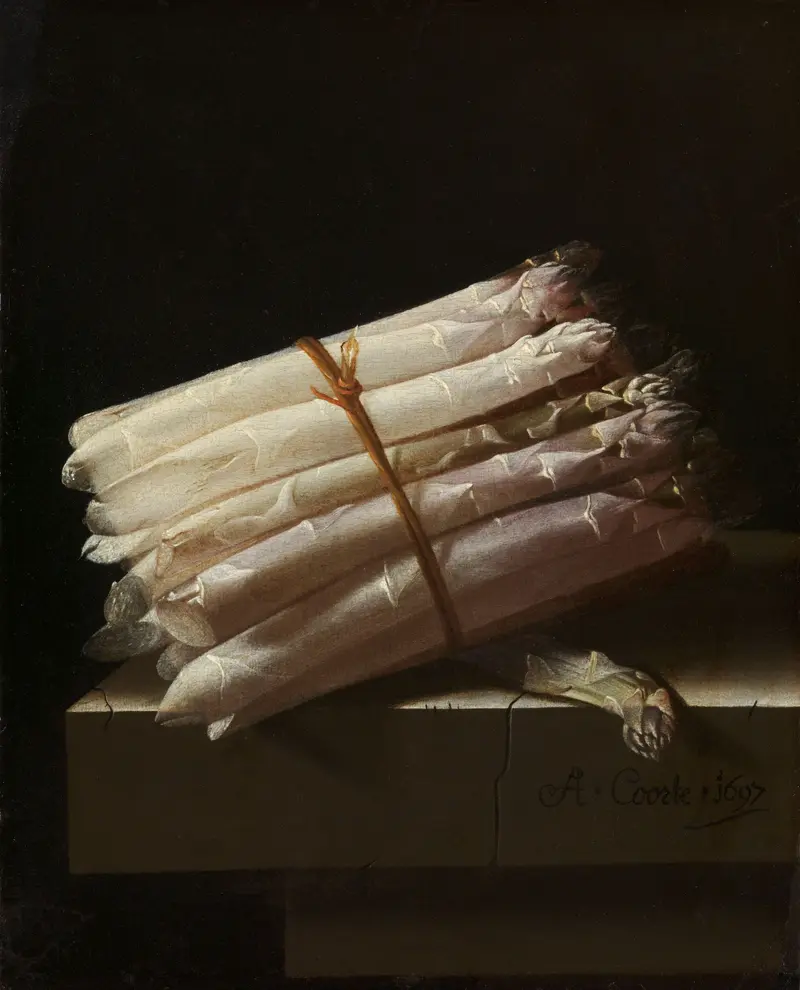
Still Life with Asparagus
Adriaen Coorte
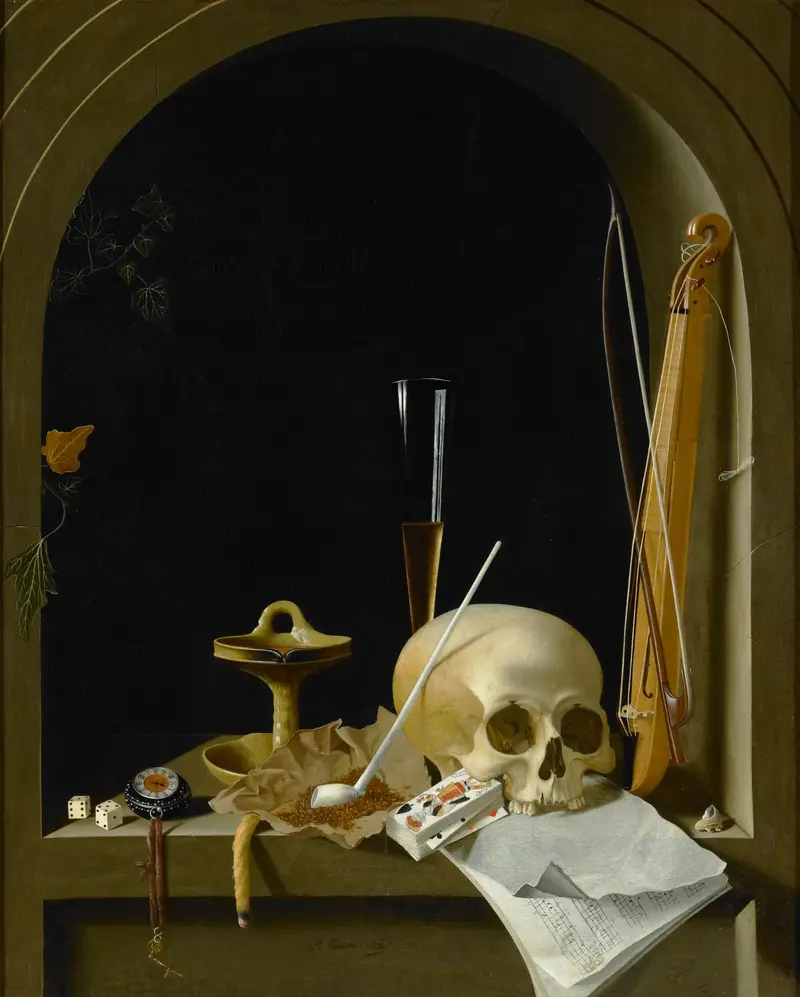
Vanitas still life in a niche
Adriaen Coorte
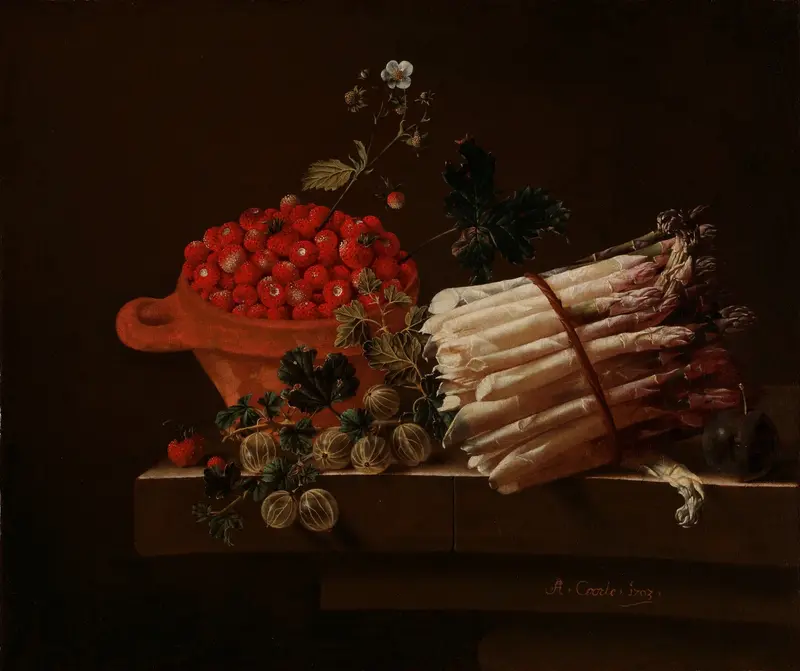
A Pot of Strawberries, Gooseberries, and a Bundle of Asparagus on a Stone Plinth
Adriaen Coorte
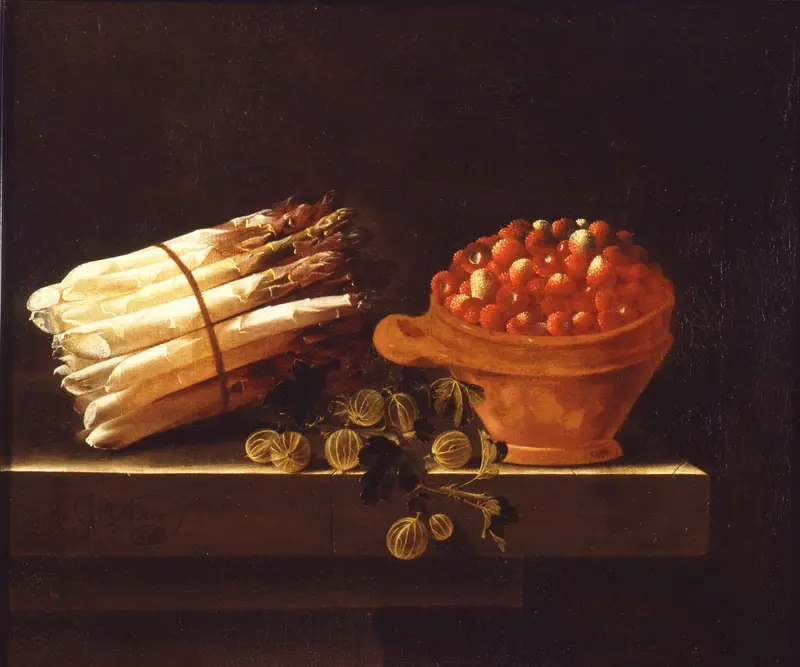
Asparagus, Gooseberries and Strawberries on a Stone Ledge
Adriaen Coorte
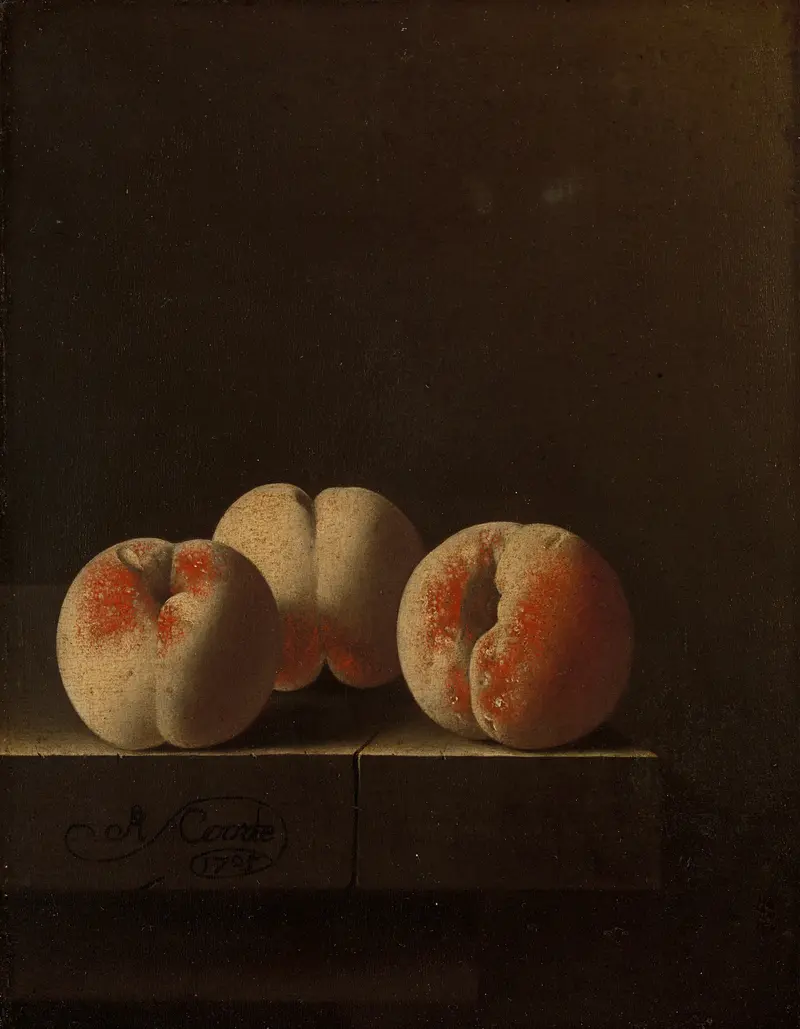
Drie perziken op een stenen plint SK A 5101 Rijksmuseum
Adriaen Coorte
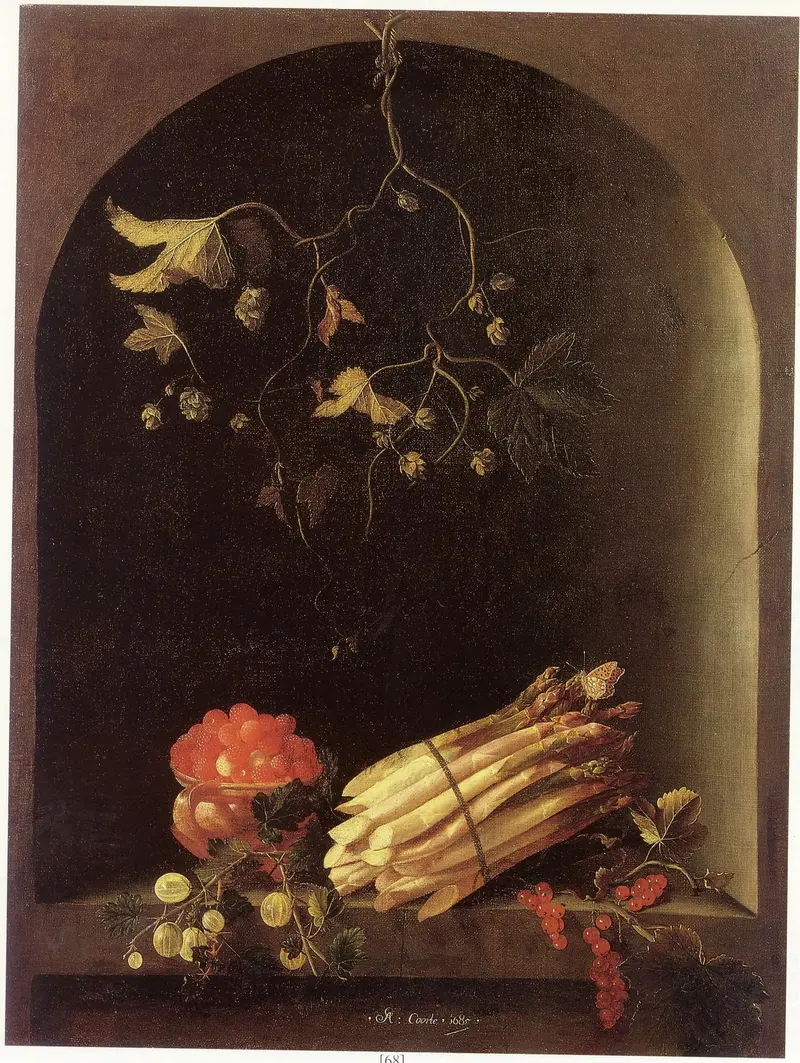
Strawberries, Asparagus, and Gooseberries in a Niche
Adriaen Coorte
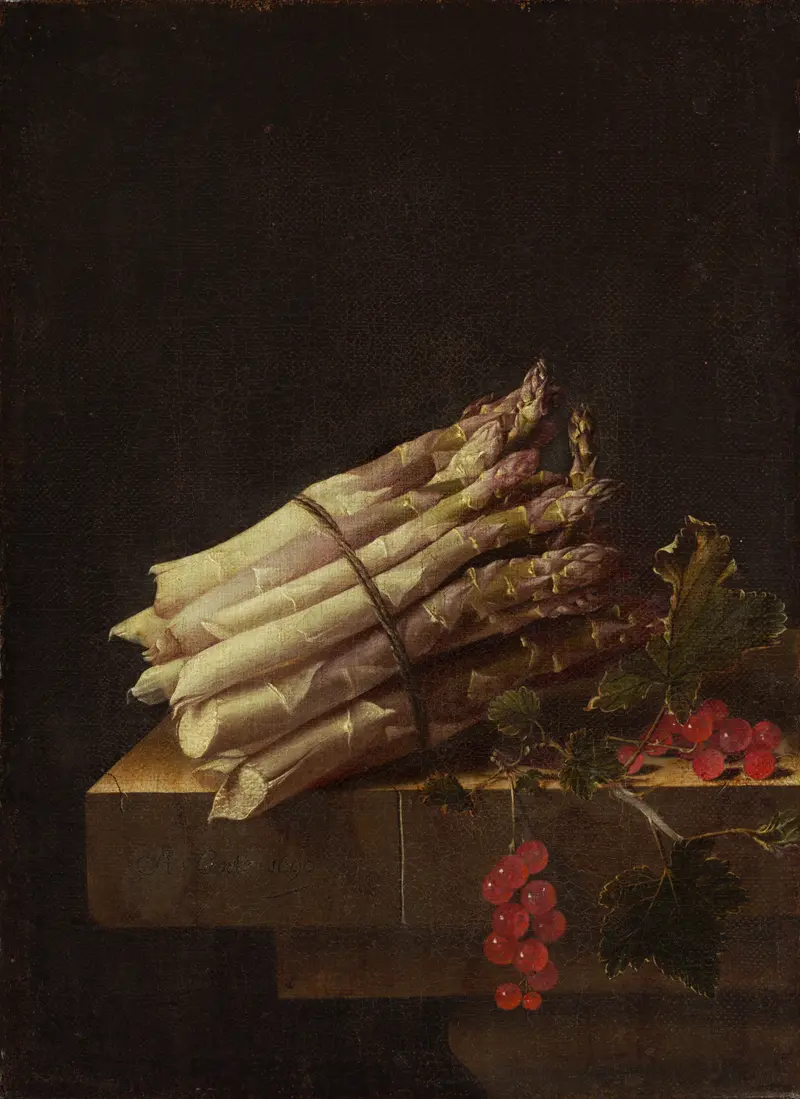
Still Life with Asparagus and Red Currants
Adriaen Coorte
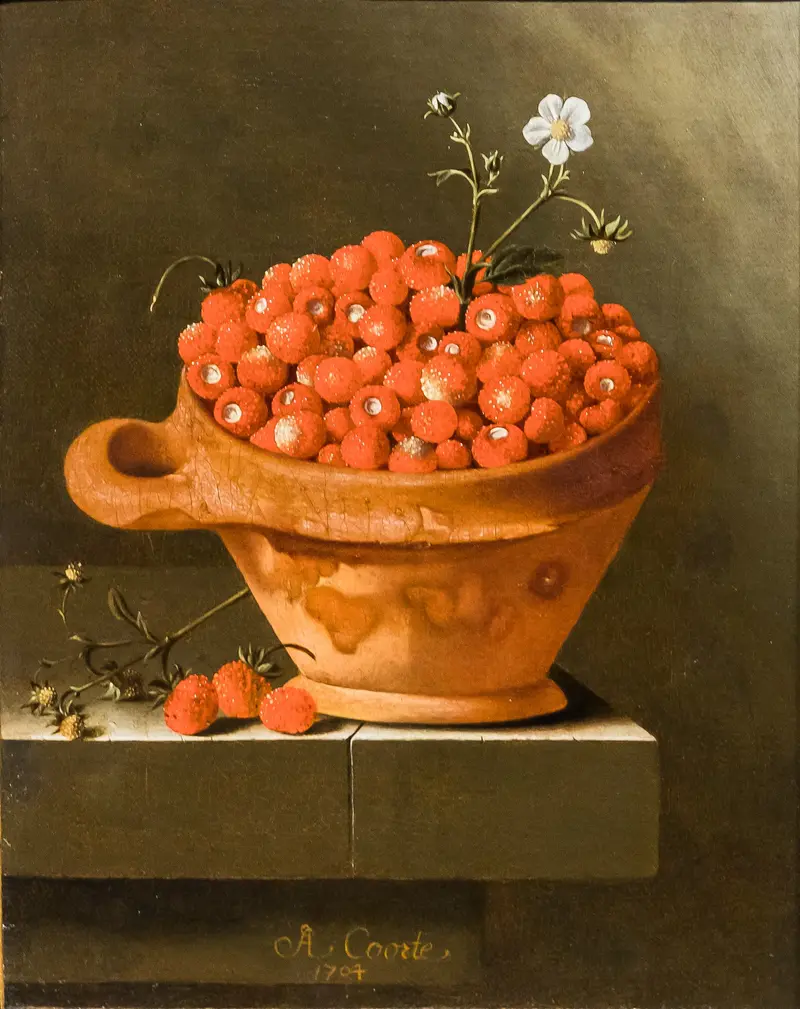
Still life with strawberries in a terracotta pot
Adriaen Coorte
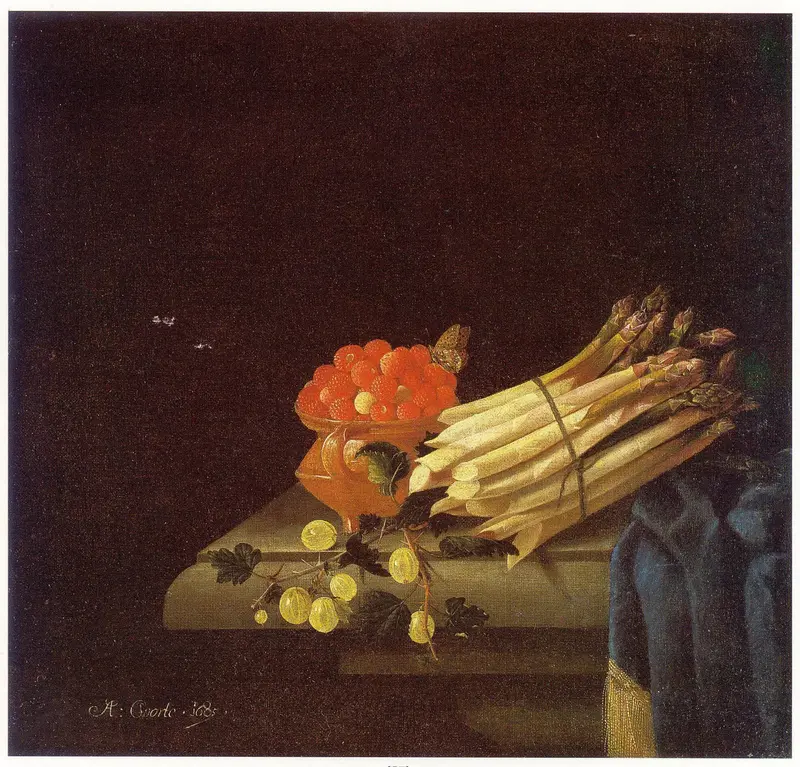
Strawberries, Asparagus, and Gooseberries with a Tablecloth
Adriaen Coorte
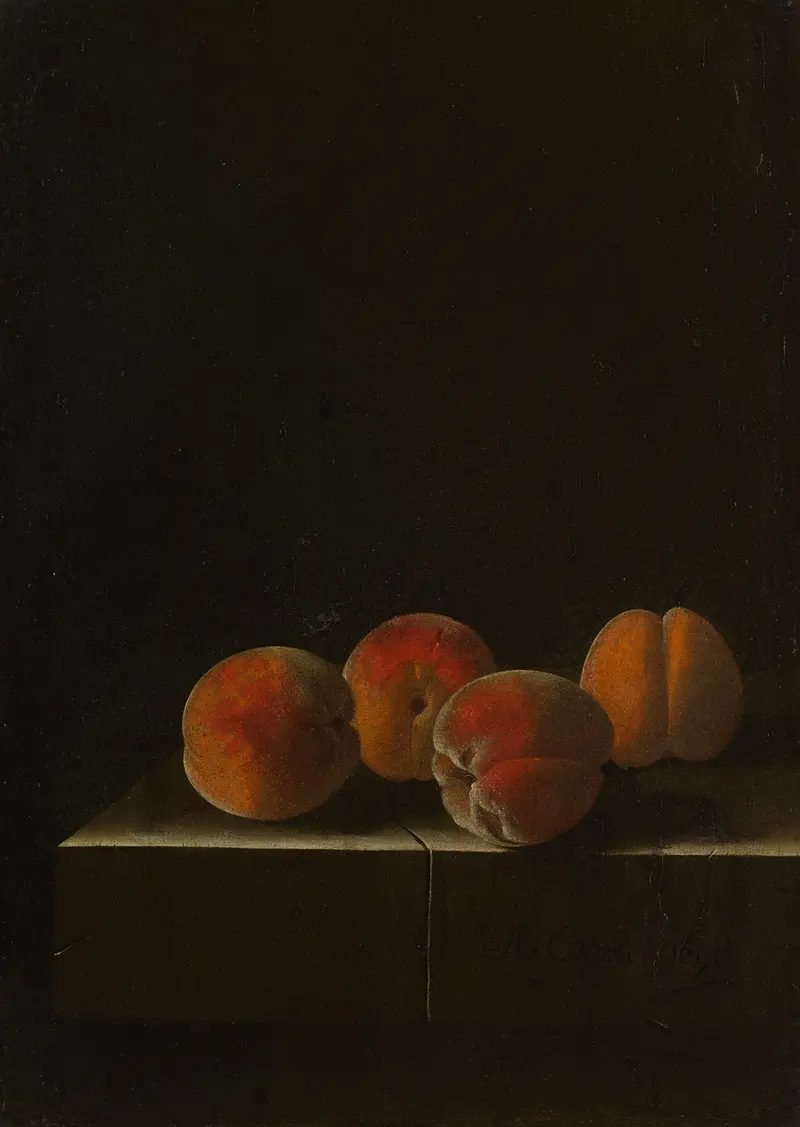
Four Apricots on a Stone Plinth
Adriaen Coorte





