Still Life with Fruit — History & Facts
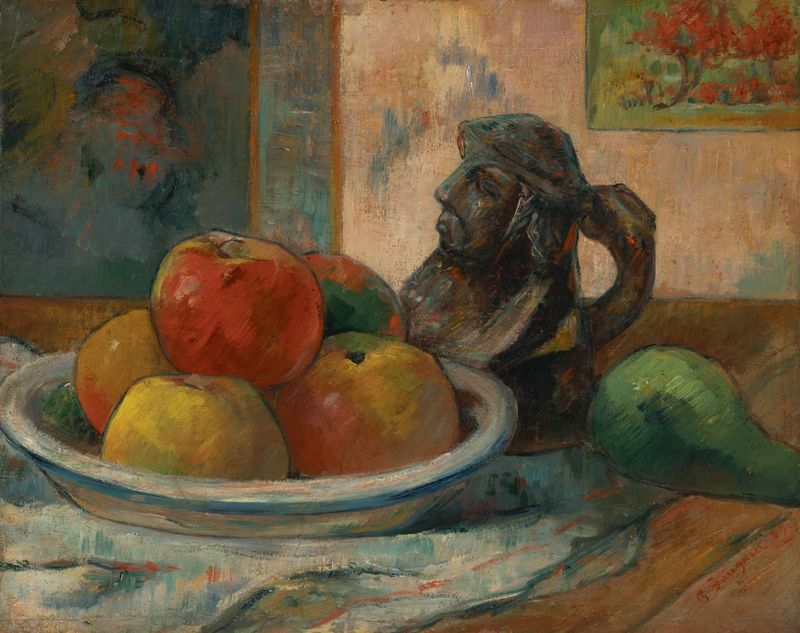
In the stillness of a moment captured on canvas, the burden of legacy hangs heavily, as vibrant fruits defy the passage of time. Look to the left at the luscious arrangement of ripe, plump peaches and the glistening skin of apples. Their colors—a riotous blend of reds, yellows, and greens—coalesce with the soft, diffused light that bathes the scene. Notice how the brushstrokes create a texture that invites touch, contrasting with the smoothness of the fruit against the rustic, worn surface of the table, grounding the composition in reality while hinting at the ephemeral beauty of life. Here, the interplay of shadow and light suggests a deeper narrative, one of transience and abundance.
The fruit, rendered with meticulous attention, speaks to the cycles of nature and human experience, while the looming shadows suggest the inevitable approach of time. This contrast echoes a tension between vitality and decay, prompting reflection on what we choose to preserve in memory versus what is lost to time. In 1928, the artist worked in a period of personal introspection and artistic exploration in his home studio in Massachusetts. Amid a changing art world, where modernism began to dominate, he held onto the tradition of still life as a means to explore beauty and mortality.
This piece serves as a testament to his commitment to capturing moments that resonate with the viewer, preserving them within the eternal embrace of art.
More Artworks by Childe Hassam
Browse all →
Beach at Newport
Childe Hassam

Washington Arch, Spring
Childe Hassam

Thaxter’s Garden
Childe Hassam

New England Headlands
Childe Hassam

Rocks At Appledore, Morning
Childe Hassam
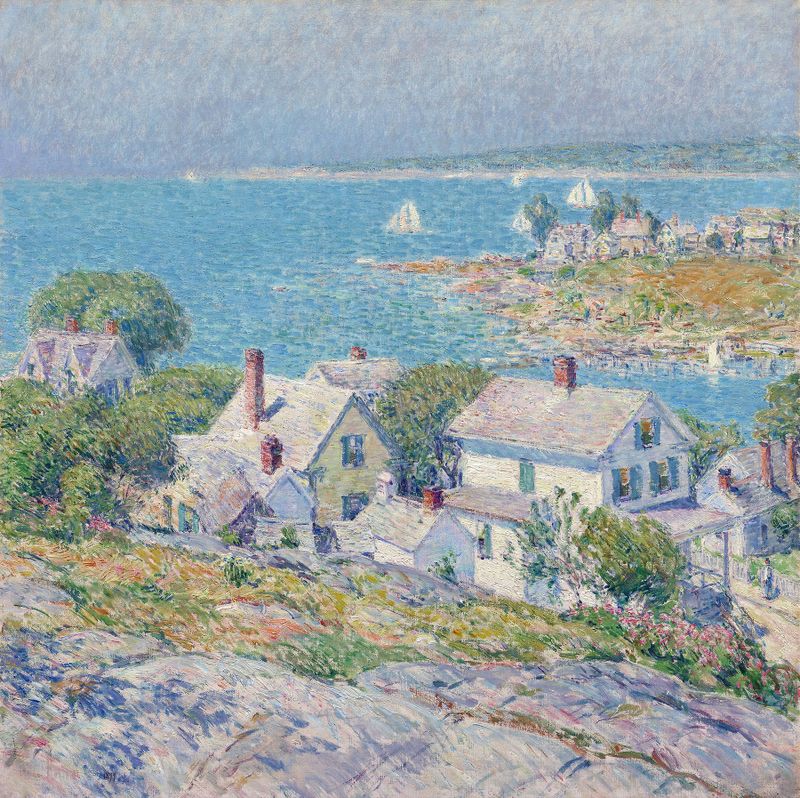
New England Headlands
Childe Hassam
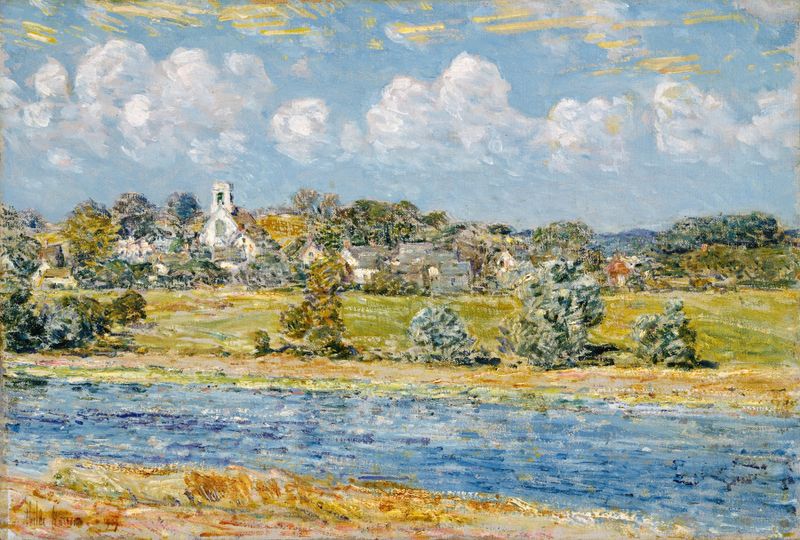
Landscape at Newfields, New Hampshire
Childe Hassam

Piazza di Spagna, Rome
Childe Hassam

The Harbor
Childe Hassam

Late Afternoon, New York, Winter
Childe Hassam