
Still Life with Two Large and Three Smaller Shells — History & Facts
A single shaft of light falls across the rough stone ledge, catching the ridges and spirals of five seashells arranged with deliberate care. The largest shell, pale and ridged, seems almost to float above its shadow, while the others—each with its own color and texture—draw the eye in a slow, contemplative arc from left to right. The ledge itself, with its deep crack and sharply defined edge, anchors the composition in a world of tactile reality.
The darkness behind is absolute, pushing the shells into sharp relief and inviting the viewer to linger over every groove and glint. Even the artist’s signature, crisply inscribed in the lower right, becomes part of this quiet drama of surface and substance. Painted in 1696, Still Life with Two Large and Three Smaller Shells by Adriaen Coorte belongs to a world where the humble and the exotic met on the tables of collectors and scholars. In the late seventeenth century, Dutch still lifes like this one were prized for their ability to capture the marvels of nature—objects gathered from distant shores, brought home by merchants, and set before the viewer as both scientific specimen and quiet meditation.
Little is recorded about the journey of this particular painting, now documented in the collection of the RKD, but its silence is part of its power: a moment of stillness, a study in patience, a reminder that even the smallest forms can hold the eye and the mind. Look again, and see how the light invents new worlds along every curve.
More Artworks by Adriaen Coorte
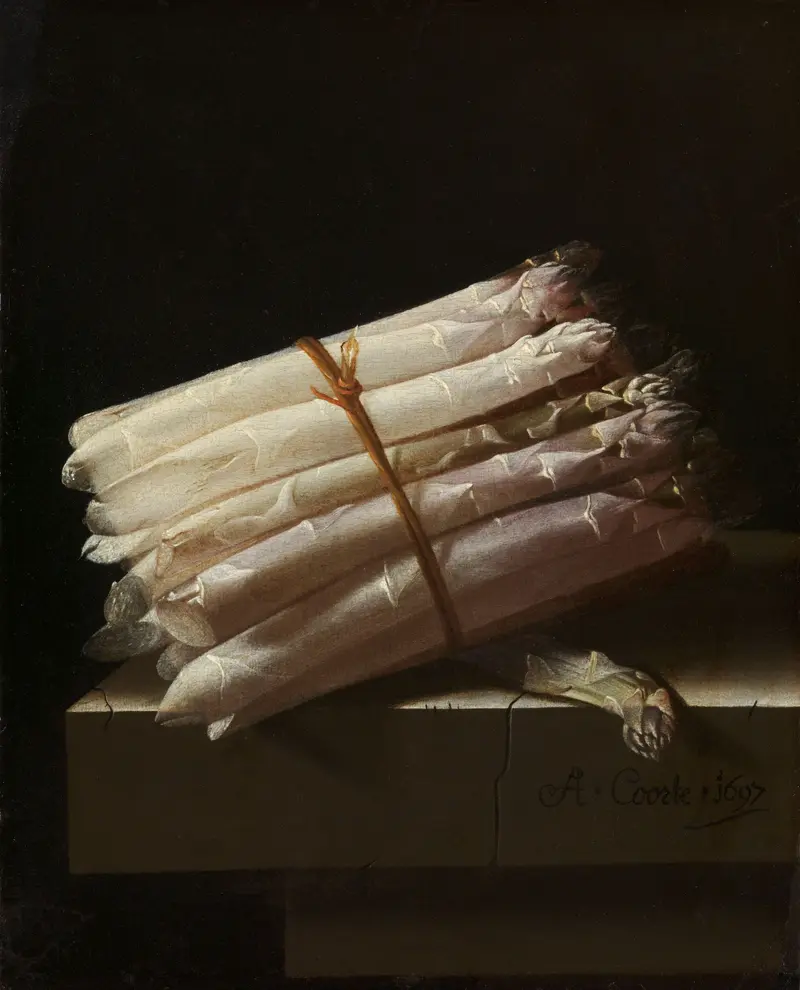
Still Life with Asparagus
Adriaen Coorte
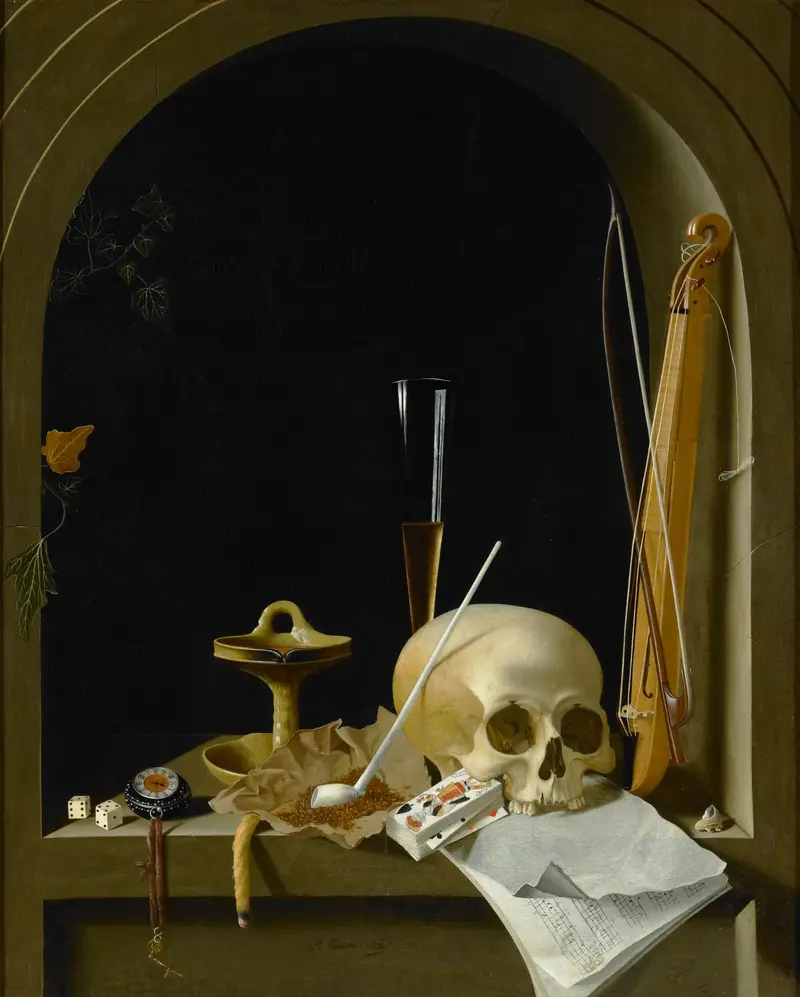
Vanitas still life in a niche
Adriaen Coorte
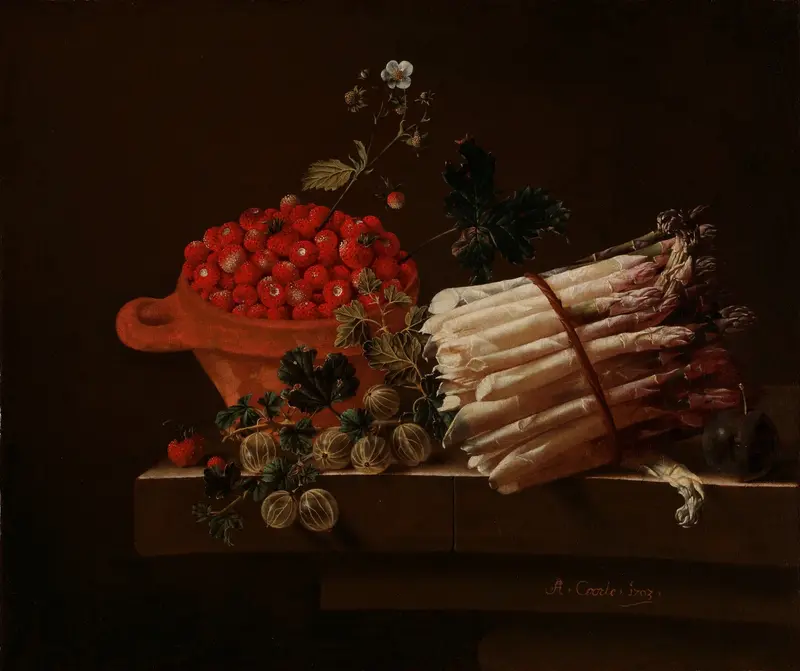
A Pot of Strawberries, Gooseberries, and a Bundle of Asparagus on a Stone Plinth
Adriaen Coorte
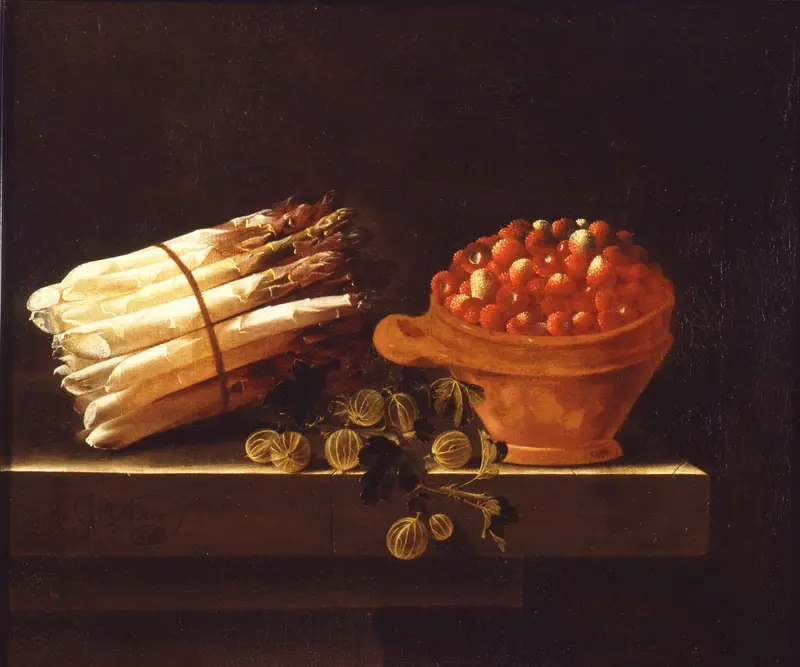
Asparagus, Gooseberries and Strawberries on a Stone Ledge
Adriaen Coorte
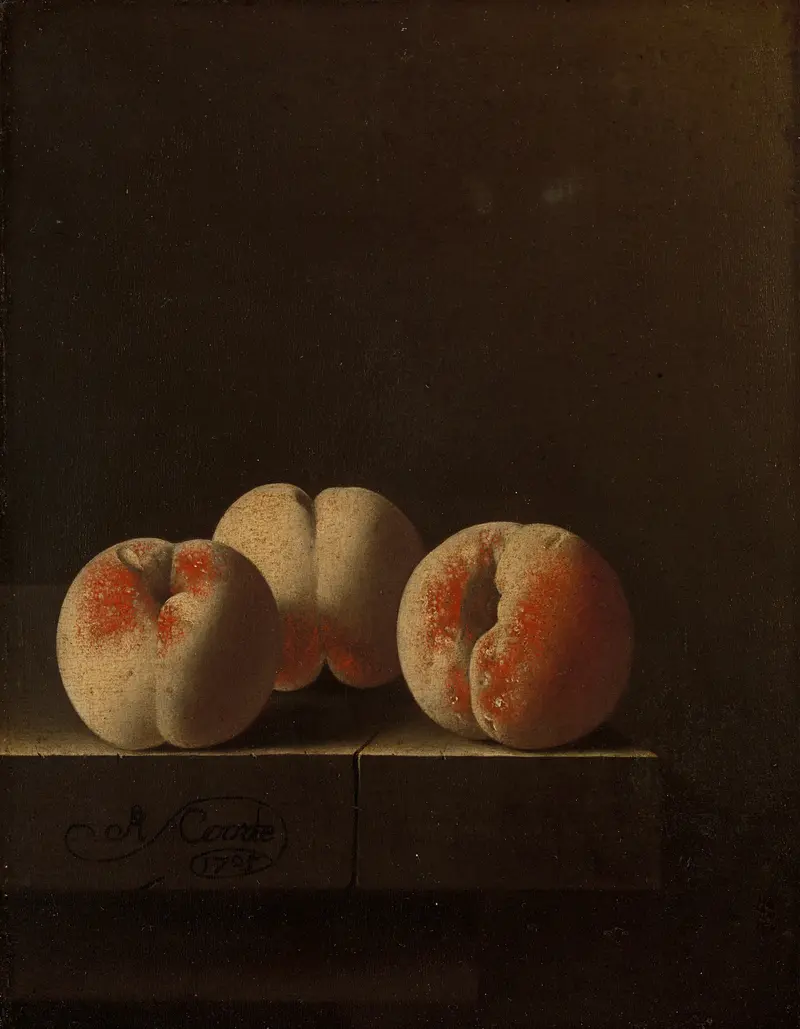
Drie perziken op een stenen plint SK A 5101 Rijksmuseum
Adriaen Coorte
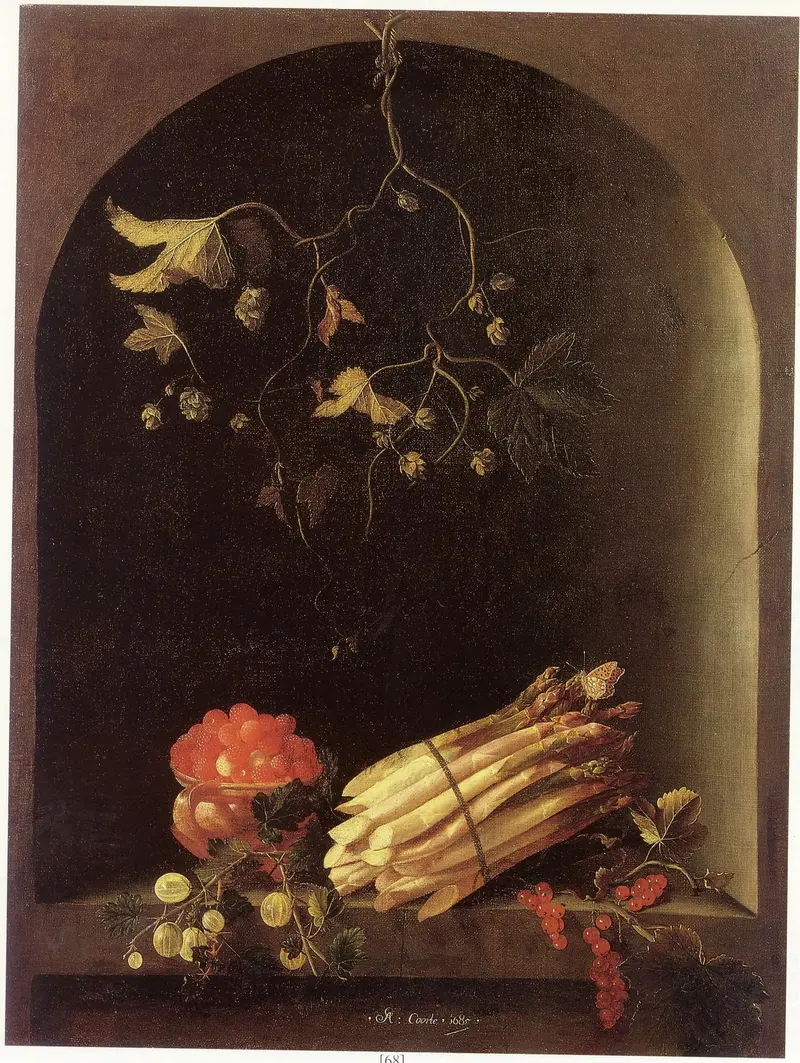
Strawberries, Asparagus, and Gooseberries in a Niche
Adriaen Coorte
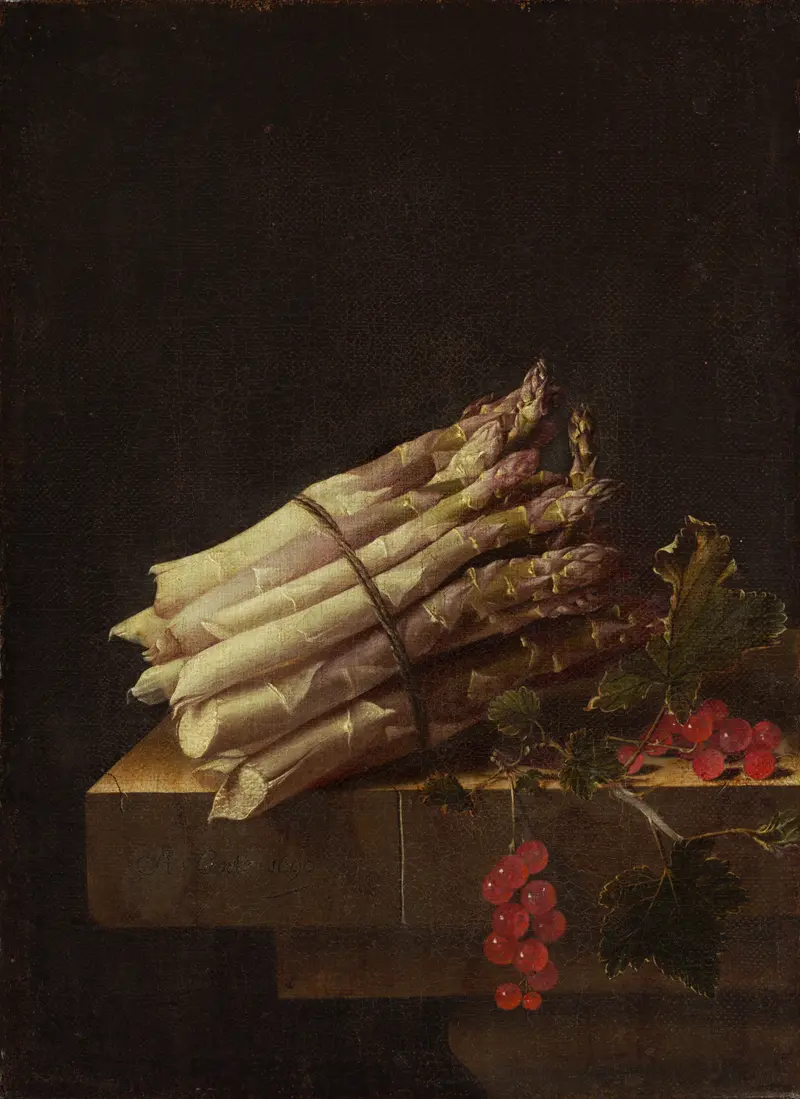
Still Life with Asparagus and Red Currants
Adriaen Coorte
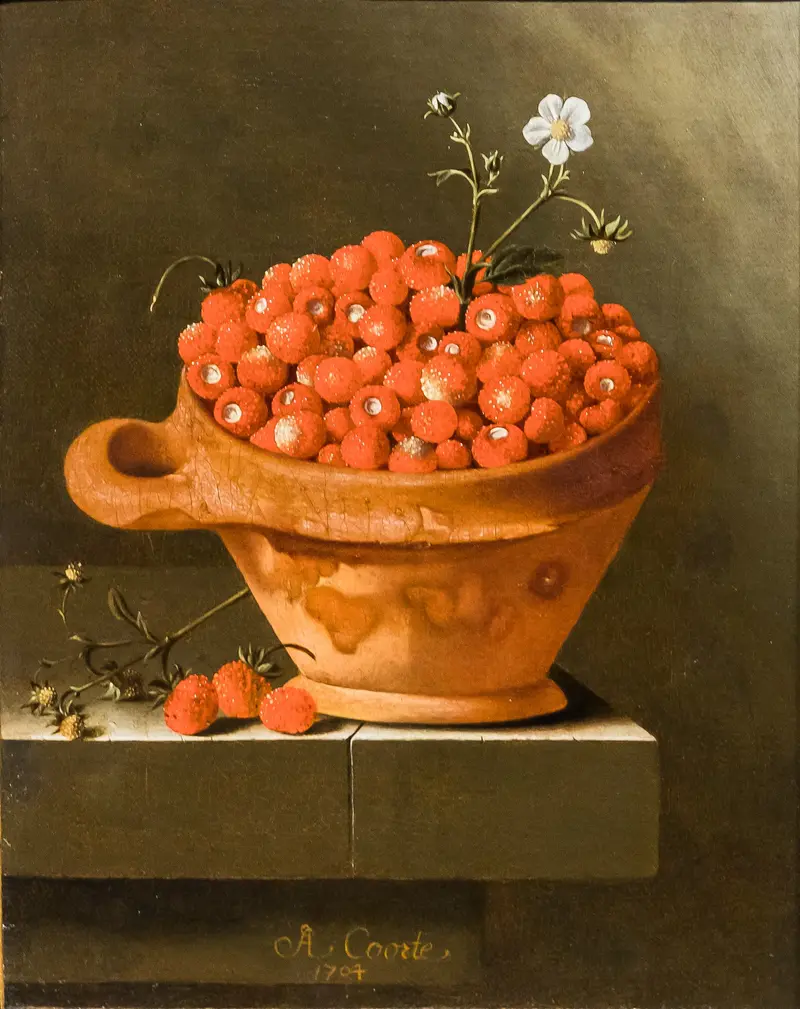
Still life with strawberries in a terracotta pot
Adriaen Coorte
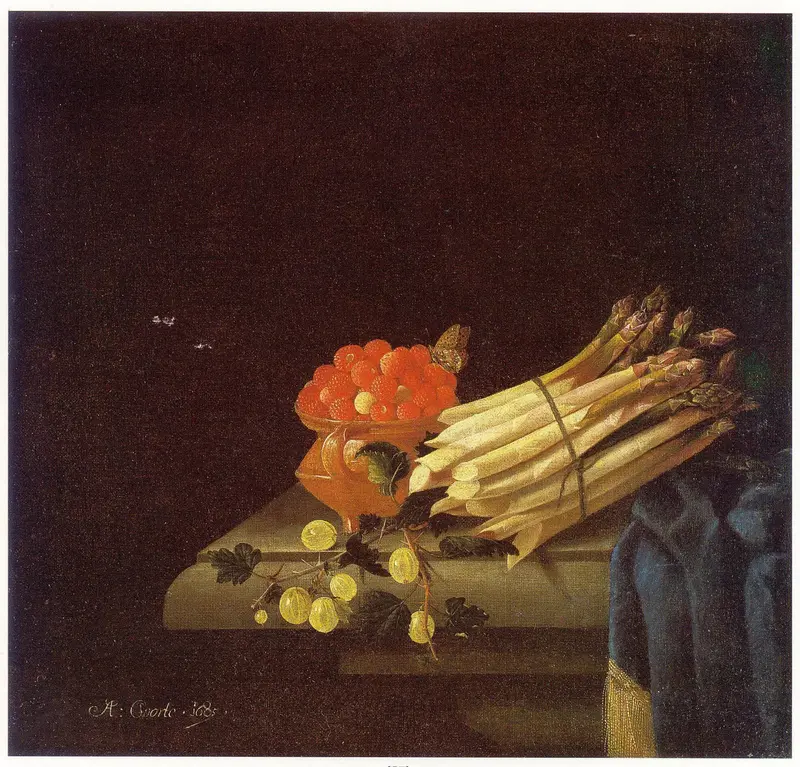
Strawberries, Asparagus, and Gooseberries with a Tablecloth
Adriaen Coorte
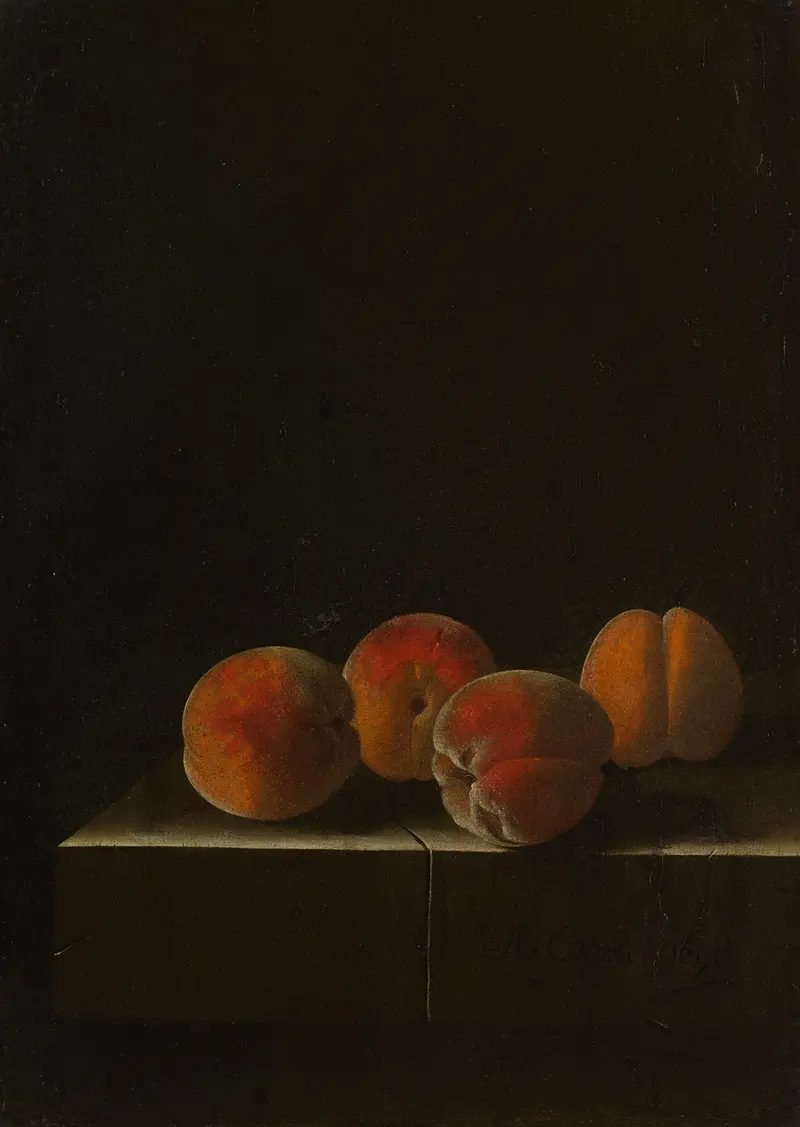
Four Apricots on a Stone Plinth
Adriaen Coorte





