
Stormweer bij ondergaande zon — History & Facts
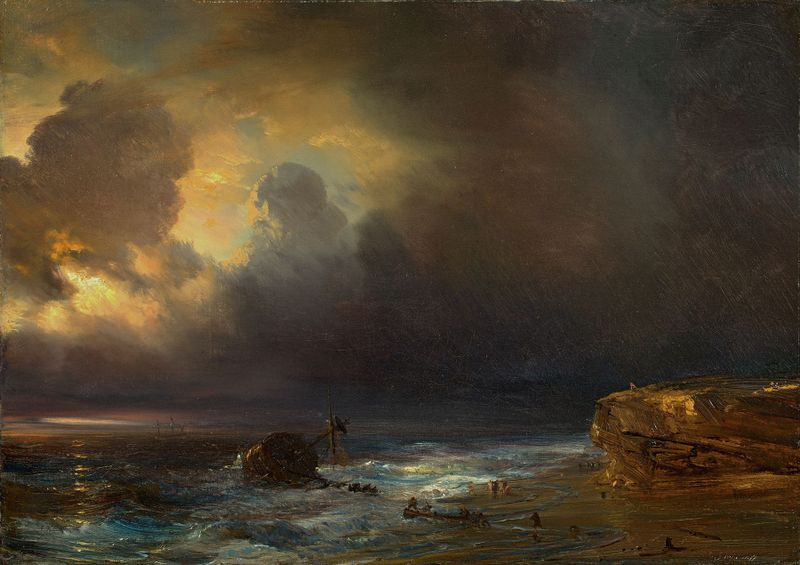
Is this a mirror — or a memory? The stillness of a stormy evening lingers in the air, hinting at a world caught between chaos and calm, where the horizon bleeds into twilight. Focus on the swirling clouds painted in deep indigos and grays, battling for dominance against a glowing sunset. Notice how the light falls upon the water, shimmering with golden flecks that contrast starkly with the impending storm. Each brushstroke reveals tension, as the turbulent waves rush toward the observer, inviting an exploration of both beauty and destruction. Delve deeper, and you'll uncover the emotional weight of this scene.
The juxtaposition of the vibrant sunset against the dark, roiling clouds speaks to the duality of nature — serenity before the storm, the promise of rain mingling with the warmth of the setting sun. The landscape, poised on the brink of transformation, captures a fleeting moment of silence that resonates beyond the visual; it tells a story of anticipation, a pause before the inevitable. In 1862, the artist found himself navigating the changing tides of Romanticism, a movement that sought to capture the sublime in nature. Painted during a time of personal reflection, Stormweer bij ondergaande zon emerged as both a technical exploration and an emotional reckoning during his travels in coastal France.
The work reflects not only the artist's mastery of seascape but also the broader tension within 19th-century art, as artists sought to convey the overwhelming power of nature in a rapidly modernizing world.
More Artworks by Théodore Gudin
Browse all →
Sormy Seas by a Chalk Coast
Théodore Gudin

The Gulf of Naples with View of Mount Vesuvius
Théodore Gudin
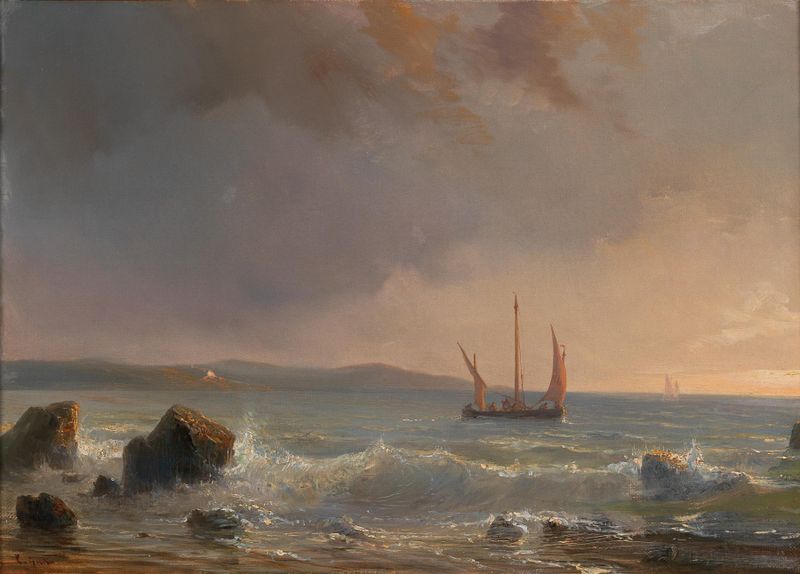
Abendstimmung über einer Meereslandschaft mit Segelbooten
Théodore Gudin
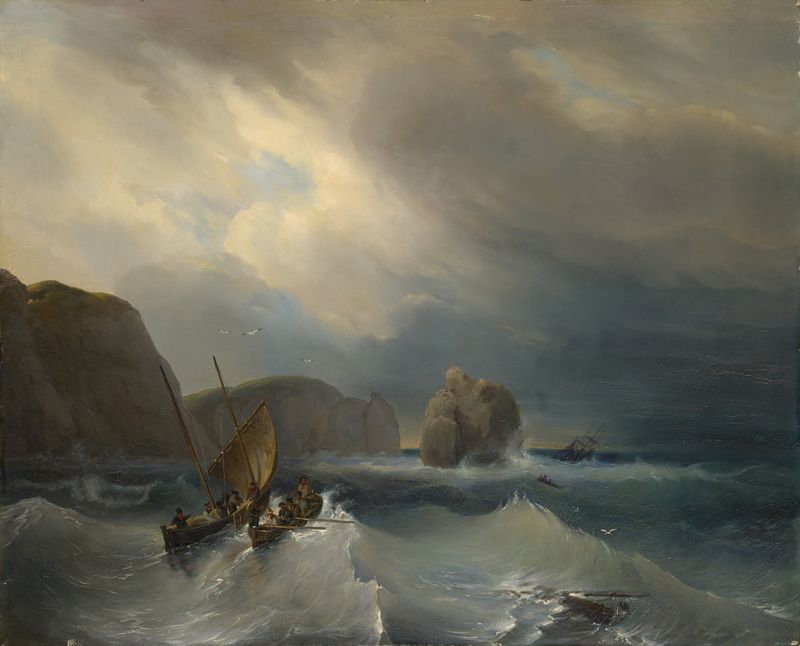
Rough Sea with Ships
Théodore Gudin

Fishermen at the harbour wall, low tide
Théodore Gudin
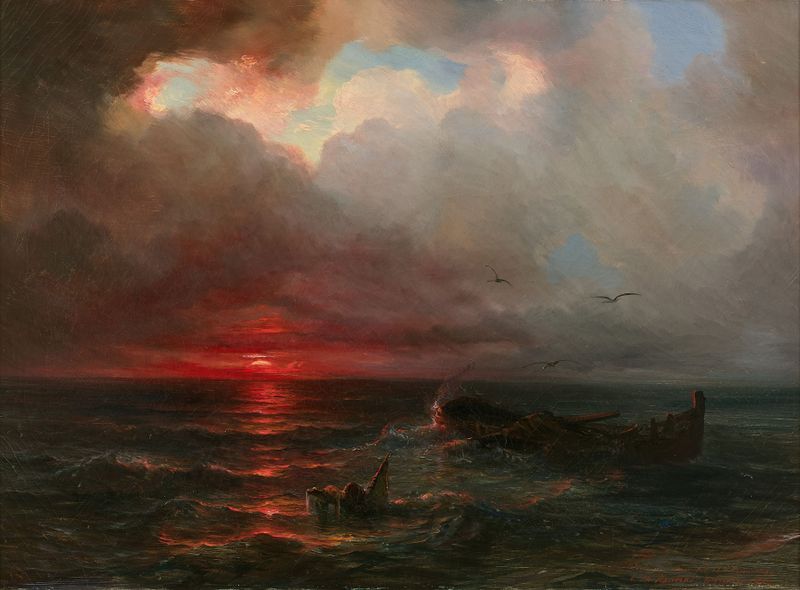
Coucher de soleil sur un littoral
Théodore Gudin
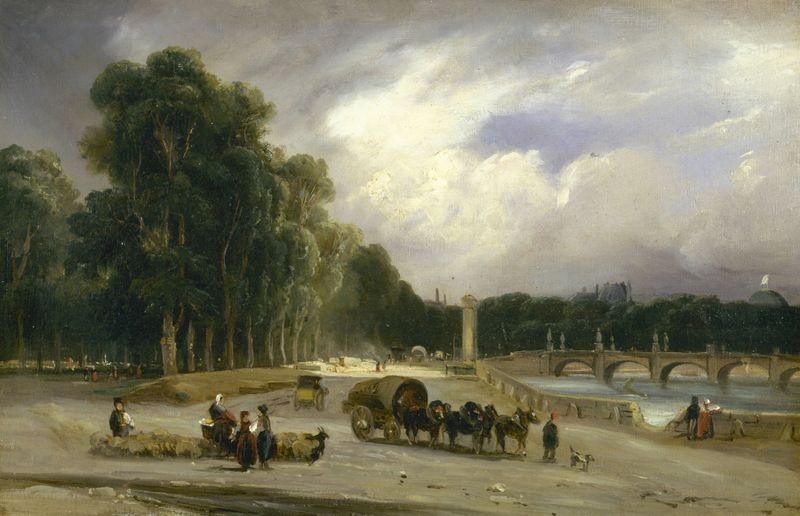
Le Cours-la-Reine
Théodore Gudin
Coastal scene by moonlight
Théodore Gudin
View Of Constantinople
Théodore Gudin

Shipwreck at Castello sul Mare in Rapallo
Théodore Gudin





